A ruling on equal treatment leaves an entire batch waiting
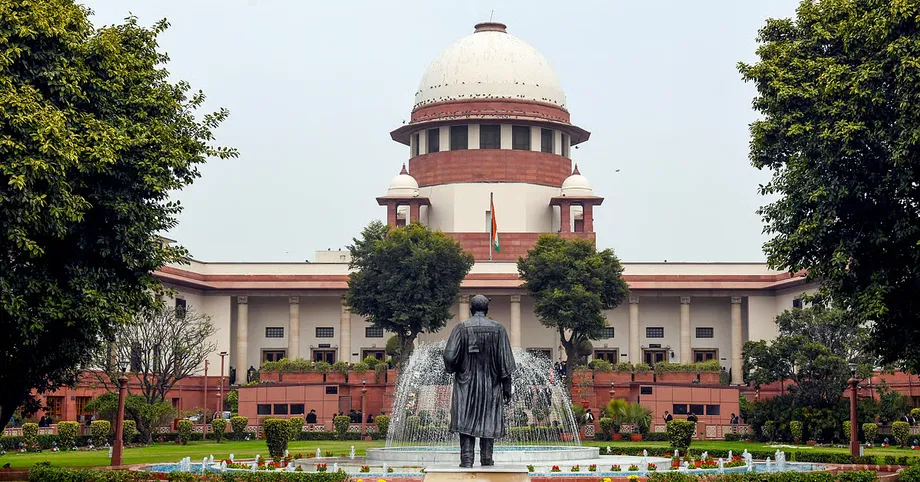
Training for 958 candidates recommended through India's Civil Services Examination 2025 remains on hold after a Supreme Court ruling changed how the government must assess eligibility for Other Backward Classes reservation. The court reserved its decision on the Centre's request for clarification on September 24, 2026, leaving service allocation and the opening of the Foundation Course unresolved.
Contents
- A ruling on equal treatment leaves an entire batch waiting
- Why the March judgment matters
- What the government's written policy says
- How the examination and court dates collided
- What the Centre wants protected
- Why comparing jobs could take two years
- Earlier candidates and a much larger recruitment system
- How earlier rulings frame the dispute
- What the delay means for recruits
- Key Points
The course at the Lal Bahadur Shastri National Academy of Administration (LBSNAA) in Mussoorie had been scheduled to begin in the last week of August. It normally starts in late August or early September and finishes in December. A senior government officer who previously coordinated the course described the disruption as unprecedented in the history of civil services in independent India.
The immediate problem concerns which candidates qualify for OBC reservation when their parents work in public sector undertakings or private companies. On March 11, Justices P. S. Narasimha and R. Mahadevan held that parental salary alone cannot determine whether a candidate belongs to the creamy layer, the relatively advanced section of OBC communities excluded from reservation benefits.
The Centre says applying that ruling to selections already completed could change merit lists, service assignments and the careers of serving officers. It has asked for two years to compare employment positions across sectors and, meanwhile, permission to allocate services to the 958 candidates under the existing framework.
For the recruits, the consequence is immediate: clearing the examination has not yet brought a service assignment or a date to begin training.
Why the March judgment matters
The Supreme Court examined a distinction between children of government employees and children of employees in public sector undertakings, known as PSUs, or private businesses. Government employment has recognised categories of posts, commonly described as Group A, B, C and D. Those categories help determine whether a family falls within the creamy layer.
A Department of Personnel and Training (DoPT) clarification dated October 14, 2004, allowed parental salary to be considered where jobs outside government had not been matched with equivalent government posts. That meant children of employees doing comparable work could receive different treatment because their parents had different employers.
The bench said that excluding children of PSU or private sector employees solely because of salary, without examining the status of their parents' posts, could violate the constitutional guarantees of equality under Articles 14, 15 and 16. It also held that a clarification could not introduce a substantive condition absent from the original policy.
Justices Narasimha and Mahadevan explained the principle behind their decision in these words:
The object of excluding the creamy layer is… not to create artificial distinctions between equally placed members of the same social class… unequal treatment of similarly placed OBC candidates would not only be legally erroneous but constitutionally impermissible.
The ruling requires the government to examine employment status as well as the relevant income and wealth rules. For candidates, the central change is that a parent's salary cannot be the automatic answer to the eligibility question.
What the government's written policy says
The DoPT's March 2004 memorandum provides a concrete record of how the income test developed. Issued on March 9, 2004, it raised the annual income threshold from Rs 1 lakh to Rs 2.5 lakh, with effect from February 4 that year.
The memorandum's income and wealth category covered children of people with gross annual income of Rs 2.5 lakh or above, or wealth above the exemption limit under the Wealth Tax Act, for three consecutive years. Its explanation said income from salaries or agricultural land should not be clubbed.
The document identifies the underlying policy as the Office Memorandum dated September 8, 1993. The Centre's pending application has also been described as referring to an August 8, 1993 memorandum; the official March 2004 document explicitly gives September 8 as the date of the original instrument.
The March 2004 memorandum and the October 2004 clarification performed different tasks. The first raised the financial threshold. The second addressed how to assess families whose employment positions had not been equated with government posts, creating the distinction challenged in court.
The income ceiling was revised again in 2008 and 2013, then increased to Rs 8 lakh annually in 2017. It has remained at that level. The framework also contains separate categories covering senior public office, government service, armed forces service, professions, business and property. Eligibility therefore depends on which category applies to a family, as well as the rules within it.
How the examination and court dates collided
The timing is central to the Centre's application. UPSC announced the CSE 2025 final results on March 6, 2026, five days before the Supreme Court judgment. The government argues that selection was substantially complete and had reached the final stage of assigning candidates to services.
The main dates show how an examination completed over more than a year became caught in an unresolved implementation process:
- January 22, 2025: The CSE 2025 notification was issued.
- May 25, 2025: The preliminary examination took place.
- August 22 to 31, 2025: The main examination was held.
- March 6, 2026: UPSC announced the final result, recommending 958 candidates.
- March 11, 2026: The Supreme Court delivered its creamy layer judgment and set six months for implementation.
- August 24, 2026: The Centre sought clarification from the court.
- August 25, 2026: The court agreed to constitute a special bench; a hearing was scheduled for September 1.
- September 11, 2026: The original implementation period ended.
- September 24, 2026: The court reserved judgment on the Centre's application.
The pending proceedings are titled Union of India v. Rohith Nathan and Anr., under Diary Nos. 51879 and 51897 of 2026. No date for the clarification ruling or the delayed Foundation Course has been announced.
What the Centre wants protected
The Union government says it is seeking clarification about when and how the March judgment applies, rather than a review of the judgment itself. Its main request is to protect completed selections, appointments, service and cadre allocations, seniority positions and admissions from being reopened retrospectively.
Retrospective application means applying a legal decision to events that happened before it was delivered. Prospective application would limit its operation to a later point specified by the court. The Centre also wants guidance for examinations and recruitment processes that were already underway on March 11.
CSE 2025 illustrates the difficulty. A candidate whose parental salary appeared to make them ineligible for OBC benefits might have entered the examination under the general category. Another person might have decided against applying because they believed they could not claim category benefits. Revisiting eligibility after results could involve more than reassessing certificates for the candidates already selected.
The government has separately asked permission to finalise service allocation for the 958 recommended candidates while its clarification application is pending. It argues that continued delay will push back their annual training and induction cycle, with consequences that a later favourable ruling could not fully undo.
For admissions, the Centre seeks protection for completed academic sessions, degrees already awarded and settled student rights. Its concern extends to institutions without arrangements for additional seats beyond their approved intake.
Why comparing jobs could take two years
The Centre says a consistent system is needed to establish equivalence between government posts and positions in PSUs, banks, universities, private businesses and other organisations. Equivalence means deciding whether jobs in different organisations carry a comparable level of responsibility and status.
Government services have defined grades and classifications. Outside government, the same job title can describe very different levels of authority. A director or senior manager in one organisation may have responsibilities unlike those of someone with the same title elsewhere.
Some central PSU posts were assigned equivalence in 2017. Questions remain across private employment, universities, educational institutions and various state government organisations. The Centre estimates that completing the exercise could take two years, including consultations with states, Union Territories and other stakeholders.
The government also warns that excluding salary without an alternative way to assess professional status could allow families with very high salaries to retain access to reservation. Its proposed exercise must therefore address both sides of the dispute: equal treatment for comparable families and a workable method of identifying socially advanced sections within OBC communities.
Earlier candidates and a much larger recruitment system
About 100 candidates who cleared civil service examinations from 2016 onward had their OBC claims rejected on creamy layer grounds. Many held caste certificates issued by competent authorities and are involved in proceedings before the Supreme Court or High Courts. The disputed salary approach began to be applied rigorously from CSE 2015, corresponding to the 2016 batch.
The March ruling directed the government to create supernumerary posts if necessary for candidates wrongly excluded earlier. These are additional posts created beyond the regular sanctioned number, providing a possible way to accommodate successful claimants.
The Centre says a wider retrospective exercise could require reconsideration of civil service allocations made since 2012. Changes could reach officers already appointed, affecting their service, cadre, seniority and promotion prospects. It also raises practical concerns about candidates becoming eligible for technical services years later, when meeting prescribed medical or physical standards could be more difficult.
The scale extends far beyond UPSC. According to the government's plea, more than 5.69 lakh reserved vacancies were filled in central ministries, departments and their attached and subordinate offices between 2016 and 2025, including 3.70 lakh OBC vacancies. Those figures amount to more than 569,000 reserved posts, of which 370,000 were OBC posts.
The Centre identifies possible consequences for recruitment by the Railways, banks, the Department of Posts and paramilitary organisations. It says similar issues could arise in 18 states and Union Territories that follow the 1993 framework. These are the government's estimates of the judgment's potential reach; the application seeks a decision on which completed processes will remain settled.
How earlier rulings frame the dispute
The Supreme Court has previously considered whether selection criteria can change after recruitment or admissions begin. In Tej Prakash Pathak v. Rajasthan High Court in 2024, a Constitution Bench addressed the principle commonly called the rules of the game doctrine: candidates should know the governing selection criteria when they enter a process.
A January 2026 decision, Divjot Sekhon v. State of Punjab, applied that principle to sports quota admissions for medical and dental courses. Punjab had widened eligibility after issuing its prospectus and receiving applications. The court found the change unlawful but declined to redraw the entire merit list because doing so would affect admitted candidates who were not before it.
The present case brings together comparable practical concerns and a different underlying wrong: unequal treatment under reservation rules. The court must decide how to implement its equality ruling while addressing claims from people excluded earlier and the position of candidates whose selections are already complete.
What the delay means for recruits
LBSNAA's common Foundation Course introduces officer trainees to the Constitution, government functioning and public policy. It also brings together recruits from different services before they proceed into more specialised training.
A separate course for recruits who retook the CSE main examination to improve their ranks has also been postponed indefinitely. It had been planned at the National Communications Academy-Finance in Delhi, about a week after the Mussoorie course began.
An LBSNAA official said preparations were underway, with the start dependent on decisions by senior authorities. Candidates awaiting allocation have described repeatedly checking for updates while remaining uncertain about their joining schedules.
The delay also matters because the Foundation Course start is used to reckon civil service seniority. The Centre's application identifies training, seniority and pay fixation as connected consequences of holding back allocation. For the batch, a postponed opening date affects the beginning of a career, rather than simply moving a classroom timetable.
Key Points
- Service allocation and Foundation Course training remain delayed for 958 CSE 2025 candidates.
- The Supreme Court's March 11 ruling requires consideration of parental employment status and post category, rather than salary alone.
- The Centre seeks protection for completed selections and admissions, plus two years to establish equivalence between posts.
- About 100 candidates from earlier civil service cycles had their OBC claims rejected on creamy layer grounds.
- The court reserved judgment on September 24, 2026. No ruling date or training start date has been announced.