A fictional war reaches a country still under armistice
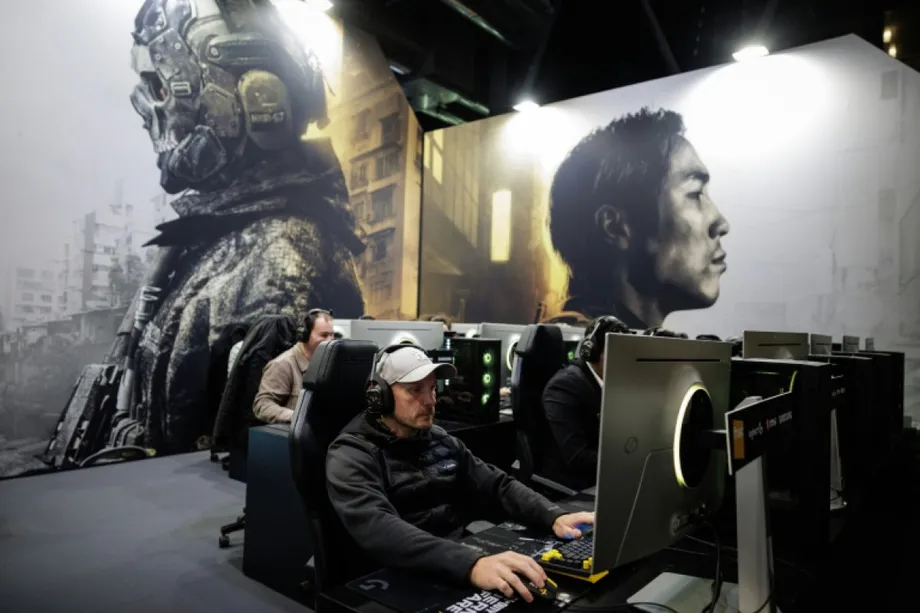
Call of Duty: Modern Warfare 4 reached the top of Steam's South Korean and global sales charts following its October 23, 2026 release, bringing a fictional North Korean invasion into homes less than a month after Seoul announced findings on a real border explosion that injured three soldiers.
Contents
- A fictional war reaches a country still under armistice
- Why familiar streets make the fighting feel closer
- A Korean campaign inside a wider global thriller
- Players respond with enthusiasm, grief and fear
- Lawmakers turn the game into a political argument
- The real border explosion behind the tension
- A disputed boundary adds danger to border work
- How a real conflict could differ from the campaign
- Turkey's response connects the game to shared history
- Key Points
The game, developed by Infinity Ward and published by Activision, has drawn attention for more than its battles. Its South Korean campaign follows Marine Private Park Hyun-jun, played by Korean American actor Young Mazino, through familiar streets suddenly transformed by war. Convenience stores, neighbourhood alleys and ordinary conversations give the opening attack an immediate connection to everyday life.
By 5:49 p.m. on release day, 89 percent of 308 Steam reviews written by users using Korean were positive. A broader release snapshot recorded 5,399 favourable reviews out of 5,886, or 91.7 percent, through SteamDB. The strong reception has arrived alongside arguments over creative freedom, military preparedness and the commercial use of a conflict that remains unresolved.
South Korean lawmakers have brought the title into a parliamentary audit and used its invasion scenario to challenge President Lee Jae-myung's security policies. Culture, Sports and Tourism Minister Choi Hwi-young responded that constitutional freedom of expression applies to games and that the government does not conduct prior censorship.
The debate reaches beyond South Korea. The game also topped Steam's sales chart in Turkey, where players have connected its story to their country's participation in the Korean War. Across both countries, a commercial military thriller is stirring memories that extend well beyond the screen.
Why familiar streets make the fighting feel closer
Private Park's story begins with young soldiers on a routine patrol before a surprise attack plunges them into combat. North Korean forces use missiles, paratroopers and an underground tunnel to overwhelm South Korean and American troops. Park and his squad then fight through collapsing cities and counteroffensives.
Seoul locations evoke the alleys of Daerim and Hongdae. A CU convenience store advertises a buy one, get one free promotion, while references to chicken and beer reflect the familiar social custom known as chimaek. A baseball stadium also becomes part of the battlefield.
South Korean viewers have responded to the soldiers' conversations and the sudden destruction of recognisable surroundings. Some said the dialogue recalled their own military service. Most able bodied South Korean men must serve between 18 and 21 months, depending on their military branch, giving the portrayal a personal reference point for many players.
Infinity Ward associate design director Alex Norris described a shift towards battles involving infantry, armour and air support working together to retake a city. The campaign includes beach landings, trench fighting, tanks and joint operations by South Korean and American marines.
A Korean campaign inside a wider global thriller
Modern Warfare 4 places the peninsula conflict alongside the continuing story of Captain John Price and tensions between the United States and Russia. Price becomes a fugitive after killing General Shepherd, while the disbanding of Task Force 141 leaves former allies divided. Ghost and Gaz are assigned to capture or eliminate their former captain.
Price's missions take the story to New York, Paris and Mumbai. Another thread involves an unidentified weapon delivered to an antagonist known as The Archer, played by Mads Mikkelsen. Inside North Korea, the plot depicts a leader's funeral, a succession struggle and a military coup involving a fictional ruling family.
Infinity Ward says it created its own North Korean leadership rather than portraying Kim Jong Un's actual family. The studio's co-head, Jack O'Hara, explained the intended relationship between the fiction and current affairs:
We want the game to feel like a story straight out of real news. Not by copying it directly, but by making it feel like something that could actually happen in reality.
Players respond with enthusiasm, grief and fear
South Korean gamers have praised the production and discussed buying new consoles or upgrading computers to play it. Some have shared slogans expressing hostility towards communism, while others have focused on the emotional weight of seeing a war fought through Korean streets.
A Threads user posting under the handle b_yeol_t connected the experience to a family member who fought in the Korean War:
I cried so much playing the game to a point I almost got dehydrated. It reminds me so much of my grandfather, who fought in the Korean War.
Another user, ireozima_zebal, described the experience as horrifying and imagined Gangwon being overwhelmed before South Korean defences were pushed towards Seoul. The reaction captures how the game's sudden invasion can turn entertainment into a personal fear for people living near the border.
Kim Hong-min, a 31-year-old office worker and longtime Call of Duty player, defended the choice of setting:
The series has always used real wars, like World War II, as settings. There's no special intent in featuring the Korean Peninsula this time.
Kim Sung-jae, chairman of the Kim Dae Jung Peace Center, has questioned whether the Korean War's tragedy and continuing hostility between the two Koreas should become entertainment. His objection centres on a conflict whose consequences remain part of daily life, rather than a distant historical setting.
Yang Moo-jin, a distinguished professor at the University of North Korean Studies, offered another explanation for the response. He said strained relations appeared to be encouraging some young people to use the game as stress relief directed at North Korea. The same battles can therefore carry different meanings: an action spectacle, a reminder of family loss, or an outlet for anger.
Lawmakers turn the game into a political argument
People Power Party lawmaker Ahn Cheol-soo invoked the game on October 20 while criticising President Lee's remarks about North Korea's nuclear weapons. He urged the president to play it if he did not understand the danger of North Korean provocations.
Han Dong-hoon, identified as an independent lawmaker, also raised military readiness on release day while acknowledging that the story was fictional. The political argument focused on whether South Korea would be prepared for another attack and whether the administration was responding firmly enough to Pyongyang.
During the National Assembly's October 23 audit of the culture ministry, People Power Party representative Kim Seok-ki asked why the game was attracting younger players. He argued that its appeal reflected dissatisfaction with the government's response to North Korean provocations. Minister Choi rejected that explanation and pointed to Call of Duty's longstanding international audience.
Kim also criticised calls to block distribution and alleged a double standard in arguments about creative freedom. Choi set out the government's position:
The government does not practice prior censorship on games either. Freedom of expression is guaranteed by the Constitution, and our society has other legal frameworks such as defamation laws and criminal laws in place to provide remedies.
Prior censorship means authorities stopping or changing a work before it reaches the public. Choi said the ministry could discuss legal and institutional changes with lawmakers if the game's social effects warranted policy action. His immediate answer placed disputes about expression within existing constitutional and legal protections.
The real border explosion behind the tension
The military incident preceding the release occurred on September 21 in the western Demilitarised Zone near Paju, in an area controlled by South Korea's 25th Division. Troops were opening a search route for an investigation into suspected North Korean mines when an explosion occurred during their withdrawal. A second explosion followed during the rescue.
Two soldiers suffered serious ankle injuries and a third sustained minor injuries. Initial military statements described an unidentified explosion and left open several possible origins. On October 5, South Korea's Joint Chiefs of Staff announced its final conclusion that deliberately planted North Korean mines had caused the blasts. North Korea denied responsibility and called the findings fabricated.
Vice chairman Lieutenant General Kwon Dae-won said investigators found TNT and resin components consistent with North Korean antipersonnel mines. The mines were buried between three and 10 centimetres underground, about 10 metres south of the Military Demarcation Line. Kwon said the United Nations Command also assessed that they had been deliberately placed and estimated installation roughly 12 months earlier.
The United Nations Command, which supervises compliance with the 1953 armistice, announced on September 30 that a functioning North Korean antipersonnel mine found south of the line constituted an armistice violation. South Korea said it cleared the minefield at 12:51 p.m. on October 5 and would continue removing mines if North Korea did not do so.
The sequence leading into the game's release was:
- September 21: Two explosions in the western DMZ injured three South Korean soldiers.
- September 30: The United Nations Command announced its finding of an armistice violation.
- October 5: South Korea announced its final investigation findings and cleared the minefield.
- October 6: North Korea's foreign ministry rejected responsibility and warned against entry into territory it considers its own.
- October 20: Ahn Cheol-soo invoked the game in criticism of the president's security position.
- October 23: Modern Warfare 4 launched, topped South Korea's Steam chart and entered parliamentary debate.
A disputed boundary adds danger to border work
South Korea's military and the United Nations Command have been working to align their methods for locating the Military Demarcation Line. South Korean authorities said only about 200 of the original 1,292 boundary markers remain identifiable, making maps and surveying methods increasingly important.
The South Korean military uses a reference based on a 2004 United States National Geospatial Intelligence Agency map, while the United Nations Command uses a standard developed through surveying in 2016. North Korea has rejected South Korean proposals for communication to check and measure the boundary.
South Korea's Joint Chiefs said recorded North Korean crossings south of the line rose from nine in 2024 to 17 in 2025 and more than 50 in 2026. The latest total is more than five times the 2024 figure. The military estimated that as many as 7,000 North Korean troops had been mobilised daily for some border fortification work.
Pyongyang has reinforced fences, laid mines and built barriers since 2024. North Korean state media also said Kim Jong Un urged the military to become the world's strongest during a meeting of company commanders in Pyongyang in the week before the game's release.
How a real conflict could differ from the campaign
A 2023 assessment by the United States Intelligence Community judged North Korea more likely to use nuclear weapons and ballistic missiles for regional influence and deterrence than to launch a full invasion. Deterrence means persuading an opponent not to attack by threatening costs it would find unacceptable.
Markus Garlauskas, a former United States national intelligence officer for North Korea now at the Atlantic Council, said an attack on Seoul would more likely involve limited missile strikes supported by threats of nuclear escalation. That assessment describes a different military danger from the game's rapid, sweeping invasion.
North Korea has an estimated 1.2 million troops compared with South Korea's roughly 450,000. Fyodor Tertitskiy, a lecturer at Korea University, pointed to South Korea's advantages in air power and the limits of North Korea's rigid command structure. Political and security approvals can restrict commanders' ability to act quickly.
South Korea estimated in 2018 that the North had about 810 combat aircraft, many of them ageing Soviet designs. Around 16,000 North Korean troops reportedly joined Russia's war in Ukraine, potentially giving survivors experience with drones and modern combat.
Seoul faces vulnerabilities of its own. The capital lies roughly 38 to 50 kilometres south of the DMZ, and its wider metropolitan region contains more than half the country's population. Tertitskiy described it as vulnerable and difficult to evacuate. South Korean active military personnel also fell from about 563,000 in 2019 to 450,000 in 2025, a reduction of approximately 20 percent.
About 28,000 American troops are stationed in South Korea. The alliance operates on a peninsula where the 1950 to 1953 Korean War ended with an armistice, an agreement to stop fighting, rather than a peace treaty. North Korea's rejection of reunification in January 2024 and its treatment of the South as a hostile state have further changed the political setting.
Turkey's response connects the game to shared history
Modern Warfare 4 also reached first place on Turkey's Steam sales chart. Turkish players created unofficial subtitle patches despite the absence of official Turkish language support, while prominent gaming channels drew large audiences for playthroughs.
A beta video by Easter Gamers TV, a channel with 1.55 million subscribers, exceeded 650,000 views by October 25. Other creators connected the invasion scenes to Turkey's participation in the Korean War and discussed the experience of compulsory military service shared by both countries.
Turkey sent approximately 21,000 troops during the Korean War, including forces that fought at Kunuri in 1950. Those historical connections help explain why the game's Korean setting has attracted an emotional response abroad as well as at home.
The title is available for PC, PlayStation 5, Xbox Series X/S and Nintendo Switch 2. Beyond its campaign, it includes multiplayer battles and the returning DMZ extraction mode, in which players collect equipment, complete missions and try to escape safely. Its commercial reach spans a franchise whose cumulative sales exceed 500 million copies, while its latest story has made the unresolved Korean conflict a subject of international gaming conversation.
Key Points
- Modern Warfare 4 topped Steam's South Korean and global sales charts following its October 23, 2026 release.
- The campaign follows South Korean Marine Private Park Hyun-jun through a fictional North Korean invasion.
- Positive player reviews have accompanied criticism over turning an unresolved conflict into entertainment.
- Culture Minister Choi Hwi-young said the government does not conduct prior censorship of games.
- South Korea attributed the September 21 DMZ explosions to deliberately planted North Korean mines. Pyongyang denied responsibility.
- Named security specialists described limited attacks, nuclear threats, geography and military readiness as central concerns in a real conflict.
- The game also topped Turkey's Steam chart, where players connected its setting to their country's Korean War history.