A week of debuts across air, land and sea
China's upgraded J-20A stealth fighter will make its first flying display at Airshow China from December 7 to 13, 2026, while the Y-20B heavy transport will appear in the ground exhibition for the first time with its cargo hold open to visitors. The 16th China International Aviation and Aerospace Exhibition will take place in Zhuhai, a coastal city in Guangdong Province, with public visiting days scheduled for December 11 to 13.
Contents
- A week of debuts across air, land and sea
- What makes the J-20A different?
- Why the Y-20B's engines and open hold matter
- The Army adds an assault helicopter and a new tank
- The Navy brings its carrier air wing
- Warships open at Gaolan Port
- A larger exhibition spread across three areas
- What visitors can do beyond watching aircraft
- The dates behind the debuts
- What the display will reveal in December
- The Bottom Line
The People's Liberation Army Air Force announced its programme on November 26, promising more than 60 pieces of equipment across 33 types. The Navy had released its carrier aviation lineup on November 23, and the Army followed on November 27 with assault helicopters, tanks and unmanned systems. Their combined plans turn an event best known for aircraft into a display spanning air, land and maritime forces.
The exhibition also marks 30 years since Airshow China was first held in 1996. Its central attraction will be equipment that the public can see at close range, including a stealth fighter, a large transport aircraft, naval helicopters and three types of warship. Stealth does not make an aircraft invisible. It involves shaping the aircraft and controlling its signals to make detection and tracking by radar and other sensors more difficult.
What makes the J-20A different?
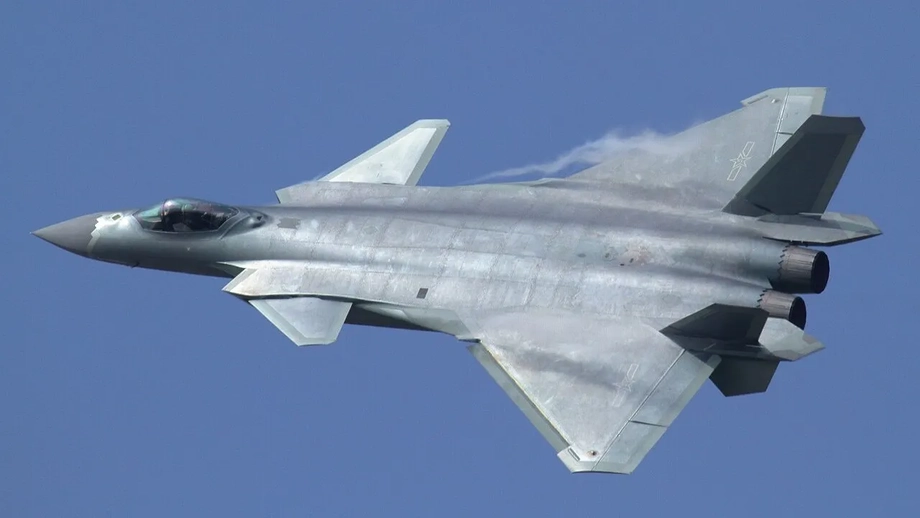
The J-20A was first shown publicly at the Beijing military parade on September 3, 2025, which marked 80 years since victory in the Chinese people's war against Japanese aggression and the end of the Second World War. The original J-20 had already appeared at Zhuhai, when two aircraft made its first public flypast in 2016. December's display will be different because the improved J-20A itself will fly a routine before an airshow audience.
Chinese military affairs expert Song Zhongping said the J-20A has improved avionics, flight control and fire control systems. Avionics are the aircraft's electronic systems, while fire control equipment helps a pilot identify targets and employ weapons. The fighter also uses domestically developed engines with more thrust than those fitted to earlier J-20s. Song said this should improve acceleration and supersonic cruise, meaning sustained flight faster than the speed of sound. The announcements did not identify the engine model or publish official thrust, speed or range figures.
Song linked the decision to display the aircraft with its state of development, while leaving room for later versions.
The J-20A's scheduled appearance at the air show indicates that its combat capabilities have reached standard requirements. Further upgrades could follow, with future variants building on the J-20A through additional refinements.
Military expert Zhang Xuefeng described a J-20 family comprising the basic J-20, the J-20A and the J-20S. He called the J-20S the world's first fifth generation fighter with two seats and said its second crew member could help it serve as a forward command node for drones. Zhang also pointed to the J-20A's exterior: the area behind the canopy is more closely integrated with the fuselage. In his assessment, that change favours supersonic operations and combat at medium and long distances.
Why the Y-20B's engines and open hold matter
The Y-20B will both fly and stand in the ground display area, where visitors will be allowed inside its cargo hold. The original Y-20 made its public debut at Zhuhai in 2014. Since then, the airframe has become the basis for the YY-20A tanker, which refuels other aircraft in flight and will also perform in December, and the KJ-3000 aircraft for airborne early warning.
The principal change on the Y-20B is its propulsion. Earlier Y-20A aircraft used Russian D-30KP-2 turbofan engines, while the new version carries China's WS-20. The WS-20 uses a high bypass design, sending a large share of incoming air around the hot engine core. This arrangement is intended to move a large aircraft efficiently while providing greater thrust.
Song said the original Y-20 design targeted a maximum payload of about 66 tonnes, but the older engines restricted what the aircraft could achieve in practice. He expects the WS-20 to bring the Y-20B closer to that target while improving fuel economy. Greater thrust and lower fuel consumption could allow the transport to carry heavier loads, travel farther, or combine both advantages depending on the mission. The 66 tonne figure is the design target described by Song; official payload and range figures for the Y-20B have not been released.
A new generation early warning radar will also be shown on the ground for the first time. The Air Force has organised its exhibits around air combat and strike, unmanned operations, strategic transport and airborne delivery, and early warning detection with air and missile defence. Military expert Zhang Xuefeng identified advanced drones and air defence equipment such as the HQ-9 and HQ-19 among the other displays worth watching.
The Army adds an assault helicopter and a new tank
The PLA Army will fly three helicopter types: the Z-10 attack helicopter, the Z-20 utility helicopter and the Z-20T, which is making its Airshow China debut. Helicopters carrying assault troops will operate with ground equipment in demonstrations simulating fire strikes and air assault missions to seize and secure important positions. All three types will also appear on the ground with equipment including rocket launchers and externally mounted seats.
Song explained that the T in Z-20T stands for tuji, the Chinese word for assault. He said the variant combines transport and assault functions in one aircraft. The wider Z-20 family will be visible elsewhere at the show through the Navy's Z-20J and Z-20F versions.
Song gave this assessment of the newest Army member of that family.
The debut of the Z-20T adds another elite frontline asset to the Z-20 family.
On the ground, the Army will have its own indoor exhibition area for the first time. It plans to present 24 pieces of main battle equipment already in service, arranged across six categories and headed by the Type 100 tank. The Type 100 took part in the September 2025 Beijing parade. Unmanned and intelligent systems will form another part of the display, alongside equipment intended to illustrate mobile warfare and operations combining several dimensions of the battlefield. Army aviators and special forces personnel are also scheduled to meet visitors.
The Navy brings its carrier air wing
The PLA Navy's November 23 announcement listed six aircraft types for the flying programme: the J-35 stealth fighter, the J-15T fighter designed for catapult launch, the KJ-600 early warning aircraft, the JL-15 trainer, and the Z-20J and Z-8C helicopters. They are scheduled to perform formation flights, passes over the venue and drills simulating attacks on an airfield.
Several appearances will be firsts. The naval J-35 is making its Airshow China debut, following the public flying debut of the J-35A version used on land at Zhuhai in 2024. The KJ-600 carries radar to watch air and sea activity well beyond a carrier's immediate surroundings. It has already conducted electromagnetic catapult launches and arrested landings aboard the carrier Fujian and appeared at the September 2025 Beijing parade.
The JL-15 is a naval development of the Hongdu JL-10 advanced jet trainer, which is exported as the L-15. A model equipped with a tailhook was seen beside Fujian in 2024. A trainer suitable for carrier operations could give pilots a more direct route from advanced flight instruction to landing on a ship. The announcements did not say whether the JL-15 has completed carrier landings.
Military affairs expert Zhang Junshe grouped the J-35, J-15T, KJ-600, J-15DT electronic warfare aircraft and Z-20F helicopter for submarine hunting as five assets associated with carrier operations. Together they cover fighting, surveillance, disruption of hostile sensors and protection against submarines. The static display will include the J-15T, Z-20F, a Y-9 patrol aircraft for submarine detection and the WZ-2 unmanned helicopter.
Warships open at Gaolan Port
A new maritime exhibition area at Gaolan Port will allow visitors to tour a Type 075 amphibious assault ship, a Type 055 guided missile destroyer and a Type 054A guided missile frigate. All three types are making their Airshow China debuts. The Type 075 can support helicopters, landing craft and troops, while the Type 055 is China's first destroyer design around the 10,000 tonne mark and serves as a major escort for carrier groups.
The Navy had not publicly named the Type 055 destroyer assigned to the exhibition. Its ship visits form part of a broader presentation across indoor halls, outdoor displays, flying demonstrations and port tours. Indoor sections will cover aircraft carriers, submarines, carrier aircraft and naval special warfare.
Zhang Junshe, speaking as a military affairs expert, connected the port display with the show's expansion beyond its traditional aviation setting.
For the first time, this Airshow opens the offshore exhibition area at Gaolan Port, where the Chinese PLA Navy's main combat ships make their debut at the Zhuhai Airshow.
A larger exhibition spread across three areas
The organiser's layout, described as one exhibition with three areas, consists of the main airshow centre, an unmanned equipment area at Lianzhou and the maritime area at Gaolan. The indoor exhibition covers nearly 150,000 square metres, while the outdoor exhibition and support areas have expanded to 335,000 square metres.
More than 1,100 enterprises from nearly 50 countries and regions are expected to participate, with over 3,000 exhibits. Around 10 percent are scheduled to be shown or demonstrated for the first time. The Navy first brought physical equipment to Zhuhai in 2024; its ships and expanded aircraft lineup represent a much larger presence two years later.
Space exploration will provide a civilian contrast to the military hardware. Lunar soil collected by Chang'e 5 from the Moon's near side and by Chang'e 6 from its far side will be displayed together. Models will also represent an engine for the first stage of a heavy launch rocket and the main Tianwen-2 probe.
What visitors can do beyond watching aircraft
Three aerobatic teams will perform: the Chinese Air Force's Bayi team, also known as August 1, the Russian Aerospace Forces' Russian Knights and the United Arab Emirates Air Force's Al Fursan. It will be the first Airshow China since 2016 to host two foreign military aerobatic teams at the same time.
On the ground, visitors can tour the Y-20B's cargo hold, try simulated flight experiences and watch performances by the Air Force military band. Separate areas will cover aircrew recruitment, talent development, military college enrolment, air traffic control and equipment maintenance. Activities will include presentations, consultations, simulated operations and immersive exhibits.
Test pilots and distinguished representatives of Air Force units will meet the public. The exhibition coincides with the Air Force's 77th anniversary as well as the show's 30th anniversary. Air force leaders and representatives from multiple countries are due to attend international exchanges on military flight training and a forum on unmanned intelligent systems hosted by the Chinese Air Force.
The dates behind the debuts
The sequence of earlier appearances and recent announcements explains why several aircraft arriving in December are already familiar names, even though their particular versions are new to the show.
- 1996: Airshow China was held for the first time.
- 2014: The Y-20 heavy transport made its public debut at Zhuhai.
- 2016: Two J-20 fighters made the type's first public flypast at the show.
- 2024: The J-35A made its public flying debut, and the Navy first brought physical equipment to the exhibition.
- September 3, 2025: The J-20A and Type 100 tank appeared at the Beijing parade, which also included the KJ-600.
- November 23, 2026: The Navy announced its aircraft and warship lineup.
- November 26, 2026: The Air Force announced 33 equipment types and the J-20A and Y-20B appearances.
- November 27, 2026: The Army announced the Z-20T debut and its indoor equipment display.
- December 7 to 13, 2026: The exhibition takes place, with public days scheduled for December 11 to 13.
The announced programme therefore combines aircraft already seen at earlier parades with equipment receiving its first public airshow exposure. The opening flights on December 7 will begin the first opportunity to assess how closely the flying displays match those plans.
What the display will reveal in December
Domestic propulsion connects two of the biggest exhibits. The J-20A uses Chinese engines described as more powerful than those on earlier fighters, while the Y-20B replaces Russian engines with the WS-20. Shared aircraft families provide another connection: the Y-20 supports transport, refuelling and early warning roles, while Z-20 variants appear in Army and Navy formations.
The mission groupings are equally concrete. Tankers can extend the operating distance of other aircraft, early warning systems can expand surveillance, transports can move heavy cargo, and helicopters can deliver troops. Carrier fighters, electronic warfare aircraft and helicopters add the naval component, while unmanned systems appear in the Air Force, Army and dedicated exhibition areas.
Some details remain unpublished. China has not released measured performance figures for the J-20A, official payload and range figures for the Y-20B, or the name of the Type 055 visiting Gaolan Port. The confirmed next milestone is the start of the exhibition on December 7, followed by three public days when visitors will receive the closest access to the transport aircraft and warships.
The Bottom Line
- Airshow China runs from December 7 to 13, 2026, in Zhuhai, with public days from December 11 to 13.
- The J-20A will make its first airshow flying display, powered by domestic engines and equipped with upgraded electronic and control systems.
- The Y-20B will make its first static appearance, fly in the display programme and open its cargo hold to visitors.
- The Air Force will present more than 60 pieces of equipment across 33 types, including a new early warning radar.
- The Army will debut the Z-20T and display 24 pieces of equipment across six categories, headed by the Type 100 tank.
- The Navy will fly the J-35, J-15T, KJ-600 and JL-15, while opening three types of warship at Gaolan Port.
- More than 1,100 enterprises from nearly 50 countries and regions are expected across three exhibition areas.
- The event marks 30 years since the first Airshow China and includes aerobatic teams, public activities, training exchanges and a forum on unmanned intelligent systems.