An Unidentified Aircraft at 11,000 Feet
The Royal Thai Air Force detected an unidentified aircraft approaching the border near Phop Phra district in Tak province at 10:35 a.m. on Thursday, November 26, 2026. The aircraft was flying at about 11,000 feet, roughly 3,350 metres, and its course appeared to be taking it towards Thai territory, according to the air force spokesperson's office.
Contents
- An Unidentified Aircraft at 11,000 Feet
- What the Air Force Has Not Announced
- A Demonstration, a Patrol and a Noise Warning
- Crossing Rules Changed Four Days Earlier
- What Checkpoint Teams Are Looking For
- The May 2025 Yak-130 Interception
- The Human Cost Across the Moei River
- Talks With Myanmar and Another Reported Air Strike
- Timeline of the Alerts and Border Controls
- What to Know
The Air Operations Control Centre made the detection. An early account put the spotting at about 10:15 a.m., but the time carried in the air force statement was 10:35 a.m. Phop Phra lies on Thailand's border with Myanmar, an area where fighting across the frontier has previously brought military aircraft close to Thai villages.
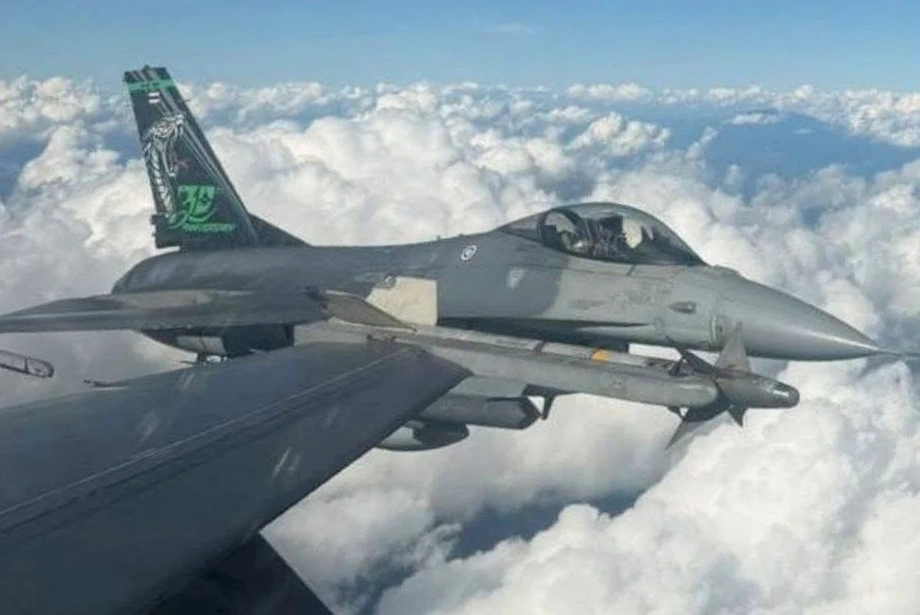
Two F-16 fighters, designated Fighter Type 19 by the air force, took off from Wing 4 in Takhli district, Nakhon Sawan province. Their orders were to intercept the aircraft, establish its identity and provide a deterrent under urgent air defence procedures. Scrambling means launching fighters rapidly so that pilots can check a potential problem in the air.
The air force told residents of Phop Phra and neighbouring communities that it watches Thai airspace 24 hours a day and can respond immediately to developments affecting national security. It said the mission was intended to protect sovereignty, lives and property along the border, and promised to report further developments.
What the Air Force Has Not Announced
The air force statement did not say whether the aircraft entered Thai airspace, which country or operator it belonged to, or what type of aircraft it was. It also did not say whether the F-16 pilots visually identified it or established contact with it.
No interception time, departure time or return time was released for Thursday's mission. No update on the outcome accompanied the statement, so the aircraft remained publicly described only as unidentified. The statement also gave no indication that weapons were used.
One account of the scramble instead described a launch at 3 p.m. on Sunday, November 8, and called the fighters F-16 MLU aircraft operating under Quick Reaction Alert procedures. That timing conflicts with the November 26 statement from the spokesperson's office, which identifies the jets simply as Fighter Type 19, or F-16. Quick Reaction Alert is a readiness arrangement under which aircraft and crews are prepared to take off at short notice when controllers need an approaching aircraft checked.
A Demonstration, a Patrol and a Noise Warning
Thursday's flying schedule included an unusual sequence. After two air force F-16s completed a bombing demonstration watched by the prime minister, they were assigned to patrol the border around Phop Phra and nearby areas before being sent on the urgent mission.
The air force warned that people in the area could hear loud aircraft noise during the operation. Residents were asked not to panic and were given the advisory to prevent misunderstanding about the activity overhead.
The public message also described the patrol as part of the air force's duties along the border. For local communities, the practical effect was a visible and audible military presence at the same time that ground units were enforcing much stricter controls at crossings.
Crossing Rules Changed Four Days Earlier
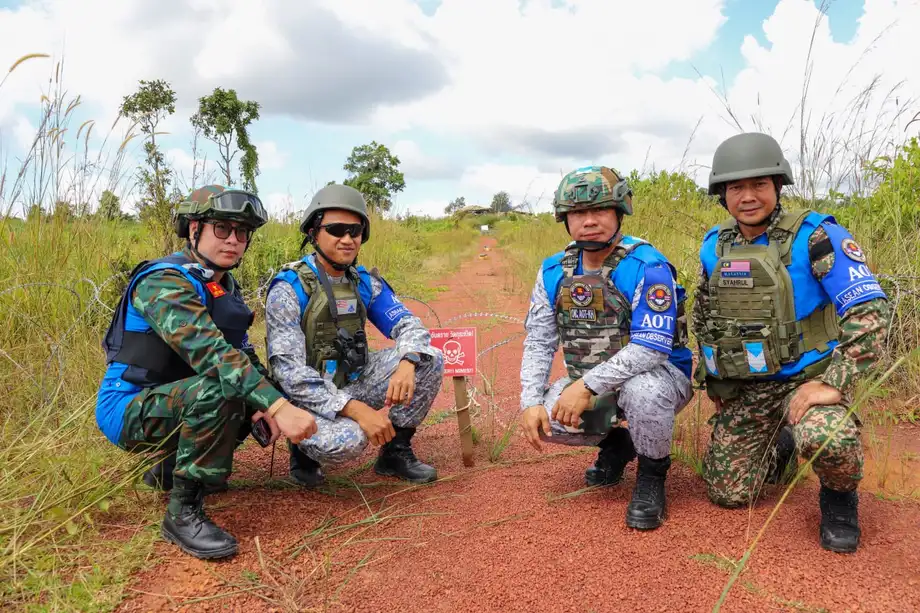
Military units responsible for security in Phop Phra had tightened controls at local border crossings from November 22, four days before the air alert. The measures apply to crossing points described by the authorities as natural crossings and form part of an effort against cyber scam networks, drug trafficking and support for armed groups.
The rules changed both when people can cross and what they can carry:
- Crossing points operate from 8 a.m. to 5 p.m., and vehicles of every type are prohibited from passing through.
- Individual crossings are subject to the discretion of soldiers in the area, detailed screening and presentation of identification on every occasion.
- Goods are limited to a value of 50,000 baht for each crossing trip.
- Myanmar citizens must carry a passport or border pass, with the permitted stay reduced from 14 days to seven, cutting the earlier allowance in half.
- Thai citizens are forbidden to cross for gambling or tourism and may carry no more than 100,000 baht in cash.
- Schoolchildren have a longer crossing window, from 6 a.m. to 6 p.m.
Patient transfers on humanitarian grounds require approval from the border coordination agency for Thailand and Myanmar. Checkpoint personnel must keep a written record of everyone passing through and take photographs so that movements can be examined later.
For residents and small traders, the rules mean that a routine journey can now involve document checks, inspection of goods and firm limits on cash and merchandise. The vehicle prohibition also prevents traders from simply driving consignments through these local crossing points.
What Checkpoint Teams Are Looking For
Weapons, ammunition, explosives and imitation weapons are banned from the crossings. The prohibition also covers controlled narcotics and chemicals associated with drug production, including ammonium nitrate, large quantities of urea fertiliser and sulphur.
Equipment with both civilian and security uses requires permission from a superior headquarters before it can be taken through. This category includes every type of drone, Starlink satellite receiving equipment, radios, large backup power stations and generators. Such equipment can serve ordinary communications and power needs, but the authorities are concerned that it could also support armed activity or online fraud operations.
Checkpoint teams have also been told to examine:
- Fuel carried in containers holding two litres, fuel in unusual quantities, and cooking gas cylinders whether empty or full.
- Large consignments of field medical supplies, military uniforms, body armour, combat boots and camouflage waterproof sheeting.
- Cement, steel, bricks, concrete blocks and office equipment that could be used to build accommodation or operating sites for scam networks.
- Batteries and solar panels, particularly during periods of fighting, with a clear origin and destination required for the shipment.
When prohibited goods are found, personnel are instructed to hold the people and vehicles involved, photograph the items and vehicle registration plates, and inform the company commander immediately. Anything unusual can be held for inspection and photographed. The records are intended to allow later checks on who attempted to move particular goods and where those goods were going.
The May 2025 Yak-130 Interception
An earlier incident shows why an aircraft near Phop Phra can trigger a rapid response. At 1:03 p.m. on May 28, 2025, the air force ordered two F-16 MLU fighters from Wing 4 in Takhli to intercept a Myanmar Yak-130 detected close to the border opposite the district. The Yak-130 is an advanced training aircraft that can also carry out combat missions.
The Myanmar aircraft had dropped four bombs in a strike on Karen National Liberation Army forces near a sports field in Se Zimiang village, Su Ka Li township, Myawaddy, in Kayin State. The strike location was about one kilometre from Moe Ko Thai village in Phop Phra.
The air strike followed fighting earlier that day. More than 70 Myanmar soldiers travelling to reinforce a base at Thibawbo were ambushed by Karen National Liberation Army and People's Defence Force personnel. A firefight lasting about an hour followed, and Myanmar's military called for air support. Thai air control and warning units then detected the Yak-130's course approaching Thai airspace.
Air Vice Marshal Prapas Sornchaidee, the air force spokesperson, said the response belonged to normal air defence procedures. His statement after the aircraft turned away was:
The Royal Thai Air Force confirms that this operation was part of its standard protocol to protect national airspace. We remain committed to maintaining Thailand's sovereignty and ensuring the safety and confidence of the public.
At 1:16 p.m., 13 minutes after the interception order, the Yak-130 changed course and moved away from the border area. The spokesperson said it showed no aggressive behaviour or intention to threaten national security. The Thai fighters patrolled the border while security agencies on the ground continued monitoring the situation.
The Human Cost Across the Moei River
The May fighting forced 377 Myanmar civilians into three temporary safe zones in Tak province. A total of 318 people sheltered at Moe Ko Thai temple in Village 1, Wa Lay subdistrict, 23 went to Ban Muen Ruechai temple in Phop Phra, and 36 went to Muen Ruechai Church. The 318 people at Moe Ko Thai temple represented about 84 percent of all those who fled.
Residents of Moe Ko Thai reported hearing gunfire and explosions during the day. Classes at Moe Ko Thai School were suspended because of safety concerns. The school sits directly opposite the conflict area across the Moei River, placing daily village life unusually close to the fighting.
The Royal Thai Army's Rachamanu Task Force, Border Patrol Police Unit 34, local police and administrative units reinforced security. Their work included monitoring the border, protecting Thai citizens and providing humanitarian assistance to those who had crossed.
Talks With Myanmar and Another Reported Air Strike
Air Chief Marshal Seksan Kantha, the air force chief, said on Wednesday, November 25, that no further aircraft had strayed across the border after he met Myanmar's air force chief. He described the earlier airspace problem as an internal Myanmar matter. Thursday's statement did not say whether the new detection was connected to the incidents he had discussed.
In another episode for which no date was given, Myanmar MIG-29 jets bombed Karen forces near the border, prompting Thailand to deploy F-16s to monitor its airspace and protect sovereignty. Those strikes targeted the Karen National Union, or KNU. The KNU is the Karen political movement whose armed wing is the Karen National Liberation Army, the force attacked near Se Zimiang in May 2025.
No interception time or outcome was supplied for the MIG-29 episode. Its inclusion in the recent history of the border nevertheless shows that Thursday's alert followed several occasions on which Thai fighters were sent to watch military activity close to the frontier.
Timeline of the Alerts and Border Controls
The confirmed dates separate the latest unidentified aircraft from the earlier fighting and the restrictions introduced on the ground:
- May 28, 2025, 1:03 p.m.: Two Thai F-16 MLU fighters were ordered to intercept a Myanmar Yak-130 after its air strike near Se Zimiang and its approach towards the border opposite Phop Phra.
- May 28, 2025, 1:16 p.m.: The Yak-130 changed course and moved away without displaying hostile intent, according to the air force spokesperson.
- November 22, 2026: Stricter operating hours, document checks, cash and goods limits, and inspections of restricted equipment took effect at Phop Phra's local crossings.
- November 25, 2026: Air Chief Marshal Seksan Kantha said no further aircraft had strayed across the border following his meeting with Myanmar's air force chief.
- November 26, 2026, 10:35 a.m.: The Air Operations Control Centre detected an unidentified aircraft at about 11,000 feet heading towards Thai territory near Phop Phra.
- November 26, 2026: Two F-16s from Wing 4 were sent to intercept and identify the aircraft. The air force promised updates, but no identification or outcome was announced with the statement.
What to Know
- The Royal Thai Air Force says an unidentified aircraft was detected at 10:35 a.m. on November 26, 2026, near Phop Phra in Tak, flying at about 11,000 feet towards Thai territory.
- Two F-16 fighters from Wing 4 in Takhli, Nakhon Sawan, were scrambled to intercept and identify it.
- The air force has not publicly identified the aircraft, named its origin, confirmed an airspace crossing or announced how the encounter ended.
- Residents were assured that airspace is monitored 24 hours a day and were asked not to panic about loud aircraft noise.
- Border controls introduced on November 22 restrict vehicles, crossing hours, cash and goods while increasing checks on drones, communications equipment, fuel, chemicals and construction supplies.
- In May 2025, a Myanmar Yak-130 turned away 13 minutes after Thai fighters were ordered to intercept it; the associated fighting sent 377 civilians into temporary shelters in Tak.
- The air force says its interception missions are intended to protect Thai sovereignty and the safety of people and property along the border.