Thailand Moves to Acquire Advanced US Rocket Systems
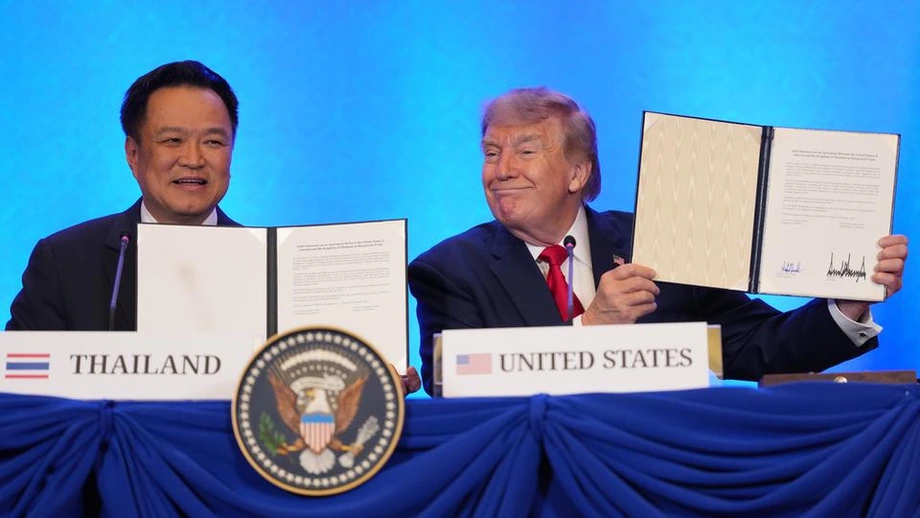
Thailand intends to purchase a High Mobility Artillery Rocket System (HIMARS) worth $123 million (approximately 3.9 billion baht or 4.2 billion baht according to different official estimates) from the United States. The proposed arms deal was announced on November 18, 2026, by the White House during the conclusion of the 49th Association of Southeast Asian Nations (ASEAN) Summit in Manila, Philippines. US President Donald Trump and Thailand Prime Minister Anutin Charnvirakul reviewed the documentation during a signing ceremony on November 17, 2026. If completed, the acquisition would mark the first deal of its kind in mainland Southeast Asia, with Singapore standing as the only previous ASEAN buyer of the system. The transaction is projected to support roughly 400 jobs in the United States and its defense industry.
Contents
Manufactured by Lockheed Martin, HIMARS is a truck-mounted artillery rocket system capable of launching either six Guided Multiple Launch Rocket System rockets or a single Army Tactical Missile System missile. The manufacturer states that these rockets can reach a proven range of 300 kilometers, with extended capabilities stretching beyond 499 kilometers. Kevin Nauen, Dean of Social Sciences and International Relations at Paññāsāstra University of Cambodia, explained that traditional artillery systems rely on firing numerous unguided rockets to cover wide areas, whereas HIMARS is designed to strike specific military targets over long distances, such as supply depots and command posts. The vehicle is mounted on a fast truck chassis, allowing operators to strike targets rapidly and relocate before opposing forces can mount a response.
Cambodian Concerns and Border Realities
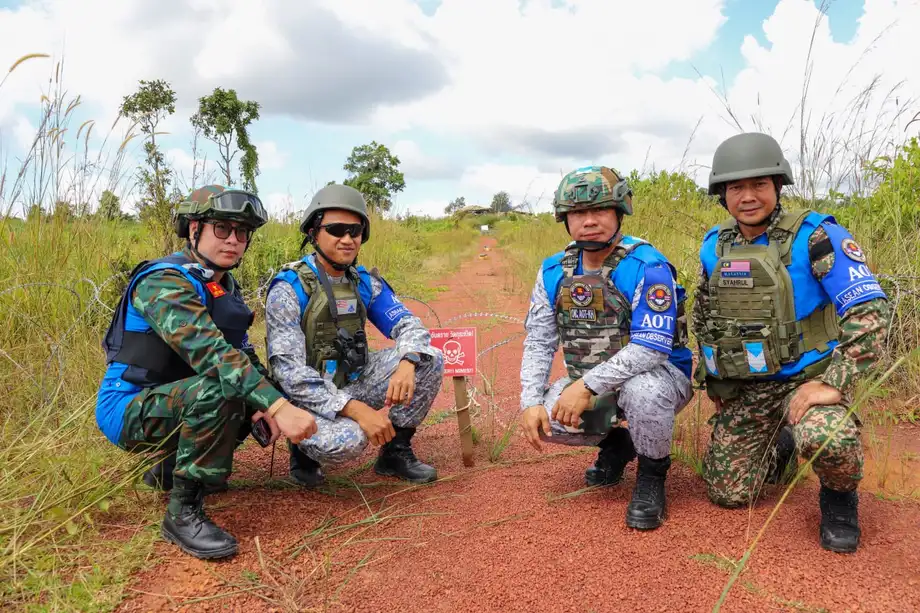
The announcement has sparked unease among Cambodia-based analysts and officials following armed border clashes between Thailand and Cambodia last year. Kiripost reached out to Maly Socheata, Spokeswoman of the Ministry of National Defence, but she did not respond by the time of publication. Although both nations agreed to a ceasefire on December 27, 2025, they have not yet implemented key measures outlined in the agreement, such as resuming joint border demarcation and de-mining efforts. Cambodia Ministry of Foreign Affairs and International Cooperation has raised multiple complaints internationally regarding Thai military actions along the frontier. Meanwhile, Thailand accused Cambodia of using the Francophonie Summit to level unfounded allegations meant to villify Bangkok, a claim rejected by Cambodia's Ministry of Foreign Affairs. Cambodian Prime Minister Hun Manet stated in a Facebook post that he sat next to US President Trump during a meal at the ASEAN Summit and thanked the American leader for assistance in securing ceasefire agreements with Thailand.
Kevin Nauen described the potential introduction of the missile launchers as a serious strategic challenge for Cambodia, requiring careful diplomatic and defensive planning. Him Raksmey, Executive Director of the Cambodian Centre for Regional Studies, noted that the purchase falls within Thailand sovereign rights regarding defense procurement. Raksmey suggested viewing the plans through the lens of Thailand domestic politics, while emphasizing that both countries should pursue dialogue and peaceful dispute resolution through existing ceasefire frameworks and ongoing legal proceedings. The two governments are scheduled to continue maritime boundary talks in Kuala Lumpur from November 24 to 27, following constructive discussions held in The Hague in October. The ongoing land border closures, which began in June 2025 and have kept all seven checkpoints shut for roughly 16 months, continue to affect trade and civilian movement, leaving about 20,000 displaced Cambodians unable to return home safely.
Thai Defense Ministry Clarifies Procurement Process
Rear Admiral Surasant Kongsiri, spokesman for the Thai Ministry of Defense, addressed the procurement plans on November 20, 2026, emphasizing that the deal remains unconfirmed and subject to a lengthy review procedure. Surasant stated that military acquisitions are driven by national security requirements and operational readiness rather than trade negotiations with Washington. The White House announcement coincided with discussions over a reciprocal trade agreement under which Thailand would eliminate tariffs on 99 percent of US goods and remove barriers on specific American products. Surasant maintained that national defense should not be used as a bargaining tool in trade talks, asserting that the timing of the two announcements did not establish a connection between them.
The defense spokesman cautioned that the HIMARS proposal must navigate extensive bureaucratic and legislative hurdles before any final agreement can be reached. He noted that the acquisition requires US government approval, including potential congressional review, due to the advanced technology involved. Surasant cited Thailand unsuccessful 2023 attempt to acquire US-made F-35 stealth fighter jets, which was declined by Washington due to training, technical, and maintenance constraints. Consequently, the defense ministry stressed that it remains too early to guarantee that Thailand will ultimately acquire the HIMARS platforms.
Broader Economic Packages Across ASEAN
The HIMARS announcement was part of a broader US initiative involving more than $17 billion in commercial deals and strategic investments across five ASEAN member states, as detailed in a White House fact sheet published on November 18, 2026. In the Philippines, Boeing and GE Aerospace finalized agreements for twenty 787 aircraft valued at $12 billion with Philippine Airlines. The United States also pledged over $2 billion in financing for Philippine military equipment, including $400 million designated for South China Sea operations, alongside a $40 million fuel depot in Subic Bay and airfield improvements at Basco Airport. In Indonesia, Latitude Energy and the Danantara wealth fund engaged in discussions regarding a $2 billion coal project utilizing US technology. Malaysia secured a three-year, $100 million coal supply agreement between the Navajo Transitional Energy Company and Tenaga Nasional Berhad, alongside a $50 million US commitment to support a national sovereign artificial intelligence cloud. Brunei announced data center contracts with American firm Vertiv, totaling nearly $1 billion in US goods and services, as part of regional technology development initiatives.
Surasant highlighted the long-standing defense relationship between Thailand and the United States, pointing to joint military exercises such as Cobra Gold as evidence of an established security partnership. He suggested that Washington interest in supporting Thailand advanced military capabilities aligns with broader American goals of fostering self-reliance among allies. Furthermore, technology sharing could support Thailand ongoing efforts to develop its domestic defense industry. While diplomatic and defense discussions continue, the border region remains sensitive, and civilians continue to navigate the economic and social fallout of prolonged security restrictions.
Timeline of Key Developments
- June 2025: Thailand implements a complete closure of all seven border checkpoints and crossings with Cambodia.
- July 2025: Renewed armed border clashes result in casualties and displacement, prompting international mediation and a subsequent ceasefire.
- December 27, 2025: Thailand and Cambodia reach a ceasefire agreement, though key implementation measures remain pending.
- October 14 to 18, 2026: Delegations meet at the Peace Palace in The Hague to establish maritime trust measures.
- November 15, 2026: Cambodian Prime Minister Hun Manet calls for resumed land demarcation during the Francophonie Summit.
- November 17 to 18, 2026: Leaders meet at the ASEAN Summit in Manila, where the White House announces the proposed $123 million HIMARS deal.
- November 20, 2026: Thai Ministry of Defense spokesman Rear Admiral Surasant Kongsiri clarifies that the procurement is not finalized and operates independently of trade negotiations.
The Essentials
- Thailand plans to purchase HIMARS rocket systems from the United States for $123 million, estimated at roughly 3.9 billion to 4.2 billion baht.
- The proposed procurement was disclosed by the White House on November 18, 2026, during the ASEAN Summit in Manila.
- Thai military officials emphasize that the acquisition is still a proposal requiring extensive US legislative and governmental approvals.
- Cambodian analysts have raised strategic concerns regarding the long-range precision capabilities of the rocket system amid lingering border tensions.
- Bilateral discussions continue, with upcoming maritime boundary talks scheduled in Kuala Lumpur from November 24 to 27.