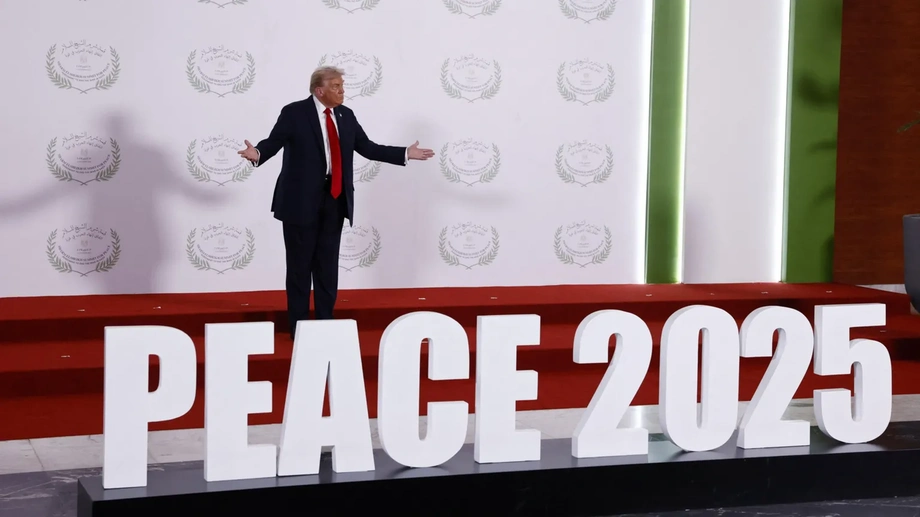
A ceasefire announced after days of fighting
After fewer than a week of deadly border clashes between Thailand and Cambodia in July 2025, US President Donald Trump said he helped bring the fighting to a halt. Thai and Cambodian officials reported at least 35 people killed and more than 200 injured by the time the ceasefire was announced. Trump later said he had saved thousands of lives and described himself as a president of peace.
Contents
The agreement followed talks in Kuala Lumpur mediated by Malaysian Prime Minister Anwar Ibrahim, then chair of the Association of Southeast Asian Nations (ASEAN). Trump also used a separate source of influence: he warned the two governments that US trade deals would not go ahead while they were fighting. Both countries rely heavily on exports to the United States, giving the warning economic weight.
Trump revisited the episode while discussing his failure to win the Nobel Peace Prize and criticizing the United Nations, which he said had not helped resolve the conflict. The date of those remarks was not specified. His account places him at the centre of the outcome; the sequence also shows a regional leader hosting the negotiations and the two governments agreeing to stop the fighting.
Trump said he had instructed his trade team to restart negotiations with Thailand and Cambodia after the ceasefire. That was a direction to resume talks, not an announcement that trade deals had been completed.
Who brought the two sides to the table?
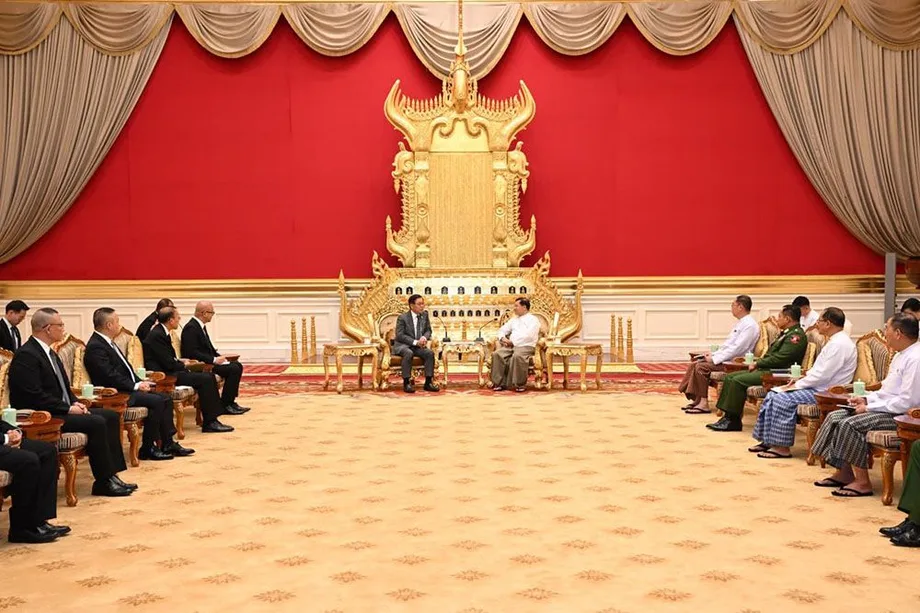
Anwar Ibrahim mediated the ceasefire talks at his official residence near Kuala Lumpur. Cambodian Prime Minister Hun Manet and Thailand's acting prime minister, Phumtham Wechayachai, took part. Malaysia's role matters because it identifies who hosted the discussions that produced the announcement, while Trump's role was to press the leaders using the prospect of trade negotiations.
Trump described his approach during a meeting with British Prime Minister Keir Starmer. The US president said he had made trade conditional on an end to the fighting:
I don't want to trade with anybody that's killing each other, so we just got that one solved.
Tariffs are taxes charged on imported goods. Threatening to delay tariff discussions or trade deals can put pressure on governments whose businesses depend on access to a large market. The two Southeast Asian countries were both heavily reliant on exports to the United States, though no figures for that reliance were given.
Trump had called for a ceasefire in a July 26, 2025, social media post, saying he was contacting Thailand's acting prime minister. A couple of days later, the countries agreed to an immediate and unconditional ceasefire. The announcement did not mean that every soldier had stopped firing at once.
Why did Trump say he had saved thousands of lives?
Trump's public claim was that ending the war had saved thousands of lives. The figures reported by Thai and Cambodian officials at the time were at least 35 dead and more than 200 injured. Those numbers describe the human toll reported around the initial ceasefire, while Trump's statement about lives saved was his estimate of what might have happened if the fighting had continued.
Clashes had started along the countries' disputed border, a longstanding source of tension. In the first days after the ceasefire announcement, local fighting was reported to have continued. Moun Nara, head of an evacuation shelter on the Cambodian side, described what he heard after the announcement:
I still hear the sound of the shooting... It's not yet ended yet. Let's wait and see until midnight.
His account illustrates the difference between leaders announcing an agreement and people near the border experiencing a quiet that is actually holding. A ceasefire is an agreement to stop fighting. It can reduce immediate danger, but it needs both sides to follow it and often requires further arrangements to prevent clashes from restarting.
What did the two governments agree to next?
On August 7, 2025, Thailand and Cambodia reached a further agreement aimed at reducing tensions along their shared border. It came after the first ceasefire and was part of a continuing effort to prevent another outbreak. The initial announcement and the later steps therefore marked stages in diplomacy, rather than a single event that settled the border dispute.
A short timeline shows how those steps unfolded:
- July 26, 2025: Trump publicly called for a ceasefire and said he was contacting Thailand's acting prime minister.
- Late July 2025: Anwar Ibrahim mediated talks in Kuala Lumpur, and Thailand and Cambodia agreed to an immediate ceasefire after fewer than a week of fighting.
- August 7, 2025: The two countries reached a further agreement intended to reduce border tensions.
- December 2025: Fighting intensified again. A later ceasefire was agreed on December 27, after a renewed period of clashes.
The later violence showed how difficult it was to turn an initial pause into lasting security. By November 2026, Hun Manet said about 20,000 Cambodians remained unable to return home after the 2025 fighting. His call to resume border surveying and demarcation was part of a wider effort to address disputed areas and make the ceasefire more durable. Details of that appeal appear in Hun Manet's border talks call.
Did the first ceasefire end the conflict?
No. Fighting along the border intensified again after the agreement Trump celebrated, and clashes continued into a renewed crisis later in 2025. A further ceasefire was agreed on December 27, 2025, but the border remained tense in the months that followed. The reported deaths in the first flare-up and those in later fighting refer to different periods and should not be added together without care.
By October 31, 2026, Thailand had kept all seven crossings on its border with Cambodia closed to people and goods, with no reopening date announced. The closure affected ordinary travel as well as trade through those crossings. Thailand's crossing closure reflects how the dispute continued to affect daily movement long after the initial agreement.
The practical meaning of a peace agreement is not only whether leaders sign or announce it. Families need to know whether they can safely go home, and communities need conditions that allow normal travel and work. The figure of about 20,000 displaced Cambodians in November 2026 shows that, for many people, the consequences of the fighting had not ended with the July announcement.
How much credit belongs to Trump?
Trump's pressure on trade negotiations was one part of the effort to stop the fighting. His warning gave the two governments an economic reason to seek a pause, because both depended heavily on exports to the US. The talks that produced the ceasefire, however, were mediated by Anwar in Kuala Lumpur, with Hun Manet and Phumtham representing their governments.
Trump presented the outcome as a war he had ended and said he was proud to be a president of peace. The record supports a more specific description: he used the prospect of US trade deals to press for a ceasefire, while Malaysia hosted the negotiations and the two countries agreed to stop fighting. The first agreement was followed by another effort to reduce tensions, then by renewed clashes.
The episode was part of Trump's broader public claim that he had ended several wars. Some other disputes on his list involved ceasefires or agreements rather than the end of sustained fighting, and in some cases there had been no active war. That distinction helps explain why counting conflicts is not the same as showing that peace has been secured. In the Thailand-Cambodia case, the initial halt was real, but later violence and displacement made the limits of that early result visible.
What did the United Nations do?
Trump took a swipe at the United Nations, saying it had offered no assistance in resolving the Thailand-Cambodia conflict. The talks described in the accounts of the ceasefire were led by Malaysia's prime minister, rather than the United Nations. ASEAN's role as the regional organisation was reflected in Anwar's position as its chair.
That account identifies the mediator and the process behind the ceasefire without assigning the United Nations a role in those particular talks. For readers, the key distinction is between Trump's criticism of the UN and the specific diplomatic work that produced the announcement: Anwar hosted and mediated the meeting, while Trump pressed the governments over trade.
Key Points
- Thailand and Cambodia agreed to a ceasefire in late July 2025 after fewer than a week of border fighting.
- Thai and Cambodian officials reported at least 35 people killed and more than 200 injured during the initial clashes.
- Malaysian Prime Minister Anwar Ibrahim mediated the Kuala Lumpur talks; Trump threatened to hold back US trade deals while the fighting continued.
- A further agreement followed on August 7, but fighting intensified again later in 2025.
- By November 2026, Hun Manet said about 20,000 Cambodians remained unable to return home, while Thailand's border crossings remained closed.