Three proposed texts put peace and culture at the centre
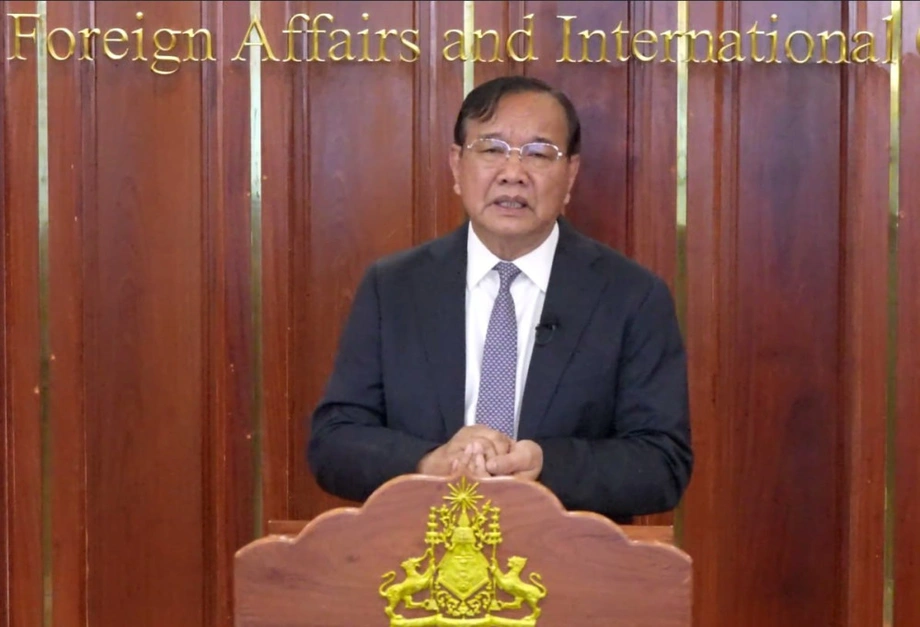
Cambodia expects leaders at the 20th Francophonie Summit in Phnom Penh on November 15 and 16, 2026, to consider three documents covering the political direction of the French language community, responses to crises and the protection of cultural heritage. Deputy Prime Minister and Foreign Minister Prak Sokhonn identified the proposed agreements as central outcomes of the gathering.
Contents
- Three proposed texts put peace and culture at the centre
- What would the three documents do?
- Who is coming to Phnom Penh?
- The schedule and Cambodia's place as host
- Business meetings bring thousands more participants
- Cultural protection moves from diplomacy to public display
- A UN envoy presses for the release of activists
- Cambodia defends the legal proceedings
- Thailand sets limits as Cambodia prepares to welcome visitors
- Key Points
The summit preparations are already substantial. By November 10, 79 of 90 expected delegations had confirmed participation, including 20 heads of state and government, according to a government summit update published by Cambodia's Agence Kampuchea Presse. More than 1,000 delegates were expected at the summit, alongside thousands of participants in business and cultural events.
Prak Sokhonn said leaders would examine the Phnom Penh Declaration, a resolution on crises and strengthening peace, and a Phnom Penh Appeal on cultural heritage and diversity. Together, the documents would connect the organisation's diplomatic priorities with Cambodia's ambitions as host.
The gathering will also bring sensitive issues into view. A United Nations human rights envoy has urged visiting leaders to press Cambodia to release detained activists, while Thailand has confirmed that it will send observers and has warned against using the summit to discuss its dispute with Cambodia.
What would the three documents do?
The Phnom Penh Declaration is intended to reaffirm the positions of the International Organisation of La Francophonie, known as the OIF, and outline its future direction. A political declaration sets out shared positions and priorities that governments can use to guide later cooperation.
The second proposed text, the Resolution on the Situation of Crises, Exiting Crises and Strengthening Peace in the Francophone Community, would address challenges in French speaking regions. Its stated focus includes resolving crises and building peace that lasts beyond an immediate settlement.
The third, the Phnom Penh Appeal on the Protection of Cultural Heritage and the Promotion of Cultural Diversity, would call for safeguarding heritage and respect for different cultures. It places the protection of cultural identity alongside the summit's political and security concerns.
Prak Sokhonn described all three as expected outcomes. Their final wording, detailed commitments and arrangements for carrying them out have not been announced. Leaders are expected to examine and adopt them during the summit.
Who is coming to Phnom Penh?
The OIF comprises 90 member states and governments: 53 full members, five associate members and 32 observers. Those categories allow governments to take part at different levels, including countries where French is not the main language.
The 79 confirmed delegations represent about 88 percent of the 90 expected, using the figures announced by Prak Sokhonn. Registration was continuing. Alongside the 20 confirmed heads of state and government, 21 delegations were to be led by deputy prime ministers, ministers or undersecretaries of state.
The Democratic Republic of the Congo was expected to send approximately 211 people, the largest delegation identified by the foreign minister. Vietnam was sending more than 150 delegates, while Canada was expected to send 124 representatives. The Congolese and Canadian delegations alone would therefore account for about 335 participants.
French President Emmanuel Macron is expected to attend and make an official visit to Cambodia. His anticipated presence adds a bilateral diplomatic engagement to a gathering that connects governments across Africa, Asia, Europe and the Americas.
The schedule and Cambodia's place as host
Cambodia's announced dates for the leaders' summit are November 15 and 16. The gathering is to be preceded by the 48th Session of the Ministerial Conference of Francophonie, where ministers meet before the summit. A Thai announcement described the event as running from November 14 to 16, a broader date range than Cambodia's schedule for the leaders' meeting.
The main steps announced ahead of the gathering are:
- November 9: UN human rights envoy Tom Andrews called for the release of people he said were detained for exercising fundamental freedoms.
- November 10: Prak Sokhonn's participation update was released, and Thailand confirmed that it would send observers.
- Before the leaders' summit: The 48th Session of the Ministerial Conference of Francophonie is scheduled to take place.
- November 15 and 16: Leaders are due to meet in Phnom Penh and consider the three proposed documents.
Phnom Penh will become the second Asian capital to host the summit, following Hanoi in 1997. For Cambodia, hosting offers an opportunity to connect its role in Southeast Asia with a wider diplomatic community linked by French language and culture.
The theme is announced by Cambodia as "Reinvest in Peace for Shared Prosperity and Sustainable Stability." Peacebuilding also connects with Cambodia's experience of recovering from conflict and its contribution of troops to United Nations peacekeeping missions.
Business meetings bring thousands more participants
FrancoTech, an event focused on technology and innovation, had attracted approximately 4,600 participants, according to Prak Sokhonn. A Francophone entrepreneurs' meeting was expected to bring together around 1,200 entrepreneurs and business representatives from 72 countries.
Those figures show how much activity is planned beyond the leaders' meeting. The 4,600 participants associated with FrancoTech are several times the summit's announced minimum of more than 1,000 delegates. Attendance figures cover different events, and some people may participate in more than one.
The business programme includes green technology, sustainable agriculture, digital development, logistics and renewable energy. Meetings between companies are intended to connect Cambodian enterprises with potential customers, suppliers and investors across the Francophone community.
For a Cambodian business, the immediate opportunity is access to visiting firms and officials in one place. Commercial results will depend on agreements reached by participants and work after the meetings. The announced programme gives companies a venue for those conversations.
Cultural protection moves from diplomacy to public display
The proposed Phnom Penh Appeal will give cultural heritage a place in the summit's formal agenda. Alongside it, the Village de la Francophonie is planned as a public showcase of products, performances, tourism attractions and culinary traditions from participating countries.
The village is scheduled for Wat Botum Watey Public Park, with around 90 national pavilions, cultural exhibits and food displays. Local artisans, performers and businesses are expected to meet international visitors there.
Cambodia hopes the attention will extend to destinations beyond the capital, including Angkor in Siem Reap, communities along the Mekong River and coastal areas. Visitors attending diplomatic or business events will also encounter tourism promotion and Cambodian cultural presentations.
The cultural programme gives a practical setting to the appeal's focus on diversity. Governments will discuss the protection of heritage in meeting rooms while participating communities present their own traditions outside them. For artisans and performers, the village provides a direct audience for their work.
A UN envoy presses for the release of activists
Tom Andrews, the UN special rapporteur on the situation of human rights in Cambodia, has urged OIF leaders to use the summit to seek the release of detained activists. In a November 9 statement, he said more than 100 people were likely imprisoned for exercising freedom of expression, assembly and association.
Andrews linked his appeal to the OIF's stated commitments to peace, democracy and human rights. He asked the Cambodian government to demonstrate those commitments through releases.
"By releasing those detained for exercising their fundamental freedoms, the Royal Government of Cambodia would be honouring the values of the OIF while making a statement that would be much stronger than words," Andrews said.
The envoy referred to findings by the UN Working Group on Arbitrary Detention concerning Cambodian American lawyer Seng Theary, former Khmer Student Intellectual League Association president Koet Saray and five Mother Nature Cambodia activists. The working group found their continued detention arbitrary and inconsistent with Cambodia's international human rights obligations.
An arbitrary detention finding means the UN body considers a person's confinement incompatible with applicable rights standards. Andrews asked visiting leaders to engage with Cambodia over the cases, placing specific detainees alongside the summit's wider discussion of peace and political values.
Cambodia defends the legal proceedings
Pa Ponnarada, spokesperson for the Cambodian Human Rights Committee, defended the legal action against the activists. He said the proceedings concerned criminal offences and rejected the view that they restricted press freedom, freedom of speech or freedom of assembly.
Ponnarada cited Article 41 of Cambodia's Constitution and the country's participation in international human rights treaties, including the International Covenant on Civil and Political Rights. He argued that the state was entitled to enforce its criminal laws when conduct went beyond legally permitted rights.
The covenant protects freedom of expression while allowing restrictions under specified conditions. Article 19 requires such restrictions to be provided by law and necessary for purposes including protecting the rights or reputations of others, national security, public order, public health or morals.
The disagreement concerns how those protections and limits apply to the detained individuals. Andrews is calling for their release, while the Cambodian committee's spokesperson has urged those involved to defend themselves through legal proceedings. The issue puts a concrete human rights dispute before leaders gathering to discuss shared political principles.
Thailand sets limits as Cambodia prepares to welcome visitors
Thailand will participate as an observer, Deputy Prime Minister and Foreign Minister Sihasak Phuangketkeow said on November 10. Thailand joined the OIF as an observer in 2008, giving it a place in the organisation despite French not being a primary foreign language there.
Sihasak said the summit should focus on matters concerning the Francophone community. He argued that the dispute between Thailand and Cambodia fell outside its scope and should not be brought into the discussions.
His comments give the peace agenda a regional sensitivity. Cambodia is preparing to host a broad discussion of crises and stability while its neighbour is asking that their bilateral tensions stay outside the summit. Thailand's decision to attend keeps it represented within the OIF framework.
Prak Sokhonn has identified logistics, hospitality and security as key preparation priorities. The number and size of visiting delegations, together with business gatherings and cultural programmes, require coordination across venues and government agencies.
More than 1,200 national and international journalists had also registered to cover the summit. Information Minister Neth Pheaktra reviewed arrangements with OIF communications director and spokesperson Oria Kije Vandeweghe, including access to meeting rooms, live broadcasts and the media centre.
The OIF representative will act as summit spokesperson, while Cambodian officials will answer questions concerning the host country. Those arrangements will be central to explaining the final agreements and any announcements made during the two days of leaders' meetings.
Key Points
- Cambodia will host the 20th Francophonie Summit in Phnom Penh on November 15 and 16, 2026.
- Leaders are expected to consider three documents on political direction, crises and peace, and cultural heritage and diversity.
- By November 10, 79 of 90 expected delegations had confirmed participation, including 20 heads of state and government.
- FrancoTech had attracted approximately 4,600 participants, while an entrepreneurs' meeting expected around 1,200 people from 72 countries.
- UN envoy Tom Andrews has urged the release of detained activists; Cambodia's human rights committee has defended the legal proceedings.
- Thailand will send observers and has asked that its dispute with Cambodia remain outside summit discussions.