Two tools target AI labels and unauthorized likenesses
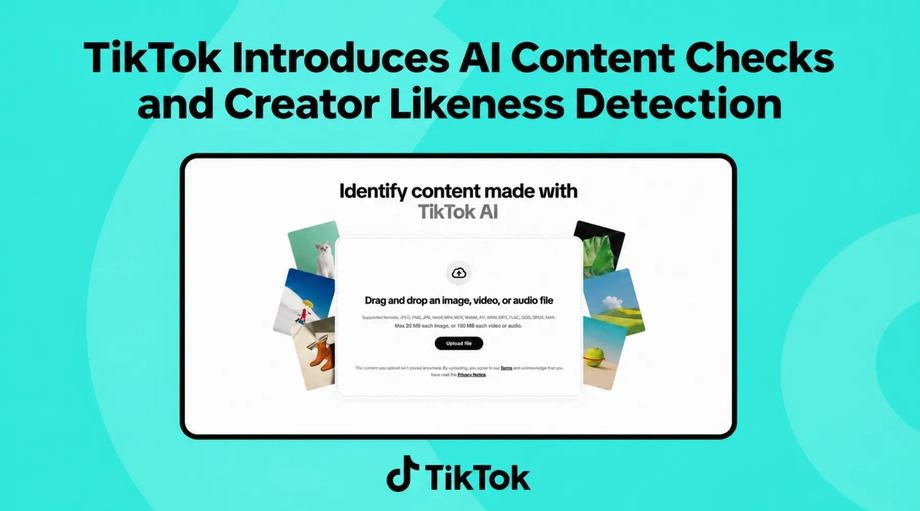
TikTok is introducing two tools to help people check whether media was made with its AI creation features and help eligible public figures find AI generated material that may use their image without permission. The public checker is available without a TikTok account. The second feature, Likeness Detection, is optional and is being rolled out gradually to eligible creators and public figures around the world.
Contents
- Two tools target AI labels and unauthorized likenesses
- What can the public checker examine?
- Why use both credentials and a hidden watermark?
- How does Likeness Detection work?
- Why TikTok is connecting the launch to elections
- Detection is one part of content checks
- How the tools compare with other platform measures
- What to Know
The checker looks for two kinds of clues: Content Credentials, which can record how a digital file was made or edited, and VeraDura, TikTok's invisible watermark. The company says it has labeled more than 5 billion AI generated videos. A separate feature lets viewers adjust how much AI generated content appears in their For You feed.
The timing is described in two ways: TikTok's Japanese announcement is dated Nov. 20, 2026, while the global launch was also announced at a London event on Nov. 19. Francesca Scapolo, TikTok's government relations lead for European elections, spoke at that event as the company linked the likeness tool to preparations for elections in 2027.
The tools address different problems. The checker can look for signs that supported TikTok or ByteDance tools were used to make or edit a file. Likeness Detection is designed to alert enrolled people when content on TikTok may use their face or other likeness. Neither function replaces a human review of a reported post.
What can the public checker examine?
Anyone can upload a file through TikTok's Transparency Centre and check whether it carries signals connected to supported AI creation tools. The interface accepts images, video and audio, with reported upload limits of 20 megabytes for an image and 100 megabytes for a video or audio file. TikTok says uploaded files are not stored.
The supported tools include TikTok's own AI features and ByteDance applications such as CapCut, Dreamina, Pippit and Hypic. The checker is not a general test for every AI image, voice or video. It searches for signals associated with TikTok and ByteDance products, so material made with other systems, such as OpenAI's Sora or Google's Veo, may be outside its reach.
A result with no detected signal cannot confirm that a file is genuine. A person assessing a suspicious video still needs to consider where it came from, whether the person shown consented and whether other reliable evidence supports its claims.
Why use both credentials and a hidden watermark?
Content Credentials are metadata, information attached to a digital file that can describe its creation and editing history. The standard is developed by the C2PA coalition, and TikTok has added these credentials to content made with its tools since 2024. If another service keeps that information intact, it can help identify how the media was produced.
Metadata can disappear when a file is downloaded, edited or shared through a service that strips it away. VeraDura is meant to provide another clue: an invisible mark embedded in the content, which TikTok says is harder to remove. The checker looks for both types of signals, rather than relying on the creator's label alone.
TikTok said it had labeled 3 billion AI generated videos by July 10 and more than 5 billion about four months later. The labels can come from creators identifying their own material, Content Credentials or TikTok's watermark technology. The rising total shows how widely the platform is applying labels, while the new checker is meant to let people inspect files outside the normal feed as well.
How does Likeness Detection work?
Likeness Detection is an opt in feature. A participant must verify their identity through an outside provider before TikTok can look for possible uses of their likeness. The company says identity documents used for verification are not kept by TikTok after the process.
After signing up, a participant can receive notifications when TikTok identifies videos or accounts that may use their appearance. They can review the material and report it directly to the platform's safety team. TikTok says content that violates its Community Guidelines can be removed after review.
The rollout includes eligible creators and public figures, including government bodies, politicians and political parties. TikTok has not published the eligibility rules. The tool was tested with a small group of US creators from July, with identity checks handled by Jumio, before the global rollout began.
People who cannot use Likeness Detection, including those without a TikTok account, can still report suspected nonconsensual AI content through TikTok's privacy reporting form. The detection feature is a way to find and report possible misuse, not a guarantee that every impersonation will be found or that a flagged post will be removed automatically.
Why TikTok is connecting the launch to elections
TikTok has pointed to elections scheduled in Italy, France and Greece in 2027. AI generated audio or video can make a real person appear to say or do something that never happened. During an election, such material can spread claims about candidates or government officials before viewers have a chance to check them.
Scapolo described election protection as a central responsibility for the company. At the London safety and innovation event, TikTok's government relations lead for European elections said:
Protecting the integrity of the elections is one of the most critical responsibilities that we have at TikTok.
She said the tool could help politicians and governments identify potentially AI generated content shared without their consent. The European Union began rolling out AI transparency rules in August, including requirements to label deepfakes and other AI generated material. TikTok has also required labels on realistic AI generated images, audio and video for several years.
Detection is one part of content checks
TikTok also works with more than a dozen fact checking organisations in several countries, including Agence France Presse, to review videos that may contain false information. That work addresses whether claims in a video are accurate, while the new checker looks for technical signals about how a file was made and Likeness Detection helps people report possible misuse of their identity.
The distinction matters for viewers. A video can be AI generated without making a false claim, and a video with no detected AI signal can still be misleading or manipulated. A label or a checker result is one piece of information, not a substitute for checking the claim and its context.
Platforms are also relying more on automated systems to review content such as misinformation, hate speech and pornography. TikTok said in 2025 that technology improvements could allow it to reduce moderation jobs and locations worldwide. The new features add ways to identify certain kinds of synthetic media, while reports still go to safety teams for review.
How the tools compare with other platform measures
YouTube has developed a similar likeness detection feature for creators, and its tool was opened to major creators in May 2026 after an earlier launch for monetized creators in late 2025. TikTok's rollout is aimed at eligible creators and public figures, with a gradual global launch and no public list of who qualifies.
TikTok's existing Manage Topics control gives users another choice: it can adjust the amount of AI generated content shown in the For You feed. That changes what a viewer sees, while the checker examines a file and Likeness Detection focuses on reports about a person's image.
For creators, public figures and political organisations, the clearest immediate step is to enroll if eligible and review alerts before making a report. For other users, the public checker can help when a file may have been made with a supported ByteDance tool, while TikTok's privacy form remains an option for suspected unauthorized use of a likeness.
What to Know
- TikTok's public checker accepts images, video and audio and can be used without an account.
- It searches for Content Credentials and VeraDura signals from supported TikTok and ByteDance tools, not every AI system.
- Likeness Detection is an opt in global rollout for eligible creators and public figures, including political and government accounts.
- Participants can review alerts and report suspected misuse; TikTok says identity documents are not retained.
- TikTok says it has labeled more than 5 billion AI generated videos, up from 3 billion on July 10.