Regulator puts 15 major brands on notice
China's State Administration for Market Regulation summoned 15 electric bicycle manufacturers to a collective meeting on November 27, 2026, after unannounced inspections found weaknesses in quality management and cases of products being sold in violation of mandatory national standards. The companies now face orders to correct factory practices, tighten control over certified components, handle customer returns properly and recall any products that investigations find defective.
Contents
- Regulator puts 15 major brands on notice
- What inspectors found, and what remains undisclosed
- How CCC certification and the tracing rule work
- Return, repair and recall duties spelled out
- Key dates behind the November action
- The safety campaign reached a cooling and divided market
- Price pressure and the daily needs of riders
- What to Know
The manufacturers named were Yadea, Tailing, Aima, Sunra, Xiaodao, Luyuan, Jinjian, Ninebot, Niu, Lvjia, Lvju, Lima, Jiyue, Saige and Zeeho. The list includes established mass market producers as well as brands associated with connected and premium models, making the action relevant to a broad range of prices and customers.
The inspections covered China Compulsory Certification across the sector. They were described as flying inspections, meaning checks conducted without advance notice. This approach allows inspectors to examine actual production conditions rather than relying only on paperwork prepared for a scheduled visit. The regulator said the resulting problems had disrupted market order, harmed consumers and created risks for personal safety and property.
Market regulation officials from Tianjin, Jiangsu, Zhejiang, Shandong, Guangdong, Guangxi, Chongqing and Sichuan also attended. Their participation brought authorities from eight provincial level jurisdictions into the meeting alongside the national regulator. The administration said market regulation departments would continue strict enforcement, investigate violations under the law and protect the credibility of the certification system.
What inspectors found, and what remains undisclosed
The administration identified three broad failures. Some companies had not properly fulfilled their primary responsibility for product quality, their ability to guarantee consistent quality was inadequate, and their controls over product consistency were insufficient. In the most serious cases, businesses had allowed products that failed mandatory national standards to leave the factory and enter the market.
An October regulatory notice gave a more concrete picture of problems encountered during the wider enforcement campaign. Important components had been changed without authorization, production management and final factory inspections were inadequate, and some vehicles retained room for their speed limits to be removed. Parts of the electric bicycle businesses of Yadea, Tailing, Aima and Ninebot were among those affected in that earlier episode. Electric motorcycles were not included.
The November 27 announcement did not provide a breakdown for each company, identify affected models, state how many vehicles were involved or announce fines. It also gave no public deadline for completing corrections or making certification decisions. Those details matter because the practical response can differ substantially: one case may require changes to factory controls, while another may involve a suspended certificate, difficulty registering a purchased bicycle or a recall.
The meeting itself produced corrective instructions rather than a published list of penalties. Any customer trying to assess an individual bicycle therefore needs information identifying its model and certification status, rather than assuming that every product made by one of the 15 companies has the same problem.
How CCC certification and the tracing rule work
CCC stands for China Compulsory Certification. It is a conformity system for products covered by compulsory requirements, intended to show that they meet applicable standards before being sold. For an electric bicycle, certification concerns more than the appearance of the finished vehicle. The components and production process must correspond to what was approved.
Product consistency is the principle that bicycles leaving the factory match the certified design. Replacing an important component without authorization can break that correspondence even if the outside of the vehicle looks unchanged. Weak final inspections add another risk because a discrepancy may reach a dealer or customer without being detected.
Since November 1, the new certification arrangements have placed full chain tracing at the centre of compliance. The administration described the requirement as one vehicle, one battery, one charger and one code. In plain terms, each bicycle must be matched with its specified battery and charger and an identifying code, creating a record that can be followed through production, sale and service. This makes quiet component substitution harder and gives investigators a clearer trail when a problem emerges.
The administration told manufacturers to comply with a group of laws and regulations governing product quality, standards, consumers and certification:
- The Product Quality Law of the People's Republic of China.
- The Standardization Law of the People's Republic of China.
- The Law of the People's Republic of China on the Protection of Consumer Rights and Interests.
- The Regulation of the People's Republic of China on Certification and Accreditation.
- The Provisions on the Administration of Compulsory Product Certification.
Together, these rules connect the design approved during certification with the bicycle delivered to a customer. They also provide the legal framework for the administration's demands on factory corrections, market sales and recalls.
Return, repair and recall duties spelled out
The instructions went well beyond changes inside factories. Manufacturers were told to address problems promptly, improve quality management, prevent noncompliant products from reaching the market and take the initiative in providing service after a sale. The wording directly addresses situations in which a customer has bought a bicycle but cannot register it, or seeks a return while its certification is unavailable.
The State Administration for Market Regulation, which convened the meeting and issued the instructions, set out four prohibited responses to customers and then stated the recall obligation:
Companies must not shirk responsibility, mislead consumers into riding on the road without a number plate, require a discounted return of the vehicle, or refuse to accept a return on the grounds that the certificate will soon be restored.
Products for which investigation and analysis indicate defects must be recalled immediately.
For a buyer, the instruction means a seller cannot answer a return request simply by promising that certification will soon be restored. A customer also must not be told to use an unregistered bicycle on public roads while the paperwork remains unresolved. The administration further rejected shifting responsibility between businesses or requiring the vehicle to be taken back at a reduced value as a way of avoiding the return demand.
Owners dealing with registration or return problems can preserve the purchase invoice, certification information, registration response and written communications with the seller. Those records can identify the bicycle and document how the seller handled the request. The regulator did not publish a national formula for calculating refunds or a list of models eligible for particular remedies.
The recall instruction has a separate trigger. Once investigation and analysis indicate that a product is defective, the company must act immediately rather than wait for individual customers to discover the problem. That places the burden on the manufacturer to address a defect across the affected products.
Key dates behind the November action
The meeting followed months of tighter enforcement and changes to certification. The sequence also shows how a factory issue can eventually appear at a registration office or in a dispute between a customer and a dealer.
- August and September 2026: Enforcement against illegal modifications and CCC certification intensified. Practices such as fitting larger batteries and removing speed limits had previously added unofficial appeal to some bicycles.
- October 2026: The administration reported unauthorized component changes, weak production management and inadequate factory inspections. Around the same period, registration offices in a number of cities began returning some applications with the explanation that the vehicle's CCC certificate had been suspended.
- November 1, 2026: New certification rules took effect, with full chain tracing based on one vehicle, one battery, one charger and one code.
- November 27, 2026: The 15 manufacturers were called together and ordered to correct problems, protect customer rights and recall defective products.
A certificate suspension can therefore affect a customer far from the factory where the original problem occurred. A person may already have paid for a bicycle, only to discover that it cannot receive a number plate. The administration's instructions on returns and misleading advice address that exact point of pressure.
The tracing requirement also makes compliance a continuing responsibility. Passing an initial inspection does not remove the need to keep later production, batteries, chargers and records aligned with the certified vehicle.
The safety campaign reached a cooling and divided market
Domestic electric bicycle sales reached 58.767 million units in 2025, an increase of 16.6%. More than 12.5 million bicycles were replaced through the programme encouraging consumers to exchange old vehicles, and the volume of old vehicles retired and replaced was more than nine times the 2024 level. Electric bicycles were no longer included in the national consumer goods replacement list in 2026. Sales during the first three quarters of 2026 fell 4.8% to 48.378 million units.
The third quarter nevertheless brought a partial recovery. Domestic sales across the wider electric two wheeler market exceeded 20 million units, rising 9.0% from a year earlier and producing the first quarterly increase of the year. Company performance still varied sharply. Aima's third quarter revenue fell 13.81% to 6.949 billion yuan, while Ninebot sold 1.8096 million electric two wheelers, an increase of 21.72%.
Aima's results for the first nine months showed revenue of 18.389 billion yuan, down 12.82%, and profit attributable to shareholders of 1.104 billion yuan, down 42.13%. Net cash generated by operating activities fell 67.20% to 1.827 billion yuan. These figures show that the enforcement action arrived while one major manufacturer was already contending with weaker sales, profits and operating cash generation.
Yadea's first half revenue fell 5.0% to 18.236 billion yuan. Its electric bicycle sales dropped 37.8%, from 6.6655 million units to 4.1481 million, while electric scooter sales rose 63.7%, from 2.128 million to 3.4842 million. Combined volume declined from about 8.79 million to 7.63 million units. Electric bicycles consequently supplied 34.3% of revenue, down from 48.5% a year earlier.
Price pressure and the daily needs of riders
Prices were rising as compliance tightened. Mainstream models generally cost 300 to 800 yuan more than comparable versions built under the old national standard when the new standard was introduced. In April, Yadea raised prices charged for its full product range by more than 300 yuan per unit, citing increases exceeding 40% in aluminium, copper, iron and other metals, and rises of more than 80% in plastic pellets and other chemical materials. Taken together, the rounds of increases left a typical commuter model costing roughly 600 to more than 1,000 yuan extra.
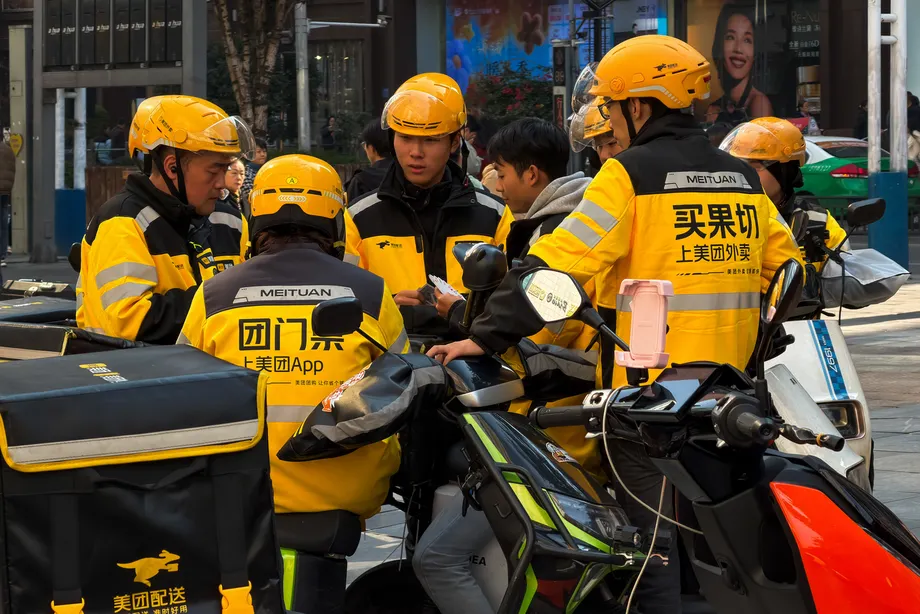
For delivery riders and couriers, a bicycle is equipment used to earn income. Its range, repair costs and time spent out of service affect daily earnings. Some customers had previously relied on dealers to install larger batteries or remove speed restrictions, obtaining performance beyond the standard product. Stronger enforcement has closed that route. A shift toward electric motorcycles can also bring registration and driving licence requirements, adding procedures and expense.
China now has more than 400 million electric two wheelers in use, and more than 80% of demand comes from replacing existing vehicles. Yadea, Aima and Tailing together held 57.8% of the market from January through September. Those figures indicate substantial scale, but replacement customers often have experience with several brands and can compare battery durability, parts prices and repair service directly.
The immediate regulatory test is concrete: stop noncompliant products, maintain certified consistency, honour the stated return obligations and recall defects. The commercial test is equally practical. Manufacturers must keep a fully compliant bicycle affordable and straightforward to maintain without depending on modifications that the safety campaign is removing.
What to Know
- China's market regulator summoned 15 electric bicycle manufacturers on November 27, 2026, after compulsory certification inspections.
- Inspectors found weak quality responsibility, inadequate quality assurance, poor control over product consistency and some sales of products that failed mandatory standards.
- The companies must implement tracing based on one vehicle, one battery, one charger and one code.
- Sellers must not tell customers to ride without number plates, insist on discounted returns or refuse returns by promising that certificates will soon be restored.
- Products found defective through investigation and analysis must be recalled immediately.
- Officials from eight provincial level jurisdictions attended, but no fines, affected model list, vehicle count or public correction deadline was announced.
- The action came as industry sales declined, company results diverged and price increases raised the cost of compliant commuter bicycles.