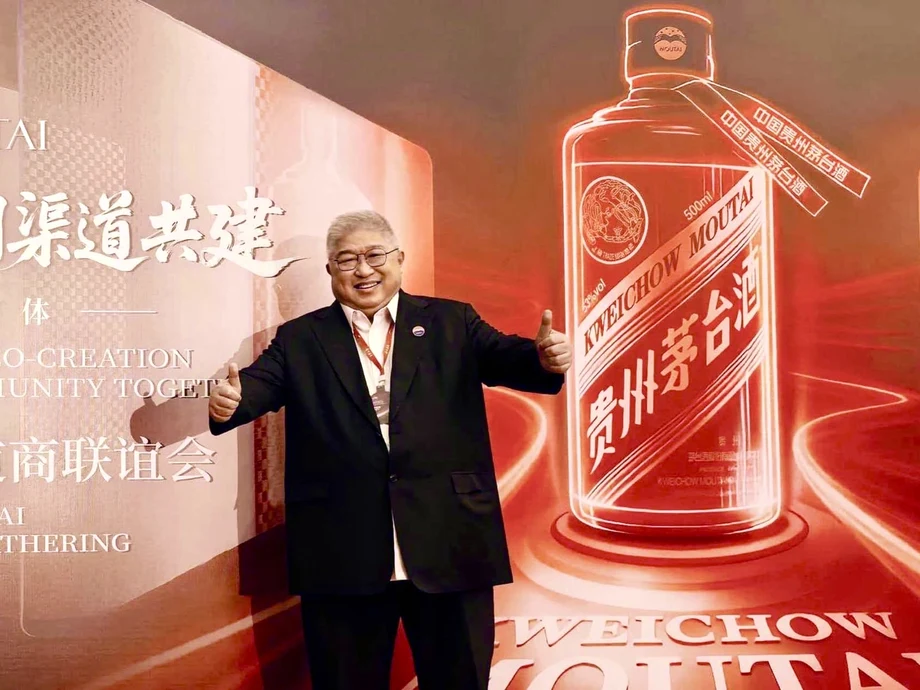
A Bigger Cash Return Despite Softer Earnings
Kweichow Moutai moved on the evening of Nov 27, 2026 to keep a promise to investors, approving a 2026 interim cash dividend of 25.60 yuan per share, including tax. Based on 1,250,081,601 shares as of Oct 31, the payout comes to 32,002,088,985.60 yuan, about 32 billion yuan. It is the largest interim dividend since Moutai began midyear payouts in 2024. An interim dividend is paid before the full year is complete, giving shareholders cash earlier than the annual payout.
Contents
- A Bigger Cash Return Despite Softer Earnings
- What the Plan Actually Says
- Why a Dividend Can Rise When Profit Does Not
- The Promise Behind the Payout
- Who Receives the Cash
- What the Market Price Says
- A Long Record of Cash Returns
- Why the Timing Matters in China's Market Policy
- How Moutai Describes the Business Pressure
- What Happens After 2026
- Key Dates Behind the Payout
- What to Know
The company chose a bigger payout in a year when earnings have not grown. First half profit attributable to shareholders fell 1.95 percent, nearly 2 percent, and the decline narrowed to 0.25 percent for the first nine months after a stronger third quarter. The interim dividend is about 7 percent larger than last year's midyear payment. That combination explains why investors are focused less on headline profit growth and more on Moutai's willingness to return cash on a steady schedule.
What the Plan Actually Says
Moutai's board approved the plan at its eighth meeting of the fifth board on Nov 26, and the company disclosed it on Nov 27. Every shareholder will receive 25.60 yuan for each share held, subject to tax rules in the place where the shares are held. The exact total is calculated from the share capital on the equity registration date, the date used to decide who qualifies for the payment.
The company used 1.25 billion shares as the working base in its announcement. If share capital changes before the registration date, the total payout stays at 32.002 billion yuan and the per share amount is adjusted. Moutai did not need a fresh shareholder vote because the June 11, 2025 shareholders' meeting had already authorized the board to set the 2026 interim payout, with a ceiling equal to first half attributable profit. The plan does not require another meeting approval and is expected to be carried out in December. The exact registration day and payment day were not given.
Why a Dividend Can Rise When Profit Does Not
Moutai's first half attributable profit was 44.517 billion yuan. Attributable profit means the share of profit belonging to shareholders of the listed company. The 32.002 billion yuan interim payout equals about 72 percent of that first half profit. For the first nine months, revenue reached 133.284 billion yuan and attributable profit was 64.467 billion yuan, still down 0.25 percent from a year earlier.
The payout is best understood as a capital return choice drawing on the company's cash position and accumulated earnings. Moutai had 161.069 billion yuan in undistributed profit in its parent company accounts as of Sept 30, meaning cash earnings kept inside the business over earlier periods. That pool gives the board room to pay shareholders even while current period profit is under pressure.
The Promise Behind the Payout
On Aug 9, 2024, Moutai disclosed its 2024 to 2026 cash dividend return plan. It pledged to pay cash dividends twice in each of those years, once as a year end payment and once as an interim payment, with total annual cash dividends no lower than 75 percent of that year's attributable net profit. A cash dividend rate of 75 percent means that, across the year, the company returns three quarters of that profit measure to shareholders.
Liquor commentator Xiao Zhuqing said steady dividends matter to value investors because they make a company's cash returns easier to plan around and strengthen belief in its long term worth.
For value investors, stable, continuous and highly certain dividends are the most direct proof of steady business operations. They can offset anxiety caused by market swings and strengthen the capital market consensus on Moutai's long term value.
Xiao's comment points to the practical appeal of the plan. A shareholder can count on receiving cash even when the share price moves up or down, and a predictable payout helps long term investors compare Moutai with other large companies.
Who Receives the Cash
Every shareholder on the register will receive the same 25.60 yuan per share before applicable tax. Based on current holdings, state owned shareholders are set to receive at least 60 percent of the 32 billion yuan payout. They include Moutai Group and its technical development arm, Guizhou Provincial State Asset Operation Company and Guizhou Financial Holdings Group.
For those holders, more cash means more room to cover funding needs or redeploy money. For other shareholders, the payment arrives as cash rather than as a larger holding of shares. That difference matters to investors who want income now instead of a bigger stake later.
What the Market Price Says
Moutai, whose Shanghai trading code is 600519, closed at 1,472.36 yuan on Nov 27, up 0.23 percent, giving the company a market value of 1.84 trillion yuan. Its share price was the highest among A shares, the shares traded on mainland Chinese stock exchanges. At that closing price, the interim dividend alone was about 1.74 percent of the share price before tax.
The payment is also easy to picture at the level of one account. A holder of 1,000 shares would be due 25,600 yuan before tax under the proposed rate. A holder of 10,000 shares would be due 256,000 yuan before tax. Those figures show why a dividend measured in yuan per share can become a large cash event for a company with 1.25 billion shares.
A Long Record of Cash Returns
Moutai has built one of the most visible dividend records in China's stock market. Since listing in 2001, it has paid 401.145 billion yuan in cash dividends before this new interim plan. A September 2026 cash dividend list from the China Association of Listed Companies placed Moutai seventh for total cash dividends and eighth for payout ratio, which is the share of profit paid out to shareholders.
The company has also used buybacks. In September 2024 and November 2025, it announced large repurchase plans, with the shares intended for cancellation. Cancelling shares reduces registered capital and can raise the value attached to each remaining share. Moutai Group, the controlling shareholder, has carried out five large stake increases. The latest was completed on Dec 26, 2025, with 3 billion yuan spent on shares.
Why the Timing Matters in China's Market Policy
The State Council, China's cabinet, held a meeting on Nov 27 and called for listed companies to increase dividends and share buybacks. Moutai disclosed its interim plan that evening. The timing puts the decision in the middle of a policy push to make listed companies return more cash to investors and support market confidence.
For Moutai, the policy setting reinforces a message it has been sending since 2024: dividends would arrive twice each year on a stated minimum return level. The company's size means the plan is visible to investors across the market, and many use it as a marker for other consumer stocks. The practical result is that shareholders receive cash sooner, while the company keeps the plan within limits set by earlier shareholder approval.
How Moutai Describes the Business Pressure
Moutai makes baijiu, a Chinese distilled spirit, and its results show a company adjusting to weaker demand. Profit fell in the first half, then the decline over the first nine months became much smaller. At a 2026 strategy meeting, Moutai Group chairman Chen Hua said the group was moving closer to consumers, reducing inventory, meaning clearing stock held in the sales chain, and attempting to lighten operations, with early results from the reform.
Moutai said the dividend plan took production, operations, future funding needs and operating cash flow into account, and would not affect normal operations or long term development. The company's parent balance sheet showed 161.069 billion yuan of undistributed profit as of Sept 30. That cash reservoir helps explain how the board could raise the interim payout while current earnings remain under pressure.
Guohai Securities has framed the company as a long term holding, saying its reforms during the industry adjustment show strategic staying power and that the shares have a sufficient margin of safety, a cushion that can help if prices fall.
What Happens After 2026
The three year return plan is close to the end of its term, so investors are already asking what Moutai will promise for 2027 to 2029. At the Nov 10 third quarter briefing, acting general manager Wang Li said a market value management plan for 2027 to 2029 had been thoroughly discussed and was going through the required procedures. Market value management means steps a listed company takes to support the value of its shares, including dividends, buybacks and investor communication.
The four directions described by Moutai are stronger value creation through operations and efficiency, better information disclosure, proper use of market value management tools to improve investment value and shareholder returns, and regular communication with investors. A final plan and a 2027 payout ratio have not been announced, leaving the next dividend framework as the main open question for shareholders after this payment.
Key Dates Behind the Payout
Moutai's payout follows dates from a two year promise, two buyback plans and a board approval. The dates show how the company moved from a long term pledge to a cash payment expected in December.
- Aug 9, 2024: Moutai disclosed the cash dividend return plan covering 2024 to 2026.
- September 2024: The company announced its first large buyback plan in this period.
- June 11, 2025: Shareholders authorized the board to decide the 2026 interim dividend within set limits.
- November 2025: Moutai announced a second large buyback plan.
- Dec 26, 2025: Moutai Group completed its latest stake increase, worth 3 billion yuan.
- Nov 10, 2026: Management discussed the 2027 to 2029 market value management plan at the third quarter briefing.
- Nov 26, 2026: The board approved the interim dividend plan.
- Nov 27, 2026: Moutai disclosed the plan after the State Council meeting, and its shares closed at 1,472.36 yuan.
- December 2026: The company expects to carry out the interim dividend.
What to Know
- Kweichow Moutai approved a record interim dividend of 25.60 yuan per share, including tax, worth about 32 billion yuan in total.
- The payout is about 7 percent higher than last year's interim dividend even though first half profit fell 1.95 percent and profit over the first nine months fell 0.25 percent.
- The board acted under authority granted in June 2025, so no new shareholder meeting vote is required.
- The plan follows a pledge to pay cash dividends twice a year from 2024 to 2026 and return at least 75 percent of annual attributable profit.
- State owned shareholders are set to receive at least 60 percent of the cash payout.
- Moutai expects to implement the dividend in December, while the 2027 to 2029 framework is still going through procedures.