A New Retirement Wallet Takes Shape
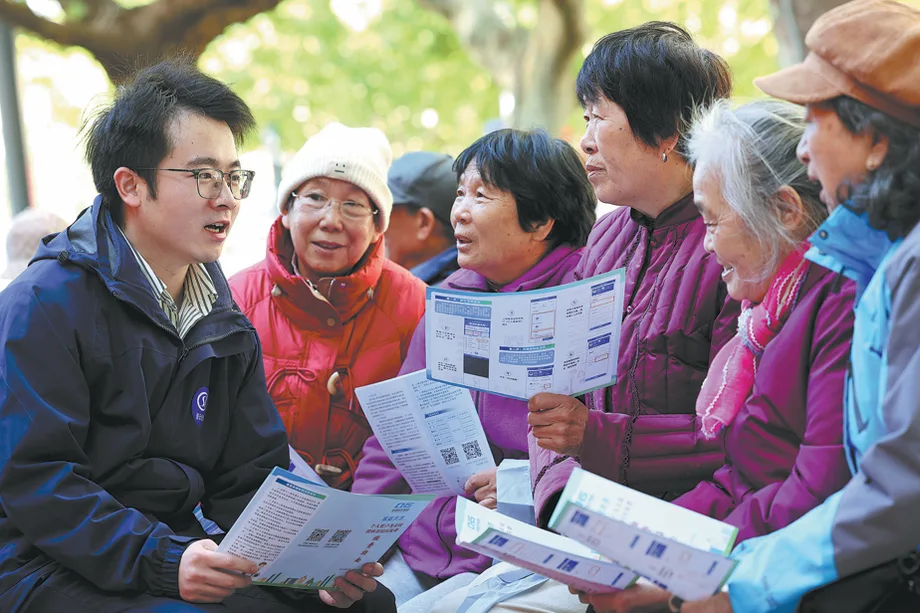
On November 27, Hangzhou's Silver Machang Mall in Xihu District was presenting a plain idea to an aging country: retirement can be a spending season. The district's first street level mall for older residents has drawn 200 to 300 visitors a day since it opened, according to the person in charge. Its ground floor holds a study, tea bar and product displays. Its second floor has a smart therapy area, a smart fitness zone and a counselling room.
Contents
- A New Retirement Wallet Takes Shape
- Who Are the New Retirees
- Health Technology Moves Into Daily Life
- Robots Enter Care, With a Reality Check
- Extended Travel Becomes a Way of Life
- Hotels and Homestays Chase a New Guest
- Concerts and Classes Feed a Second Life
- Where Supply Falls Short
- What Comes Next
- Key Points
The silver economy covers goods and services built around older people's needs, from care and health to travel, classes and digital tools. At a national aging work conference in Beijing on November 18 and 19, officials called for developing it around demand for better quality consumption. The Expanding Consumption 15th Five-Year Plan gives elder care spending a prominent place. The recommendations for the 15th Five-Year Plan set two phrases: 'actively address population aging' and 'develop the silver economy'.
The scale is hard to separate from ordinary economic planning. The State Council Information Office said the population aged 60 and above exceeded 310 million at the end of 2024, or 22 percent of the country. National Bureau of Statistics figures put the 60 plus population at about 323 million at the end of 2025, about 13 million more in roughly a year. The Institute on Aging at Fudan University estimates the silver economy will reach 19 trillion yuan by 2035, equal to 28 percent of total consumption and nearly 10 percent of GDP. The Silver Economy Blue Book puts the 2025 industry size at 9 trillion yuan and expects more than 30 trillion yuan by 2035.
Who Are the New Retirees
Generation matters. NielsenIQ data said people aged 44 to 59, known as Generation X, make up nearly 30 percent of the population but account for 31 percent of consumption. Taotian data with the China Research Center on Aging showed that people aged 50 to 59 were 67 percent of platform users in 2025 but generated 70.12 percent of orders and 74.97 percent of spending, almost eight percentage points above their share of users.
The China Aging Association's silver consumption survey found 58.3 percent of respondents favour putting their own needs first. Intergenerational balance drew 21.8 percent, while savings defence drew 9.0 percent and family responsibility 8.7 percent. For many people born in the 1970s, household decision making has widened from saving for children to spending on the next decades of their own lives.
Digital habits help explain the shift. This generation grew into smartphones, social media and online payment. By June 2025, 161 million internet users were aged 60 and above, 14.4 percent of all internet users, and about half of seniors were online. In the first half of 2025, digital consumption reached 9.37 trillion yuan; 117 million digital consumers were aged 60 and above, 12.2 percent of the total. Rural digital consumers reached 249 million, 26 percent of the total.
Health Technology Moves Into Daily Life
At the Hangzhou mall, knee massagers, bionic waist supports and fascia guns priced under 1,000 yuan were among popular products, the operator said. Smart watches, smart home devices, health monitoring tools and robots are entering retirement planning because people want quicker answers about blood pressure, heart rate, movement and safety.
Guan You recently bought a smart watch for a relative who had just retired. She said the device would track blood pressure and heart rate and send health reminders. Her reasoning was practical, not futuristic: the relative already used a phone, so a watch would be easy to learn.
With an elder at home who has just retired, a smart watch can monitor health in real time, which puts us more at ease. They are already used to phones, so a watch is not complicated to operate and they can pick it up quickly.
The Shanghai Silver Economy Development Report 2025 said new retirees had become a main consumer group, with demand rising for culture, tourism, health care and smart products. At the 12th China International Aging Industry Expo, a silver intelligent care zone displayed exoskeleton robots, smart massage equipment and elder care devices using AI. Exoskeleton robots are wearable frames that support movement and can help older people stand or train their legs.
The Liuxia Health and Care e Home centre in Xihu District has displayed Zhiyuan exoskeleton robots and Ant Lingbo robots. Its gym has 15 strength machines, 10 of them designed for older adults. The China Aging Association found functional food and clothing needs above 70 percent, home adaptations in the next tier, and smart products and anti aging products and technologies in a third tier. CIC Consulting estimated the smart eldercare market at about 11 trillion yuan by 2024, and Beijing Hongsong Online Technology has drawn more than 1 million paid users.
Robots Enter Care, With a Reality Check
The 12th China International Aging Industry Expo ran from November 26 to 28 in Guangzhou and drew more than 500 brand companies. Bedside robots demonstrated turning and transfer assistance. A traditional Chinese medicine health robot completed monitoring, and a smart cabin robot presented an integrated care terminal.
BGI and Gangzai Robot signed an agreement at the expo to build a Digital Intelligence Gene robot care centre. Jiang Xiaosen, head of BGI's biological intelligence solution centre, said gene testing, methylation age and other data can connect to home robots for aging assessments, risk estimates and health advice. Methylation age is a biological age estimate based on chemical marks on DNA.
For people with Alzheimer's disease, gene testing can identify older adults at high risk. Home robots can remind them at set times and carry out cognitive training in daily conversation, slowing the onset and progression of the disease.
Chen Jianqiu, executive director of Gangzai Robot, said demand clusters in three areas: health care, emotional companionship and daily services. An 83 year old visitor surnamed Li, who came alone, had visited three or four elder care institutions and wanted to know how much support they could offer someone confined to bed. Peng Xiaoyuan, dean of the care facility at Guangzhou Huangpu Pengruili International Care Community, said large continuing care projects are changing the idea that a nursing home means a negative end to life. Cheng Buyi, Guangdong's civil affairs chief, said the province had more than 6,800 large elder product enterprises and revenue above 650 billion yuan.
Zhejiang research released on November 21 found a common mismatch: children buy devices for convenience, while older users care more about health benefits, enjoyment and actual experience. The result can be products that someone buys but few people keep using. Eight government departments have encouraged research into exoskeleton robots and brain computer interfaces, systems that link brain signals to commands, and pilot use of smart devices in elder care institutions.
Extended Travel Becomes a Way of Life
Extended travel is the fastest growing part of the new retirement story. In May, a Y122 tourist train named All the Way North and Green Pastures carried 744 older tourists from Guangzhou to Mohe in Heilongjiang on a 15 day journey of more than 4,000 km via Shanhaiguan, Panjin and Harbin. On November 10, the National Development and Reform Commission said China will increase silver tourism trains, cruise products and high quality destinations in coming years.
Fliggy's Double 11 period saw travel orders by older users rise about 25 percent, searches for taking parents on trips rise nearly 50 percent, and more than 35,000 exchange tickets for Three Gorges cruises sold. Qunar data showed people aged 55 to 60 took 45 percent of outbound tickets among those aged 55 to 70.
Hunan recently issued the Hunan Silver Health Tourism Map, covering six functional zones and ten routes. The Greater Zhangjiajie zone includes Zhangjiajie, Xiangxi and Huaihua, parts of Shaoyang and Changde, the Wulingyuan and Langshan natural heritage sites and the old town cluster around Fenghuang. Tao, a traveller in Beijing's Haidian district, said he wanted good weather, a slower pace and a place to stay rather than three or four sights in a day.
Luo Shougui, a specially appointed professor at Shanghai Jiao Tong University's Antai College of Economics and Management, said his team found steady growth at more than 50 winter migratory retirement destinations and more than 70 summer ones. Migratory retirement means older adults live for weeks or months in places with suitable weather. A trip may last from two weeks to several months, with lower daily spending than ordinary tourism because the stay is longer.
Han Xiao, who retired two years ago and had lived in northern China, spent more than three months in Nanjing this year. After half a year of travel and half a year of rest at home, boredom pushed her back into finance work similar to her old job. Her day now runs from 8:30 a.m. to 5 p.m., followed by evening views of the Qinhuai River and duck blood and vermicelli soup. She wants to experience a southern winter without central heating.
Hotels and Homestays Chase a New Guest
Hotels are treating long stays as a business model. Tujia data showed bookings by users aged 55 and above rose about 16 percent this year, with orders for stays of seven nights or more up about 20 percent and an average stay of 12 days. Users aged 55 to 59 contributed 46 percent of silver customer orders, while orders from people over 70 rose 21 percent.
Yang Han, a researcher at Qunar's big data research institute, said older travellers are becoming a larger force in cultural and tourism spending. He said they value convenience, safety guarantees and service, prefer four and five star hotels more than other age groups and spend nearly 20 percent above the wider market on average.
Some destinations are growing faster than classic tourist cities. In Yunnan's Pu'er, Baoshan and Dehong, Guangdong's Zhanjiang, Guizhou's Liupanshui and Guangxi's Chongzuo, homestay bookings by silver visitors rose more than 50 percent. A 69 year old from Hunan booked a homestay in Anshun, Guizhou, for about three months from late June to late September.
In November 2025, Nan'ao subdistrict in Shenzhen's Dapeng New Area joined 20 hotels and homestays to sell off season long stay tickets for people aged 60 and above. The plan runs from after National Day 2025 to before Labour Day 2026: 10 percent off for up to 10 days, 15 percent off for 10 to 20 days and 20 percent off for 20 days or more. In Shanghai, Songjiang's Barcelona Resort Hotel advertised packages at 109 yuan for a day experience, 299 yuan for two days and one night, and 499 yuan for three days and two nights. Guangfulin Hilton offered lodging, dining and activity packages at about 500 yuan per person.
Ctrip's Old Friends Club groups extended stay products into retirement communities, high quality resort hotels and distinctive homestays. It has also launched Old Friends Club Plus, with product screening, off peak discounts and dedicated service. For a hotel, the arithmetic is direct. A 100 room resort with an average off season room rate of 300 yuan and 40 percent occupancy would earn about 360,000 yuan in room revenue over 30 days. If 20 previously empty rooms are occupied for 20 nights at a package rate of 220 yuan, that adds 88,000 yuan, or 24.4 percent of the original monthly room revenue.
Long stay guests create needs. They may want laundry rooms, safer bathrooms, step free access, suitable food and clear emergency plans. Some prefer homestays or serviced apartments with kitchens and washing machines. Hotels answer with standard service, hygiene, restaurants and brand trust, but they must add the details that make a month away from home workable.
Concerts and Classes Feed a Second Life
Concerts have become a way for people born in the 1970s to meet their younger selves. China Association of Performing Arts and Dengta Professional Edition data showed people aged 35 and above made up 22.6 percent of large concert audiences in 2025, up 3.1 percentage points from a year earlier. At Dao Lang's 2024 tour, people aged 50 and above were 44.5 percent of the audience. At an Alan Tam concert in Chengdu the same year, men aged 40 and above made up 60 percent.
In February 2026, the Ministry of Culture and Tourism and related departments encouraged tickets linked to dining, lodging, transport, sightseeing and shopping. A concert ticket can become a reason to sleep in a city, eat in its restaurants and visit nearby sites.
Liu, a woman in Anyang, Henan, retired in 2025 and chose a guitar course at a university for the elderly. A former high school teacher with some singing background, she said the instrument was available at home and suitable. Her fee was 120 yuan per term for one class a week or 240 yuan for two. Many courses filled in under 10 minutes, she said, especially sports, instrumental and vocal classes.
Competition for seats is visible. In the 2026 autumn term, a guzheng class at Jinling University for the Elderly filled in less than one minute. A DeepSeek artificial intelligence class at Guangzhou University for the Elderly sold out in one minute. Vocal classes at several universities in Kunming sold out in five minutes. By the end of 2024, China had more than 105,000 universities for the elderly, but coverage remained insufficient.
iResearch data showed only 24 percent of middle aged and older people were willing to spend on culture and education. Public university fees of 100 to 300 yuan per term do not cover costs. New Oriental sells a 699 yuan livestream course in expression and content creation, with free online lessons and 19.9 yuan offline trials. Lihua Culture offers courses to more than 26 million middle aged and older users. The National University for the Elderly has 44 provincial branches, 82,000 grassroots learning points and nearly 800,000 courses. Beijing Normal University's Aging Lab found online learning can meet three psychological needs: independent choice, competence improvement and social connection.
Where Supply Falls Short
The boom meets three shortages. A November 21 commentary said suitable products still show 'simple renovation, more; fine design, less' and a narrow range of categories. It called for AI, advanced manufacturing, intelligent care and health monitoring, and named universities for the elderly, silver research tours, leisure stays, adapted sports and digital experiences as ways to support active retirement. It also urged older people to join grassroots governance, science outreach, skill inheritance and volunteering.
Other consumer studies describe active people aged 50 to 59 as having money, time, high life satisfaction and high internet use. Their spending clusters around health care, tourism, fashion, home improvement, interest learning and digital products. The China National Committee on Aging said tourists aged 60 and above account for more than 20 percent of all tourists and support a 1 trillion yuan silver tourism market.
Liu Simin, a researcher at Beijing International Studies University and a council member of the Beijing Tourism Society, said demand is expanding faster than supply. He proposed product changes, clearer customer groups and better local facilities.
One is product updating, adding slow paced, long stay, light care products for migratory retirement in small cities. Two is precise layering, developing cultural study, leisure health care and neighbourhood social activities. Three is better supporting facilities, with accessible facilities, nearby medical care and an end to forced shopping and rushed itineraries.
The second shortage is confidence. Some venues still set age limits that exclude older customers, including escape rooms refusing people over 50 and some hotels declining guests over 60. The third is service economics. Suitable devices require high upfront investment, and repeat sales depend on relationships and trust.
Policy aims at those gaps. The Expanding Consumption 15th Five-Year Plan calls for expanding effective supply of silver products and pushing the sector toward scale, standards, clusters and brands. The Ministry of Civil Affairs said a comprehensive legal framework for older adults was formed during the 14th Five-Year Plan, covering eldercare services and social security. In Pudong New Area, 1.13 million residents were aged 60 and above at the end of 2024, an aging rate of 33.47 percent, with 182 eldercare institutions, more than 36,000 beds and over 2,000 community facilities. Guangdong had 18.99 million people aged 60 and above, an aging rate of 14.86 percent.
Shanghai has published its first silver friendly malls and specialist shops. Some are trendy centres also used by younger shoppers, with silver members offered video game experiences, slides and cat interaction sessions. The lesson for companies is practical: make products respectable and services trustworthy, then let adaptations fit quietly into normal life.
What Comes Next
Several details remain open. The National Development and Reform Commission said silver tourism trains, cruise products and high quality destinations will expand in coming years, but it gave no national number of routes, ticket prices or start dates for each product. The national aging work conference set a consumption goal without a funding total. The Guangzhou expo ended on November 28 without a published sales figure for the robots and care systems on display.
Companies also have tests to pass. It is not yet clear how many buyers of elder care robots will keep using them after the novelty fades, or how many hotels can maintain accessible rooms and trained staff at discounted package prices. Zhejiang research pointed to weak policy execution and thin financial support.
Ctrip's 2026 silver tourism trend report put the market above 1 trillion yuan, forecast more than 2 trillion yuan in 2026 and 2.6 trillion yuan in 2028, and said people aged 50 to 59 make up 44 percent of silver tourists, with average trips of at least 5.5 days. Two person orders were 56 percent of bookings, and 77 percent of travel companions were peers.
Key dates and markers:
- May: The Y122 tourist train carried 744 older tourists from Guangzhou to Mohe.
- November 10: The National Development and Reform Commission promised more silver tourism trains and cruise products.
- November 18 and 19: The national aging work conference called for developing the silver economy.
- November 26 to 28: The Guangzhou aging industry expo displayed more than 500 brands.
- After National Day 2025 to before Labour Day 2026: Shenzhen's Nan'ao long stay discounts apply.
- By 2030: China's senior education market is expected to reach 1.2 trillion yuan.
For families, the practical question is immediate. If a parent wants to spend two months in a warmer city, or use a watch that sends health reminders, the market now exists, but quality, service and safety vary. The silver economy is already visible in mall footfall, train seats, hotel discounts, concert queues and urgent course registrations.
Key Points
- China's 60 plus population exceeded 310 million at the end of 2024 and reached about 323 million at the end of 2025.
- People aged 50 to 59 were 67 percent of platform users but generated 74.97 percent of spending, and 58.3 percent of survey respondents put their own needs first.
- Smart watches, health monitors, exoskeletons and care robots are moving into retirement planning, though some products are bought by children and rarely used by parents.
- Long stays are reshaping tourism, with a 744 passenger train trip to Mohe, homestay stays averaging 12 days and bookings of seven nights or more up about 20 percent.
- Hotels and platforms are adding discounts, packages and club services to attract older guests who travel outside peak periods.
- Concerts, universities for the elderly and online classes are becoming major parts of the same consumer shift.
- Forecasts put the silver economy at 19 trillion yuan or more than 30 trillion yuan by 2035, depending on the measure used.