Two campaigns, two very different closing nights
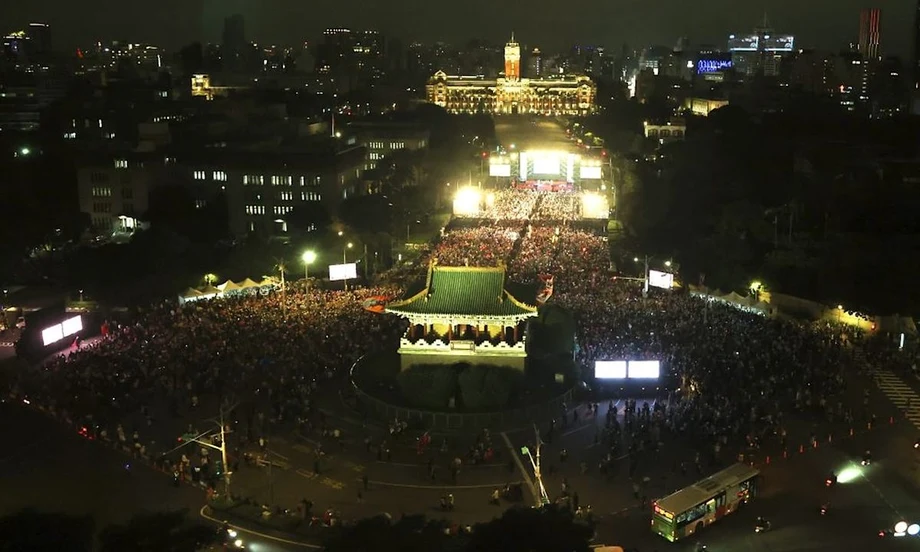
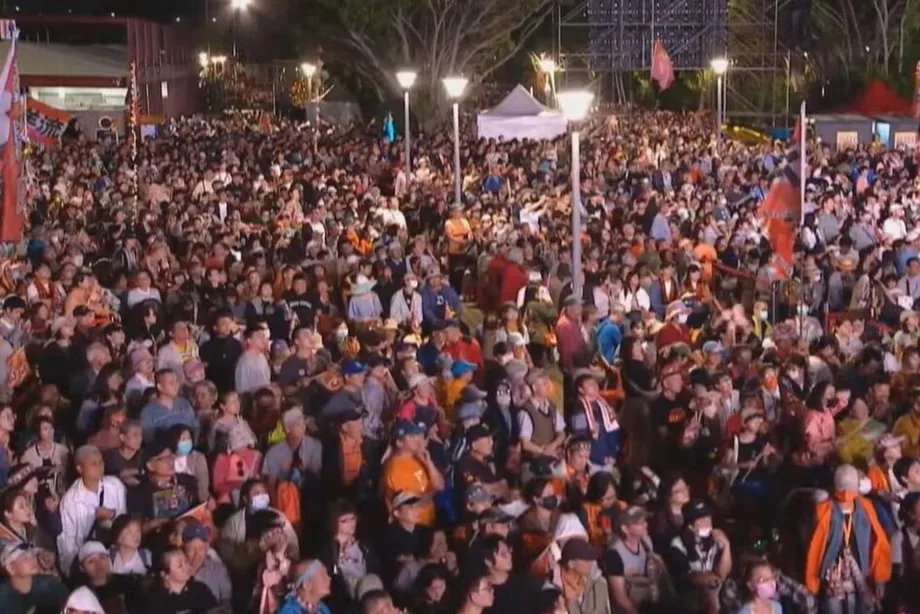
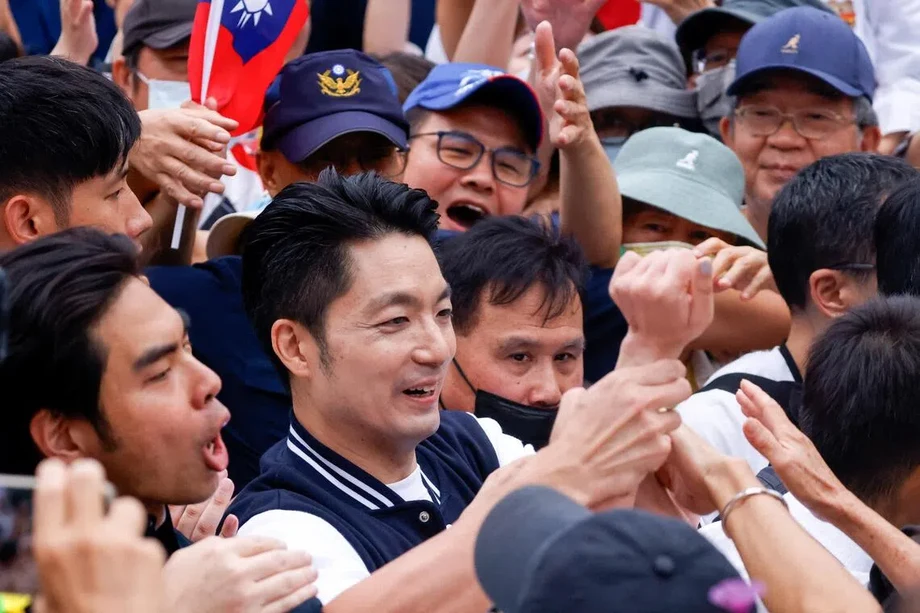
Taipei Mayor Chiang Wan-an and Democratic Progressive Party challenger Puma Shen ended their campaigns on November 27, 2026, with sharply different events. Organizers said more than 150,000 people attended Chiang's rally on Ketagalan Boulevard. Shen canceled his street gathering and instead drew a peak online audience of 520,000 to a broadcast lasting three hours.
Contents
- Two campaigns, two very different closing nights
- What the crowd and viewer numbers mean
- Chiang asks voters to continue his city program
- Shen turns a canceled stage into a citywide broadcast
- How the livestream climbed to 520,000
- Family appearances change the tone of the broadcast
- The practical choice behind the closing spectacle
- Why an October polling lead did not settle the contest
- Voting day arrives amid military activity
- Key Points
The spectacle came immediately before voting in Taiwan's combined local elections on November 28. Chiang, a Kuomintang (KMT) politician seeking another four years, filled a broad avenue near the presidential office with supporters and senior party figures. Shen, a DPP lawmaker, used campaign films, family conversations, surprise guests and an interactive map to reach supporters across Taipei and beyond.
Both men used their final speeches to argue that individual ballots mattered. Chiang asked voters to let his administration continue its construction program. Shen promised to begin his term with work on child abuse, tree planting and nutritious school lunches if elected.
What the crowd and viewer numbers mean
The two headline figures measure different things. The 150,000 attendance claim came from Chiang's rally organizers and described a physical crowd. Shen's 520,000 figure was the peak reached by the online audience counter during his broadcast.
A street estimate and a livestream counter cannot be added together or treated as equivalent samples of Taipei voters. Online viewers could watch from outside the city, while the published figures did not identify how many people at either event were eligible to vote. The numbers nevertheless showed how each campaign chose to demonstrate momentum: Chiang through a large public assembly and Shen through rapid growth in a digital audience.
Chiang asks voters to continue his city program
Supporters began entering Ketagalan Boulevard on Friday afternoon for the event formally called Glorious Taipei, Victory Night. Before the 7 p.m. program, the crowd had extended toward Jingfumen, the historic gate near the venue. Chiang appeared last and argued that the election was about whether Taipei's construction plans could continue, rather than party victory or personal advancement.
The platform brought together Legislative Yuan President Han Kuo-yu, Taichung Mayor Lu Shiow-yen and New Taipei Mayor Hou Yu-ih. Former KMT chairman Eric Chu, former Taipei mayor Hau Lung-bin and New Taipei mayoral candidate Lee Ssu-chuan also attended. Several Taipei council candidates from the Taiwan People's Party (TPP) joined them, presenting a picture of cooperation between the KMT and TPP, commonly associated with the colors blue and white.
KMT chairwoman Cheng Li-wen did not attend. Chiang said earlier that limitations on time and the program required choices about participants. He also described the previous four years as a period in which the city government and residents had completed numerous municipal projects, and said he wanted another term to continue that work.
Hours before the rally, campaign officials rejected speculation that singer Lo Ta-yu would appear as the mystery guest. One campaign figure said aides had discussed inviting Lo to sing Tomorrow Will Be Better without making a speech, but had decided against it during a meeting. Another said the rumor was incorrect. Campaign director Lo Chih-chiang had separately promised a surprise prepared with lawmaker Hsu Chiao-hsin. The account of the completed rally did not identify a performance by Lo Ta-yu.
Shen turns a canceled stage into a citywide broadcast
Shen had originally planned a Citizens' Night rally on Renai Road, close to Chiang's event. His campaign canceled the physical gathering after complaints about the road closure and concern that it would obstruct traffic. The replacement broadcast ran from 7 p.m. to 10 p.m.
An interactive support map connected hundreds of shops and encouraged supporters to gather in small groups to watch. The campaign presented these locations as points of light spread around Taipei, and nearly 100,000 people also went online through the map. The broadcast mixed campaign videos with conversations involving residents and staff members.
A deaf florist who had previously communicated with Shen through sign language at Neihu Flower Market appeared with flowers and again expressed support through signing. His appearance brought back a moment that had attracted attention earlier in the campaign.
Shen said staff had felt discouraged when they learned that the Renai Road stage would have to be dismantled. He credited soapbox activities and a campaign effort called the Ocean Current Fleet with sustaining the team during its 197 days of campaigning. He said he still regretted losing the physical event by what he called 0.38 seconds, without explaining the reference. He described his desired campaign atmosphere as optimistic, positive and enjoyable.
Former president Tsai Ing-wen had joined Shen for another livestream on Thursday evening. She encouraged him to remain brave and told him that he could rest if he felt tired.
How the livestream climbed to 520,000
The online audience grew in distinct stages as new participants appeared. The figures also show why the earlier description of an audience above 500,000 was soon overtaken by a higher peak.
- About 15 minutes after the broadcast began, more than 200,000 people were shown watching simultaneously.
- Close to 8 p.m., the audience passed 340,000 and the program entered third place in the global livestream ranking. Its likes had reached about 17,000 at that point.
- The appearance of Shen's wife and daughter was followed by an audience figure of about 400,000.
- President Lai Ching-te and Taipei 101 chairwoman Janet Chia then appeared. Chia's arrival accompanied a rise from roughly 460,000 to 500,000 viewers.
- The counter eventually peaked at 520,000, and the broadcast reached first place among YouTube livestreams worldwide.
Lai appeared alongside Shen and urged people to vote the following day. He then introduced Chia as a Taipei citizen. Chia said she had decided only in the early hours of that morning to attend.
The three also took a selfie. Chia initially held the phone above the group, then remarked that the angle made her face look too large. The phone passed across the group until Lai took control of the camera.
Chia had earlier used Facebook to argue with friends who did not intend to return to Taipei to vote. She described one friend in Taichung who would not change existing travel plans and addressed the idea that a single ballot made little difference. Chia, whose role at Taipei 101 places her in charge of one of the city's best known landmarks, explained her response in these terms:
It is precisely because you have only one vote that this vote is so precious. If you do not participate, someone else will decide for you.
Family appearances change the tone of the broadcast
Tseng Hsin-hui, Shen's wife, spoke through tears about the effort she had seen during the campaign. She said her husband discussed policy with her even while washing dishes and had begun talking in his sleep during the night. Their daughter, known by the nickname Little Mochi, also joined them on screen and later accompanied her father in chanting a campaign slogan.
Shen said Tseng had taught him the importance of love. He also credited her with stopping him when he was tempted to argue with internet users on social media. Shen, the DPP candidate, compared her influence to water gradually smoothing a stone:
It is not the hammer that can shape a pebble. It is the flow of water that creates the perfect pebble.
He described himself as having become more willing to listen and to feel what others experienced. Tseng said she and Little Mochi were proud of his determination and work, and that she had enjoyed following the broadcasts and campaign vehicle tours. She ended with an affectionate declaration:
I want to love you for 30,000 years.
Shen publicly told his wife that he loved her and joked that his daughter brought her own audience. He acknowledged that campaigning had left him little time with her. Little Mochi responded by telling him to stop talking, and the family said it hoped to eat hotpot together after the campaign.
The practical choice behind the closing spectacle
Chiang supported his request for continuity with a list of projects from his first term. He cited Nvidia's establishment in Taipei, the completion and opening of Taipei Dome and six metro lines being advanced together. He presented these as reasons for centrist voters to give his administration another four years.
Taipei Dome is a major indoor venue whose completion had been delayed for years, while the metro program affects how residents travel across the city and surrounding areas. Nvidia's presence connects Taipei's municipal pitch to Taiwan's wider importance in advanced computing and artificial intelligence hardware.
Shen offered a shorter list focused on the opening of a new administration. He said his first 100 days would concentrate on child abuse, planting trees and nutritious school lunches. Those priorities touch child protection services, urban greenery and food served to pupils. His closing remarks did not provide detailed targets, budgets or implementation schedules for the three commitments.
For Taipei residents, the choice therefore involved more than the scale of Friday's audiences. A victory for Chiang would allow the incumbent to pursue the projects he had named. A victory for Shen would give the challenger an opportunity to turn his three initial priorities into city policy.
Why an October polling lead did not settle the contest
An October survey commissioned by the Taipei Xinmin Cross-Strait Research Association had put Shen at 50.3 percent and Chiang at 33.3 percent, a lead of 17 percentage points for the challenger. A month earlier, Chiang led by 41.7 percent to 40.5 percent. The gap between the candidates consequently moved 18.2 percentage points toward Shen between those two surveys.
The polling exercise also produced a much tighter electoral forecast. Poll designer Tai Li-an incorporated voting intention, strength of commitment and previous election results into turnout models. Those estimates placed Shen's possible vote share between 49.2 and 52.9 percent and Chiang's between 46.9 and 49.9 percent. The modeled outcomes ranged from a Chiang victory by 0.7 percentage points to a Shen victory by about six points.
The survey sequence shows how quickly the public picture changed:
- September 16 to 18: Researchers completed 1,076 interviews for the first survey.
- September 22: The results showed Chiang at 41.7 percent and Shen at 40.5 percent.
- October 14 to 16: The second survey completed 1,075 interviews.
- October 20: The new results put Shen at 50.3 percent and Chiang at 33.3 percent.
- November 28: Voters were scheduled to decide the contest.
Another 12.2 percent of October respondents gave no clear answer, while 3 percent said they would abstain or cast an invalid ballot. Association founding chairman Huang Ching-lung said support from Taiwan People's Party backers and voters without a firm party preference contributed to Shen's improvement. Shen responded at the time that opinion could change quickly and that his team was more concerned with whether residents connected with its policies.
Voting day arrives amid military activity
Taiwan's military reported on November 27 that it had detected 30 Chinese military aircraft sorties. It said 26 crossed the median line of the Taiwan Strait or the line's extension. A sortie refers to an operational flight, so the figure counts flights rather than necessarily identifying 30 different aircraft.
The median line is an informal dividing line that long helped reduce the risk of accidental encounters between the two sides. It is not an internationally recognized maritime border. The military announcement formed a separate security backdrop as candidates made their final appeals.
Taiwan's combined local elections bring nine categories of local office into a single electoral exercise, although the offices appearing on a ballot depend on the location. In Taipei, the mayoral result determines who will lead city government, while council contests help determine the political environment in which the next mayor must work.
No winner had been declared when the campaigns closed. Chiang left Ketagalan Boulevard asking voters to preserve administrative continuity. Shen ended his broadcast by thanking supporters for giving him strength and urging residents to cast their ballots.
Key Points
- Organizers said more than 150,000 people attended Chiang Wan-an's November 27 rally on Ketagalan Boulevard.
- Chiang campaigned on continuity, citing Nvidia's arrival, Taipei Dome's opening and six metro lines being advanced together.
- Puma Shen canceled his Renai Road rally after complaints about road closures and held a broadcast from 7 p.m. to 10 p.m.
- Shen's online audience peaked at 520,000, and the broadcast reached first place among YouTube livestreams worldwide.
- President Lai Ching-te and Taipei 101 chairwoman Janet Chia appeared, while Shen's wife and daughter shared personal accounts of the campaign.
- Shen promised to prioritize child abuse, tree planting and nutritious school lunches during his first 100 days if elected.
- An October survey gave Shen a lead of 17 percentage points, but its turnout models allowed outcomes ranging from a narrow Chiang victory to a Shen win.
- Taiwan's military reported 30 Chinese aircraft sorties on November 27, with 26 crossing the Taiwan Strait median line or its extension.