Medical emergencies interrupt the gathering at Guandu
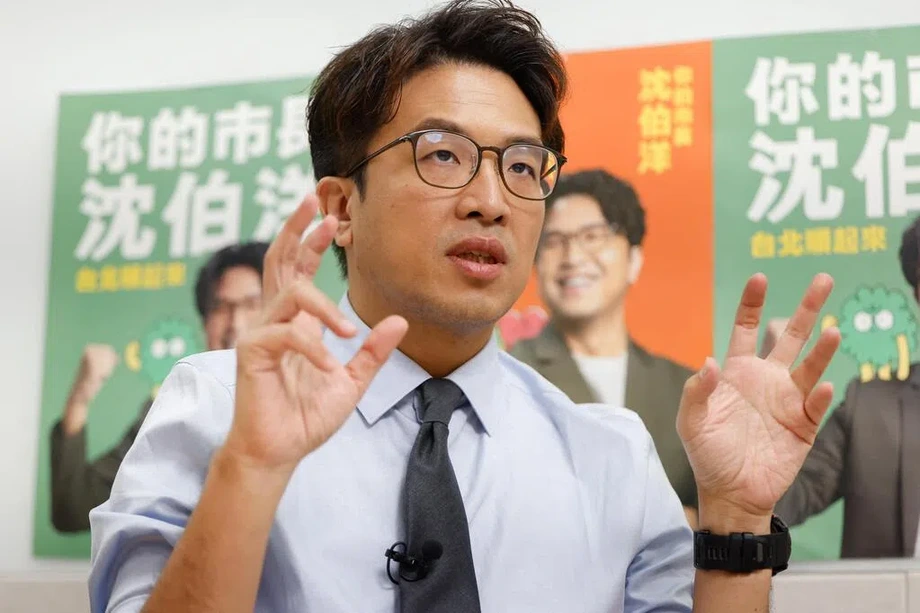
A 47-year-old man regained a heartbeat after emergency treatment at Taipei mayoral candidate Shen Boyang's rally on November 15, 2026, as dense crowds delayed ambulance access to the gathering outside Guandu Temple. A second participant also needed hospital treatment, prompting another pause in the programme.
Contents
- Medical emergencies interrupt the gathering at Guandu
- A blocked road slows the rescue
- What happened during the interruptions
- CPR and an AED restore a heartbeat
- A final campaign journey takes longer than planned
- Supporters arrive by road and river
- Organisers claim a crowd above 50,000
- Safety checks continue before the restart
- Key Points
Organisers said more than 50,000 people had gathered for the final event in Shen's Taipei Ocean Current campaign series, which travelled through Shilin and Beitou before reaching the riverside venue. Around 8 p.m., a celebration of the Democratic Progressive Party candidate's campaign became an urgent effort to clear space for rescuers.
Emergency response information placed the first call about the man at 7:59 p.m. He was reported to have no breathing or heartbeat. People at the scene performed cardiopulmonary resuscitation, or CPR, and used an automated external defibrillator, known as an AED, before he regained a heartbeat and was taken to Tamsui Mackay Memorial Hospital.
Both patients were taken to Mackay Memorial Hospital. Host and DPP spokesperson Wu Cheng later told the crowd that their initial conditions had stabilised. The causes of their medical emergencies and their subsequent hospital conditions were not disclosed.
A blocked road slows the rescue
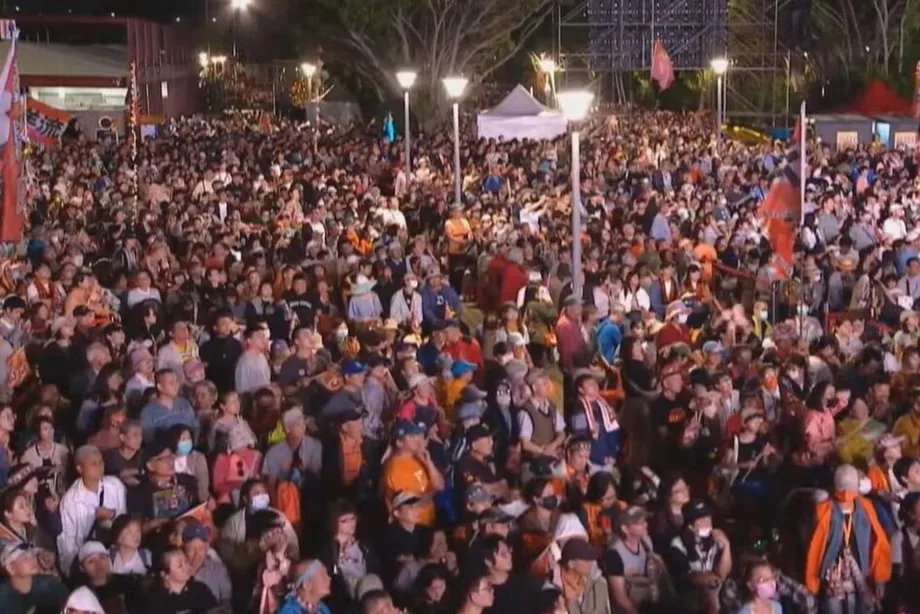
Supporters filled the riverside gathering area, nearby pavements and part of Zhixing Road. When medical assistance was needed, the crowd obstructed the road that rescuers needed to use.
At about 8:08 p.m., Shen was introducing five city council candidates from Shilin and Beitou when legislator and campaign director Wu Szu-yao and fellow host Wu Cheng interrupted the stage programme. They asked supporters to move to either side and follow staff instructions so ambulance crews could pass.
A detailed chronology put the first ambulance's passage at 8:18 p.m., about 10 minutes after the stage interruption. Another placed the patient's transfer into the ambulance at about 8:14 p.m., followed by a brief resumption of the programme at 8:17 p.m.
Campaign staff also opened the entrance used for Shen's arrival, allowing people waiting on the road to move into the venue. That gave organisers another way to relieve pressure on Zhixing Road while medical crews worked.
The immediate problem was practical: rescuers needed a continuous route through an area occupied by supporters. Hosts kept the programme on hold while staff and the crowd made room.
What happened during the interruptions
The evening involved two medical responses and a brief attempt to restart the programme between them. The most detailed timing places the second emergency at about 8:23 to 8:24 p.m.; an initial description put it less than five minutes after the first collapse.
The sequence of the main events was:
- 7:59 p.m.: Emergency services received a call about a 47-year-old man without breathing or a heartbeat near Guandu Temple.
- About 8:08 p.m.: The hosts stopped the stage programme and asked the crowd to clear a rescue route.
- About 8:14 to 8:18 p.m.: The first patient was placed in an ambulance and the vehicle passed through the crowd, with the two steps recorded at different times.
- About 8:23 to 8:24 p.m.: A second participant became unwell after the programme briefly resumed.
- About 8:27 p.m.: The second ambulance passed through after roughly three minutes of crowd clearance.
- About 8:28 p.m.: Wu Cheng said both patients had reached hospital and their initial conditions were stable.
- 8:34 p.m.: The programme resumed after a final check and a short rest.
The first interruption at 8:08 p.m. and the final restart at 8:34 p.m. span 26 minutes, including the brief resumption between emergencies. Initial descriptions put the disruption at about 20 minutes.
CPR and an AED restore a heartbeat
The 47-year-old man's condition was described as an out-of-hospital cardiac arrest, often shortened to OHCA. This means the heart has stopped pumping blood effectively before the person reaches a hospital. Emergency response information said dispatchers gave CPR instructions remotely and directed people at the scene to obtain an AED.
CPR uses repeated chest compressions to help move blood around the body when the heart cannot do so. An AED checks the heart's electrical rhythm and can deliver a shock when it detects a rhythm that can be treated that way.
People at the rally performed CPR and used the AED before the man regained a heartbeat. He was then transported for emergency treatment. The second patient's age and the treatment provided at the scene were not specified.
Wu Cheng asked the audience to remain quiet while organisers checked for other problems. He said the team was putting residents' safety first and would wait until the situation had been addressed before continuing.
A final campaign journey takes longer than planned
Shen's Shilin and Beitou appearance was the sixth and final event in the Taipei Ocean Current series. The evening gathering followed a vehicle procession through the two districts, with Kaohsiung Mayor Chen Chi-mai accompanying him.
Advance arrangements placed the starting gathering near city councillor Chen Tzu-hui's service office on Section 6 of Yanping North Road in Shilin. The convoy departed from the Shezheng Road surface car park at about 5 p.m. and reached the Guandu Temple area at about 7:30 p.m.
The journey took roughly two and a half hours, about half an hour longer than expected. Compared with the planned two hours, that was a 25% increase in travel time. Supporters lined the route, waved flags and ribbons, and in some cases ran alongside the procession.
The municipal affairs talk at the destination had been scheduled for 7 p.m., before the convoy eventually arrived. Crowds delayed its start, and Shen and Chen then took about 10 minutes to walk from their vehicle to the stage through supporters lining the entrance.
Shen and Chen wore campaign shirts and carried illuminated props during the procession. Supporters held balloons shaped like the number three, waved Ocean Current flags and called out election chants.
Supporters arrive by road and river
People began gathering well before the official departure. Crowds were building after 2 p.m., and the road outside Chen Tzu-hui's service office was already packed at about 2:30 p.m. Staff directed people into queues.
An 86-year-old supporter said she had arrived at noon and had attended every event in the series. Her account of waiting five hours before the scheduled departure illustrated how early some supporters committed to the day's activities.
The campaign also drew people along the Tamsui River. Supporters organised boats and dragon boats, with many wearing orange clothing and carrying campaign flags. Others took part using stand-up paddleboards, while campaign support also included diving displays and a pink sports car.
Shen's wife and daughter appeared among the supporters on what was also his wedding anniversary. They held a sign celebrating the anniversary, adding a family moment to the procession before the evening emergencies.
Wu Szu-yao, the local legislator and Shen's campaign director, described Shilin and Beitou as the area she had served for 20 years. She became emotional while hosting the gathering and describing the response along the route.
Organisers claim a crowd above 50,000
Wu Szu-yao announced that attendance at the Guandu gathering had exceeded 50,000. Organisers also said the livestream audience had surpassed 140,000. Shen's official YouTube channel carried aerial views of the crowd around the riverside venue.
The two figures describe different forms of participation: people attending the gathering and people watching its broadcast. Organisers gave no counting method for the crowd estimate or explanation of how the livestream figure was measured.
The size of the gathering was visible in the occupied entrance, pavements and roadway. For participants, that meant slow movement into the venue and repeated requests to make room when emergency vehicles approached.
President Lai Ching-te, who also chairs the DPP, was expected to speak later in the evening. His appearance was still described as forthcoming during the account of the procession and arrival.
Safety checks continue before the restart
Wu Cheng told the crowd at about 8:28 p.m. that the two patients had reached hospital. Even after the ambulances departed, organisers continued checking whether anyone else needed assistance and whether access routes were clear.
At about 8:32 p.m., he said the safety and health situations had been addressed and announced a further two-minute rest before restarting. The programme then resumed at about 8:34 p.m.
The gathering also involved a lost child and other participants feeling unwell. The central operational task remained keeping people moving away from the roadway so another ambulance could enter if needed.
The rally brought a large campaign crowd to Guandu, but its most urgent moments depended on people making space, following staff directions and helping rescuers reach patients. One man received CPR and a defibrillator shock before his heartbeat returned, while two people ultimately required hospital care.
Key Points
- Organisers said more than 50,000 people attended Shen Boyang's November 15 rally outside Guandu Temple in Taipei.
- A 47-year-old man regained a heartbeat after CPR and AED treatment and was taken to Tamsui Mackay Memorial Hospital.
- A second participant also required hospital treatment. Host Wu Cheng said both patients' initial conditions had stabilised.
- Crowds on Zhixing Road delayed ambulance access, prompting repeated appeals to clear a rescue route.
- The programme was interrupted twice and resumed at about 8:34 p.m.
- The gathering followed a procession through Shilin and Beitou with Kaohsiung Mayor Chen Chi-mai.