A headquarters agreement becomes a dispute over who delayed it
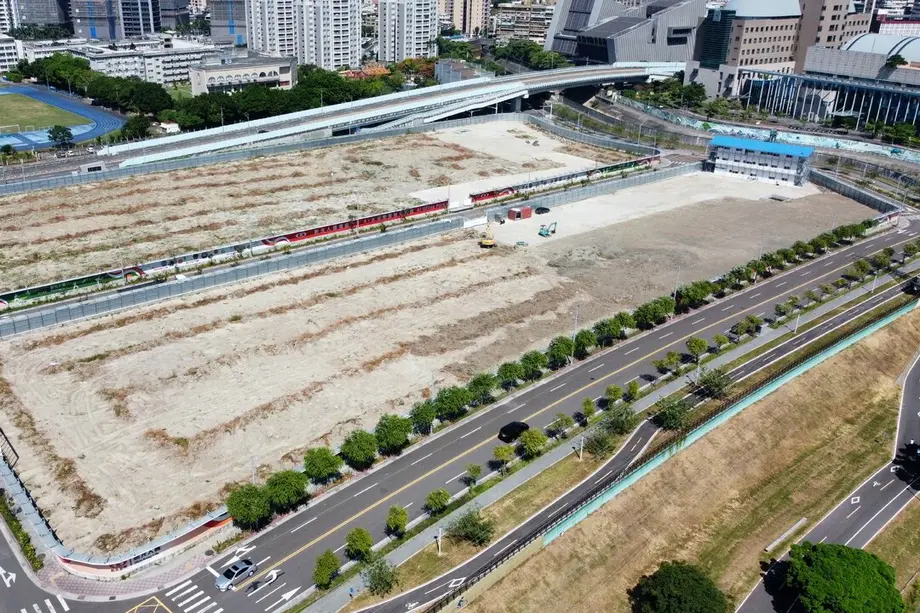
Nvidia's agreement to build a headquarters on about 3.9 hectares in Taipei's Beitou-Shilin Technology Park is facing a dispute over how it happened. An unnamed person familiar with the company's negotiations says an agreement could have been signed in July or August 2025. Taipei's government says an existing land contract prevented that route and required a different legal arrangement.
Contents
- A headquarters agreement becomes a dispute over who delayed it
- What Nvidia and Shin Kong Life had agreed
- Why the city says construction had to come first
- Two competing explanations for the same delay
- How the project moved from transfer to termination
- The dates that shaped the agreement
- Who connected Nvidia with Taipei?
- What the final contract means for the site
- From negotiations to registered rights
- Key Points
The stakes extend beyond political credit. Nvidia ultimately signed a contract with the city on February 11, 2026, with a land rights premium of NT$12.2 billion. The project, called NVIDIA Constellation, carries a planned investment exceeding NT$40 billion and a projection of more than 10,000 jobs across construction and operations.
The disagreement concerns two plots, T17 and T18, where Shin Kong Life Insurance held the rights to develop city land. According to the unnamed person, Nvidia and the insurer had already agreed on commercial terms in May 2025. The person alleges that the city rejected their proposed transfer for political and electoral reasons, insisting instead on signing directly with Nvidia.
Taipei's government denies political interference. It says Shin Kong Life had not started construction and therefore could not transfer its rights under the original contract or the applicable regulations. The city describes the eventual agreement as the result of resolving those restrictions, recovering the land and changing the rules for granting development rights.
The controversy resurfaced after Mayor Chiang Wan-an and his wife discussed their role in connecting with Nvidia chief executive Jensen Huang. Their account has brought renewed attention to the difference between attracting an investment, negotiating its commercial terms and securing permission to use public land.
What Nvidia and Shin Kong Life had agreed
Nvidia first expressed interest in the T17 and T18 plots to Shin Kong Life in December 2024, according to the person familiar with the negotiations. The two companies then signed a memorandum of understanding on May 16, 2025.
The memorandum covered a proposed transfer of surface rights, agreed commercial terms and confidentiality provisions. A surface right allows its holder to build on and use land owned by someone else. In this case, the proposed transaction concerned development rights over city land rather than a purchase of the land itself.
Huang publicly announced the selection of the Beitou-Shilin site in Taiwan on May 19, three days after the memorandum was signed. Nvidia and Shin Kong Life later visited the city government together on July 18 to explain their proposal and seek support.
The unnamed person says both companies hired outside legal advisers, who concluded that Article 18 of Taipei's regulations governing land sales, leases and surface rights in zone expropriation areas allowed a transfer with city consent. Under that interpretation, the city could approve the transaction and remove the transfer restriction in the existing contract.
The person's claim that signing could have occurred in July or August rests on that proposed approval. Taipei's government says the private memorandum could not replace the obligations Shin Kong Life had accepted when it obtained the development rights in 2021.
Why the city says construction had to come first
Taipei's government identifies clause 4.4.1 of its 2021 contract with Shin Kong Life as the central obstacle. According to the city, the clause required all building occupancy permits to be obtained, the first registration of building ownership to be completed and city consent to be secured before the surface rights and buildings could be transferred.
An occupancy permit authorizes a completed building to be used. The first ownership registration formally records ownership of that building. Shin Kong Life had not begun construction when it sought permission to transfer the rights, the city says, so those conditions had not been met.
Shin Kong Life applied for transfer approval on July 9 and July 16, 2025. The city says it replied on July 10 and July 17, respectively, explaining that the undeveloped site did not meet the contractual requirements. Both refusals therefore preceded the companies' joint visit on July 18.
The city also disputes the companies' reported reading of Article 18. It says the proviso in the article's first paragraph requires the recipient to acquire both the surface rights and the buildings above the land. In the city's interpretation, buildings had to exist before that transfer mechanism could apply.
Taipei says the regulations were issued under Article 44, paragraph 6, of the Land Expropriation Act. It argues that the regulations and the signed contract must be considered together, with the successful bidder still responsible for fulfilling its contractual obligations.
Two competing explanations for the same delay
The unnamed person describes city approval as the remaining step in a commercially settled transaction. From that perspective, replacing the proposed company transaction with a direct agreement between Nvidia and the city added months to a process that was already close to completion.
Taipei's government describes the same period as time spent finding a lawful way around an existing contractual obstacle. It says approving a transfer before development began could create concerns about reselling public land development rights for profit and unfair treatment of other businesses seeking city land.
The practical disagreement is therefore about the route to the site. Nvidia and Shin Kong Life proposed transferring an existing right. The city ultimately recovered the land and granted Nvidia a new right through a special procedure.
The claim that political or electoral considerations drove that choice comes from the unnamed person. The city rejects it and says its decisions protected public assets. Whether the original transfer could legally have been approved, including through a waiver of the contract restriction, remains contested.
How the project moved from transfer to termination
Taipei says it began asking the Ministry of the Interior about the relevant rules in July 2025. In September, the city amended its regulations to add a mechanism for granting surface rights to a specified recipient through a special project procedure.
Shin Kong Life publicly proposed a negotiated exit on October 22. Its condition was that the city return relevant costs it had already paid, allowing the insurer to give up its rights so Nvidia could proceed.
Nvidia's global real estate vice president, Scott Ekman, met Chiang on November 18 and delivered an investment letter of intent on Huang's behalf, according to the city. The letter identified T17 and T18 as the selected headquarters site.
The city dates its NT$4.434 billion termination agreement and recovery of the land to November 24, 2025; the account of Shin Kong Life's corporate approval says its board approved termination and the parties signed an agreement on November 21. The two dates place the agreement at different points in the same week.
Recovering the plots removed Shin Kong Life from the land rights arrangement. Nvidia could then negotiate directly with the city under the newly established procedure, rather than take over the insurer's existing rights.
The dates that shaped the agreement
The negotiations stretched from Nvidia's initial approach in late 2024 to registration of its new surface rights in March 2026. Several different milestones sit within that period: a company memorandum, transfer applications, termination of the insurer's rights, a new contract and final registration.
- December 2024: Nvidia first expressed interest in T17 and T18 to Shin Kong Life, according to the unnamed person familiar with the talks.
- May 16, 2025: Nvidia and Shin Kong Life signed their memorandum of understanding. Huang announced the site selection on May 19.
- July 9 to 18, 2025: Shin Kong Life submitted two transfer applications, the city rejected both, and the companies jointly visited city officials.
- September 2025: Taipei amended its regulations to create a special mechanism for granting surface rights to a specified recipient.
- October 22, 2025: Shin Kong Life publicly offered to terminate its agreement if relevant costs were returned.
- November 18 to 24, 2025: Ekman delivered Nvidia's investment letter, and the termination arrangement with Shin Kong Life advanced.
- February 11, 2026: Nvidia and Taipei signed the new surface rights contract.
- March 12, 2026: Nvidia completed registration of the special surface rights, according to the city.
The February signing came roughly six to seven months after the July or August window described by the unnamed person. Registration followed 29 days after signing, completing another stage in establishing Nvidia's rights over the site.
Who connected Nvidia with Taipei?
Chiang and his wife, Shih Fang-hsuan, discussed the headquarters project during a radio interview hosted by Wang Wei-chung. They described a connection through an Nvidia engineer they knew in the United States that allowed them to contact Huang and help advance the investment.
The unnamed person familiar with Nvidia's talks challenged that portrayal. The person said negotiations were led by two global vice presidents, identified as Mr. Linetsky and Mr. Ekman, who handled property and facility matters and reported to Huang.
Technology commentator Hsu Mei-hua also relayed criticism from Nvidia personnel. According to her account, the company had already planned to keep its new headquarters in Taipei and had spent three years developing plans in Nangang. She described Chiang's contribution as helping resolve the Beitou-Shilin land arrangement rather than originating the decision to remain in the city.
Hsu said the engineer connection narrative overlooked Nvidia's formal division of responsibilities and the role of its Taiwan general manager at the time. Those criticisms concern how the project has been publicly described, while the city's documented role in the negotiations included deciding how the public land rights could be granted.
The city's own account places Ekman at the November meeting with the investment letter. That provides a specific point at which a senior Nvidia executive formally communicated the company's choice of site to Chiang.
What the final contract means for the site
Nvidia's final arrangement covers approximately 3.9 hectares and grants surface rights for 50 years, with provision for a further 20 years. The possible duration therefore reaches 70 years if the extension is used.
The NT$12.2 billion premium announced at the February signing concerns Nvidia's new land rights contract. The NT$4.434 billion termination amount concerns the city's agreement to recover the plots from Shin Kong Life. The two sums belong to different transactions within the same project.
The planned investment of more than NT$40 billion and projection of more than 10,000 jobs cover a much wider undertaking than the land agreement alone. The employment figure combines construction and operations, spanning the period when the headquarters is built and the period when it is used.
Nvidia's signatory was identified as Mark Steven Hoose, the legal representative of its Taiwan subsidiary and its global tax chief. Chiang said the company had considered using an entity in Singapore, Hong Kong or the British Virgin Islands, and credited his efforts with securing a Taiwan subsidiary as the contracting party.
The contract gives the project a formal basis for using the site. No construction start or opening date was specified in the accounts of the agreement.
From negotiations to registered rights
Chiang said on February 5, 2026, that price negotiations and contracting procedures were still under way. He thanked Nvidia for choosing Beitou-Shilin and acknowledged assistance from the central government. The city had previously set a goal of signing before the Lunar New Year.
Six days later, Chiang displayed the signed contract and announced the NT$12.2 billion premium. Taipei says registration was completed on March 12 with support from the city council, following the regulatory amendment and the recovery of the land.
Nvidia now has registered rights to the selected plots, while the political dispute concerns the months before that outcome. The central issue is whether Taipei should have approved the earlier transfer or was required to replace it with the new arrangement. The city's defense rests on the construction conditions in the original contract; the criticism rests on the claim that city consent and a waiver could have allowed the companies' agreement to proceed sooner.
Key Points
- Nvidia signed its Taipei headquarters land rights contract on February 11, 2026, with a premium of NT$12.2 billion.
- An unnamed person familiar with the talks says Nvidia and Shin Kong Life could have signed a transfer agreement in July or August 2025.
- Taipei denies political interference and says the undeveloped plots failed the original contract's transfer conditions.
- The city amended its regulations, negotiated the termination of Shin Kong Life's rights for NT$4.434 billion and contracted directly with Nvidia.
- The headquarters project covers about 3.9 hectares, with planned investment exceeding NT$40 billion.
- Nvidia completed surface rights registration on March 12, 2026, according to the city.