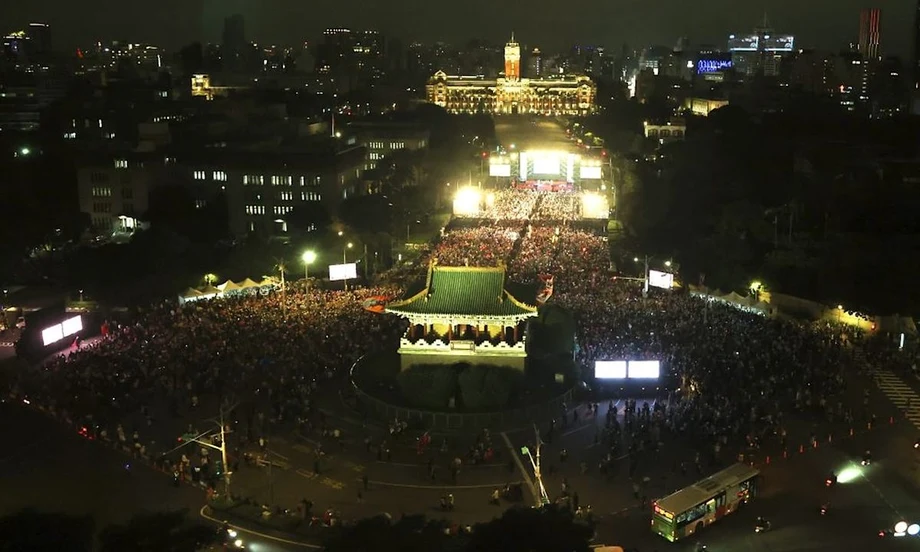
A crowd count that kept climbing in Banqiao
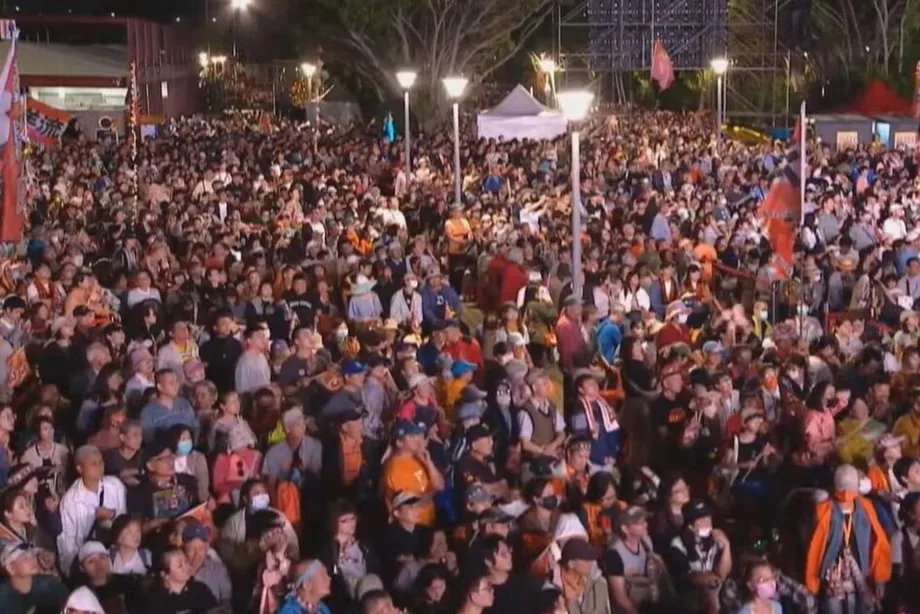
Su Chiao-hui, the Democratic Progressive Party candidate for New Taipei City mayor, closed her campaign on the night of 27 November at the Banqiao Second Sports Field, and the numbers her campaign put out grew hour by hour. When the host opened the programme the venue already held more than 20,000 people, with more queueing outside for security checks. By the time singer Wang Cai-hua finished her set shortly before 8pm, organisers announced the crowd had reached 30,000. Later material from the campaign described more than 40,000 people and then more than 50,000, with supporters filling the stands beside the field.
Contents
- A crowd count that kept climbing in Banqiao
- Three hours before the gates opened, a queue
- A evening in eight steps
- What Su Chiao-hui promised the crowd
- Diamond Mountain City and the New Crown Coast
- Lai Ching-te takes aim at Lee Si-chuan
- Tsai Ing-wen and the election she never won
- Two sports fields, one evening
- What comes next
- Key Points
The online audience told a similar story of escalation. At one point the rally stream showed 25,000 viewers watching at the same time, against 23,000 for the event held the same evening by Chiang Wan-an, the Kuomintang mayor of Taipei who was seeking another term. Campaign releases later claimed peak concurrent viewers above 50,000. Concurrent viewers means people watching at the same moment, rather than total clicks over the whole evening, which is why the figure moves up and down during a broadcast.
The crowd mattered to the campaign because New Taipei is Taiwan's largest city by population, with about 4 million residents spread across 29 districts, and because the race was decided the following day in the nine in one local elections, when voters pick mayors, city councillors and other local officials across Taiwan.
Three hours before the gates opened, a queue
Supporters began lining up roughly three hours before the 7pm start, on a day when temperatures had risen again. Even while the venue was still being inspected, 400 to 500 people were waiting in an orderly line for the security check. By the time entry opened at 6pm the queue stretched well beyond the field, and families arrived with handmade placards reading "Chiao-hui number one" and "New Taipei's mayor Su Chiao-hui", along with ribbons and towels printed with campaign slogans.
One of those in the queue was a mother surnamed Lin, who brought her daughter. She said Su's policies had struck a chord with her, particularly the childcare proposals, and that she had also followed the candidate's motorcade broadcasts, which she described as exciting. Elections are an important national event, she said, and she wanted her child to feel the atmosphere of a democratic vote first hand.
The musical line up ran from the Golden Melody award winning singer Huang Fei, who opened, to the band Fire EX. and Wang Cai-hua, billed by hosts as Taiwan's Ayumi Hamasaki for her temple style dance hits. Legislators Chang Hung-lu, Wu Ping-jui, Wu Chi-ming and Lin Shu-fen spoke in turn, along with former DPP secretary general Lin Yu-chang, before the presidential headliners took the stage.
A evening in eight steps
- Around 4pm: supporters start queueing, three hours before the scheduled start.
- 6pm: gates open with 400 to 500 people already waiting during the venue check.
- 7pm: the programme begins and the host announces more than 20,000 inside.
- Shortly before 8pm: Wang Cai-hua finishes and organisers announce 30,000.
- 8.15pm: Su enters the field and needs seven to ten minutes to work her way to the stage along a 120 metre route.
- 8.43pm: President Lai Ching-te begins speaking.
- About 8.55pm: former president Tsai Ing-wen, chair of Su's campaign, speaks last.
- 9.40pm: the rally ends.
Su was mobbed on the way in. Supporters stood on chairs, waved flags and shouted "Mayor Su Chiao-hui" and the election chant "Su Chiao-hui, freeze the garlic", a phrase in Taiwanese that sounds like a call for victory. The host called out "2026, Chiao-hui certainly wins" and described the night as the last stretch before New Taipei changed hands.
What Su Chiao-hui promised the crowd
Born and raised in New Taipei, Su has served three terms in the Legislative Yuan and says she has worked in local service for more than a decade. She told the crowd that she had spent close to 900 days walking the city, from Zhonghe, Yonghe and Xindian to Shulin and Yingge, and that her campaign had been built on what she called a positive and sunny style of politics in which residents helped write the policies.
There is no other trick, just one: genuine heart for genuine heart.
Her platform came in numbered blocks: six welfare policies aimed at different generations, three family care policies, and nine industrial park policies intended to keep capital, industry and talent in New Taipei. The industrial plan would use government subsidies and guidance to help traditional manufacturers and small and micro businesses adopt artificial intelligence, smart manufacturing and digital management, and to push both a digital and a net zero transition. Restaurants, retailers and service businesses would be encouraged to use the same tools to cut costs and raise revenue, and the campaign wants a cross industry platform that links suppliers and buyers into alliances.
Let every trade and profession take pride in its expertise, and let residents take pride in New Taipei.
The family care and welfare package was aimed at households across age groups, and it drew at least one voter to the field with a child in tow. Su also promised to work with the 36 councillors on her New Taipei team, who she said had campaigned across all 29 districts with district by district platforms.
Diamond Mountain City and the New Crown Coast
Two place branding plans sit alongside the welfare and industry pledges. The Diamond Mountain City plan and the New Crown Coast plan are meant to link New Taipei's mountain and coastal resources into a single offer, promoting tourism and local business from the hills around Shiding and Pinglin to the surf coast at Gongliao and the fishing ports of the north coast. Su framed the goal in sweeping terms: making New Taipei the first choice for Taiwanese families to settle, and a city foreigners should visit at least once in their lives.
She also borrowed an image she has used before, describing New Taipei as a rich dining table where people of different backgrounds sit together. Tsai Ing-wen picked up the metaphor in her own speech, saying it captured the inclusiveness of a city that crosses ethnic groups and backgrounds.
Lai Ching-te takes aim at Lee Si-chuan
President Lai Ching-te arrived on stage at 8.43pm, a few minutes behind the schedule, and opened with the chant "captain of the Taiwan team", which brought a roar from the stands. He spoke as a native of Wanli, a district on New Taipei's northeast coast, and as a former mayor of Tainan, arguing that his own record let him judge the job.
As a member of New Taipei, and having been mayor of Tainan, I am confident that Su Chiao-hui is the best mayor for New Taipei.
Lai praised Su's work in the legislature, noting that she had been tested in three legislator elections and had spent nearly 900 days touring the city to draw up a vision for it. He said he hoped she and her fellow DPP candidate Shen Po-yang would both win by large margins, and that he wanted to see which of the two performed better, describing their professional experience as already above the threshold for election.
The sharpest passage was aimed at the Kuomintang's candidate, Lee Si-chuan. Lai said Lee had no experience of running a government on his own, had said originally that he would not run, and had then been fielded by his party's arrangement.
Since that is the case, let us let him retire.
Lai also attacked earlier New Taipei mayors, saying the city had slipped into a supporting role despite having the best conditions and the largest population in Taiwan. One mayor, he said, had treated New Taipei as a springboard to the presidency, an apparent reference to Hou Yu-ih, who stepped down as mayor to run for president in 2024. Those before him, Lai said, had not put their hearts into the city. He credited former premier Su Chen-chang with eight years of work that transformed the area before it was upgraded into a special municipality in 2010.
Tsai Ing-wen and the election she never won
Tsai Ing-wen, who chairs Su's campaign, closed the night with a personal argument. She reminded the crowd that her first ever election was the 2010 New Taipei mayoral race, which she lost, and that the defeat remained a regret. Many members of the teams that carried her through three presidential campaigns came from New Taipei, she said, which meant her government was partly a New Taipei government.
These presidents could not have been elected without a New Taipei line on their record.
Tsai described Su as gentle but firm, patient, and solid on fundamentals, able to listen to residents and to stay calm when education, culture or local construction projects hit bottlenecks. She said the pairing of Su and Shen Po-yang gave her confidence about the next generation.
I see Su Chiao-hui and Shen Po-yang, and I know that Taiwan's next generation will walk more steadily and run faster.
Her example of persistence was the Tamkang Bridge, which opened to traffic in May and links Tamsui with Bali. The project failed to attract bidders seven times, she said, until the Cabinet under Premier Lai approved extra funding and a full review, and it was finished. She asked each supporter to bring ten real votes, and thanked those who had flown home or were still travelling back to cast ballots.
On the road to a better Taiwan, New Taipei cannot be absent.
Su, for her part, played with the crowd's eagerness to call her mayor. The time had not yet come, she said, the long campaign was not over, and the result would be delivered by the city's voters. She ended with a promise about what four years would bring.
You give me four years, and I will make you say: my great New Taipei.
Two sports fields, one evening
Across town at the Banqiao First Sports Field, the Kuomintang staged its own closing rally for Lee Si-chuan, with Chiang Wan-an, Taoyuan mayor Chang San-cheng and Keelung mayor Hsieh Kuo-liang on stage as what Lee called a line up of people who get things done. Lee's campaign framed the election around cooperation across Keelung, Taipei, New Taipei and Taoyuan.
We will certainly link up across Keelung, Taipei, New Taipei and Taoyuan, especially on the foundation the mayor laid in eight years, to serve residents.
Earlier in the day the two motorcades crossed paths. Lee, campaigning with Hou Yu-ih under the banner of a "sea of supporters" sweep, travelled through Xindian, Yonghe, Zhonghe and Banqiao, the same districts Su covered. The convoys met on Zhongzheng Road in Xindian, and Hou called encouragement across to Su's team. Lee said all 29 districts were key and that every vote could decide the city's future. He also said Huang Kuo-chang, chairman of the Taiwan People's Party, could not attend his rally, and that he had thanked him by message that morning for his party's support, adding that cooperation between the two parties would not change before or after the vote.
What comes next
Su's campaign announced a counting night at the same venue, the Banqiao Second Sports Field, from 4pm on 28 November, when the result of the mayoral race and the council races was expected to become clear. Turnout and the final vote split were not known when the rallies ended, and no official figure for either crowd had been released, with the numbers announced on stage coming from the campaigns themselves.
For residents, the immediate stakes are the policies the two candidates spent the final week arguing over: childcare and family support on one side, and a plan to move small businesses onto digital and low carbon operations on the other. For the parties, the margin in a city of 4 million people will shape how the next national election is fought, a point Tsai made directly when she told the crowd that no one reaches the presidency without a record in New Taipei.
Key Points
- Su Chiao-hui held her closing rally at the Banqiao Second Sports Field on 27 November, with gates open at 6pm and the programme starting at 7pm.
- Organisers counted more than 20,000 people at the start, 30,000 before 8pm, and later claimed more than 40,000 and then more than 50,000.
- The rally stream showed 25,000 concurrent viewers at one point against 23,000 for Chiang Wan-an's Taipei event, with later campaign claims of more than 50,000.
- Su has campaigned for close to 900 days and ran on six welfare policies, three family care policies and nine industrial park policies.
- The industrial plan centres on AI, smart manufacturing, digital and net zero transition for small and medium businesses, plus a cross industry platform.
- Her Diamond Mountain City and New Crown Coast plans aim to link the city's mountain and coastal tourism resources.
- President Lai Ching-te spoke at 8.43pm and said Lee Si-chuan lacked experience of running a government alone.
- Former president Tsai Ing-wen, the campaign chair, closed the night and recalled losing the 2010 New Taipei mayoral race.
- The Kuomintang held its own rally at the Banqiao First Sports Field with Chiang Wan-an, Chang San-cheng and Hsieh Kuo-liang.
- Counting was scheduled at the same Banqiao venue from 4pm on 28 November.