A historic anniversary carries a firm Taiwan message
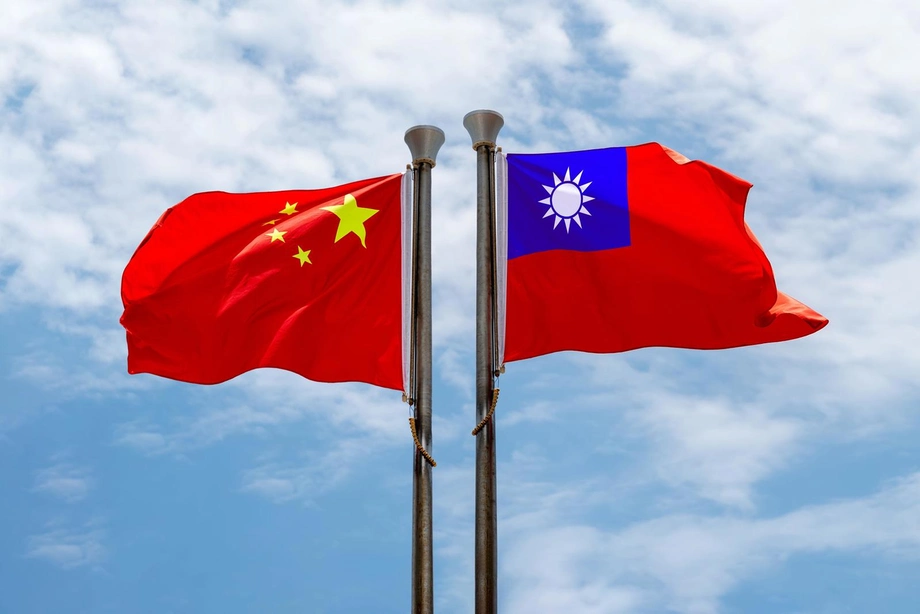
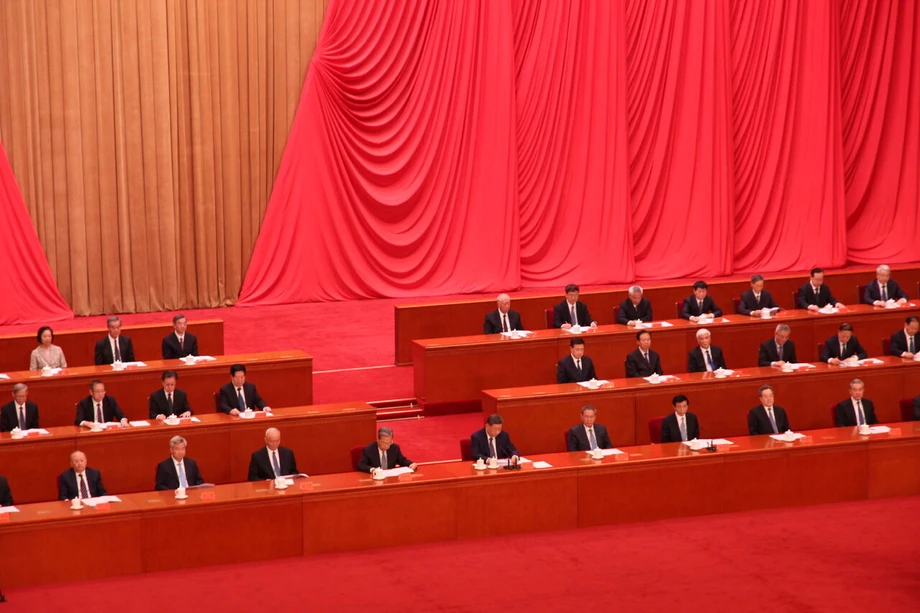
Chinese President Xi Jinping said Beijing would leave no room for Taiwan independence as he addressed about 3,000 people at the Great Hall of the People on November 12, 2026, marking 160 years since the birth of revolutionary leader Sun Yat-sen. He paired that warning with an offer of dialogue under Beijing's political conditions and a pledge to consider the interests and feelings of Taiwan's people.
Contents
- A historic anniversary carries a firm Taiwan message
- Dialogue comes with political conditions
- Why Sun Yat-sen was central to the argument
- A ceremony designed for a broad audience
- Patriotism linked directly to party leadership
- Infrastructure and prosperity support the succession claim
- Sun's relatives pursue exchanges through a living symbol
- Hong Kong connects the anniversary to education
- The anniversary follows weeks of security concerns
- Key Points
Xi, who also heads the Chinese Communist Party and the Central Military Commission, presented unification as an enduring party mission and part of his wider goal of national rejuvenation. Taiwan governs itself, while Beijing claims the island as its territory and seeks to bring it under Chinese control.
Addressing the Taiwan issue during his speech, Xi stated:
We will never leave any room for Taiwan independence separatist activities in any form.
The ceremony brought together China's senior leadership, relatives of Sun, visitors from Taiwan, Hong Kong and Macao, overseas guests and foreign diplomats. Its audience reflected the speech's reach: Xi was addressing people across the Taiwan Strait and Chinese communities abroad, alongside officials responsible for carrying out party policy.
Sun's legacy supplied the central argument. Xi portrayed the revolutionary's commitment to national unity as a historical foundation for Beijing's present position on Taiwan. He also connected Sun's ambitions for a stronger, more prosperous China with Communist Party leadership, socialism and China's current development programme.
Dialogue comes with political conditions
Xi said Beijing would maintain its policy of peaceful unification and one country, two systems. That formula proposes bringing Taiwan under Chinese sovereignty while allowing it to retain a different system from the mainland.
He offered discussions with people from different sectors in Taiwan on relations across the strait and national unification, provided they accepted the one China principle and the 1992 Consensus. Beijing uses those terms to require a common political starting point that Taiwan and the mainland belong to one China.
The 1992 Consensus refers to a claimed understanding arising from contacts between representatives of the two sides in 1992. Its meaning and acceptance are contested in Taiwan. In Xi's speech, it served as a condition for the dialogue he proposed.
Xi described people on both sides of the strait as members of one family and argued that discussion could resolve disagreements. He also promised to account for Taiwan's circumstances. Explaining that pledge, the Chinese president said:
We will fully consider the realities in Taiwan and fully take into account the interests and feelings of Taiwan compatriots.
His offer therefore combined consultation about how relations and unification might develop with a fixed objective of eventual Chinese sovereignty over Taiwan. The speech gave no timetable for unification or date for talks.
Why Sun Yat-sen was central to the argument
Sun, born in 1866, played a leading role in the 1911 revolution that ended China's imperial system. He died in 1925. His political programme, the Three Principles of the People, centred on nationalism, democracy and people's livelihoods.
Xi described Sun as a national hero, patriot and pioneer of China's democratic revolution. He recalled Sun's opposition to national division and cited his appeals for a unified country before moving into the speech's Taiwan passages.
Sun's political history also connects him to the Kuomintang, the party he reorganised during his revolutionary career. Xi highlighted Sun's cooperation with the Soviet Union and the Chinese Communist Party, along with his support for workers and farmers. He then presented the Communist Party as the most faithful inheritor of Sun's revolutionary undertaking.
That claim gave the commemoration a purpose beyond remembering a historical figure. Xi used Sun's standing among Chinese communities to argue that the party's current programme fulfils the revolutionary's ambitions. His speech joined three ideas into one political narrative: Sun's campaign to strengthen China, Communist Party leadership and eventual unification with Taiwan.
A ceremony designed for a broad audience
The Beijing gathering began at 10 a.m. beneath a portrait of Sun and the dates 1866 to 2026. Before the event, Xi met representatives of Sun's relatives and overseas guests.
Wang Huning, a member of the Communist Party's Politburo Standing Committee, chaired the ceremony. The other Standing Committee members attending alongside Xi were Li Qiang, Zhao Leji, Cai Qi, Ding Xuexiang and Li Xi. Representatives of central government and military bodies, Beijing authorities, other political parties, business organisations and people without party affiliation also attended.
Xi spoke for about 35 minutes, compared with roughly 50 minutes at the ceremony marking Sun's 150th birth anniversary in 2016. This year's address was therefore about 15 minutes shorter, while still covering Taiwan, domestic governance, economic development and China's relationship with the wider world.
Beijing called the occasion Sun's 160th birth anniversary; the Taiwan description cited in coverage used the 161st. The Great Hall's displayed dates, 1866 and 2026, span 160 years.
Wang's remarks after the address reinforced its message of mobilisation. He described Xi's speech as a call for people on both sides of the strait and Chinese communities overseas to work toward peaceful relations and complete national unification.
Patriotism linked directly to party leadership
Xi organised much of his address around qualities he attributed to Sun: patriotism, concern for ordinary people, pursuit of truth, perseverance, unity and an international outlook. Each theme became an instruction for present government and party work.
On patriotism, Xi called for love of country, support for the Communist Party and support for socialism to be treated as connected commitments. He urged confidence in China's socialist path, theory, institutions and culture, the four areas commonly described in party language as the four confidences.
On livelihoods, he linked Sun's concern for people's welfare with promises to improve living conditions and distribute the benefits of modernisation more fairly. On political ideas, he called for combining Marxism with China's circumstances and traditional culture.
Xi also urged officials to coordinate development and security, prepare for major tests and confront risks. His appeals for unity extended across political parties, ethnic groups, religions, social groups and Chinese communities overseas. This is the party's united front approach: bringing a wide range of groups into cooperation around its political goals.
Infrastructure and prosperity support the succession claim
Xi pointed to Sun's plans for railways, roads, communications, water projects, canals, ports, factories and mines as examples of ambitions that later generations had carried out. He said China's achievements had gone beyond many of the projects Sun envisaged.
The president described China's economy as firmly the world's second largest and said the population had achieved a moderately prosperous standard of living. He used those claims to support his argument that the Communist Party had delivered the national transformation Sun sought.
His international message followed the same pattern. Xi connected Sun's interest in China's responsibilities to the world with calls to promote peace, development, fairness, justice, democracy and freedom. He also urged implementation of four global initiatives.
Taken together, these passages placed the Taiwan demand inside a wider account of China's development. In Xi's argument, unification belongs to the same national project as industrial growth, stronger infrastructure, improved livelihoods and greater international influence.
Sun's relatives pursue exchanges through a living symbol
Sun Yali, Sun Yat-sen's great-grandniece and president of the Sun Yat-sen Cultural Foundation, has pursued a more personal form of engagement across the strait: sharing seeds from a tamarind tree associated with her ancestor.
In 1883, Sun brought tamarind seeds from Honolulu and planted them in the courtyard of his family home in Cuiheng village. During the 2026 tree planting observance, Sun Yali presented seeds from that tree to Kuomintang chair Cheng Li-wun, completing the donation in Taipei.
Sun Yali spent nearly a year preparing the seed donation and related exchanges, making eight visits to Taiwan during that effort. She also took tamarind saplings to Penang and Ipoh in Malaysia for planting at local Sun Yat-sen memorial institutions.
Her initiative gives a physical form to the shared historical memory invoked at the Beijing ceremony. A seed from a familiar historical site can be displayed, planted and passed to another generation, making the exchange more tangible than a political slogan.
Sun Yali expressed concern that some young people in Taiwan were unfamiliar with Sun and attributed that to efforts to reduce identification with China. She advocated starting with youth and community exchanges, then widening contacts in education, culture and everyday welfare. Her comments represent her assessment and her foundation's priorities.
Hong Kong connects the anniversary to education
Hong Kong Chief Executive John Lee used a separate ceremony marking the anniversary to promote patriotic education. He described Hong Kong as the birthplace of Sun's revolutionary ideas and said carrying forward the goal of national revitalisation was the best way to commemorate him.
Lee said Hong Kong's first plan covering five years proposed stronger patriotic education. His government would continue study tours to mainland China for students and support youth exchange programmes organised by nongovernmental groups.
For students, those measures mean continued opportunities to visit the mainland and encounter its history, culture and current development through organised programmes. For the government, Lee presented the visits as part of building identification with the country and Chinese culture.
The Hong Kong measures and Sun Yali's exchanges share an emphasis on young people and historical memory. Their methods differ: one proceeds through government education policy, while the other works through family connections, memorial institutions and community visits.
The anniversary follows weeks of security concerns
Xi's appeal for peaceful development came after Taiwan had raised concerns about Chinese maritime activity across the western Pacific. On October 28, Taiwan National Security Council Secretary-General Joseph Wu published a map identifying 53 Chinese naval and other official vessels across waters stretching from southern Japan to the east of the Philippines.
Taiwan described the deployment as a regional security concern, while China's defence ministry said the aircraft carrier Liaoning was conducting routine training not directed at any particular country. The regional vessel deployments placed Beijing's political demands alongside an expanding maritime presence.
Taiwan also warned about Chinese research vessels mapping waters south and east of the island. Its coast guard described the surveys as preparation of the maritime battlefield. The seabed survey activity drew attention to underwater terrain, submarine operations and communications cables.
The recent sequence shows the setting in which Xi delivered his anniversary address:
- October 28: Joseph Wu published the map identifying 53 Chinese naval and other official vessels.
- Late October: Taiwan raised concerns about Chinese seabed surveys around the island.
- November 12: Xi paired an offer of conditional dialogue with his rejection of Taiwan independence activities at the Sun anniversary ceremony.
For Taiwan, the immediate message was a renewed demand to discuss relations on Beijing's terms. For officials and organisations attending the ceremony, Xi connected that objective to education, exchanges, party leadership and the broader programme of national rejuvenation.
Key Points
- Xi addressed about 3,000 people in Beijing on November 12, 2026, marking Sun Yat-sen's 160th birth anniversary.
- He ruled out space for Taiwan independence activities and offered dialogue under Beijing's political conditions.
- He reaffirmed peaceful unification and one country, two systems, without announcing a timetable.
- Xi used Sun's legacy to connect national unity with Communist Party leadership and China's development.
- Related commemorations included seed exchanges involving Sun's family and patriotic education plans in Hong Kong.
- The speech followed Taiwanese warnings about Chinese vessel deployments and seabed surveys.