From thousands of protesters to a few hundred
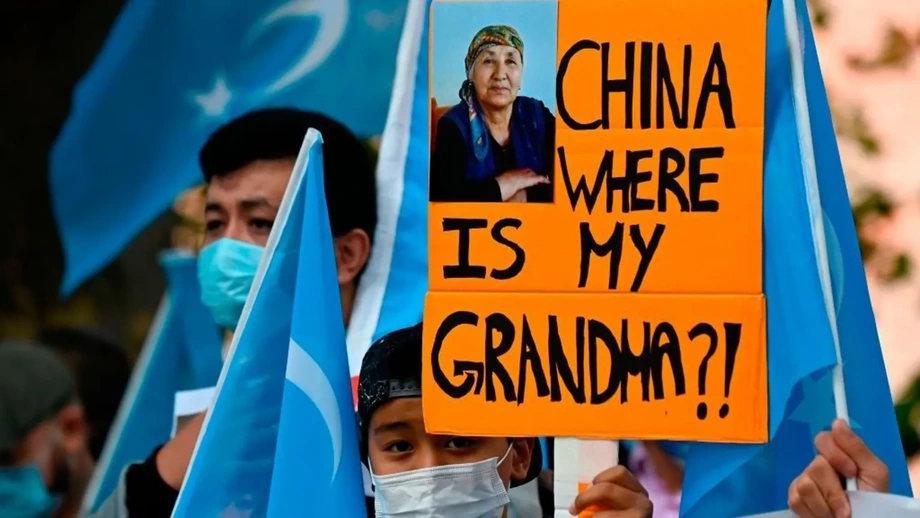
For Dolkun Isa, a Uyghur activist who has lived in exile in Germany for nearly three decades, the size of a street protest has become a measure of international attention. His movement once drew large crowds denouncing China's treatment of Uyghurs. Now, even assembling a few hundred people can be difficult.
Contents
- From thousands of protesters to a few hundred
- Why economic influence now shapes the debate
- The difficult choice over family reunions
- What happens when exile communities lose trust
- Two Paris phone calls, four days apart
- Why France is being pressed to act
- What the US human rights report adds
- Pressure that crosses borders
- For Tibetans, the dispute is also about language
- Beijing's defence and the UN accountability gap
- Key Points
Dolkun, 59, served as president of the World Uyghur Congress, which is based in Munich, from 2017 to 2024. He described the change in stark numbers.
Back in 2018, we could easily get thousands of people out in the streets to protest against China's human rights violations. Nowadays, we have trouble finding even 500.
Reports emerging in 2018 said China had detained as many as one million Uyghurs and other Muslims in internment camps in northwestern Xinjiang. Beijing said the facilities provided reeducation intended to counter separatist violence and denied allegations of abuse. Western governments imposed trade restrictions and sanctions on senior Chinese officials and froze assets, while lawmakers in at least nine countries passed resolutions condemning the detentions.
Dolkun remembers that period as one "when we felt the world was finally listening". He now says activists must compete with economic interests and geopolitical calculations. Many supporters have also reduced their public activism because they fear consequences for relatives still in China.
Why economic influence now shapes the debate
Chinese electric vehicles travel highways from Brazil to Belgium, while Chinese batteries, solar panels, artificial intelligence models and microdramas have become part of daily consumption. Even Labubu, Pop Mart's furry plush character with prominent teeth, has become a familiar accessory. Activists say this commercial and cultural reach helps Beijing present an image of modernity and success that can overwhelm accounts of repression.
Ian Johnson, who won a Pulitzer Prize for his journalism and has long reported on Chinese civil society, says China's economic power has earned it respect abroad and reshaped foreign policy. He sees another change taking place within Western countries.
At the same time, Western governments have become much more inwardly focused and populist, pushing human rights down their lists of priorities.
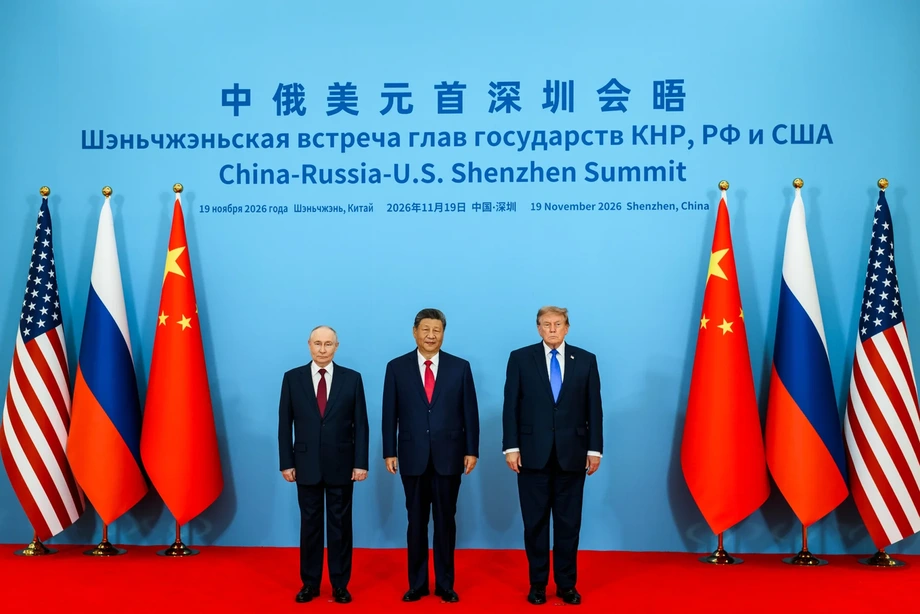
Activists point to diplomacy as evidence of that shift. China's human rights record was not mentioned in any of the three summits held this year between Xi Jinping and US President Donald Trump, including their meeting in Shenzhen. As condemnation becomes more costly for governments with extensive Chinese trade and investment, exiles say their appeals receive less attention.
Arslan Hidayat, a Uyghur journalist born and raised in Australia who runs Kashgar Times, says Beijing has also changed its approach to critics abroad. Alongside threats and punishment, he describes offers of family reunions, money and safety. In return, activists say, people are asked for information about their networks or encouraged to promote narratives supporting the Communist Party. China's embassy in the United Kingdom rejected claims that exiles would be asked to spy on or disclose information about fellow community members.
The difficult choice over family reunions
Turkey, which hosts tens of thousands of Muslim minorities from Xinjiang, provides a window into the official version of these trips. Chinese Consul General Wei Xiaodong was photographed in Istanbul in January seeing off about 30 participants. A post on the consulate's WeChat page said he hoped they would witness Xinjiang's development and actively promote what they had seen after returning to Turkey.
Such visits often involve large groups and are extensively documented on Chinese official platforms. The Istanbul post ended with footage of relatives embracing and presenting bouquets at the airport in Urumqi, Xinjiang's capital. Chinese authorities say Xinjiang received more than 300 million domestic and international tourist visits last year, more than twice the number in 2018, presenting the region as a destination for travellers rather than a centre of international controversy.
Arslan says he has interviewed at least a dozen Uyghur exiles who were invited to return on condition that they occasionally provide information to Chinese agents. He describes questions about neighbours and Uyghur restaurants as seemingly harmless, but believes the answers can help build profiles of dissidents overseas. He also says some people remain quiet to preserve the limited communication with relatives that they have been allowed to regain.
The criteria for joining an organised family visit remain unclear. Alim, a Uyghur exile in Turkey, said a friend was rejected after consulate staff alluded to her past relationship with a Kazakh man who had lobbied for his detained parents in China. Alim said she had not seen her own relatives for years and was devastated. In his understanding, the preferred participant is influential enough to spread China's message while having few political associations.
China's embassy in the United Kingdom described family reunions as a normal part of consular services. It said China respects the lawful rights and interests of every ethnic group, including Uyghurs, and protects their freedom to maintain contact with relatives overseas.
What happens when exile communities lose trust
Mehmut, a Uyghur businessman, accepted an invitation to join a family visit in October 2024 because he hoped to restore commercial connections and keep his business operating. He expected warm reunions but said conversations with friends and relatives felt superficial. He did not describe officials following him or restricting his movements. Instead, he encountered fear, cautious answers and people censoring themselves, leaving him deeply uncomfortable.
Abduweli Ayup, a prominent Uyghur linguist based in Norway, says some former activists withdrew from public view after similar trips. He has seen people delete social media accounts and cut off contact with former colleagues. Others appeared worried that continued activism could endanger their own relatives or the relatives of people around them.
Karma Rinchen, a Tibetan activist who serves as information secretary in the Tibetan government in exile in Dharamshala, India, says selecting only a small number of people for homeland visits creates confusion and resentment. Returnees can find themselves isolated by other exiles. He also alleged that some participants had passed information back to Chinese authorities.
The practical result, according to Dolkun and other campaigners, is a movement with fewer public voices and weaker internal trust. A person who stops attending protests or answering messages may simply be afraid for a parent, spouse or child, but other exiles cannot always know the reason.
Two Paris phone calls, four days apart
A Human Rights Watch statement published on February 18, 2026, documents two Paris cases involving a man who claimed to be an official from Urumqi.
- January 15, 2026: Abdurahman Tohti, 37, received a call pressuring him to monitor Uyghur community activities in France.
- January 19: Mirkamel Tourghoun, 42, received a call from the same man demanding that he stop his activism. Tourghoun recorded and published the conversation.
- January 20: The European Uyghur Institute was scheduled to open its new Paris headquarters.
- February 18: Human Rights Watch publicly urged France to investigate and strengthen protections.
Tohti said the caller wanted him to monitor activities at the European Uyghur Institute, which defends Uyghur rights, preserves the language and culture, and supports the diaspora across Europe. Dilnur Reyhan, the academic who founded the institute, alleged that the Chinese embassy also pressed invited French local authorities not to attend the opening ceremony.
Tohti left Xinjiang in 2013 and has held refugee status in France since 2022. He has had no contact with his family since 2016. In June 2025, he obtained information that his father, mother, wife and sister had received prison terms of 20 to 25 years for inciting ethnic hatred and ethnic discrimination. He still lacks information about his two children, who are believed to have spent a decade in orphanages run by the state, and about three other siblings.
Tohti said the caller displayed detailed knowledge of his life in Paris and presented family contact as an incentive for cooperation.
I can let you speak to your family, even reunite with them abroad.
Tourghoun is a musician, filmmaker and activist who arrived in France as a student in 2005. He sought asylum after Chinese authorities detained and interrogated him for filming in Kashgar following the 2008 Beijing Olympics. During the January call, the man asked whether he wanted the political pressure removed so that he could return and see his parents. The caller claimed that Tourghoun's father was gravely ill.
Tourghoun had chosen to cut off contact with his family in Urumqi and described the approach as emotional blackmail. He told Human Rights Watch that authorities had previously forced his relatives to cry over the phone while seeking information about other Uyghurs. He refused the offer because he wanted to end what he called psychological torture.
Tell my family to forget they ever had a child like me. There is no other solution.
Why France is being pressed to act
Human Rights Watch describes these cases as transnational repression, meaning harassment, surveillance or coercion directed by a government at critics and diaspora communities beyond its own borders. Yalkun Uluyol, the organisation's China researcher, called on French authorities to investigate fully and help Uyghurs resist intimidation.
The Chinese government seeks to silence critical Uyghur voices in France through coercion, intimidation, and surveillance.
France's domestic intelligence agency had already issued a memo in January 2025 identifying transnational repression as a national security threat that undermines the rights of people living in France. The memo said addressing it would be a government priority.
In June 2025, the United Nations human rights office urged host governments to investigate the practice thoroughly and create effective response mechanisms. That same month, Group of 7 leaders pledged to improve global understanding, develop a resilience and response framework, and support people being targeted. At the time of its February statement, Human Rights Watch urged President Emmanuel Macron to use France's Group of 7 summit that June to turn those commitments into coordinated action.
Two other cases illustrate the risks surrounding activism connected to France. In October 2025, following a complaint by the Chinese embassy, a French court convicted Reyhan of damage to public property after she reportedly threw red paint on an embassy banner at a music festival near Paris. In July 2025, Chinese authorities arrested Tara Zhang Yadi, a Chinese student returning from France, after she advocated for Tibetan rights. She faces up to five years in prison, or as many as 15 if deemed a ringleader, on charges of inciting separatism and undermining national unity.
Human Rights Watch said neither the Chinese embassy in Paris nor the French Interior Ministry had responded to its requests for comment by publication. Its statement did not announce whether French prosecutors would open the investigations it requested.
What the US human rights report adds
The US State Department's China 2024 Human Rights Report places the exile accounts within a much larger official assessment. It states that genocide and crimes against humanity occurred during the year against predominantly Muslim Uyghurs and other ethnic and religious minority groups in Xinjiang. It says more than one million Uyghurs, ethnic Kazakhs, Kyrgyz and other Muslims have been detained since 2017 in camps, prisons or reeducation centres, with an additional unknown number receiving training only during the day.
The assessment says Chinese authorities did not take credible steps to identify or punish officials responsible for abuses. One cited case concerns Abidin Ayup, a 96-year-old imam whose death in custody was reported in February. He had been arrested in 2017 and sentenced to nine years in prison for promoting religious extremism.
Birth rates in Xinjiang fell sharply after 2018, a change the report ties to coercive population controls including forced abortions, forced sterilisations, involuntary intrauterine device insertions and pregnancy checks at detention centres. It also describes unusually long sentences imposed in closed trials after some camp detainees were moved into the formal prison system.
The report cites estimates of 55,977 to 113,407 cases of residential surveillance at a designated location from 2015 through 2021, and approximately 60,000 liuzhi detentions between March 2018 and the end of 2021. The first is a form of confinement outside an ordinary jail. Liuzhi is detention under China's supervisory system.
Independent scrutiny is also restricted. The assessment says 85 percent of surveyed journalists who attempted to report from Xinjiang encountered problems. It separately cites a 2023 press freedom index count of 108 professional and nonprofessional journalists detained across China as of August.
Xinjiang's labour transfer programme adds an economic dimension. Research cited in the report found that authorities sought to increase transfers to other Chinese regions by 38 percent in 2023. The assessment says researchers, rights organisations and survivors identified extensive state coercion and serious indications of forced labour.
Several prisoners connect directly to the exile movement. Hushtar Isa, Dolkun Isa's brother, appears on the report's list of political prisoners. Retired doctor Gulshan Abbas is believed to be serving a 20-year sentence on charges related to terrorism. Her family has had no contact with her since her arrest in 2018, less than a week after her sister in the United States spoke out against mass detentions.
Pressure that crosses borders
The State Department assessment cites Freedom House research identifying approximately 250 direct physical acts of transnational repression committed by China from 2014 through 2022. Targets included Uyghurs, Tibetans, religious practitioners, dissidents, journalists, students and academics overseas. Relatives of journalists working abroad also faced harassment or detention, including dozens of relatives of Uyghur Service journalists.
A separate assessment examined 283 individual forced returns from at least 56 countries since 2014, although it did not distinguish ordinary criminal suspects from victims of repression. Chinese authorities described a wider total of 12,000 returned fugitives from more than 120 countries and regions under Operations Fox Hunt and Sky Net.
Digital pressure accompanies those cases. The report describes a leak of more than 500 documents from cybersecurity firm i-Soon revealing cyber attacks against overseas organisations linked to Tibetans and Uyghurs, including the Tibetan administration in exile in Dharamshala. Other targets included hospitals in Taiwan and 14 foreign governments, among them India, Indonesia and Nigeria. Authorities also refused to renew passports for some Uyghurs, Tibetans and other Chinese citizens abroad.
For Tibetans, the dispute is also about language
In July, Tibetan activist Lobga Rangzen died after setting himself on fire outside United Nations headquarters in New York. He was protesting against China's new ethnic unity law, which includes a requirement for minorities, including Tibetans, to learn Mandarin. The UN called the incident absolutely tragic, but Tenzin Dorjee, a researcher at the Tibet Action Institute, says attention faded quickly.
Dorjee described Rangzen's death as an appeal to the international community. He believes many governments are reluctant to criticise China because of its power. Dolkun attempted to rally opposition to the same law that month and likewise received a muted response.
Rinchen's parents were among the Tibetans who followed the Dalai Lama into exile after China took control of Tibet. He says many families have now been separated for generations, making offers to visit Tibetan soil especially powerful. He argues that exile communities must work harder rather than abandon their advocacy.
For Tibetans, this is not something we can simply walk away from. Our struggle is about our identity, our culture, our religion and the basic rights of our people. We have been doing this work for many decades, and we have learned to remain patient and persistent.
Their activism sits within a wider Chinese dissident diaspora shaped by students fleeing after the Tiananmen Square massacre, later waves of lawyers and journalists, and the more recent departure of Hong Kong residents following the suppression of the pro-democracy movement.
Beijing's defence and the UN accountability gap
Beijing rejects the accusations and presents development as evidence of human rights progress. During an October UN committee debate, Chinese Deputy Permanent Representative Sun Lei used a right of reply to accuse the United Kingdom, Australia, Japan, Ireland, the Czech Republic and Lithuania of making groundless accusations and politicising human rights. He cited nearly 100 million people lifted out of poverty and more than 400 million people with middle incomes, while pointing to poverty, racism and other social problems in Western countries.
On November 25, 2026, Abdulhakim Idris, executive director of the Center for Uyghur Studies, brought the debate back to individual families at the 15th UN Forum on Business and Human Rights in Geneva. He said 24 relatives, including his mother, had been missing since 2017. Addressing Mauricio Lazala, chief of the Business and Human Rights Section at the UN human rights office, Idris asked what concrete follow-up had occurred since the office's August 2022 Xinjiang assessment.
That assessment concluded that China's arbitrary and discriminatory detention of Uyghurs and other predominantly Muslim groups could constitute international crimes, including crimes against humanity. In October 2022, however, the UN Human Rights Council voted 19 to 17 against holding a formal debate on the findings, with 11 abstentions. Beijing rejected the assessment as unfounded and declined to implement its recommendations during its Universal Periodic Review in July 2024.
In February 2026, 26 civil society organisations asked UN High Commissioner for Human Rights Volker Türk to clarify what documentation work his office was still conducting. China, alongside 143 other countries, backed Türk's appointment to a second term in July 2026. Civil society groups then repeated demands for stronger independent reporting, citing concerns raised by the Chinese Human Rights Defenders network that the office's leadership had favoured bilateral dialogue with governments over formal public reporting.
Idris's appeal gave no date for another Human Rights Council vote. For exiles, the immediate demands are more concrete: French investigations into coercive approaches, continued public UN documentation, and ways to speak with relatives without feeling that family contact requires silence or information in return. Until then, a sparse protest, a deleted social media account or an unanswered telephone can carry consequences far beyond the individual involved.
Key Points
- Dolkun Isa says protests that easily attracted thousands in 2018 now struggle to draw even 500 people.
- Exiles describe offers of family contact and return visits accompanied by requests for information; Beijing rejects spying claims and calls reunions a consular service.
- Human Rights Watch documented January 2026 calls pressuring Abdurahman Tohti and Mirkamel Tourghoun in Paris.
- The US State Department says more than one million people have been detained in Xinjiang since 2017 and documents repression extending overseas.
- Tibetan activists say the ethnic unity law and pressure surrounding family visits threaten language, identity and community trust.
- France faces calls to investigate transnational repression, while Uyghur advocates continue pressing the UN for public documentation and accountability.