A 150 MW tender within a much larger winter plan
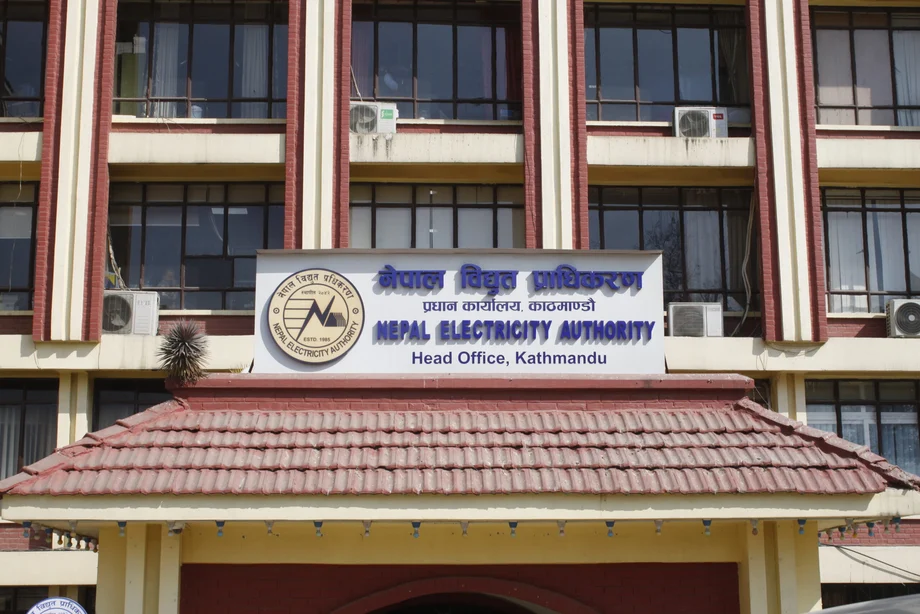
The Nepal Electricity Authority (NEA) invited Indian power trading companies on Friday, November 27, to supply 150 megawatts of electricity for the dry season. Proposals must reach the utility by 12 noon on December 28, 2026, corresponding to Poush 13 in Nepal's calendar. Technical proposals will be opened at 1 pm the same day. The purchase is intended to provide continuous supply throughout the day, rather than electricity available only during certain market periods.
Contents
- A 150 MW tender within a much larger winter plan
- How the bidding will work
- Why a previous NTPC offer collapsed
- Flood damage has shrunk the domestic cushion
- Why Nepal can export and import in the same season
- Indian permissions set the hours and routes
- Export renewals and Bangladesh sales remain pending
- The paused Tata proposal adds a separate trading dispute
- The dates between now and spring
- Key Points
NEA board member Anshu Kiran Shahi has described a procurement lasting four months, within an import window identified as January to May 2027. The tender is considerably smaller than the utility's broader contingency plan. NEA spokesperson Rajan Dhakal said Nepal was considering imports of up to 1,100 MW from India during the dry period from December 2026 to May 2027, when river flows fall and demand reaches its highest levels between February and May.
Dhakal placed Nepal's operating generation capacity at around 3,740 MW. The 150 MW tender therefore equals about 14% of the proposed import ceiling and roughly 4% of domestic installed capacity. It forms one part of a supply strategy that also includes purchases through Indian electricity markets, repairs to damaged plants and new generation expected to join the national grid.
Dhakal explained when the pressure on supplies would become most acute.
Although we need to import some power from India after November, the peak period for demand lies between February and May.
How the bidding will work
Companies holding Category I, II or III electricity trading licences in India can participate. Tender documents are available through the electronic bidding portal of Nepal's Public Procurement Monitoring Office, and proposals must be submitted through the same portal. The technical opening will take place at the NEA's central office in Durbar Marg, Kathmandu. Bidders or their authorised representatives may attend.
Each bidder must pay a tender fee of 12,500 Indian rupees, or the equivalent in Nepali rupees. Earnest money, a deposit submitted with the proposal, is set at 55,000 Indian rupees per megawatt per month, based on the capacity offered. At that published rate, a proposal covering all 150 MW for four months would require a deposit of INR 33 million.
Bids cannot exceed INR 7.34 per unit. A unit is one kilowatt hour, equivalent to using 1,000 watts for one hour. The ceiling matches the average clearing price in India's Day-Ahead Market in October, which was equivalent to approximately NPR 11.74 per unit. The NEA has retained the right to accept or reject any proposal, including all of them, so the opening of technical bids will not by itself select a supplier.
Why a previous NTPC offer collapsed
The competition follows an unsuccessful attempt to agree a price directly with NTPC Trading Corporation Limited. The NEA's Electricity Trade Analysis Committee had recommended using the round-the-clock procurement mechanism about two months before the tender. The utility subsequently received quotations of INR 6.90 per unit from NTPC Trading Corporation, INR 8.50 from Manikaran Energy Limited and INR 9 from SJVN Limited.
Based on the lowest quotation, the NEA issued a letter of intent to NTPC on October 2 and invited it to sign a power purchase agreement on October 15. The following day, NTPC said it could not proceed at the quoted rate and sought a revision. It cited geopolitical uncertainty, rising coal and other fuel prices, changing weather patterns, climate change and El Niño effects, alongside increasing electricity demand within India.
NEA Executive Director Dirghayu Kumar Shrestha said the Indian side had initially committed to supply at a lower rate but later declined to conclude the memorandum, pointing to higher prices in India. Shahi then said fresh competitive bids would be invited. The resulting INR 7.34 ceiling is INR 0.44, or about 6.4%, above NTPC's withdrawn quotation, although it remains below the other two offers. No replacement contract or agreed price has been announced.
Flood damage has shrunk the domestic cushion
The Rasuwa-Bhotekoshi floods in August damaged hydropower stations and related infrastructure in central Nepal. The tender notice says projects with a combined installed capacity of 431 MW remain disconnected from the national grid. An earlier NEA account put the shutdown at 431.1 MW and described an immediate power shortfall of 350 to 400 MW. Dhakal later estimated that the August 26 Bhotekoshi flash floods alone removed about 450 MW of generation capacity.
Heavy monsoon rain from September 24 to 27 then damaged the 190 MW Kaligandaki hydropower project. Dhakal put the combined capacity loss from the Bhotekoshi floods and the September rainfall at about 640 MW. The figures serve different purposes: 431 MW identifies projects disconnected after the August disaster, 350 to 400 MW describes the resulting supply shortfall, and 640 MW combines the estimated damage from both weather episodes.
New plants will provide less relief than their nameplate capacity suggests. Projects totaling around 300 MW are expected to connect to the grid before the dry season, but their actual winter generation is estimated at only about 90 MW because there will be less water in the rivers. That is roughly 30% of their combined installed capacity.
Repairs could gradually improve the position. The NEA expects around 160 MW of capacity affected by the Bhotekoshi floods to be restored by February 2027. Dhakal also expects the 190 MW Kaligandaki project to resume generation within a couple of months. Domestic production should improve more broadly from mid-April as river levels rise, reducing import requirements and potentially allowing exports to resume.
Why Nepal can export and import in the same season
Nepal's electricity system depends heavily on run-of-the-river hydropower. These plants generate electricity from flowing river water without the large seasonal storage provided by a major reservoir. High monsoon flows can produce more electricity than Nepal consumes, while winter flows leave the same plants generating far below their installed capacity.
The NEA was exporting an average of about 600 MW a day to India in September. Dhakal subsequently placed exports at between 600 and 700 MW, even while the utility was preparing winter imports. Sales and purchases can occur at different times and under different contracts. Electricity sold during periods of surplus does not remain available for an evening peak or for the dry months ahead.
For the past three years, the utility has used the Indian Energy Exchange to help balance these variations. Its Day-Ahead Market allows purchases or sales for the following day, while the Real-Time Market permits transactions at short notice, typically about an hour before delivery. Nepal also uses India's transmission network to deliver electricity to Bangladesh. The new tender seeks a continuous supply arrangement alongside those market options.
Indian permissions set the hours and routes
India's Ministry of Power approved NEA imports of up to 654 MW from September 13 through December 31, 2026, for 18 hours a day, from midnight to 6 pm. That arrangement excluded the evening period, when dry season demand is especially high. Dhakal said at the time that India would review the question of dry season imports later.
A subsequent approval for 350 MW covers purchases from November 17, 2026, through July 31, 2027. It allows imports through the Indian Energy Exchange for 17 hours a day but excludes 5 am to 8 am and 5 pm to 9 pm. The NEA must therefore manage those seven morning and evening hours through domestic generation or other permitted supply arrangements.
The November approval divides capacity among four transmission routes. Up to 300 MW can travel through the Kataiya-Kushaha, Ramnagar-Surajpura and Raxaul-Parwanipur lines together, while another 50 MW is assigned to the New Nautanwa-Mainahiya line. All four operate at 132 kilovolts.
The 654 MW and 350 MW figures belong to separate permissions with different dates and conditions. Neither amounts to Indian approval for the entire 1,100 MW that the NEA is considering in its winter plan. That larger figure remains a planning ceiling, while the tender concerns just 150 MW and the market permissions specify their own limits.
Export renewals and Bangladesh sales remain pending
India's approvals also affect Nepal's earnings from electricity sales. The export permit for the 38.8 MW Upper Chameliya project expired on June 30. Permits for the 24.25 MW Seti River and 10.7 MW Upper Tadi Khola projects expired on July 31. Together, those three projects represent 73.75 MW. Another 134.85 MW authorised for export remained unsold because the necessary approvals had not been completed.
Nepal has secured approval in principle to export about 1,200 MW from 37 hydropower projects to India and Bangladesh. In practice, annual renewals, project specific permissions and flood damage determine how much can be sold. The Bhotekoshi disaster damaged the Trishuli and Chilime projects, which had export approvals, and Bangladesh exports had been halted for nearly a month by mid-September. The 14.1 MW Devighat project was also damaged.
The NEA has sought permission to sell electricity from the 9.94 MW Kabeli B-1 and 82 MW Solu Khola projects to Bangladesh. Both can trade in India's Day-Ahead and Real-Time markets, but their Bangladesh sales remain pending. The utility has also asked to use Lower Modi in India's bilateral market as a replacement for Devighat. Lower Modi already has access to the Indian Energy Exchange.
Dirghayu Kumar Shrestha, who was acting managing director of the NEA when he discussed these requests, described the outstanding decisions.
We have sent the name of another project for approval to export electricity to Bangladesh, but we have not received approval yet. We have also asked India to renew the permits for projects whose export approvals have expired, but we have not received them yet.
The paused Tata proposal adds a separate trading dispute
Shrestha has also ordered a pause in a proposed electricity trading arrangement with Tata Power Trading Company Ltd. The NEA board's 1036th meeting decided on Asar 25 to trade through the company, and the Electricity Regulatory Commission approved that decision on Bhadra 2. The proposed arrangement covered exports of approximately 86 MW from two projects that remain under construction: 28.1 MW from Upper Kabeli Hydropower and 57.5 MW from Nupche Likhu Hydropower.
NEA officials said the pause reflected the financial risk if either plant missed its commercial operation date, the date by which it is expected to begin contracted deliveries. Under the proposed terms, delays could have left the NEA liable for substantial penalties to Tata. An NEA employee said there was no guarantee that unfinished projects would begin supplying electricity on schedule.
A ministry employee separately questioned why the commission had approved the board's decision without reviewing the construction status of the two plants. Officials also said people close to Energy Minister Biraj Bhakta Shrestha had been active in promoting the Tata arrangement and had contacted the company.
Internal NEA accounts further described NTPC Vidyut Vyapar Nigam Ltd, or NVVN, as unhappy with the proposed Tata route and slow to respond to repeated requests to sell the NEA 150 MW of continuous supply. The utility has so far conducted its Indian electricity trading through PTC India and NVVN. Those accounts did not include public responses from Tata, NVVN, the commission or the minister.
The dates between now and spring
December 28 is the next fixed procurement date, but repairs, import permissions and river conditions will shape supplies for several more months.
- August 26: Bhotekoshi flash floods damaged hydropower plants and disconnected hundreds of megawatts of capacity.
- September 24 to 27: Heavy rain damaged the 190 MW Kaligandaki project.
- October 2: The NEA issued its letter of intent to NTPC Trading Corporation.
- October 15 and 16: The NEA invited NTPC to sign an agreement, and the company then declined to proceed at INR 6.90 per unit.
- November 17: The later 350 MW Indian market approval began, with seven hours excluded each day.
- November 27: The NEA opened the competitive tender for 150 MW.
- December 28: Bids close at noon, followed by the technical opening at 1 pm.
- February 2027: Around 160 MW of flood affected capacity is expected to be restored.
No date has been announced for completing the financial evaluation, selecting a bidder or signing a power purchase agreement. The NEA can reject every proposal. Its next supply decisions will therefore depend on the prices submitted, Indian approval for delivery, the pace of plant repairs and how much electricity the new projects actually generate. River flows are expected to improve from mid-April, while the NEA's dry season planning extends through May.
Key Points
- Nepal is seeking 150 MW of continuous electricity supply from licensed Indian traders, with bids due on December 28.
- The tender has a ceiling of INR 7.34 per unit and forms part of a plan that contemplates imports of up to 1,100 MW.
- NTPC Trading Corporation withdrew its earlier INR 6.90 quotation after being invited to sign an agreement.
- Flood and rain damage has reduced domestic capacity, with 431 MW still disconnected under the tender notice's August flood figure.
- About 160 MW is expected back by February, while broader river flows should improve from mid-April.
- Indian import approvals specify capacity, transmission routes and permitted hours, including restrictions during morning and evening peaks.
- No supplier, final price or contract signing date has been announced, and the NEA retains the right to reject all bids.