The Hague takes its fight to Beijing
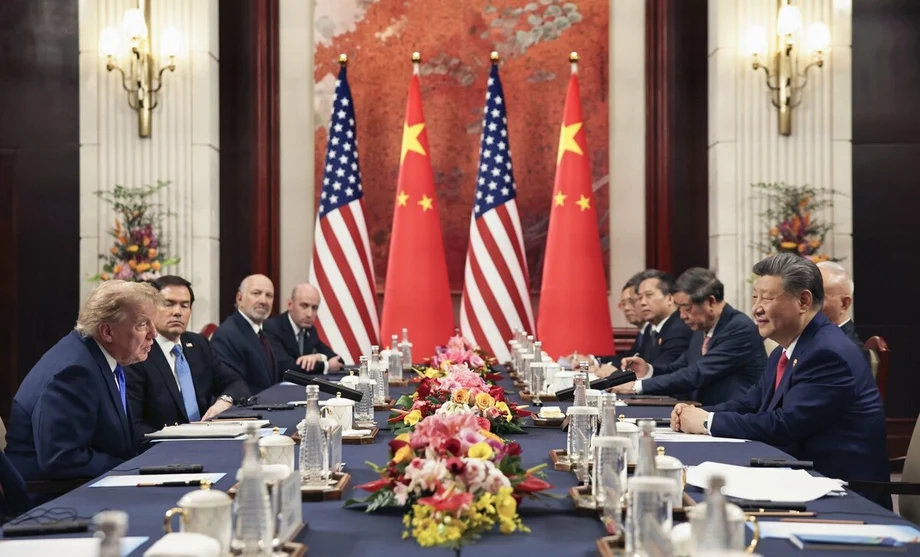
Dutch Foreign Minister Tom Berendsen used a visit to Beijing on Wednesday, November 25, 2026, to deliver a message aimed squarely at Washington: Congress should not pass the MATCH Act. His appeal followed meetings with Chinese Vice Premier Ding Xuexiang and Foreign Minister Wang Yi, and came one day after Dutch lawmakers from governing and opposition parties demanded a concerted diplomatic effort to protect ASML.
Contents
- The Hague takes its fight to Beijing
- What the MATCH Act would change
- Why maintenance is central to the dispute
- The Dutch case for national control
- The money and industrial capacity at stake
- Security politics in Washington and Europe
- Could China replace ASML technology?
- The defense bill route and the dates that matter
- What the Netherlands does next
- Key Points
Berendsen told reporters that the Netherlands would continue deciding its own export controls. He made the immediate objective of Dutch diplomacy plain.
The MATCH Act must not be passed. That is the most important thing.
The proposal would press the Netherlands, Japan and other technology partners to align their restrictions on chipmaking equipment with those of the United States. If they did not, Washington could extend its own jurisdiction to equipment made in those countries. For ASML, that could mean tighter limits on immersion deep ultraviolet lithography sales to China and licensing requirements for maintaining machines already installed there.
The congressional record still describes legislation, not an enacted law. The official bill page identifies the House measure as H.R. 8170 in the 119th Congress. It lists the status as Introduced, shows no passage by the House or Senate, and records no cost estimate from the Congressional Budget Office. The House Foreign Affairs Committee ordered an amended version reported on April 22 by 36 votes to 8, but there has been no House floor vote.
During Tuesday's trade debate in The Hague, Nicole Maes of the governing VVD party connected the proposal directly to national prosperity.
The MATCH Act is a disaster for ASML, and therefore a disaster for the Dutch economy.
Laurens Dassen, leader of the opposition Volt party, called for European measures to protect the company. Michiel Hoogeveen of JA21 described the bill as unacceptable and urged diplomacy to stop it in December, while acknowledging Dutch dependence on the United States for trade and security. Foreign Trade Minister Sjoerd Sjoerdsma said he would spend half of December camping outside Congress if that would help remove the proposal. Germany, France and the European Commission have also backed the Dutch objections.
What the MATCH Act would change
The full name is the Multilateral Alignment of Technology Controls on Hardware Act. Representative Michael Baumgartner, a Republican from Washington state, introduced H.R. 8170 on April 2 with ten original cosponsors, five Republicans and five Democrats. In the Senate, Pete Ricketts introduced S. 4281 on April 13 with Andy Kim, Jim Risch and Chuck Schumer as original cosponsors. The Senate measure remained in the Banking Committee, with 13 cosponsors after two more senators joined on November 10.
The mechanism starts with the US departments of Commerce and State identifying chipmaking tools that countries of concern cannot produce in volume at comparable capability. The bill calls these chokepoint tools, meaning products whose scarcity gives supplier countries considerable control over an industry. Agencies would also identify facilities making advanced chips, then negotiate with supplier countries for comparable controls on exports and servicing.
The amended House text gives agencies 90 days to identify the tools and facilities, 120 days to report on negotiations with allies, and 240 days after enactment to certify alignment or identify countries that have not aligned. That 240 day allied deadline replaces the 150 days in the original proposal. A waiver that could be used once would now last up to 60 days rather than 90. The Senate bill still contains the 150 day period.
If alignment did not occur, Commerce could require licenses for covered tools and components exported from the countries concerned. The House version also allows the extra US controls to be lifted after an ally adopts equivalent restrictions. Its country scope covers China, including Hong Kong and Macau, along with Russia, Iran, North Korea and other countries designated by the State Department. The proposed law would expire five years after enactment.
Licenses under the proposed countrywide controls would be handled with a presumption of denial. In practical terms, the starting assumption would be refusal rather than approval. The House committee retained a countrywide restriction on immersion DUV lithography while narrowing some other equipment coverage. It also directed agencies to examine components including electrostatic chucks, DUV light sources, optics, lasers, certain radio frequency power generators and impedance matching networks. That brings component suppliers into the compliance work alongside manufacturers of complete machines.
Why maintenance is central to the dispute
Lithography machines print extremely small circuit patterns onto silicon wafers. ASML is the only producer of extreme ultraviolet systems, which are essential for efficient production of the most advanced chips. It has never shipped an EUV machine to China. Deep ultraviolet systems use an older generation of technology, but immersion DUV equipment remains valuable to Chinese fabs and is the principal commercial focus of the new proposal.
The servicing language reaches well beyond an engineer visiting a factory with spare parts. It covers remote installation, calibration, repair, software and firmware updates, training, field service and troubleshooting. Installation support and technical assistance are also included. Restricting these activities could affect output from equipment that Chinese customers bought years earlier and complicate contracts that promised continuing support.
Hoogeveen's parliamentary questions named SMIC, Hua Hong, Huawei, CXMT and YMTC and asked whether a maintenance ban could effectively force ASML to break contracts. Sjoerdsma did not give a definitive legal answer. He said the draft could require licenses for work on machines already delivered, with refusal as the starting presumption, and that the eventual impact would depend on implementing regulations and any exceptions. The amended House text no longer lists individual Chinese companies; it ties facility coverage to existing US end user controls and definitions in earlier defense legislation.
The enforcement threat rests partly on the Foreign Direct Product Rule. This is a US export control mechanism that can bring certain items made abroad under American jurisdiction when they incorporate US technology, software or components. ASML uses light sources produced by Cymer, its US subsidiary, among other international inputs. Washington therefore has potential pressure points even though ASML is headquartered in the Netherlands and assembles its machines outside the United States.
The Dutch case for national control
The Dutch government's position is set out in written ministerial answers published by parliament as document 2026Z07615. Hoogeveen submitted his questions on April 10, and Sjoerdsma answered on May 12. The cabinet said it viewed the MATCH Act with concern and had raised its objections, particularly over extraterritoriality, with members of Congress and the US administration. Extraterritoriality here means one country applying its legal rules to conduct and companies beyond its own territory.
The answers accept that partners have security concerns about advanced semiconductor technology reaching unwanted users. They nevertheless argue that each country remains responsible for its own export control laws. For the Netherlands, the EU Dual Use Regulation is the leading legal framework. Dual use goods are products with civilian applications that can also serve military purposes. Dutch policy is country neutral, assesses each license application on its merits, and treats export control as different from a general export ban.
The government described its approach as surgical, based on national security risks, nonproliferation and the prevention of unwanted end use. It also continues consultations through bilateral contacts and the Wassenaar Arrangement, a multilateral forum through which participating states coordinate controls on conventional arms and sensitive dual use technology. Details of current MATCH Act discussions remain confidential.
The Hague has already accepted substantial restrictions. ASML received permission for EUV sales to China in 2018, but the Dutch government reversed course in July 2019 after intense pressure from Washington. National licensing requirements for advanced chipmaking equipment began on September 1, 2023, and were widened effective April 1, 2025. Some less advanced DUV systems consequently require Dutch licenses. The present dispute concerns whether Washington can compel the next expansion and dictate how The Hague treats service contracts.
A Dutch Foreign Affairs spokesperson summarized that sovereignty argument by saying that extraterritorial measures are unacceptable between partners. Benedetta Girardi, a strategic analyst at the Hague Centre for Strategic Studies, made the procedural distinction in similar terms: coordinating national policies is different from allowing one country to determine the commercial reach of companies based in another.
The money and industrial capacity at stake
China accounted for 33% of ASML revenue in 2025, making it the company's largest market that year. ASML expects the share to fall to approximately 20% in 2026 as existing restrictions take greater effect. The difference is 13 percentage points, although those figures describe shares of total sales rather than a direct measure of changing revenue. China provided 23% of revenue in the most recent quarter, showing that the market remained substantial even as its annual share declined.
ASML is Europe's most valuable listed company and the world's largest supplier of semiconductor lithography equipment. Its machines contain tens of thousands of parts and support a network that extends well beyond Veldhoven, where the company is based. Germany's ZEISS supplies precision lenses and mirrors that direct the light used to print circuit patterns. Sjoerdsma warned that lost immersion DUV sales would hurt the Dutch economy, its suppliers and employment, while also making trade and investment less predictable.
A collapse in Chinese orders would not necessarily translate into an equal immediate loss of total company revenue. Demand associated with artificial intelligence currently exceeds what ASML can supply, creating opportunities to redirect some production. The exposure to servicing, customer relationships and future market position is broader than a single year's equipment orders.
Investors have nevertheless reacted sharply. ASML shares fell 6% in US trading on Wednesday and have lost approximately one third of their market value since the June peak, despite strong quarterly results. The session also brought heavy losses across semiconductor shares: Intel, AMD and Broadcom declined between 6.3% and 8.45%, while KLA, Lam Research and Applied Materials fell between 8.4% and 10% as investors reassessed AI valuations. Separately, ASML disclosed that it repurchased 445,000 shares for roughly €557 million between November 16 and 20 under its continuing buyback program.
Security politics in Washington and Europe
Supporters of the MATCH Act argue that US restrictions lose effectiveness if Chinese chipmakers can obtain comparable tools and support from Japan or the Netherlands. They also point to multipatterning, a technique in which several DUV exposures and processing steps are used to create finer features than a single exposure would allow. It can extend the capability of older equipment, although it adds cost and manufacturing complexity.
Congressional pressure intensified after disclosures concerning Nvidia's former chief executive Jensen Huang and his links to a suspected Chinese spy. Huang had been a prominent advocate of looser export controls. Senior lawmakers subsequently requested that he appear before Congress, while backers of the legislation argued that access to sensitive technology could not depend on the preferences of private businesses.
Dutch and European critics see an inconsistency in Washington asking ASML to stop supplying equipment while American companies can still export advanced AI chips to China. Bart Groothuis, a Dutch member of the European Parliament, expressed that objection directly.
You can't say: they can't have AI chips, so don't sell them the machines, but we sell them our AI chips. It's not right, it doesn't make any sense.
Sjoerdsma voiced the same frustration and said the Netherlands already has one of the world's strictest export control systems. Bernd Lange, the German member of the European Parliament who chairs its trade committee, called the extraterritorial approach totally unacceptable in October and said the discussion should occur on equal footing. The dispute therefore covers both the security case for denying China technology and the process by which allied governments decide what to restrict.
Could China replace ASML technology?
ASML finance chief Roger Dassen used the company's results presentation for the third quarter to criticize the MATCH Act. His argument was that cutting Chinese customers off would accelerate their efforts to build competing equipment. ASML has repeatedly described the proposal as a bad idea for that reason, rather than presenting its opposition solely as a defense of current sales.
Chinese company Langdao Suiyan offered a concrete sign of those efforts at the 26th China International Industry Fair in Shanghai in October. It publicly displayed a prototype EUV light source, a core component of an EUV lithography system. The company said 90% of the content was domestic, most key parts came from its own research, and the system was ready for wafer exposure testing.
The prototype is one component rather than a complete production machine. Langdao Suiyan said commercial mass production would require another three to five years, citing the need to increase output and demonstrate stable operation over long periods. Frank Lohmuller, head of the semiconductor division at Carl Zeiss Group, estimated that China would need 15 years to develop EUV lithography equipment, while cautioning that the degree of Chinese progress was difficult to quantify.
Those estimates leave a wide interval between demonstrating a component in a test setting and operating a reliable commercial manufacturing system. They also explain the strategic disagreement: Washington's supporters want to close remaining supply routes now, while ASML warns that tighter closure could strengthen the incentive and urgency behind Chinese substitution.
The defense bill route and the dates that matter
Attaching MATCH to the National Defense Authorization Act would give it a faster legislative route than a standalone floor vote. The annual defense package is often used to carry unrelated national security provisions because congressional leaders consider it essential business. Inclusion is not guaranteed, and negotiators can alter or remove provisions before a final text reaches both chambers.
A Senate managers package also combined MATCH with two other China technology bills. The AI Overwatch Act would bring Congress further into licensing decisions for advanced AI processors such as Nvidia's Blackwell line, with its version in the package shortening a ban window for sales to countries of concern from two years to 18 months. The Chip Security Act, sponsored by Senator Tom Cotton, would require location verification hardware on advanced chip exports to detect smuggling and diversion. None of the three bills has independently cleared the full Senate.
- April 2: Baumgartner introduced H.R. 8170 in the House.
- April 13: Ricketts introduced the companion Senate bill, S. 4281.
- April 22: House Foreign Affairs ordered an amended House bill reported, 36 to 8.
- May 12: Sjoerdsma formally recorded Dutch objections to extraterritorial controls.
- July 14: A Senate vote to open debate on its defense bill failed 50 to 46, short of the 60 votes required.
- July 22: The House passed its 2027 defense bill, H.R. 8800, without MATCH language.
- November 24 and 25: Dutch lawmakers demanded action, and Berendsen took the government's case to Beijing.
As of November 21, MATCH remained a bill, with no new action on the standalone measures since early October. Dutch officials are concentrating on December defense negotiations, and Congress could consider the proposal in the middle of the month. No firm date has been set for standalone floor action. The current Congress ends on January 3, 2027, adding a deadline if supporters want to use this session. The final equipment scope, servicing exceptions and any defense bill language remain undecided.
What the Netherlands does next
Dutch diplomacy now runs through several channels. Prime Minister Rob Jetten raised concerns during an April visit to Washington, and Sjoerdsma met Commerce Secretary Howard Lutnick and lawmakers in June. Ministers have continued contacts with Congress and the administration, while the Netherlands discusses export controls with Japan, Taiwan, South Korea and the European Commission. Support from Germany, France and the Commission gives The Hague a broader European argument about risks to the continent's technology base.
A meeting on December 2 is scheduled to discuss Pax Silica, a technology partnership intended to secure global supply chains for semiconductors, AI and rare metals. The EU is also preparing a summit of government leaders and chief executives from major European technology companies to accelerate AI development and strengthen cooperation across the value chain. Sjoerdsma has linked that work to the scale required for European AI production.
Berendsen's Beijing agenda included another unresolved chip dispute. He raised Nexperia, whose European and Chinese operations remain locked in litigation following the Dutch government's intervention last year. He told Chinese officials that reaching a solution was ultimately the companies' responsibility.
For ASML and its customers, the immediate legal position is straightforward: current Dutch, EU and US licensing rules continue to apply, while the additional MATCH requirements do not because Congress has not enacted them. The decisions expected in December will determine whether the proposal moves closer to law, returns to committee or loses its place in the defense package.
Key Points
- Berendsen said in Beijing that the MATCH Act must not pass, following cross party opposition in the Dutch parliament.
- H.R. 8170 remains at Introduced status; the House committee approved an amended version 36 to 8, but neither chamber has passed it.
- The House draft allows 240 days for allied alignment, while the Senate draft retains 150 days.
- Failure to align could bring allied equipment under US controls, affecting ASML immersion DUV sales and servicing in China.
- China supplied 33% of ASML revenue in 2025 and is expected to provide about 20% in 2026.
- The House defense bill contains no MATCH text, and the Senate defense effort stalled after a 50 to 46 procedural vote.
- ASML warns that tighter restrictions could accelerate Chinese competition; a Chinese EUV light source prototype still needs an estimated three to five years to reach mass production.
- Dutch diplomacy is focused on December, with the current Congress scheduled to end on January 3, 2027.