A Record Award After Years of Litigation
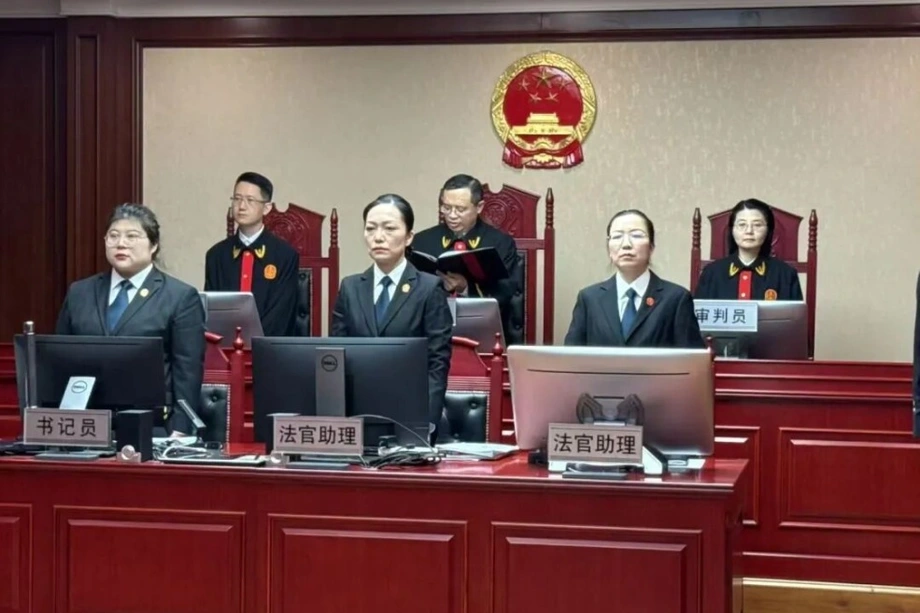
China's Supreme People's Court on Friday, 27 November 2026, ordered Tetra Pak China Ltd and related parties to pay about 492 million yuan ($74 million) to two groups of Chinese competitors. It is the largest damages award in an antitrust civil lawsuit heard by the country's courts, and it comes on top of a separate regulatory fine of about 668 million yuan imposed in 2016.
Contents
- A Record Award After Years of Litigation
- How the Awards Grew on Appeal
- The Conduct That Shut Rivals Out
- The 2016 Investigation Behind the Civil Claims
- How the Court Turned Market Share Into Damages
- Why the Reasoning Matters Beyond Tetra Pak
- Timeline of the Investigation and Lawsuits
- What the Award Changes for Businesses
- Key Points
The Greatview parties, including Greatview (Beijing) Trading Co Ltd, were awarded 466 million yuan. That comprises 464 million yuan for losses and 2 million yuan for reasonable expenses connected with pursuing the claim. The Newjf parties, including Shandong Newjf Technology Packaging Co Ltd, whose name is also transliterated as Xinjufeng, were awarded 26.47 million yuan: 25.67 million yuan for losses and 800,000 yuan for expenses. The detailed components total 492.47 million yuan, which the court expressed in rounded form as 492 million yuan.
The panel announced the revised judgments in open court in Courtroom One of the Supreme People's Court Intellectual Property Court after explaining its main reasons. Both disputes grew out of findings that Tetra Pak abused a dominant position in mainland China from 2009 to 2013. Greatview was its largest Chinese competitor during that period, while Newjf was a young business with a small market share but rapid growth.
How the Awards Grew on Appeal
The Beijing High People's Court had awarded much smaller sums in December 2023. It ordered Tetra Pak to pay more than 40.43 million yuan to the Greatview parties and more than 1.69 million yuan to the Newjf parties for economic losses and reasonable expenses. Tetra Pak, Greatview and Newjf all appealed.
The Supreme People's Court increased Greatview's payment to 466 million yuan, more than 11 times the initial award. It granted Greatview's claim for losses in full at 464 million yuan and added 2 million yuan in expenses. Greatview had originally sought more than 468 million yuan in combined losses and expenses when it filed its civil lawsuit in May 2018.
Newjf's final award of 26.47 million yuan is more than 15 times its initial award, although it remains far below the compensation it requested. Newjf filed in November 2019, seeking more than 125 million yuan for losses and expenses. The top court accepted that both sets of plaintiffs had suffered competitive harm and losses, then applied its own economic assessment to determine how much they should receive.
The Conduct That Shut Rivals Out
Tetra Pak's equipment and cartons are used to package liquid milk and pure fruit juice. Aseptic packaging allows suitable drinks to remain safe without refrigeration until the container is opened. The relevant Chinese markets covered equipment for aseptic cartons made from composite materials with a paper base, technical services supporting that equipment, and the packaging materials themselves.
The former State Administration for Industry and Commerce (SAIC) identified three connected practices. Tetra Pak restricted raw material suppliers from providing paper to its competitors. It tied purchases of packaging materials to the supply of its equipment or technical services. It also used loyalty discounts based on cumulative purchase volumes and personalised purchase targets.
These practices could keep customers within Tetra Pak's system while limiting rivals' access to both customers and supplies. The Supreme People's Court found that the conduct had a clear market foreclosure effect. In plain terms, competing suppliers were blocked from opportunities they would otherwise have had to win business. The court connected that exclusion to reduced demand for competitors' products and, in some circumstances, higher costs for those competitors.
Greatview and Newjf occupied different positions when the conduct occurred. Greatview was already Tetra Pak's largest competitor in China, giving it a substantial existing business that could be affected by restricted sales opportunities. Newjf was still establishing itself, but its rapid expansion made access to customers especially valuable. The court concluded that both were operating competitors during the relevant period and therefore suffered harm from the exclusionary conduct.
The 2016 Investigation Behind the Civil Claims
SAIC opened its investigation in January 2012 after receiving a complaint. The inquiry lasted more than four years and involved dawn raids, visits to business premises, interviews and market surveys. Its decision on 21 November 2016 covered Tetra Pak International S.A. and five Chinese subsidiaries, and examined conduct between 2009 and 2013.
A legal update from CMS records the exact penalty as RMB 667,724,176.88, approximately 91 million euros, and says Tetra Pak did not intend to appeal that administrative decision. The fine was separate from the compensation later sought by Greatview and Newjf through the civil courts.
The 2016 decision cited three provisions of China's Anti-Monopoly Law. Article 17.4 addressed unjustified restrictions on trading partners, covering the limits placed on paper suppliers. Article 17.5 addressed sales that tied packaging materials to equipment and technical services without justification. Article 17.7 covered other abusive practices identified by enforcement authorities, including the loyalty discount schemes used in this case.
CMS described the decision as SAIC's first penalty for abuse of a dominant position and China's first case concerning loyalty discounts. It also noted an earlier European case: the European Commission fined Tetra Pak 75 million euros in 1991 for abuse of dominance in the European Community markets for packaging machinery and cartons. The Chinese investigation therefore added to a much longer history of antitrust scrutiny, while introducing a distinct analysis of discounts that reward customers for concentrating their purchases with a dominant supplier.
How the Court Turned Market Share Into Damages
Economists retained by Greatview, Newjf and Tetra Pak produced competing analyses of the losses. The Supreme People's Court examined those reports, expert opinions and 36 new pieces of evidence submitted by the parties. Its review covered the reliability of data sources, the suitability of analytical tools, the logic of each calculation and whether the final conclusions were credible.
The judges accepted the market share method proposed by the plaintiffs as basically reliable, although they adjusted data that came from inconsistent sources. This method estimates what the market would have looked like without the abusive conduct. Rather than attempting to reconstruct every individual carton order lost by a rival, it asks how much market share Tetra Pak should have given up under competitive conditions and uses that estimate to calculate the resulting losses.
Tetra Pak's missing evidence became central to the period covered by that calculation. The court ordered the company to submit evidence showing when it had stopped the conduct in question, but Tetra Pak submitted none. Based on the evidence before it, the court found that the anticompetitive effects persisted until at least 2014. Its reasoning also recognised that ending a restrictive practice does not automatically erase its effects on customers, competitors and sales.
The judges treated Tetra Pak's market share in 2015 as the benchmark for the position that should have existed without the abuse. They used it to calculate the share the company should have ceded from 2012 to 2014, a period the court treated as one of market saturation and equilibrium. The figure for 2012 then provided a basis for estimating the share that should have been ceded in each year from 2009 to 2011, when the market was growing rapidly. This sequence produced the revised damages of 464 million yuan for Greatview and 25.67 million yuan for Newjf, before reasonable expenses were added.
Why the Reasoning Matters Beyond Tetra Pak
The Supreme People's Court also clarified when a competitor can be presumed to have suffered harm. The rule applies where a dominant business locks in demand across a market, or controls access to an essential supply, in a way that forecloses rivals by generally reducing demand for their products or raising their costs. A plaintiff that can show it was a competitor in the relevant market during the abuse can then benefit from a presumption that it suffered injury.
The presumption answers the question of whether a competitor was harmed, while the economic evidence determines the size of the payment. The judgments also explain how courts can assess several closely connected practices together and use the market share method to calculate losses. That is particularly relevant where equipment contracts, material purchases, supplier restrictions and discounts operate as parts of the same exclusionary system.
The court presented administrative enforcement and civil litigation as complementary. SAIC's investigation established the regulatory infringement and produced the 2016 fine. The subsequent civil cases focused on the losses suffered by competitors and the expenses they incurred, resulting in payments directed to those businesses.
Xiao Fu of Fudan University and Guofu Tan of the University of Southern California examined the earlier administrative decision in the Review of Industrial Organization in March 2019. Their academic case study focuses on loyalty rebates and identifies the decision as China's first antitrust ruling involving loyalty discounts. Writing in the abstract, the authors explained its expected role in later enforcement:
As the first antitrust ruling in China involving loyalty discounts, we expect that the decision will serve as an important reference in antitrust enforcement in China.
The new civil judgments add a further stage to that reference point. They address how a competitor proves injury after an enforcement action and how judges can convert an estimate of lost market share into a damages award. The court said this guidance should help with the assessment of losses in later antitrust litigation.
Timeline of the Investigation and Lawsuits
The investigation and litigation moved through regulators and two levels of civil courts across these dates:
- 2009 to 2013: SAIC later found that Tetra Pak abused its dominant position through tying, exclusive dealing and loyalty discounts.
- January 2012: SAIC opened its investigation following a complaint.
- 21 November 2016: SAIC issued its penalty decision, imposing a fine of RMB 667,724,176.88.
- May 2018: The Greatview parties filed their civil claim for more than 468 million yuan.
- November 2019: The Newjf parties filed their separate claim for more than 125 million yuan.
- December 2023: The Beijing High People's Court awarded more than 40.43 million yuan to Greatview and more than 1.69 million yuan to Newjf, prompting appeals by all three sides.
- 27 November 2026: The Supreme People's Court revised the awards in open court, bringing the combined compensation and expenses to 492.47 million yuan.
What the Award Changes for Businesses
Multinational companies now have a concrete illustration of how administrative and civil financial exposure can accumulate in China. Adding the 2016 fine of about 667.7 million yuan to the new civil payments of 492.47 million yuan produces approximately 1.16 billion yuan across the two stages. These are distinct obligations: the first was a regulatory penalty, while the second compensates the plaintiff groups for losses and reasonable expenses.
The immediate financial effect falls on Tetra Pak and the two groups of packaging rivals. Greatview secured its full claim for losses as assessed by the court, while Newjf obtained a substantially higher award than it received in 2023. The judgments contain no calculation of changes in retail milk or juice prices, so any effect on consumer prices remains unquantified.
Future antitrust plaintiffs and defendants also have a detailed example of the evidence that can shape compensation, including economic reports, supplier and customer arrangements, market share estimates and proof of when exclusionary effects ended. No payment timetable or further court date was announced with the judgments, and Tetra Pak's response to the new awards was not included in Friday's announcement.
Key Points
- China's Supreme People's Court ordered Tetra Pak to pay about 492 million yuan ($74 million) on 27 November 2026, a record antitrust civil damages award.
- Greatview receives 464 million yuan in damages plus 2 million yuan in expenses, totalling 466 million yuan.
- Newjf receives 25.67 million yuan in damages plus 800,000 yuan in expenses, totalling 26.47 million yuan.
- The awards replace much smaller sums granted by the Beijing High People's Court in December 2023.
- The underlying conduct involved tying, exclusive dealing and loyalty discounts from 2009 to 2013, and led to a separate fine of about 668 million yuan in 2016.
- The court reviewed 36 new evidence items, found that anticompetitive effects lasted until at least 2014, and used Tetra Pak's 2015 market share as a calculation benchmark.
- The judgments provide guidance on presuming competitive harm and calculating damages through the market share method in future Chinese antitrust cases.