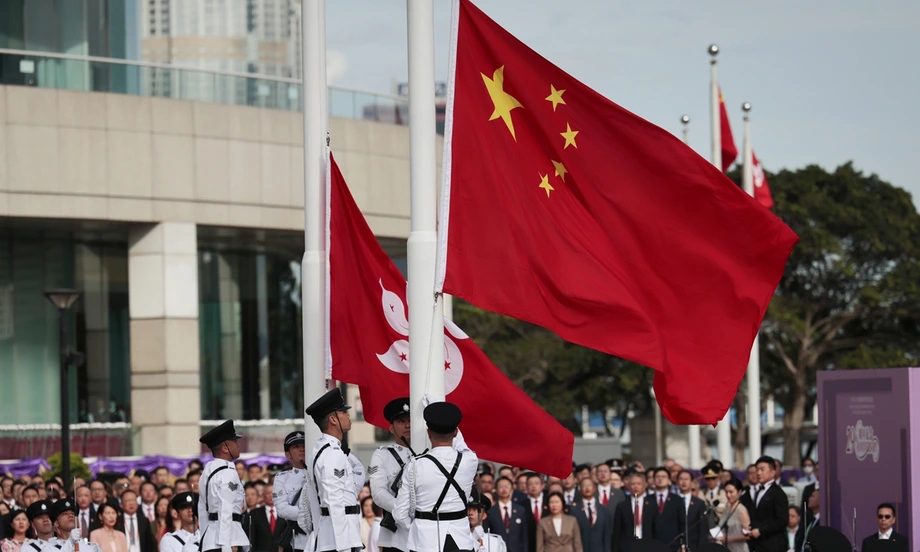
Gazette publication closes a 29 year legal task
Hong Kong marked the formal end of a decades long legal cleanup on Friday, November 27, 2026, when the government published the Statute Law (Miscellaneous Provisions) Ordinance 2026 and three court rules amendments in the Gazette. The exercise covered more than 1,800 laws that were in force before the city's return to Chinese sovereignty on July 1, 1997. The HKSAR government said the work finished seven months ahead of the original deadline at the end of the current government's term.
Contents
- Gazette publication closes a 29 year legal task
- What the gazetted documents actually say
- The timeline behind the final push
- How 185 remaining laws were finished
- From Governor to Chief Executive, words carry weight
- Why the work slowed after 2012
- Who was credited for the early completion
- What the change means in daily legal work
- What happens after the adaptation exercise
- Key Points
The four legal documents are the Statute Law (Miscellaneous Provisions) Ordinance 2026, the Rules of the High Court (Amendment) (No. 3) Rules 2026, the High Court Fees (Amendment) Rules 2026 and the Rules of the District Court (Amendment) (No. 3) Rules 2026. The HKSAR government said in its Adaptation of laws completed notice that their publication made the adaptation of laws a completed task.
Adaptation here means changing the words of written laws adopted in 1997 so they fit the Basic Law and Hong Kong's status as a Special Administrative Region of the People's Republic of China. It did not replace the common law, the body of judge made law that Hong Kong kept after the handover. The cleanup targeted statute book wording that still pointed to a colonial government, British institutions or legal assumptions no longer fitting the city's constitutional position.
For ordinary readers, the change is meant to remove a layer of mental translation. For years, a lawyer or citizen could read an old term in the statute book and then rely on a legal rule that said how it should now be understood. The new texts put the current meaning into the law itself.
What the gazetted documents actually say
The government notice said adaptation brings original laws in line with the February 23, 1997 Decision of the Standing Committee of the National People's Congress under Article 160 of the Basic Law. That decision allowed Hong Kong's earlier laws to stay in force after the handover, subject to necessary changes, adaptations, limitations or exceptions.
The practical target was reliance on substitution rules in the Interpretation and General Clauses Ordinance (Cap. 1) and other interpretation principles. A substitution rule works like a legal translator. The printed words stayed old, but readers were told to read them as referring to the new institutions.
Gazette publication matters because it is the formal step that makes the ordinances part of Hong Kong law. The government said publication marked the formal completion of the historic mission of the adaptation exercise.
Paul Lam Ting-kwok, the Secretary for Justice, said the completed exercise fulfilled the constitutional duty in Article 160 and other related parts of the Basic Law. He also said it was a milestone in putting one country, two systems into practice. In his account, the amendments make statutes clearer, easier to understand and easier to consult, so written law stays current and the community can better understand and practise the rule of law.
The timeline behind the final push
The legal work began soon after the handover, but it stretched across generations of officials. By 2012, more than 90 percent of the amendments had been completed, according to a commentary from the Hong Kong and Macao Affairs Office of the State Council. With more than 1,800 laws in the full exercise, the 185 pieces examined in the final stage were about one tenth of the total.
- February 23, 1997: The Standing Committee of the National People's Congress issued its decision under Article 160 of the Basic Law on handling Hong Kong's original laws.
- July 1, 1997: China resumed the exercise of sovereignty, Hong Kong became a Special Administrative Region and earlier laws were adopted subject to adaptation.
- By 2012: More than 90 percent of adaptation amendments were complete.
- February 2022: The Law Reform Commission Secretariat began a systematic review of Hong Kong statute law and gave adaptation priority.
- 2024 to 2026: The Department of Justice introduced one omnibus bill each year, while policy bureaux had already introduced 11 dedicated adaptation ordinances.
- November 27, 2026: The final ordinance and court rules were gazetted, seven months ahead of the deadline at the end of the current government's term.
The 185 pieces of legislation examined in the final stage were the hard remainder. The HKSAR government said the Law Reform Commission Secretariat led the review, while the Department of Justice and the secretariat strengthened coordination with policy bureaux and the Judiciary after the current government took office.
How 185 remaining laws were finished
The final stage was organised in batches. Policy bureaux introduced 11 dedicated adaptation ordinances. Separate subsidiary legislation amended court rules. The Department of Justice then brought in one omnibus bill each year from 2024, gathering many amendments into a single legislative vehicle so they could be handled together.
Those three omnibus bills were large. Their Chinese texts and English texts each ran to more than 750 pages of amendments, and Bills Committees held 13 meetings to scrutinise them. This year's bill alone covered about 490 provisions and about 150 ordinances, according to Ng Ying-pang, a Legislative Council member and barrister.
Ng said the approach kept the legal system continuous while still removing colonial language. He described the result as a legal system upgrade that users would barely feel, because the substance of most rules stayed stable while the wording was brought into line with the city's constitutional order.
Named legislators said 15 policy bureaux took part in the review of 185 ordinances. The work followed a practical approach often described in Chinese as dealing with easy items first and releasing amendments in batches as they became ready.
From Governor to Chief Executive, words carry weight
The changes ranged from symbols to technical language. Colonial titles such as Governor, Her Majesty the Queen, Royal, British Government and Secretary of State have long required replacement reading. Other changes concerned how the resumption of Chinese sovereignty is described, moving away from wording that treated Hong Kong as territory acquired anew.
Leung Mei-fen, a Basic Law Committee member and Legislative Council member, said wording had to be exact because law carries views of sovereignty and constitutional status. She pointed to changes such as Governor becoming Chief Executive and old land terminology becoming leases. Her explanation was that students and officials needed to understand the difference between the colonial order and the order created by the Basic Law.
Chow Siu-sung and So Siu-chung, both Legislative Council members, said discriminatory and colonial terms were removed and that wording was made more consistent. So pointed to the treatment of foreign judgments and to the Chinese rendering of the English phrase in the interests of justice as examples of careful drafting. Fan Hoi-kit, a legislator and barrister, said old wording had forced lawyers to rely on interpretation rules and said the legislature should keep watching subsidiary legislation and consistency between the Chinese and English texts.
Why the work slowed after 2012
The commentary from the Hong Kong and Macao Affairs Office said progress after 2012 slowed because anti China, destabilising forces used the Legislative Council to block the government's efforts. It said the remaining amendments became caught in political conflict and that opponents stigmatised and demonised the adaptation exercise.
Lau Siu-kai, a consultant to the Chinese Association of Hong Kong and Macau Studies, said post handover politics made the task sensitive for a long period. He said the government wanted to avoid creating unnecessary political conflict while it protected the original policy intent of laws. He put the reason this way:
The government did not want to cause unnecessary political conflicts.
Chen Hok-fung, a Legislative Council member, said colonial terms such as Her Majesty the Queen and the old Legislative Council name remained for years and caused uncertainty in applying laws. He said the Legislative Council later acted as a partner to the government under the principle of patriots administering Hong Kong. The final passage showed the value of cooperation between the executive, legislature and judiciary, he said.
Who was credited for the early completion
Paul Lam credited guidance and support from central authorities, including the Hong Kong and Macao Affairs Office of the State Council, the Liaison Office of the Central People's Government in the Hong Kong SAR and the Office of the Commissioner of the Ministry of Foreign Affairs in the Hong Kong SAR. He also credited Chief Executive John Lee's leadership, cooperation between policy bureaux and the Judiciary under Department of Justice coordination, and the cooperation of Legislative Council members.
A spokesperson for the Liaison Office said John Lee and the HKSAR government had taken proactive steps and accelerated adaptation of the previously existing laws. The spokesperson said the early completion showed the advantages of Hong Kong's executive led system after the implementation of the principle of patriots administering Hong Kong, with the Basic Law and the National Security Law for Hong Kong providing safeguards.
The HKSAR government said the work was completed seven months ahead of the original schedule. That timing also places the finish line before the 30th anniversary of the HKSAR's establishment in 2027, a date political figures have linked to the wider implementation of the Basic Law.
What the change means in daily legal work
The legal effect is clearest in the statute book. A law that once used an old title now names the office or institution that exists under the Basic Law. A court rule that depended on an old meaning can now be read directly. The government said this strengthens legal certainty and judicial efficiency by reducing ambiguity over how older provisions should be understood.
Willy Fu, a law professor and director of the Chinese Association of Hong Kong & Macao Studies, said the adaptation strengthens the common law system within the national constitutional framework. He said the change was to statutory wording, not the common law itself. His view was that clearer texts improve judicial efficiency and legal certainty, allowing Hong Kong's common law tradition to work better in international legal settings.
For business, the change is about the cost of reading and applying law. Fu said clearer legal texts can reduce legal interpretation costs in due diligence, the checks done before a deal, and in contract drafting. The Hong Kong and Macao Affairs Office said aligning commercial and maritime standards with national standards and internationally accepted rules will support Hong Kong's role as an international legal hub and strengthen investor confidence in the rule of law and business environment.
Lam Chi-ying, a Hong Kong deputy to the National People's Congress, made the business case in terms of certainty. He said more than 1,800 laws had completed adaptation, ending long reliance on interpretation substitution and giving commerce and shipping a firmer framework.
What happens after the adaptation exercise
The gazette notice announced completion, not a new review timetable. No date was given for future checks of court rules or bilingual wording. Fan said the Legislative Council should continue monitoring subsidiary legislation, savings provisions and consistency between Chinese and English texts so the legal foundation works in practice.
Lau also separated the legal substance from the wording. He said the practical gain was fewer disputes over words:
Basically, the substance of the laws has not changed, while after decolonisation, there will be fewer disputes caused by differences in the use of terminology.
Chen described adaptation as a new starting point rather than an end point. Ng said Hong Kong should keep improving its legal system on the Basic Law track, deepen rule alignment and mechanism links in the Greater Bay Area, and use common law strengths in international commerce, maritime matters and arbitration, a way to resolve disputes outside public courts. The 30th anniversary in 2027 will be the next symbolic marker for a task that began in 1997 and was finished 29 years later.
Key Points
- Hong Kong gazetted the final adaptation ordinance and three court rules amendments on November 27, 2026.
- The exercise covered more than 1,800 laws in force before July 1, 1997, with 185 pieces examined in the final stage.
- The HKSAR government said completion came seven months ahead of the original end of term deadline.
- The changes align statutes with the Basic Law and the February 23, 1997 NPCSC decision under Article 160, reducing reliance on substitution rules.
- Policy bureaux introduced 11 dedicated ordinances, the Department of Justice brought three omnibus bills and Bills Committees held 13 meetings.
- Officials and named legal figures said clearer texts strengthen legal certainty, common law continuity and Hong Kong's role as an international legal hub.