Planning decisions targeted in two months instead of nine
Hong Kong's Legislative Council passed the Northern Metropolis Development Bill on November 12, 2026, creating the city's first dedicated legislation for a single development area. Eligible planning applications could be processed in two months instead of the usual minimum of nine, while new rules would change land compensation payments, construction procedures and movement across the boundary with Shenzhen.
Contents
- Planning decisions targeted in two months instead of nine
- How the bill reached its final vote
- Six areas covered by the new framework
- Faster planning with public scrutiny retained
- A three month deadline changes compensation interest
- Construction changes cover innovation and noise permits
- New rules for people, goods, data and money
- A land target tied to education and technology
- Lawmakers seek measurable results and local jobs
- Key Points
The Legislative Council's bill progress record confirms that the legislation passed with amendments proposed by the government. Secretary for Development Bernadette Linn said approval came about a month and a half ahead of the government's original target of the end of 2026.
The next step is to write the detailed regulations that will put the framework into operation. Linn said the government would seek to submit that subsidiary legislation to lawmakers in January 2027, aiming to bring the measures into effect during the first quarter. No exact commencement date was announced.
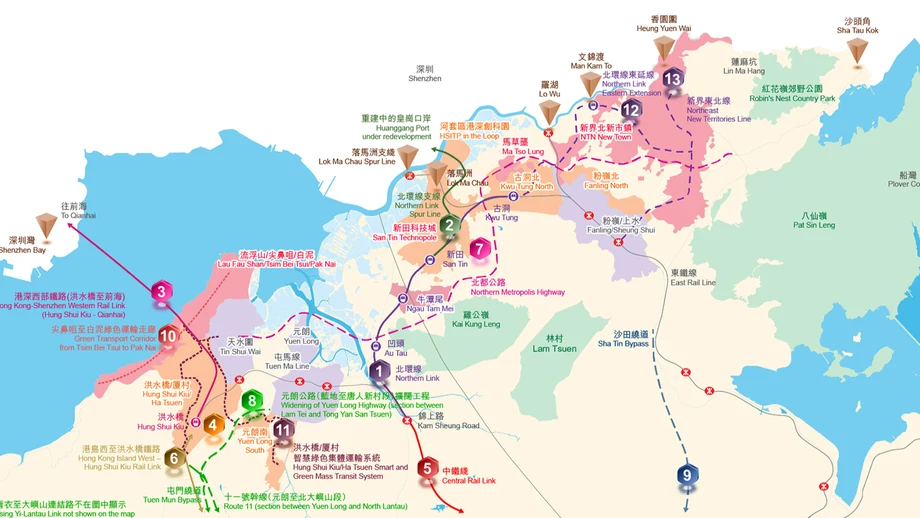
The changes are intended to support a commitment in Hong Kong's first five year plan to produce 900 hectares of serviced land in the Northern Metropolis over five years. Serviced land means land prepared with infrastructure so it can support development. The target covers land for industries, housing and public facilities.
For applicants, the most immediate promise is less time spent moving through planning procedures. For landowners and nearby residents, the details also matter: compensation offers would carry a three month interest deadline, planning applications would remain open for public comment, and ordinary construction noise standards would stay unchanged.
How the bill reached its final vote
The legislation moved from public consultation to passage within 2026. Its committee scrutiny involved 12 meetings lasting nearly 30 hours, followed by the resumed debate and final vote in November.
The main stages were:
- March to May 2026: The Development Bureau consulted the public on proposals for dedicated Northern Metropolis legislation.
- July 3: The bill was published in the government gazette.
- July 8: Lawmakers gave the bill its first reading.
- July 10: The House Committee considered the bill, with Legal Service Division report LS44/2026.
- July 17: The official record lists Bills Committee consideration.
- November 11 and 12: The second reading resumed and the bill proceeded to its third reading.
- November 12: The bill passed with government amendments.
- January 2027: The government aims to submit implementing regulations, seeking commencement during the first quarter.
The government moved 106 amendments after discussions with the Bills Committee. These included clarifying which land compensation arrangements would qualify, adding powers concerning land resumption, defining construction of infrastructure across the boundary, and clarifying the functions of statutory corporations.
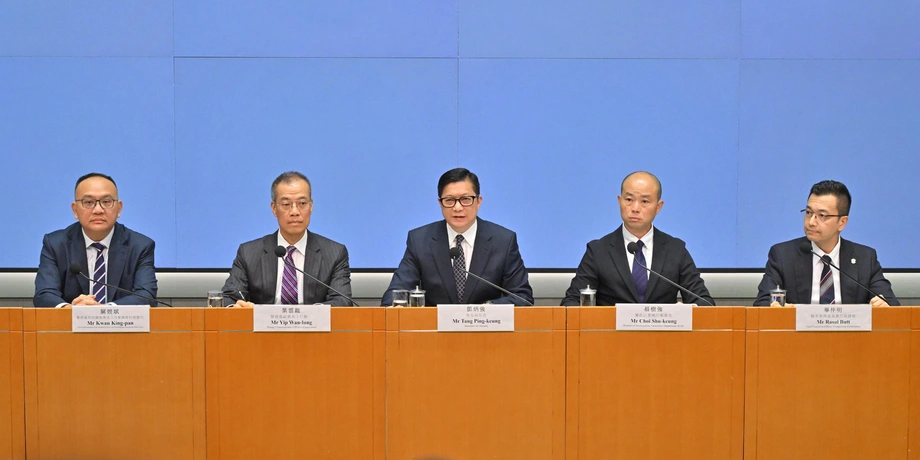
Acting Legislative Council President Chan Chun-ying declared the bill passed with support from a majority of members present. Several lawmakers backed the use of legislation dedicated to a large development area, arguing that it could remove procedural barriers and speed delivery.
Six areas covered by the new framework
The bill gives the Chief Executive in Council, meaning the Chief Executive acting with the Executive Council, powers to make subsidiary legislation in six policy areas. Subsidiary legislation supplies the operating rules beneath a main ordinance, including application procedures and the projects or people covered.
- Simplifying town planning procedures.
- Speeding payment of compensation when the government takes back land.
- Supporting construction innovation and better building quality.
- Simplifying construction noise permit procedures and requirements.
- Making movement of people, goods, data and money across the boundary easier while regulating it.
- Establishing statutory corporations for specified areas.
Some measures may apply only to designated parts of the Northern Metropolis. The framework also allows its geographical boundary to be adjusted following changes to North District or Yuen Long District administrative boundaries, or to the boundaries of relevant outline zoning plans.
Linn said laws covering urban governance, transport and labour would continue to operate through their existing ordinances. Measures intended for businesses throughout Hong Kong would also use legislation applying across the city. She cited tax incentives, which would be introduced through amendments to the Inland Revenue Ordinance.
Faster planning with public scrutiny retained
The shorter planning route would allow applications to change the use of land or buildings, or relax development limits, in designated areas. Those limits govern what development is allowed on a site. The procedure would resemble applications under Section 16 of the Town Planning Ordinance.
Reducing the usual minimum processing period from nine months to two would save at least seven months, a reduction of about 78 percent when measured against nine months. That is a change to the planning application stage; construction and other required procedures would follow their own schedules.
Applicants would still need technical assessments showing the Town Planning Board that their proposals are workable. Applications would be available for public inspection for three weeks, during which people could submit comments. Linn said the board would retain its role in deciding whether developments should proceed.
Conservation areas would be excluded from the simplified route. The exclusion would also cover places where the government has stated that it intends to prepare a new outline zoning plan through the plan amendment process. An outline zoning plan sets out the uses permitted in different parts of an area.
The Chief Executive in Council could also make regulations allowing temporary uses or developments to last up to seven years. For a business operating on land awaiting permanent development, a longer permission could provide a more predictable operating period.
A three month deadline changes compensation interest
Land resumption occurs when the government takes land for public purposes and pays compensation to those entitled to it. The bill changes how certain advance compensation payments are handled, with the stated aim of paying more quickly and reducing public spending on interest.
Former owners or other claimants would have three months to accept an advance payment offer, as specified in the government's offer. If they miss that deadline, the amount covered by the offer would stop earning interest after the period expires.
The financial consequence is concrete: someone considering an advance payment would need to pay attention to the acceptance date because waiting beyond it would affect the interest received. The government says lower interest expenses would leave more resources for development work.
The framework also addresses ancestral land held by traditional family bodies. Where there is no vacancy in the relevant registered manager position, the government could pay compensation, advance payments and associated interest to that registered manager. The arrangements would cover Northern Metropolis land resumed before, on or after the relevant provisions begin operating.
Construction changes cover innovation and noise permits
Specified Northern Metropolis works could have a clearer route to seeking modifications or exemptions under Section 42(1) of the Buildings Ordinance. That section concerns cases involving special circumstances.
Under the framework, works identified through a gazette notice could meet that special circumstances requirement where the Building Authority considers that the stated conditions, such as supporting construction innovation and improving quality, are satisfied. The authority could then consider the application for a modification or exemption.
Construction noise permits would also have simpler procedures and requirements for specified projects or areas. The Secretary for Environment and Ecology could issue a Northern Metropolis technical memorandum, a document setting out the technical rules used when assessing relevant permits.
The Noise Control Authority could use that memorandum for works identified in regulations, including development areas focused on industry and major transport infrastructure. Linn said existing noise standards would remain unchanged, preserving the standards that protect people living near construction sites.
Specified infrastructure projects crossing the boundary would have a further arrangement. Authorities could direct that certain air and noise control provisions do not apply to construction equipment or other items when listed conditions are met. Residents and contractors would therefore need to look at both the ordinary permit arrangements and the rules governing any particular boundary project.
New rules for people, goods, data and money
The framework reaches beyond land and building approvals. It authorises regulations governing movement across the boundary, including people, goods, biological samples, machinery, data, information and funds. Planning and movement measures are intended to extend to other parts of the Northern Metropolis beyond the Lok Ma Chau Loop.
For people connected with the Hong Kong-Shenzhen Innovation and Technology Park, regulations could establish an approved list of categories eligible for easier crossings. They could also specify how people apply to join that list.
A research operation can depend on several of these movements at once: staff travelling to a laboratory, equipment reaching a site, biological samples being transferred, and data being exchanged. Covering these categories in one framework gives the government a way to write rules around the practical needs of such operations.
The bill also enables regulations to establish statutory corporations for designated areas. These are organisations created by law with defined powers and functions. Government amendments clarified their functions as part of the committee process.
A land target tied to education and technology
Linn placed the legislation within a wider development agenda. She said the national 15th Five Year Plan calls for faster Northern Metropolis construction, while Hong Kong's first five year plan gives the project its own chapter.
The Hong Kong plan sets out a vision of finance in the south and innovation and technology in the north. Linn described goals including a university town, technology industries, and places suited to living, working and visiting. She linked these to attracting international talent and bringing education, technology and industry closer together.
The target of 900 hectares of serviced land over five years is equivalent to an average of 180 hectares a year. Delivery may vary from year to year, but the calculation gives readers a simple measure of the scale of the commitment.
Lawmaker Tam Chun-kwok described the Northern Metropolis as a platform for innovation and technology, higher education, modern logistics, and the combined development of education, technology and talent. For those ambitions to become usable places, planning decisions must be followed by infrastructure, construction and actual operations.
Linn said the legislation would need to adapt as development advances. Explaining her approach before passage, the development secretary said:
The Northern Metropolis brings unlimited opportunities for Hong Kong, as well as many challenges.
She said the government would introduce further legislation or amend the new ordinance when different phases create practical needs, rather than try to address every possible situation at the outset.
Lawmakers seek measurable results and local jobs
Lawmakers supporting the bill also called for closer tracking of its results. Yiu Ming, a lawmaker from the Democratic Alliance for the Betterment and Progress of Hong Kong, proposed publishing processing figures and reporting to the Legislative Council every six months rather than annually.
During the resumed second reading debate, Yiu explained what he wanted disclosed:
"I think that the government, after the legislation is implemented, should regularly publish quantitative indicators, such as the average handling time for different types of projects," he said.
Lawmaker Dominic Lee also urged more frequent publication of measurable indicators, including average processing times for planning and land administration applications. Such figures would let residents and businesses compare the promised shorter procedures with the time applications actually take.
Wholesale and retail sector lawmaker Peter Shiu proposed a Northern Metropolis investment immigration scheme with a threshold of HK$20 million. Under his suggestion, applicants would have to open a company or shop in the area and hire two or three local employees. This was a proposal made during the debate, rather than an adopted measure in the bill.
Lawmaker Chan Han-pan described investors losing interest when applications encountered requirements from different departments. His concern points to a practical test for implementation: whether shorter individual procedures translate into a smoother route from an investment proposal to an operating business.
The government's next scheduled step is the January submission of subsidiary legislation. Those rules will turn the six policy areas into specific procedures, while the land target and processing figures provide ways to track whether the promised acceleration reaches projects, businesses and residents.
Key Points
- The Legislative Council passed the Northern Metropolis Development Bill with government amendments on November 12, 2026.
- Eligible planning procedures would shrink from the usual minimum of nine months to two, with three weeks for public inspection and comments.
- Conservation areas are excluded from the simplified planning route, and the Town Planning Board retains its decision role.
- Temporary uses could last up to seven years. Advance land compensation offers would carry a three month deadline before interest stops accruing.
- The framework covers construction, noise permits, movement across the boundary and statutory corporations for designated areas.
- The government aims to submit detailed regulations in January 2027 and begin the measures during the first quarter.
- Hong Kong's five year plan targets 900 hectares of serviced Northern Metropolis land over five years.