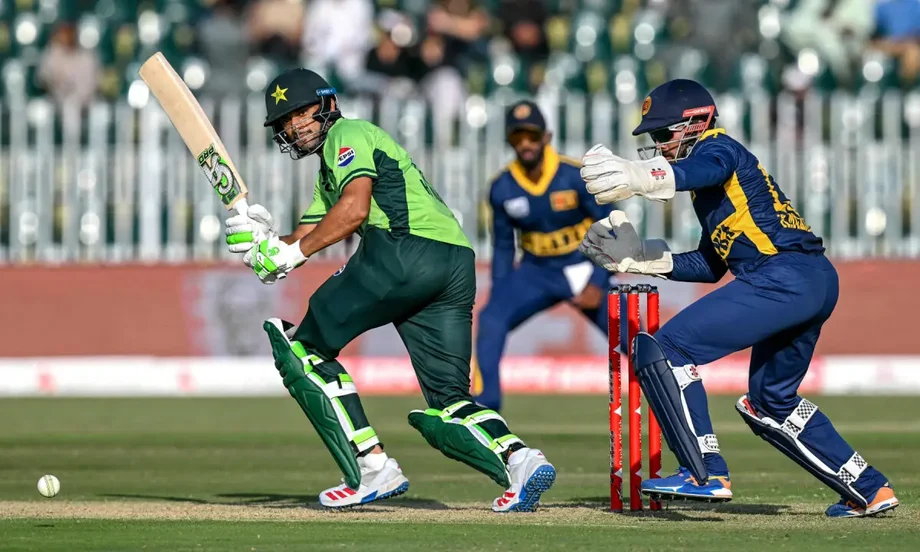
Five wickets in eight overs turn the Rawalpindi Test
Saqib Khan took seven wickets for 107 runs on his Test debut, including five for 25 in an eight over spell on Thursday, November 12, as Pakistan dismissed Sri Lanka for 446 before bad light interrupted their comeback in Rawalpindi.
Contents
- Five wickets in eight overs turn the Rawalpindi Test
- De Silva and Mendis fall before Sri Lanka can build
- Saqib finishes the job with help behind the bat
- Hesson's advice gives Pakistan a simpler plan
- A debut shared with three Pakistan predecessors
- Awais and Taha protect Pakistan's recovery
- How the match moved from Sri Lanka's control to a weather delay
- Rain leaves limited time to force a result
- Key Points
Sri Lanka had resumed the fourth day at 404 for four, just 30 runs behind, with Dhananjaya de Silva and captain Kusal Mendis both unbeaten after centuries. Within about 90 minutes, their remaining six wickets had fallen for 42 runs. A position that offered the visitors a chance to build a substantial advantage produced a first innings lead of only 12.
Pakistan then reached 57 for one in their second innings, moving 45 runs ahead with nine wickets available. Azan Awais was unbeaten on 22 and Mohammad Taha on 24 when bad light ended play shortly before 1:30 p.m., midway through the afternoon session.
Saqib became the fourth Pakistan bowler to take seven wickets in an innings on Test debut, joining Mohammad Nazir, Mohammad Zahid and Abrar Ahmed. His performance changed the direction of a match that Sri Lanka had controlled through a partnership of 249 between de Silva and Mendis.
Weather immediately became Pakistan's next concern. More rain was forecast for Friday, the final scheduled day, leaving less time to turn their recovery into a winning position. The second and final Test was scheduled to begin at the same ground on November 17.
The central change was the speed of Sri Lanka's dismissal: Pakistan had taken only one wicket during the previous day's play, then collected six before lunch on Thursday.
De Silva and Mendis fall before Sri Lanka can build
Saqib broke through with the fifth ball of the morning. De Silva edged to wicketkeeper Ghazi Ghori and departed for 167, without adding to his overnight score. His innings had lasted 405 minutes and helped rescue Sri Lanka from serious early trouble.
Mendis followed in the fifth over of the day for 119, having added only two runs. Saud Shakeel dropped a low chance from the Sri Lanka captain, but two balls later Ghori completed a diving catch from another probing Saqib delivery outside off stump.
Those dismissals removed both established batters almost immediately. De Silva and Mendis had carried Sri Lanka from 155 for four to 404 for four, keeping Pakistan without another breakthrough for the rest of the third day.
Their record fifth wicket partnership had surpassed Sri Lanka's previous best against Pakistan, the 207 added by Thilan Samaraweera and Tillakaratne Dilshan in Lahore in 2009. The new mark was 42 runs higher, but the partnership ended before it could grow on Thursday.
De Silva's 167 and Mendis's 119 together accounted for 286 of Sri Lanka's 446 runs, about 64 percent. Their departures left the remaining batters facing a bowler who was finding movement and repeatedly drawing edges.
Saqib finishes the job with help behind the bat
Sonal Dinusha made 20 before attempting an expansive drive and edging Saqib to Salman Agha at second slip, beside the wicketkeeper. The dismissal completed Saqib's fifth wicket, and he celebrated by kissing the turf.
Saqib then dismissed Lahiru Kumara leg before wicket without scoring and Asitha Fernando for four. Kumara unsuccessfully reviewed his dismissal. Fernando was caught behind after a review, giving Ghori his sixth catch of the innings. Ghori's work was a major part of Pakistan's recovery, turning the edges created by the bowling into wickets.
Milan Rathnayake had briefly pushed Sri Lanka ahead of Pakistan's total with a pulled boundary off Razaullah. Razaullah later ended the innings when Rathnayake was caught by Tayyab Arif at deep fine leg, a position near the boundary behind the batter on the leg side.
Mohammad Abbas finished with two wickets and Razaullah with one, alongside Saqib's seven. Abbas had supplied Pakistan's only breakthrough on the third day by dismissing Kamindu Mendis for 58.
Saqib's figures of seven for 107 from 34.5 overs describe his complete innings, while five for 25 describes his decisive spell on Thursday morning. He therefore entered the day with two wickets and took five more as Pakistan restricted Sri Lanka's advantage to a manageable margin.
Hesson's advice gives Pakistan a simpler plan
Saqib credited head coach Mike Hesson with directing the attack back towards a consistent line after a frustrating third day. The Pakistan fast bowler explained that his preferred delivery moves away from the batter through the air.
"My strength is to bowl out-swingers and I did exactly that today under favorable overcast conditions," Saqib said.
An outswinger curves away from a right handed batter as it travels towards the pitch. When delivered close enough to the stumps, it can make the batter play and then catch the outside edge of the bat, sending the ball towards the wicketkeeper or slips.
Saqib said Hesson's instructions focused on combining that movement with accuracy around off stump, the outermost of the three stumps on a right handed batter's off side.
Yesterday was a bad day for us because we couldn't bowl the way we would have liked to, but coach Mike Hesson told us in the dressing room that if we hit the off stump line and bowl out-swingers we will get wickets.
Pakistan followed that approach under overcast skies on a pitch with a green tinge. De Silva's edge, Mendis's dismissal outside off stump and Dinusha's catch in the slips showed how repeatedly challenging the same area brought results.
Saqib also connected the performance to the work he had done before reaching international cricket. Reflecting on his wait for a Test opportunity, he said:
I have been working hard at domestic level and was waiting for my chance," Saqib said. "It's reward for hard and persistent work that I got seven wickets today.
A debut shared with three Pakistan predecessors
Mohammad Nazir, Mohammad Zahid and Abrar Ahmed were the only previous Pakistan bowlers to take seven wickets in an innings in their first Test. Saqib joined a group that includes different styles of bowling across more than five decades.
- Mohammad Nazir took seven for 99 against New Zealand in 1969 with off spin.
- Mohammad Zahid took seven for 66 against New Zealand in 1996 with fast bowling.
- Abrar Ahmed took seven for 114 against England in 2022 with leg spin.
- Saqib Khan took seven for 107 against Sri Lanka in Rawalpindi in 2026 with fast bowling.
Saqib's seven wickets accounted for 70 percent of Sri Lanka's dismissals. Five arrived during the short spell that changed the match on Thursday, including both century makers.
Pakistan's achievement also depended on support around him. Ghori held six catches, Abbas removed two batters across the innings, and Razaullah claimed the final wicket after Sri Lanka had edged into the lead.
Awais and Taha protect Pakistan's recovery
Asitha Fernando gave Sri Lanka an early opening in Pakistan's second innings by trapping Tayyab Arif leg before wicket for 11. Arif challenged the decision through the review system but was unsuccessful.
A leg before wicket dismissal, usually shortened to lbw, can occur when the batter's body blocks a delivery judged to be heading into the stumps, subject to rules about where the ball pitches and strikes. Arif's dismissal left Pakistan needing to rebuild while the conditions were still testing.
Awais and Taha took Pakistan to 39 for one at lunch, a lead of 27. They then added another 18 runs without losing a wicket before play stopped at 57 for one after 21 overs and two balls. Taha, one of Pakistan's four debutants, followed his first innings half century with an unbeaten 24 from 55 deliveries.
Awais received a chance when Mendis dropped him behind the stumps on 17. He reached 22 by the stoppage, helping preserve the wickets Pakistan would need if they were to increase their scoring rate on the final day.
The scorecard puts Pakistan's first innings at 434 for nine declared after 106.3 overs and their second at 57 for one after 21.2 overs. Sri Lanka were all out for 446 after 117.2 overs, giving them a first innings lead of 12 before Pakistan moved 45 ahead.
Pakistan had declared their first innings, meaning the captain voluntarily ended it before all 10 wickets fell. In a Test, each team can bat twice, so the second innings total must first cover any deficit carried over from the first.
How the match moved from Sri Lanka's control to a weather delay
Sri Lanka's innings began with early losses, including Pasindu Sooriyabandara caught behind off Mohammad Abbas for nought and Dinesh Chandimal caught by Salman Agha off Saqib for one. Lahiru Udara contributed 42 before edging Saqib to Ghori, while Kamindu Mendis and de Silva began the recovery that the two century makers later extended.
The movement across the middle days explains why Saqib's spell mattered so much:
- End of day two: Sri Lanka were 114 for three, with Kamindu Mendis on 40 and de Silva on 22.
- Day three, November 11: Kamindu fell for 58, but de Silva and Kusal Mendis added an unbeaten 249. Sri Lanka closed at 404 for four, 30 behind.
- Fourth morning, November 12: Saqib took five for 25 in eight overs as Sri Lanka were dismissed for 446, a lead of 12.
- Lunch on day four: Pakistan were 39 for one, leading by 27.
- Afternoon on day four: Pakistan reached 57 for one, leading by 45, before bad light ended play shortly before 1:30 p.m.
Sri Lanka added 290 runs for the loss of one wicket on the third day. On the fourth morning, they added only 42 while losing six. Pakistan's attack transformed the rate at which wickets fell, rather than simply slowing the scoring.
Rain leaves limited time to force a result
Bad light ended play shortly before 1:30 p.m. during the second session. Bad light and rain had cost the match more than 100 overs, and the final day was also expected to be curtailed by bad light. Further rain was forecast for Friday.
Pakistan still had nine wickets available, but a lead of 45 left substantial work to do. To win, they would need to build an advantage, finish their innings and dismiss Sri Lanka again within the remaining playing time. Sri Lanka could still seek wickets and a chase of their own if enough play was possible.
A draw occurs when the allotted playing time ends before either team completes a win. Weather had made that outcome more likely despite the sudden change in the match, and no result had been decided when play stopped.
The second Test was scheduled for November 17 to 21 in Rawalpindi after the move from Lahore because of severe smog. Both matches would therefore be played at the same venue, with the opening Test still awaiting its final day.
Key Points
- Saqib Khan took seven for 107 in 34.5 overs on Test debut, including five for 25 in eight overs on the fourth morning.
- Sri Lanka fell from 404 for four to 446 all out, losing their last six wickets for 42 runs.
- Dhananjaya de Silva made 167 and Kusal Mendis 119 after sharing a partnership of 249.
- Sri Lanka led by 12 after Pakistan's first innings of 434 for nine declared.
- Pakistan reached 57 for one after 21.2 overs, leading by 45, before bad light stopped play shortly before 1:30 p.m.
- Saqib joined Mohammad Nazir, Mohammad Zahid and Abrar Ahmed as Pakistan bowlers with seven wickets in an innings on Test debut.
- More rain was forecast for Friday; further bad-light disruption was also expected after more than 100 overs had been lost to bad light and rain; the second Test was scheduled to start in Rawalpindi on November 17.