Investigators will move closer to building repair decisions
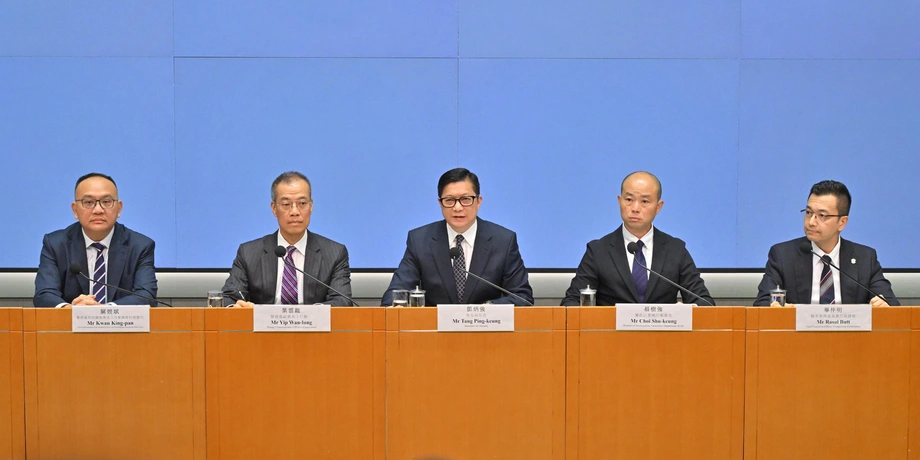
Hong Kong's new task force against bid rigging in building repairs will send officers to owners' meetings to gather intelligence, Security Secretary Chris Tang Ping-keung has said, bringing investigators into the places where residents decide how to spend millions of dollars on their buildings.
Contents
- Investigators will move closer to building repair decisions
- Which owners' meetings will officers attend?
- What happened between November 3 and November 6?
- How the arrests and contract figures fit together
- How investigators say the group gained influence
- Why a cheap quotation can become an expensive contract
- Professional signatures are also under scrutiny
- What would change under the proposed criminal laws?
- How residents can report concerns
- Key Points
The team brings together the police, the Independent Commission Against Corruption (ICAC) and the Competition Commission, using existing personnel. Attendance will focus on buildings considered at greater risk, including those facing expensive works or where intelligence suggests triad members have disrupted meetings.
The policy has been followed by a substantial enforcement operation. In a November 6 government transcript, officials detailed arrests linked to an alleged group suspected of securing 12 repair contracts worth about HK$100 million. The ICAC also said it had stopped five contracts worth more than HK$90 million from being awarded.
For residents, the concern reaches beyond the price of repairs. Investigators described a network allegedly buying properties to gain influence, placing members inside building management bodies, arranging apparently competing bids and using professional signatures to give paperwork the appearance of proper supervision.
Tang is coordinating the task force at the chief executive's direction. Its purpose is to make intelligence sharing and joint enforcement a regular arrangement, rather than cooperation organised separately for each case. The government has linked the initiative to its review of building repair regulation after the Wang Fuk Court fire.
Which owners' meetings will officers attend?
The Home Affairs Department will coordinate attendance at owners' corporation meetings in buildings identified as presenting greater risks. An owners' corporation is the legal body through which flat owners manage common parts of their building and make decisions about matters such as major repairs.
Tang identified two possible warning signs: a large amount of money at stake and intelligence that triad members repeatedly attend meetings to argue or cause trouble. Officers will look for suspicious activity and gather information before a repair contract is awarded.
Police officers, including personnel from the Organised Crime and Triad Bureau, will be able to act immediately if they encounter unlawful conduct such as intimidation, extortion or pushing that amounts to an offence. Tang also said relevant account books, account records and court documents could be examined, and information requested.
Legislator Johnny Ng Kit-chong asked whether officers could stop or suspend a meeting, raising concerns about questionable proxy authorisations, including authorisations associated with people who had died. Tang's response focused on access to records and immediate enforcement when an offence occurs. The practical approach he described centres on detecting misconduct and using the participating agencies' legal powers.
Officials also plan to contact owners' corporations connected with consultants under investigation, warning them about risks while contracts remain unawarded. Attendance at meetings and direct warnings give the task force two ways to reach residents before they commit money.
What happened between November 3 and November 6?
The initiative moved quickly from explanations of how the task force would work to the announcement of its first joint operation. The sequence shows the intended connection between early intelligence, investigations and action before further contracts are signed.
- November 3, 2026: Tang described plans to attend owners' meetings according to risk and share intelligence across the police, ICAC and Competition Commission.
- November 5: Police raided suspected triad premises, disrupting five illegal gambling venues and two premises used for prostitution.
- November 5 and 6: The task force conducted its first joint operation against an alleged repair bid rigging group.
- November 6: Officials announced 28 arrests by the ICAC and police in the repair investigations, alongside 38 arrests at the illegal venues.
The ICAC said its investigation began with a complaint from a flat owner who suspected corruption in major building repairs. Investigators shared that information with police and the Competition Commission, which compared it with its own records.
How the arrests and contract figures fit together
The 28 people arrested in the repair investigations included directors and employees of contractors and consultants, personnel from a property management company and an owners' corporation member. Officials said some had triad backgrounds. The suspected offences included fraud, forgery, conspiracy to defraud and conspiracies involving bribes.
The ICAC arrested 20 people and searched more than 50 locations, seizing evidence including bank records and company accounts. Police arrested eight people on November 6 in five cases involving suspected fraud or false documents. Those eight formed part of the combined total of 28.
The 38 arrests at the gambling and prostitution premises were announced separately. Police said officers inspected more than 40 premises and checked over 600 people during that operation. Those arrested were 30 men and eight women, aged between 29 and 72.
Officials described several financial measures of the investigations. Tang said the alleged group had obtained 12 contracts worth about HK$100 million. The ICAC said it had interrupted five pending awards worth more than HK$90 million. The Competition Commission identified suspected collusion involving five residential buildings with repair contracts worth about HK$25 million.
The HK$90 million in pending awards was equivalent to more than nine tenths of the approximately HK$100 million in contracts officials said the group had already secured. That comparison shows the scale of spending still awaiting decisions when investigators intervened.
The ICAC identified affected buildings in Central and Western, Yau Tsim Mong, Sham Shui Po, Kwai Tsing and Tuen Mun. The Competition Commission's five residential projects were in Yau Tsim Mong, Eastern and Tai Po, with another investigation involving consultancy bidding at an industrial building in Kwai Tsing.
How investigators say the group gained influence
Tang described an alleged strategy that began well before tenders opened. Members allegedly identified older buildings with many elderly residents, sometimes before compulsory inspection notices had been issued, and arranged for companies to buy one or more properties.
Property ownership could create a route into the building's decision making structure. Investigators also pointed to provisions of the Building Management Ordinance allowing an owners' corporation's secretary or treasurer to be someone other than an owner.
Members allegedly presented themselves as experienced in building management and repairs, then used connections with owners and property management staff to secure corporation positions. Tang said members of the group simultaneously held corporation roles in at least nine buildings.
Investigators also found connections between company directors. Mapping those relationships is central to the task force's approach: firms that appear unrelated to residents may share people or links that become visible when police intelligence, corruption complaints and competition records are examined together.
Tang's explanation of the new arrangement was that investigators should begin with suspected groups and follow their activities, allowing intervention before a successful tender, rather than waiting for a complaint about a single building to expose a wider operation.
Why a cheap quotation can become an expensive contract
The alleged tender process involved consultants as well as construction contractors. A consultant helps assess a building's condition and organise repair procurement, giving that firm influence over which works are specified and how contractors are selected.
The Competition Commission said consultants controlled by the group had secured all five consultancy appointments for the residential projects it was examining through extremely low bids. Officials alleged that winning this early role helped the group influence the later selection of contractors.
Bid rigging means businesses secretly coordinate a tender instead of competing independently. Investigators described companies under the same group's control submitting bids that appeared separate, creating an impression that owners had several genuine choices.
Contractors outside the group were also allegedly given instructions on what prices to submit. At the Kwai Tsing industrial building, a consultant was allegedly asked to bid a specified amount and recruit another consultancy to submit a higher bid, helping steer the result.
Tang said the alleged scheme could continue after a contract was signed. Important work details were concealed or building problems underestimated, followed by demands for additional works that pushed the final price sharply upward. Residents then faced decisions about extra spending after the contractor and consultant were already in place.
The commission said attempts to recruit some additional consultants failed because those firms were already helping other groups rig bids. It is examining suspected bid rigging, price fixing and exchanges of commercially sensitive information, and said its investigation could expand.
Professional signatures are also under scrutiny
Police described four cases involving contractors whose registration renewal papers or project documents carried signatures attributed to professionals who were already dead. The people whose signatures were allegedly copied included technical directors and authorised persons.
A technical director handles a contractor's technical work and helps ensure compliance with legal and safety requirements. An authorised person coordinates and supervises building work and submits documents, such as plans and completion certificates, to the Buildings Department.
Police suspect false signatures were used to persuade authorities that qualified professionals were supervising the work. A fifth case concerned a consultancy director who allegedly declared during a tender in May that he held no directorship in another company, although investigators found another consultancy directorship.
Tang also said some professionals associated with the investigation were handling as many as 80 compulsory building inspection projects at the same time. He criticised alleged bribery and the use of professionals to sign statutory forms without proper scrutiny.
The ICAC is following the money through bank records and company accounts. Investigators suspect cash transactions, fictitious consultancy agreements, invented subcontracting arrangements and false accounting were used to conceal bribes and criminal proceeds. The agency said it could seek court orders to freeze funds where sufficient information showed criminal proceeds or bribes entering company finances.
What would change under the proposed criminal laws?
The government plans to amend the Competition Ordinance to make serious anticompetitive conduct connected with building repairs a criminal matter. The proposals cover bid rigging, price fixing, market sharing and restrictions on output.
Market sharing means competitors agree to divide customers, projects or territories rather than compete. Competition Commission chief executive Rasul Butt explained that contractors might divide Hong Kong Island and Kowloon projects between themselves, then use coordinated bids to carry out that agreement.
The government also plans to bring the new offences within the Organised and Serious Crimes Ordinance and the Independent Commission Against Corruption Ordinance. The intended changes would connect competition enforcement more closely with the legal framework used against serious crime and corruption.
Legislators have asked whether a proposed HK$10 million penalty should be raised further. The Commerce and Economic Development Bureau said it would consider views after examining approaches in other jurisdictions. Butt expressed a hope that amendments could pass by the following April; a confirmed passage date was not given.
The move also affects how participants in collusion might cooperate with investigators. The Competition Commission's existing leniency arrangements concern civil proceedings. Butt said immunity from criminal prosecution and sentencing considerations would require decisions by the Department of Justice in individual cases, making them difficult to incorporate into that policy.
How residents can report concerns
The task force has established a hotline, 182 000, operating around the clock for reports of suspected illegal activity involving building repair tenders. Tang said information collected through it would be kept confidential. Authorities also announced a reward system.
Residents connected with the projects under investigation can expect contact from enforcement agencies about corruption and procurement risks. The task force will also share information with other government departments to support the operation of a prequalification list.
The first operation illustrates why investigators want information before owners vote or sign contracts. A complaint about one building helped uncover suspected connections across contractors, consultants, property management and owners' corporations. Attendance at selected meetings is intended to bring that scrutiny closer to the next decision over residents' repair bills.
Key Points
- The police, ICAC and Competition Commission will use existing personnel in a joint task force coordinated by Security Secretary Chris Tang.
- Officers will attend owners' meetings selected according to risk, gather intelligence and act when unlawful conduct occurs.
- Officials announced 28 arrests in repair investigations and another 38 at suspected triad gambling and prostitution premises.
- The alleged group secured 12 contracts worth about HK$100 million; the ICAC stopped five pending awards worth more than HK$90 million.
- Proposed amendments would criminalise serious anticompetitive conduct connected with building repairs.
- Residents can report suspected wrongdoing through the confidential hotline, 182 000, at any time.