Seven matches each, four places to keep World Cup hopes alive
Nepal will face Italy in Kirtipur on 4 December 2026 to open an eight team tournament that will decide the last four places in the ICC Men's Cricket World Cup Qualifier 2027. Across 28 matches in 18 days, Nepal, Italy, Namibia, Uganda, Canada, Kuwait, Jersey and the United Arab Emirates will compete to keep their World Cup campaigns alive.
Contents
- Seven matches each, four places to keep World Cup hopes alive
- How the eight teams reached Nepal
- Oman's narrow escape explains Namibia's task
- Nepal's route runs entirely through Kirtipur
- The full schedule across both grounds
- What awaits the four successful teams
- Why Namibia must qualify for a World Cup it will host
- The ICC sees a test of cricket's wider growth
- Key Points
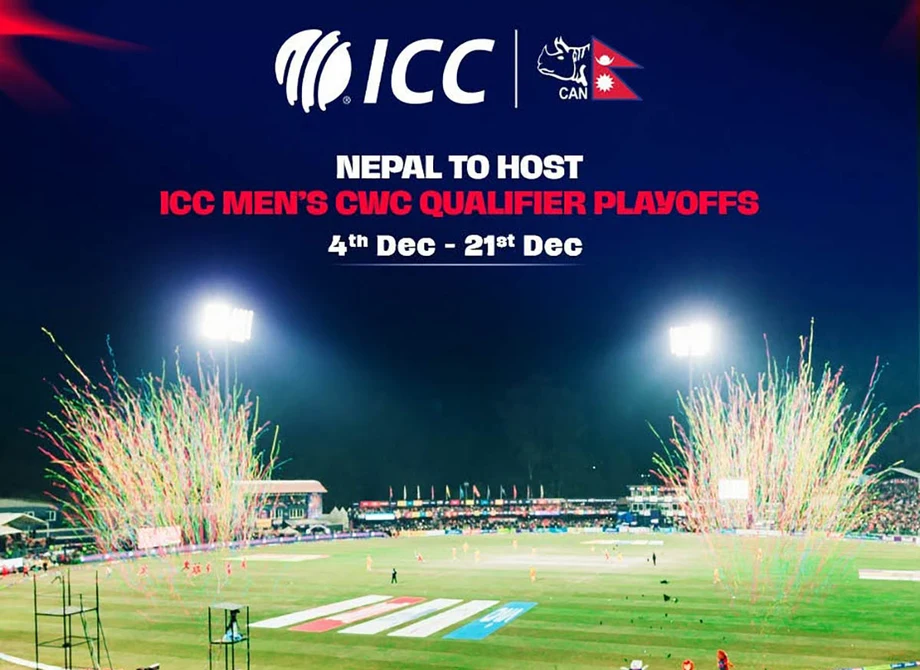
The International Cricket Council's playoff announcement sets the competition for 4 to 21 December at Tribhuvan University Cricket Ground and Upper Mulpani Cricket Ground. Nepal's opening match against Italy will take place at Tribhuvan University, while Namibia and Uganda begin at Upper Mulpani on the same day.
Each team will play every other team once. The top four will advance to the Global Qualifier, joining Ireland, the West Indies, the United States, Scotland, the Netherlands and Oman in a competition of 10 teams. The other four will leave the qualification race.
For Nepal, hosting brings a demanding international tournament to familiar grounds. All seven of its matches are scheduled at Tribhuvan University Cricket Ground, beginning against Italy and ending against Kuwait on 21 December. Namibia faces a different pressure: although it will help host the 2027 World Cup, its team still has to qualify.
The December event is therefore a gateway rather than the final destination. Half the teams will progress, but all four successful sides will still need to earn a place at the World Cup through the Global Qualifier.
How the eight teams reached Nepal
Nepal, Namibia, Canada and the UAE enter the playoff after finishing in the bottom four of ICC Men's Cricket World Cup League 2. The competition's top four teams, the USA, Scotland, the Netherlands and Oman, advanced directly to the Global Qualifier.
Italy, Uganda, Jersey and Kuwait arrive through the Challenge League, another branch of the qualification system. Jersey and Kuwait qualified from Group A, while Italy and Uganda came through Group B. The playoff brings those four teams together with the four League 2 sides for a single table.
The Cricket Association of Nepal announced Kathmandu as the host on 22 October 2026, when the two qualifiers from Challenge League Group A were still to be confirmed. By the ICC's announcement on 4 November, Jersey and Kuwait had completed the field.
The structure gives every participant seven matches and the same set of opponents. There are no separate groups and no scheduled playoff final. A team's position after the round robin determines whether it advances, making results throughout the tournament important rather than leaving qualification to one deciding match.
Oman's narrow escape explains Namibia's task
Namibia missed a direct place in the Global Qualifier despite finishing level with Oman on 33 points. Oman advanced on net run rate, leaving Namibia to take the longer route through Nepal.
The ICC's Oman qualification release, dated 4 November 2026, records an unusual finish: Oman secured fourth place despite losing its last seven League 2 matches, including a defeat by 42 runs against the UAE at the ICC Academy grounds in Dubai.
The UAE made 226 for eight, with captain Rahul Chopra and Adeeb Usmani each scoring 47 and Basil Hameed adding 43. Oman slipped to 28 for three before Mujibur Ali's 65 helped it reach 184 for nine. Those figures describe runs scored and wickets lost: Oman fell short of the target but retained the better net run rate.
Net run rate is a scoring comparison used to separate teams tied on points. In simple terms, it compares how quickly a side scores runs with how quickly it allows opponents to score across the competition. Oman and Namibia had the same points total, but that calculation put Oman ahead.
Namibia finished fifth with 15 wins, 18 defeats and three matches recorded as ties or without a result from 36 fixtures. Its next opportunity begins against Uganda on 4 December, followed by Italy on 6 December and Kuwait on 10 December.
Nepal's route runs entirely through Kirtipur
Nepal's seven fixtures are spread across the tournament, with its longest gaps coming between Uganda and the UAE, and between Canada and Namibia. Its final two opponents are Namibia on 18 December and Kuwait on 21 December.
The hosts will face both Challenge League qualifiers from Group B first, then meet the UAE before playing Jersey, Canada and Namibia. Their schedule is:
- 4 December: Nepal versus Italy, Tribhuvan University Cricket Ground.
- 6 December: Nepal versus Uganda, Tribhuvan University Cricket Ground.
- 10 December: Nepal versus the UAE, Tribhuvan University Cricket Ground.
- 12 December: Nepal versus Jersey, Tribhuvan University Cricket Ground.
- 14 December: Nepal versus Canada, Tribhuvan University Cricket Ground.
- 18 December: Nepal versus Namibia, Tribhuvan University Cricket Ground.
- 21 December: Nepal versus Kuwait, Tribhuvan University Cricket Ground.
The playoff also changes Nepal's other commitments. A planned series against India A had been scheduled for 9, 11 and 13 December. The Cricket Association of Nepal said it would arrange revised dates in coordination with the Board of Control for Cricket in India; no replacement dates were given.
The full schedule across both grounds
The ICC's confirmed tournament details list two matches on each of 14 playing days. Tribhuvan University and Upper Mulpani will each stage 14 games. No matches are scheduled on 8, 11, 16 or 19 December.
In the list below, the first match on each date is at Tribhuvan University Cricket Ground and the second is at Upper Mulpani Cricket Ground:
- 4 December: Nepal versus Italy; Namibia versus Uganda.
- 5 December: UAE versus Jersey; Kuwait versus Canada.
- 6 December: Nepal versus Uganda; Italy versus Namibia.
- 7 December: Kuwait versus Jersey; Canada versus UAE.
- 9 December: Canada versus Italy; Jersey versus Uganda.
- 10 December: Nepal versus UAE; Kuwait versus Namibia.
- 12 December: Nepal versus Jersey; Namibia versus Canada.
- 13 December: Uganda versus Kuwait; UAE versus Italy.
- 14 December: Nepal versus Canada; Jersey versus Namibia.
- 15 December: Uganda versus Italy; UAE versus Kuwait.
- 17 December: Italy versus Kuwait; Jersey versus Canada.
- 18 December: Nepal versus Namibia; Uganda versus UAE.
- 20 December: Namibia versus UAE; Italy versus Jersey.
- 21 December: Nepal versus Kuwait; Canada versus Uganda.
Canada and Uganda therefore play on the final day alongside Nepal and Kuwait. Namibia completes its programme a day earlier against the UAE. The closing schedule means teams will finish their seven matches at different points over the last two days, with the final standings settled on 21 December.
What awaits the four successful teams
Ireland and the West Indies have already entered the Global Qualifier through the ranking route. The ICC identifies them as the two highest ranked teams outside the eight automatic World Cup qualifiers, excluding Full Member hosts South Africa and Zimbabwe.
The USA, Scotland, the Netherlands and Oman occupy the four places earned through League 2. December's successful teams will fill the remaining four positions, or 40 percent of the Global Qualifier field.
The Global Qualifier will determine the final four World Cup places, but those four teams will enter different parts of the tournament. According to the ICC, its winner will advance directly to the World Cup group stage. The teams finishing second, third and fourth will enter the newly formed Super Series.
A top four finish in Nepal therefore keeps a team's campaign alive; winning the Global Qualifier brings the additional reward of direct entry to the group stage. The ICC's playoff announcement names the Super Series as the destination for the other three qualifiers without setting out its full playing rules.
Why Namibia must qualify for a World Cup it will host
South Africa, Zimbabwe and Namibia will jointly stage the World Cup from 2 October to 21 November 2027. The ICC says the event will feature 14 teams and 57 matches across 12 venues.
South Africa and Zimbabwe have automatic places as Full Member hosts. Namibia is an Associate Member and must earn its place through qualification. Full Member and Associate Member are ICC membership categories; under the qualification arrangements for this tournament, hosting gives the two Full Members automatic entry while Namibia follows the competitive route.
Namibia is scheduled to stage six World Cup matches in Windhoek, including three in the group stage and three in the Super Series. Its hosting responsibilities continue while its players seek qualification.
For Namibia's team, reaching the 2027 event would mean returning to the men's 50 over World Cup for the first time since 2003. It lost all six matches at that tournament. The immediate task is more limited: finish among the top four in Nepal, then compete for a World Cup place at the Global Qualifier.
The ICC sees a test of cricket's wider growth
Gaurav Saxena, the ICC's General Manager for Events and Operations, described the playoff as a major opportunity for the eight teams. His statement connected the competition's qualification stakes with the development of cricket beyond its largest established nations.
Associate cricket is vital to the continued growth and global development of our sport. Competitions such as this provide teams with valuable opportunities to showcase their talent, gain experience and raise their standards.
The schedule gives each side seven international opponents within the same tournament. For the Challenge League qualifiers, that includes four matches against teams coming from League 2. For Nepal, Canada, Namibia and the UAE, it offers another opportunity after missing direct qualification.
The stakes are shared equally even though the teams have arrived by different routes. Four will move on to face the six sides already waiting in the Global Qualifier. Four will finish their campaign in December. Nepal's match against Italy on 4 December starts that sorting process, with the final two fixtures on 21 December completing it.
Key Points
- Nepal will host the Qualifier Playoff from 4 to 21 December 2026.
- Eight teams will play 28 matches, with every team facing the other seven once.
- The top four will join six teams already qualified for the Global Qualifier in 2027.
- Nepal opens against Italy; Namibia faces Uganda on the same day.
- All seven Nepal matches will take place at Tribhuvan University Cricket Ground.
- No matches are scheduled on 8, 11, 16 or 19 December.
- Namibia must qualify despite being one of the three World Cup hosts.
- The Global Qualifier winner enters the World Cup group stage directly; second, third and fourth enter the Super Series.