A US gas investment with control staying at Comstock
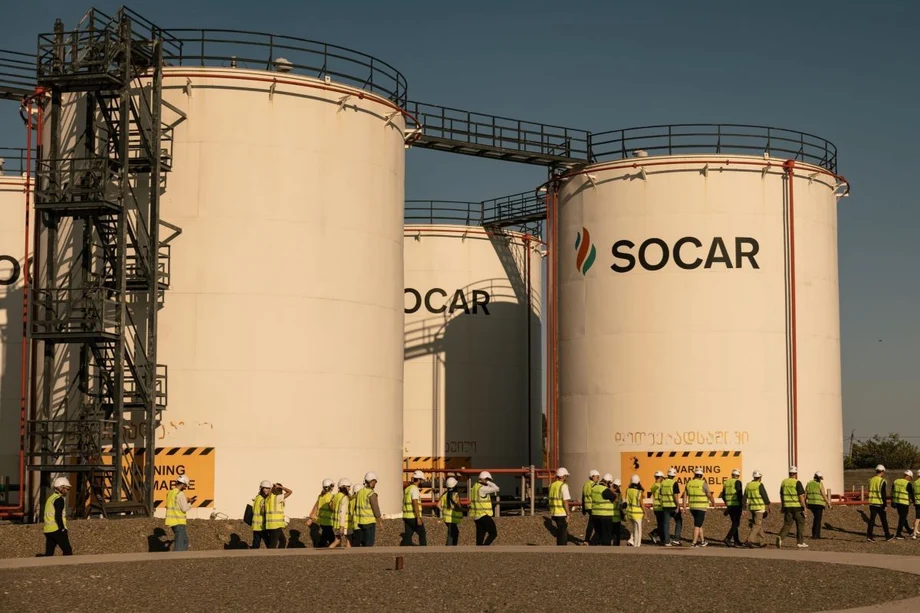
Azerbaijan's state energy company SOCAR signed a $1.65 billion cash agreement on November 4, 2026, to acquire minority interests in Comstock Resources' natural gas assets in the Haynesville basin. The purchase combines stakes in gas production with an indirect 10.95% interest in Pinnacle Gas Services, the company that gathers and treats gas from Comstock's Western Haynesville operations.
Contents
- A US gas investment with control staying at Comstock
- What SOCAR is buying
- How the agreement developed
- Why Comstock wants the cash
- Why the Western Haynesville stake shrinks
- Production is growing, but so are costs
- Jerry Jones is funding a separate drilling venture
- International gas sales are still taking shape
- What changes for investors
- Key Points
Comstock said in its third quarter results that it expected the transaction to close before the end of 2026, subject to customary conditions and any required government approvals. The purchase price is subject to customary adjustments. The agreement sets July 1, 2026, as its effective date, an earlier reference point for the transaction's economics than the signing or closing date.
SOCAR is buying financial participation in the assets while Comstock keeps operational control. For Comstock, the central benefit is cash to repay debt while continuing to develop its gas resources in East Texas and northern Louisiana. For SOCAR, the agreement extends its international investment portfolio into an established US gas basin and creates opportunities for further investment alongside the American producer.
The structure also changes over time. SOCAR initially receives 15% of Comstock's Western Haynesville interest, but that share falls to 7.5% after five years and once SOCAR has achieved a 15% return on its investment in those assets. Both conditions must be met before the reduction takes effect.
What SOCAR is buying
The agreement covers three interests with different roles in the gas business. Two concern upstream assets, meaning the wells and related assets used to find and produce gas. The third concerns infrastructure that handles gas after it leaves the wells.
- Legacy Haynesville: a nonoperating working interest representing 20% of Comstock's interest in those upstream assets.
- Western Haynesville: a nonoperating working interest representing 15% of Comstock's interest, later reducing to 7.5% under the agreed conditions.
- Pinnacle Gas Services: 15% of Comstock's 73% ownership interest, equivalent to 10.95% of Pinnacle's total ownership.
A working interest generally gives an investor a share of production revenue along with responsibility for its share of operating and development costs. A nonoperating investor participates financially while another company runs the operations. Comstock will remain the operator of the upstream assets and continue managing and controlling Pinnacle.
The ownership calculation matters most at Pinnacle: 15% multiplied by Comstock's 73% stake equals 10.95% of the whole company. SOCAR's statement describes that structure, matching the terms in Comstock's September announcement. Comstock's November release uses the shorter description of 15% of the company's interest in Pinnacle.
Pinnacle owns and operates a gathering and treating system serving Western Haynesville in East Texas. Gathering brings gas from individual wells into a connected network; treating prepares it for further transportation and sale. SOCAR's investment therefore reaches both gas production and the infrastructure needed to move that production toward customers.
How the agreement developed
Comstock first announced the proposed partnership on September 1, 2026. Its September partnership announcement described a letter of intent that committed the companies to negotiate a definitive purchase agreement in good faith.
The companies initially targeted October 31 for that agreement. A framework agreement signed at the Azerbaijan International Investment Forum advanced the partnership, and Comstock subsequently announced the definitive purchase agreement on November 4.
- July 1, 2026: the agreed effective date for the transaction.
- September 1, 2026: Comstock announced the letter of intent and the proposed $1.65 billion investment.
- October 31, 2026: the original target for signing the definitive agreement.
- November 4, 2026: Comstock announced that the definitive purchase and sale agreement had been signed.
- Before the end of 2026: Comstock's stated target for closing, subject to the required conditions.
The November 4 announcement identifies a signed transaction awaiting completion. The earlier July effective date provides the agreed economic reference point, while closing is the step at which the purchase is completed and the interests transfer under the agreement.
Why Comstock wants the cash
Comstock plans to use the SOCAR proceeds to retire debt. In September, it illustrated the effect using its June 30, 2026, financial position: net debt would fall from $3.1 billion to $1.5 billion after giving effect to the transaction. That is a reduction of $1.6 billion, or about 52%.
Management later discussed the transaction against the more recent quarter end position, projecting roughly $1.7 billion of net debt compared with about $3.4 billion before the sale. The two projections use different financial reference dates. Both describe a business carrying about half as much net debt after applying the proceeds.
The debt repayment also affects Comstock's bank financing. On November 4, the company extended its bank credit facility's maturity to November 15, 2028. Once the SOCAR transaction closes and the proceeds are used to retire debt, that maturity is scheduled to extend further to November 15, 2031.
Aggregate bank commitments will remain $1.5 billion, with borrowing subject to a borrowing base initially set at $1.6 billion after closing. A borrowing base is the value lenders assign to assets supporting a loan; the commitment is the amount the banks have agreed to make available. Extending the maturity gives Comstock more time before that financing must be repaid or renewed.
Why the Western Haynesville stake shrinks
SOCAR's Western Haynesville interest is designed to provide a larger share at the beginning and a smaller continuing share later. The reduction from 15% to 7.5% halves SOCAR's initial participation in Comstock's interest in those assets once the five year period and investment return condition have both been satisfied.
Comstock then receives a larger share of future production economics from the affected interests. SOCAR keeps a continuing position after reaching the agreed return threshold. The companies have described this as a way to share value over the life of the assets.
The 15% figure is a condition governing the ownership change. The public announcement describes an opportunity for SOCAR to achieve that return, with the timing dependent on the investment's performance.
SOCAR President Rovshan Najaf described the partnership's longer horizon when the proposal was announced in September:
We are pleased to invest alongside a team with a demonstrated track record in developing the Haynesville and Western Haynesville, and we look forward to a long-term partnership.
Production is growing, but so are costs
Comstock's operating results show the scale of the business behind the agreement. Production reached 122.4 billion cubic feet equivalent in the third quarter of 2026, up 9% from the same quarter in 2025 and 8% from the second quarter of 2026. Cubic feet equivalent combines gas and the smaller amount of oil into a common energy measure.
Sixteen Legacy Haynesville wells brought into production during the quarter had an average initial production rate of 25 million cubic feet of gas a day. Six Western Haynesville wells averaged 33 million cubic feet a day, a rate 32% higher than the Legacy group. Those figures describe initial output; the revenue each group earns over time also depends on production changes, costs and gas prices.
Comstock received an average of $2.61 per thousand cubic feet equivalent before hedging in the quarter, compared with $2.76 a year earlier. Production costs rose from $0.77 to $0.80 on the same unit basis. Higher volume therefore came alongside lower realised prices and higher costs per unit.
Oil and gas sales, including realised hedging gains, reached $359.3 million. Hedging uses financial contracts to manage exposure to changes in market prices. Net income available to Comstock was $22.3 million, while adjusted net income was $5.9 million after the company's specified adjustments, including the removal of an unrealised hedging gain.
Management expects to drill 19 Western Haynesville wells and bring 20 into production in 2026. Its Legacy Haynesville targets are 52 wells drilled and 45 brought into production. Executives also said service and operating costs increased by 8% to 10% between the second and third quarters, adding pressure to the economics of further development.
Jerry Jones is funding a separate drilling venture
Comstock's debt strategy runs alongside a separate drilling arrangement with Jerry Jones, its majority shareholder. Beginning September 1, 2026, a Jones family partnership agreed to fund specified shares of drilling and completion costs for 27 wells over the following 12 months, with expected funding of about $450 million.
The partnership will fund 85% of costs for 18 Western Haynesville wells and 80% for nine Legacy Haynesville wells. Once it achieves a 15% return on investment, 50% of the interest in those wells reverts to Comstock.
Management said the Jones venture would support positive free cash flow in the fourth quarter while allowing development to continue. Free cash flow is the money left after operating cash generation covers capital spending. The SOCAR sale supplies cash for debt repayment, while the Jones arrangement shifts a large share of specified drilling costs to an investment partner.
Both arrangements let Comstock continue operating assets while sharing their financial returns. Future gas production from the drilling venture will also supply volumes to Pinnacle's infrastructure, connecting the well investment with the gathering business in which SOCAR is buying an interest.
International gas sales are still taking shape
SOCAR brings a trading business as well as investment capital. Under the proposed partnership terms, it can participate in future Comstock opportunities in Legacy and Western Haynesville at the percentages acquired in the initial transaction. SOCAR is also expected to provide opportunities for Comstock to market gas to international customers.
The Haynesville's location near the Gulf Coast connects that ambition with demand from liquefied natural gas facilities, power generation and data centres. LNG is natural gas cooled into liquid form so it can be transported by ship. Comstock identified those markets, including the Texas Power Generation Hub in Anderson County, as potential sources of demand for Western Haynesville resources.
Comstock President and Chief Financial Officer Roland Burns said the details of SOCAR's LNG marketing opportunities were still being developed. No specific export sales volumes, buyers or delivery dates were announced. The commercial work includes identifying customers and examining pricing, transportation and regulatory requirements.
SOCAR's US investment follows its expansion in Europe. The Azerbaijani company completed the acquisition of 99.82% of Italy's Italiana Petroli in May 2026 and supplied gas to eight European Union member states in 2025. The Comstock agreement adds an investment in American production and infrastructure to that international business.
Another Azerbaijani investor, privately owned GL Group, acquired assets across four producing fields in Texas' Permian Basin in July 2026, covering more than 200 active wells. GL Group assumed full operatorship there, while SOCAR's Comstock interests leave operational management with the American company.
What changes for investors
Comstock's immediate priority is reducing debt rather than restarting dividends. Management said it would revisit dividends once leverage falls below 1.5 times, compared with a projected ratio of about two times after the SOCAR transaction. Leverage compares debt with a measure of earnings to show the scale of borrowing relative to the business's earning capacity.
For SOCAR, the agreement creates exposure to US gas production, infrastructure revenue and future development opportunities without taking responsibility for running the assets. For Comstock, it exchanges part of future asset income for cash now, a longer bank financing timetable and a partner with international gas marketing operations.
The practical result is a redistribution of costs, revenue and investment risk around assets that Comstock will continue to operate. The value each company receives will depend on gas prices, drilling performance, development costs and how successfully future production reaches paying customers.
Key Points
- SOCAR signed a $1.65 billion definitive agreement with Comstock on November 4, 2026.
- The purchase covers interests in Legacy Haynesville, Western Haynesville and Pinnacle Gas Services.
- SOCAR's Pinnacle interest equals 10.95% of the company; Comstock retains operational control.
- SOCAR's Western Haynesville participation falls from 15% to 7.5% after five years and achievement of a 15% investment return.
- Comstock plans to repay debt and expected closing before the end of 2026, subject to required conditions and approvals.
- A separate Jones family venture is expected to fund about $450 million toward 27 wells.