Smoke over Charigram, and two official lists
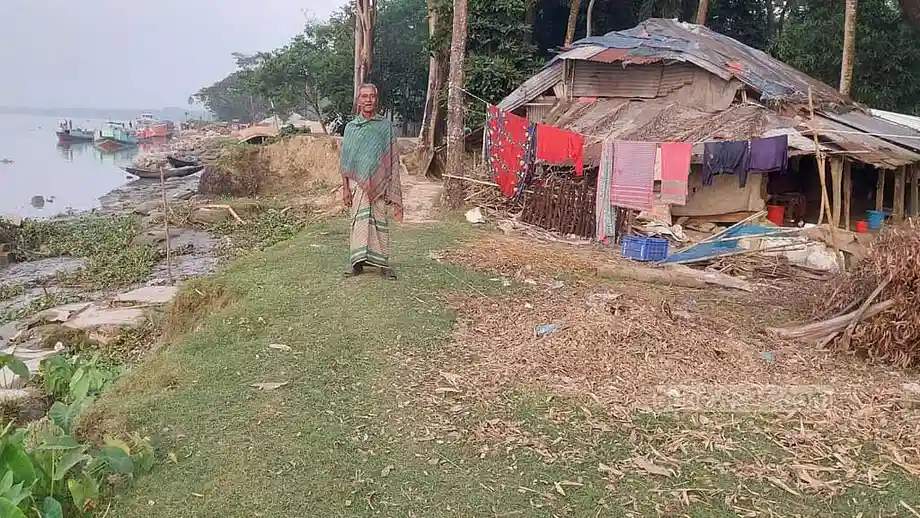
Charigram village in Singair, about 35 kilometres west of Dhaka, sits beside farmland and homes. Smoke from the chimney at Tanvir Enterprise drifts across the area while workers recover lead from discarded batteries. More than 150 residents have submitted a written complaint demanding that the smoke be stopped. They described burning eyes and throats, coughing, nausea and stomach pain. Farmers also reported falling crop yields, illness among cattle and some livestock deaths.
Contents
- Smoke over Charigram, and two official lists
- How did the fleet grow beyond a reliable count?
- What does the $112.4 million Chinese supply chain contain?
- Why does every replacement battery matter?
- Where does the recovered lead come from?
- What is the health and economic toll?
- Why can informal recycling undercut safer operators?
- Can existing environmental law close the gaps?
- What do the new rickshaw rules change?
- Why do drivers need a gradual transition?
- What does the national cleanup plan promise?
- Key Points
The plant's manager, Md Habib, said the business was following the regulations.
We are operating the factory in compliance with the rules.
Official records present two different pictures. Tanvir Enterprise appears in records held by the Department of Inspection for Factories and Establishments, but its name is absent from the Department of Environment's list of approved lead recycling plants. That environmental list contains four establishments. The registers cover different parts of oversight, leaving residents between an industrial listing and the environmental approval required for a polluting activity.
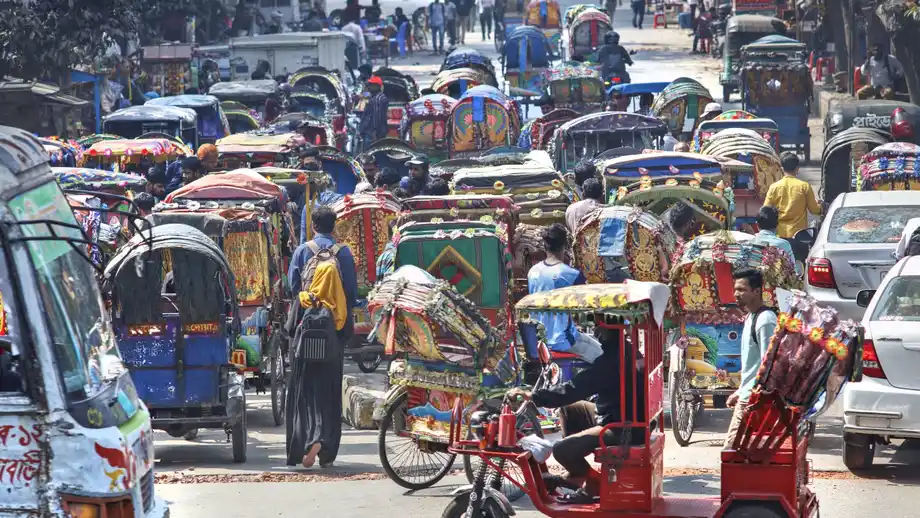
The village is at the end of a much larger business. Electric rickshaws and easy bikes can remain on the road for years, but their batteries are replaced repeatedly. Each replacement leaves a valuable residue of lead, plastic and acid. Collection is well established, while safe processing is far less common.
How did the fleet grow beyond a reliable count?
In September 2026, the home minister told parliament that Bangladesh had between 5 million and 8 million battery rickshaws, a gap of 3 million vehicles between the two estimates. Pure Earth's 2026 publication used a lower figure of about 4 million electric vehicles with three wheels. Whatever the precise count, the fleet consumes roughly 750 megawatts of electricity, about 5 per cent of national generation, much of it through informal connections. The resulting annual financial losses have been estimated in the thousands of crores of taka.
The vehicles spread through commercial initiative and repeated regulatory reversals rather than a settled transport plan. Data from the road transport authority, compiled by the Centre for Policy Dialogue, attribute close to a fifth of road deaths in recent years to collisions involving these vehicles.
- 2004: Maa Enterprise introduced the vehicles commercially in Cumilla. It later worked with Bangladesh Diesel Plant to import vehicles from China and market them from 2008.
- 2009: Dhaka City Corporation approved 7,000 vehicles and collected Tk 1,500 from each applicant, but the licences were never issued because no supporting policy was approved.
- 2011 to 2015: Authorities banned imports and assembly, the High Court barred mechanised and battery rickshaws, and the vehicles were ordered off 22 national highways.
- 2021: Another ban was announced, followed by a High Court order halting imports in December.
- 2024: A Dhaka ban collapsed within five days in May after driver protests. Further court orders in November were followed by a temporary status quo while rules were prepared.
- 2026: New operating rules were gazetted on 29 October, and registration began in 13 city corporations on 2 November.
What does the $112.4 million Chinese supply chain contain?
Chinese supply records in two trade databases identify 343 exporters and 440 Bangladeshi importers between January 2020 and June 2026. Their shipments were valued at approximately $112.4 million. Battery parts and materials accounted for about $81 million, or 72.2 per cent. Vehicles supplied without batteries, either as assembly kits or fully assembled frames, accounted for approximately $24.511 million. Assembly kits are commonly called CKD kits, meaning the parts arrive separated and are put together locally.
At least 292 Chinese companies supplied battery materials, including positive and negative plates, plate jackets, plastic cases, covers and separators. Shaoxing Nossimon Machinery supplied about $12.712 million worth, with RR International, MSARKE International and RK Power identified as its Bangladeshi buyers. Jiaxing Hongguan International Trade sent approximately $6.6 million in battery materials to buyers including Al Zara Corporation, HBC International Industries, Sinha Trading and HBC High Power.
Vehicle supplies were more concentrated. Records identify 546 shipments from 57 exporters to 93 Bangladeshi importers. Langfang Sandy Electric Tricycle and Ningbo DoWedo International Trade supplied about $21.362 million worth, nearly 87 per cent of the vehicle total. Sandy alone accounted for approximately $14.693 million, and Alina Auto Bike Industries bought about $11.892 million of its products.
Eight suppliers provided motors, controllers, chargers, converters, axles, shock absorbers and brake parts. Weihai Silon was the largest, supplying approximately $6.478 million in components. New Grameen Motors, which sells vehicles under the H Power name, received about $5.25 million of its axles, suspension and brake products.
Annual shipments fluctuated: $27.2 million in 2020, $26.6 million in 2021, $12.9 million in 2022, $7.4 million in 2023, $14 million in 2024 and $12.9 million in 2025. The first six months of 2026 brought another $11.4 million. Vehicle supplies rose more sharply, from $4.501 million in 2024 to $5.03 million in 2025 and $7.579 million in the first half of 2026. That half-year figure was 50.7 per cent above the whole of 2025.
Why does every replacement battery matter?
Drivers, mechanics and sellers generally describe two products as water batteries and powder batteries. Both contain lead and acid. Water batteries are flooded lead-acid units and commonly last one to one and a half years. Powder batteries use lead paste and generally last eight to 12 months. Some sellers reported lifespans of 18 months to two years, while other owners described replacement sets failing within a month.
Prices and protection vary just as widely. Garage owners in Kalabagan quoted Tk 24,000 to Tk 26,000 for a powder battery set, with one offering a guarantee of three months. Quotes for water battery sets ranged from Tk 45,000 to Tk 60,000. One rickshaw owner said he returned an old set and paid another Tk 13,000 without receiving a guarantee. A repair worker in Kathalbagan said some old batteries were sold again inside new casing, leaving drivers unable to judge their condition.
Research involving more than 1,000 undercover visits to 261 dealers in greater Dhaka found that 80 per cent of retailers gave inconsistent information about quality and lifespan. Stanford professor Erica Plambeck described the result as a lemons market, meaning buyers struggle to distinguish a durable product from a poor one. Her research with 1,300 vehicle owners also found that loans with longer repayment periods increased trust in better batteries and encouraged their adoption.
Pure Earth's waste estimate shows why lifespan matters. Its calculation assumes 2 million easy bikes, five batteries per vehicle and 125 kilograms of lead per set, replaced every 18 months. That produces approximately 167,000 metric tons of lead waste a year. The same publication gives a battery lifespan of eight to 11 months, so a shorter replacement cycle would produce a different annual total. Industry representative AKM Niamul Haque also warned that unsuitable charging arrangements can reduce an expected lifespan of 18 months to six months.
A used battery still has a price. Quotes ranged from Tk 80 to Tk 95 per kilogram in Karwan Bazar and about Tk 100 in Kathalbagan, to Tk 120 to Tk 160 in Savar. Damaged powder batteries in Kalabagan were quoted at Tk 180 to Tk 190 per kilogram. Returning an old set and adding cash is therefore already an established transaction, even though the battery's later destination is often obscure.
Where does the recovered lead come from?
At an open and partly covered site in Keraniganj, about 13 kilometres south of Dhaka, rows of used batteries stood beside broken cases and fragments. Around eight workers separated plastic and internal material, collecting a dark, ash-like substance in buckets. Some wore rubber boots, while others handled the material with bare hands. One worker washed an opened battery case in water. Broken plastic and battery pieces were scattered around the work area.
Workers said a pickup would carry recovered material to Kamrangirchar. The subsequent factory or buyer could not be identified from that movement. This is the point at which collection and safe recycling diverge: a battery can enter a thriving market without entering a licensed, controlled process.
About 20 kilometres north of Tanvir Enterprise, Jiangsu Storage Battery (BD) Company Limited manufactures lead batteries at Belishwar in Dhamrai. Several Chinese citizens own the company. In September, thick dark smoke was visible from its chimney, while some plants in low ground outside the boundary had died. Entry was not permitted. Its factory certificate was recorded as valid until 3 March 2027, but environmental records listed production approval from 27 July 2020 to 26 July 2021. The available documents did not show whether that clearance had subsequently been renewed.
Pure Earth estimates that 80 per cent of Bangladesh's used lead-acid batteries are recycled in illegal and informal establishments. The environment ministry's national lead strategy identifies more than 1,100 informal smelting and recycling sites, often beside densely populated communities.
What is the health and economic toll?
The Ministry of Environment, Forest and Climate Change calls informal battery recycling the single most consequential source of lead contamination in Bangladesh. Breaking cases by hand, draining acid, smelting plates in open pits and burning waste release lead dust, fumes and contaminated residue. Smelting means heating material to recover metal. The contamination can reach soil, homes, play areas, workplaces and farmland, and it can remain after a site closes.
Children can swallow contaminated dust or soil during ordinary play. Workers face direct exposure and can carry dust home on clothing, skin and tools. The strategy uses a 2025 national survey baseline showing that 38.3 per cent of children aged six to 59 months had blood lead levels of at least 5 micrograms per decilitre, a standard measure of lead in blood.
Research presented at a government seminar on 20 June 2026 described Bangladesh as the world's third most affected country for lead exposure, with an estimated annual loss of 20 million IQ points and $29 billion in economic output, equivalent to roughly 6 to 9 per cent of gross domestic product. These estimates cover the broad national burden of lead exposure, while battery recycling is identified as a major source.
Georgetown professor Amrita Kundu connected 252 battery recycling and lead smelting sites with national health data. After Bangladesh's 2015 Import Policy Order strengthened certification and customs enforcement, effectively raising tariffs on imported batteries for electric vehicles to 89 per cent, domestic production and demand for recycled lead increased. Women living within five kilometres of the sites subsequently experienced a 4.2 percentage point rise in terminated pregnancies, from 16 per cent to 20.2 per cent, compared with women living farther away. The study also found evidence of adverse effects extending as far as 13 kilometres.
Plambeck's presentation estimated that informal smelting releases 15 to 20 per cent of the lead being processed into the environment. Kundu argued that emissions across the battery value chain should fall from the current estimated range of 10 to 20 per cent to below 1 per cent.
Why can informal recycling undercut safer operators?
Informal operators avoid many costs associated with tax, pollution controls, protective storage and safe transport. They can collect batteries quickly and pay competitive prices because they do not bear the full expense of containing lead and acid. Licensed plants handle only a fraction of the waste, while the informal sector costs Bangladesh an estimated $91 million a year in lost tax revenue.
The environment ministry says Bangladesh has no Extended Producer Responsibility framework. Such a framework, commonly called EPR, makes producers responsible for collecting and managing products after consumers finish with them. Without it, manufacturers and importers can sell batteries while collection costs and pollution fall on workers, residents and the public finances.
China's revised Law on the Prevention and Control of Environmental Pollution Caused by Solid Waste offers a comparison. Article 66 requires lead battery producers to establish collection systems corresponding to their sales, either directly or through other organisations, and to publish information about those systems. The article does not spell out how that responsibility should operate after batteries are exported and reach the end of their lives abroad.
Representatives of Chinese battery companies at the Hong Kong Electronics Fair said their businesses were paying greater attention to lithium products. None identified buyers in Bangladesh or elsewhere in South Asia. Sean Dai, international business director at Hebei Tianyi Electric Appliance Co., said stricter pollution controls in China had increased equipment costs, making lead battery production harder for smaller manufacturers. Some company representatives were considering ending lead battery production, although lead units remained on display for energy storage, small equipment and 12 volt applications.
On 17 November 2026, China announced a separate battery recycling plan for retired power batteries from new energy vehicles. It includes unique identification codes and tighter links between vehicle scrapping and battery collection, illustrating how digital traceability can follow a battery through its working life.
Can existing environmental law close the gaps?
Bangladesh's 1995 environment law already requires an Environmental Clearance Certificate before an industrial unit or project is established. Section 4 allows directions that can close, prohibit or regulate an industry or process. Violating the clearance requirement carries up to three years in prison, a fine of up to Tk 300,000, or both. Ignoring certain official directions can bring up to 10 years in prison, a fine of up to Tk 1 million, or both.
Courts can also order equipment, transport and substances used in an offence to be confiscated. The Director General may seek compensation on behalf of affected people or the public. Prosecutions generally begin with a written report from a Department of Environment inspector, although a court can act after a complainant has waited 60 days without action and the inspector or authorised official has had an opportunity to be heard.
Capacity remains a constraint. The department has 735 approved positions, equivalent to roughly 220,000 citizens per position, compared with about 56,000 in the Philippines and 20,000 in Mexico. District offices generally have three staff members. A 2017 investment plan estimated that $651.6 million was needed to meet national industrial pollution objectives, but only about 10 per cent of that financing is available. The strategy also says existing penalties often fail to deter repeat violations.
What do the new rickshaw rules change?
The October registration rules extend beyond traffic control. Vehicles in city corporation areas must be registered, remain within approved zones and stay off national highways, expressways and major bus routes. The framework provides for QR coded plates, registration books, engineering fitness standards developed with BUET, a speed limit of 25 kilometres per hour and a registration term of five years.
Charging must take place at approved locations. When selling a new battery, a retailer must accept an old one and direct it through approved recycling arrangements. Dumping discarded batteries in open places, soil or water, and burning them, are prohibited. These provisions turn an existing exchange between driver and seller into a formal collection duty.
Registration began on 2 November, with Dhaka South selling application forms for Tk 100. No national ceiling for the fleet had been established. Dhaka's two city corporations plan eight colour-coded zones, initially registering 3,000 to 5,000 rickshaws in each zone, alongside annual digital registrations linked to individual identities.
Battery standards are also expanding. Md Atik Ullah, an assistant director in the standards wing of the Bangladesh Standards and Testing Institution, said technical committees had produced more than 40 standards covering lead-acid, lithium, sodium and nickel-cadmium batteries. Lead-acid batteries for electric vehicles entered mandatory certification in 2023. Lithium standards were being finalised through a statutory regulatory order, while QR code tracking was being introduced to authenticate approvals.
Why do drivers need a gradual transition?
A BRAC and BIGD study surveyed 450 active drivers in Dhaka and Barishal between 11 June and 30 July 2026. It found that 95.6 per cent had no licence or permit, 96.4 per cent relied on garages for charging and 65.6 per cent had faced fines or other penalties. More than a quarter, 26.7 per cent, reported at least one road accident in the month before the survey.
Renting leaves little room for a sudden loss of work. Among the respondents, 78.2 per cent rented their vehicles, paying an average of 38.6 per cent of their income in rent. The 352 rental drivers paid an average of Tk 10,323 a month. Some 62.9 per cent said they could not meet household expenses for even a week without earnings, while 60.7 per cent were their family's sole earner. Only 15.3 per cent received government social protection.
Migration helps explain that vulnerability. Among Dhaka respondents, 78 per cent had moved from other districts, and 84 per cent cited limited rural employment. BRAC executive director Asif Saleh called for a transition lasting three to four years, with affordable licensing, charging, insurance and battery upgrades. BIGD executive director Dr Imran Matin urged small pilot programmes and warned that expanded official monitoring could create additional opportunities for extortion unless garage owners, manufacturers, operators and communities share oversight.
The study also recommended bringing garages into the regulatory system. Garages already provide rentals, charging, battery replacement, repairs, credit and help after accidents or fines, making them practical collection and compliance points as well as places where unsafe practices can persist.
What does the national cleanup plan promise?
The national strategy covering 2026 to 2035 aims to halve the share of young children with blood lead levels at or above 5 micrograms per decilitre by 2030, using the 38.3 per cent baseline, and reduce that share by 95 per cent by 2035. Its immediate work includes identifying informal recyclers, mapping active and abandoned sites with geographical coordinates and building a national database of battery recycling facilities.
Other measures include battery tagging, revised taxes and smelting fees, safer operating procedures for formal recyclers, a national reference laboratory and battery testing facilities at at least 25 per cent of ports of entry. A digital supply chain platform would track batteries and other products containing lead. Pilot incentive schemes are intended to enrol at least 50 firms, while simplified registration, training, microcredit and public-private partnerships are meant to move informal businesses into compliant operations.
By 2030, the plan calls for at least 30 hazardous waste collection points and at least 10 licensed disposal facilities. The Department of Environment is to remediate 10 priority contaminated hotspots by 2029 and maintain a registry of polluted sites. The factories inspectorate is expected to recruit and train 200 inspectors to cover 3,000 facilities annually.
The strategy couples enforcement with transition support so that hazardous work does not simply move into more hidden locations. For Charigram's residents, success would mean cleaner air and soil. For drivers, it would mean affordable batteries that last longer and predictable collection when they fail. For recyclers, it would require a financial route into safer operations rather than relying solely on closures and penalties.
Key Points
- More than 150 Charigram residents complained about smoke from Tanvir Enterprise, citing illness and agricultural damage.
- Chinese exports of vehicles, battery materials and components to Bangladesh were valued at about $112.4 million from January 2020 to June 2026.
- Pure Earth estimates that 80 per cent of used lead-acid batteries enter illegal or informal recycling.
- The environment ministry identifies more than 1,100 informal smelting and recycling sites and $91 million in annual tax losses.
- A study linked nearby lead-emitting sites to a rise in terminated pregnancies from 16 per cent to 20.2 per cent after the 2015 import changes.
- New city rules require registration, approved charging and retailer collection of old batteries, while prohibiting dumping and burning.
- A survey of 450 drivers found widespread informality and severe financial vulnerability, supporting calls for a phased transition.
- Bangladesh's 2026 to 2035 strategy proposes site mapping, battery traceability, safer recycling, new laboratories and remediation of contaminated hotspots.