Europe's legislature names a system of exclusion
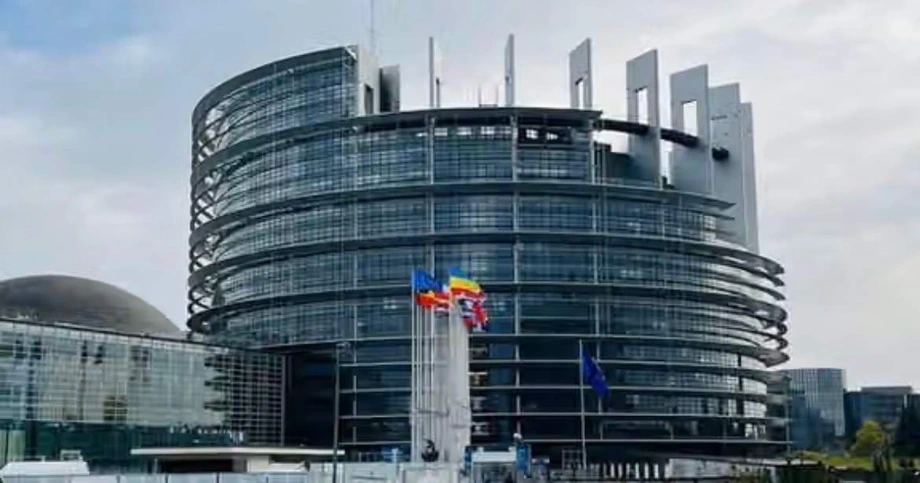
On November 25, 2026, the European Parliament said the Taliban have turned the exclusion of Afghan women and girls into an institutional system. It described the treatment as gender apartheid, slavery and child marriage, and linked those words to a resolution adopted on May 21, 2026. The Parliament was answering a direct question about whether the Taliban's conduct amounts to gender apartheid, so the reply gave a clear name to policies that Afghan women's rights activists have long described in those terms.
Contents
- Europe's legislature names a system of exclusion
- A timeline of the statements and legal moves
- What rights are being denied
- Why gender apartheid is more than an insult
- What the resolution asks Europe to do
- France and Spain give the phrase diplomatic weight
- Madrid turns words into investigative pressure
- Australia pushes a separate treaty proposal
- How the dispute reaches daily life
- What is still undecided
- Key Points
The Parliament's press office defined the period and the language it wanted used. It said the persecution began after the 2021 takeover and used two short phrases:
'illegal seizure of power' and 'systematic persecution'.
The list of denied rights was broad: education beyond the sixth grade, employment, access to justice, healthcare, freedom of movement and participation in public life. The institution also demanded an end to public floggings, corporal punishment and executions, and the lifting of restrictions on women, girls, religious minorities, LGBTQ+ persons and other vulnerable groups.
The Parliament's resolution itself declared the regime in the strongest terms:
'the Taliban regime has institutionalised slavery, gender apartheid and child marriage'.
The quotation comes from resolution 2026/2737(RSP), whose subject was the Taliban's new Criminal Procedure Code for Courts. The European Parliament adopted it on May 21, 2026, by 480 votes to 5, with 83 abstentions.
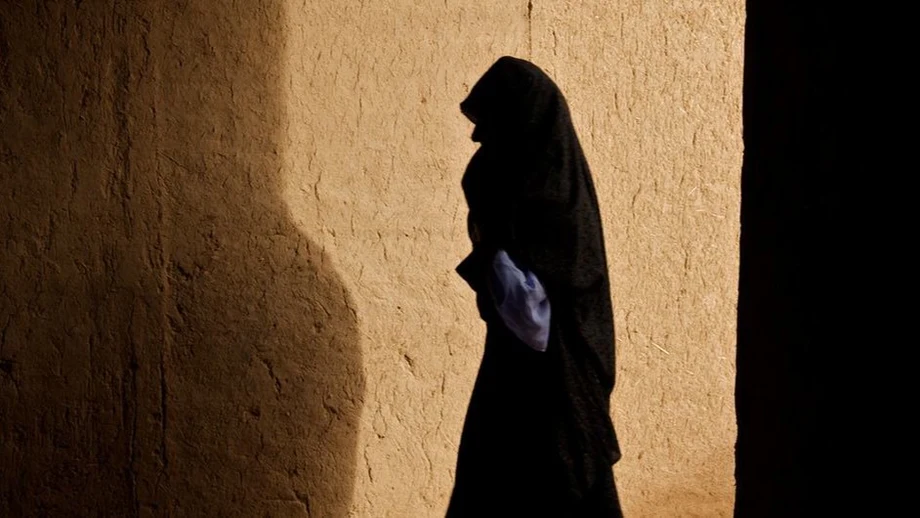
For a child in Afghanistan, the line about the sixth grade has a plain meaning. School may stop after that year, even for a girl who wants to continue. For an adult woman, the same system can close a job, a clinic, a court door and a road out of town. The Parliament's use of institutionalised gender apartheid refers to rules built into government and daily life, not one isolated act by one official.
A timeline of the statements and legal moves
The language now used in Brussels grew from a sequence of decisions, speeches and legal filings. These dates show how the phrase moved from activist language into parliamentary resolutions, foreign ministry statements and court arguments.
- August 2021: The Taliban returned to power, the event the Parliament calls an 'illegal seizure of power'.
- 17 October 2023: Spanish Foreign Minister José Manuel Albares described the situation facing Afghan women and girls as gender apartheid, pointing to girls kept from school and women kept from work.
- 25 September 2024: Australia, Canada, Germany and the Netherlands began proceedings against Afghanistan under the Convention on the Elimination of All Forms of Discrimination Against Women, known as CEDAW.
- 21 May 2026: The European Parliament adopted resolution 2026/2737(RSP) on the Taliban's new Criminal Procedure Code for Courts, by 480 votes to 5 with 83 abstentions, naming slavery, gender apartheid and child marriage and urging European diplomatic action.
- 22 and 23 November 2026: The HearUs summit in Madrid put Afghan women's leadership and accountability at the centre of a two day meeting.
- 24 November 2026: French Foreign Minister Jean-Noël Barrot used the same term in the French National Assembly while defending France's contacts with the Taliban over deportations.
- 25 November 2026: The European Parliament's press office answered the question on gender apartheid and repeated the demands from its resolution.
- 27 November 2026: Australia's foreign ministry said Canberra had proposed adding gender apartheid as a crime in the proposed convention on crimes against humanity.
The sequence matters because the words now carry several jobs at once. They name abuses, guide diplomacy, support legal arguments and answer Afghan activists who have demanded that the world describe what is happening with precision.
What rights are being denied
The Parliament's list reads like a map of public life. Education beyond the sixth grade affects girls who want to finish secondary school. Employment bans affect women who need income. The loss of access to justice means a woman may have no reliable route to claim a right, challenge an order or seek protection. Restrictions on movement and public life affect the basic ability to visit family, reach a clinic, work, study or speak in public.
The 22 million healthcare warning set out a United Nations warning that an estimated 22 million Afghan women and girls are at risk of losing access to essential healthcare. Nearly 300 humanitarian health facilities have closed or suspended operations, affecting more than one million women and girls who relied on them for basic care, maternal health and emergency treatment. Since December 2024, women have also been barred from training as nurses and midwives, a rule that matters in a country where many women avoid treatment from male staff.
Specialised care shows the human cost of those numbers. The fistula repair ward at Mirwais Regional Hospital in Kandahar and centres at Rabia Balkhi Hospital in Kabul were designed to directly benefit 300 women and indirectly support 300,000 women and girls of reproductive age. Fistula is a childbirth injury that can cause chronic pain and loss of bladder or bowel control. When clinics close or female staff are blocked from training, treatment becomes harder to reach.
Why gender apartheid is more than an insult
Apartheid was the legal system of racial separation enforced in South Africa's white minority government for decades until it was dismantled in the 1990s. Gender apartheid borrows that history to describe an institutional system that sorts people by gender and removes them from public life through rules. In Afghanistan, the rules include edicts and policies that keep girls out of secondary school, women out of universities and most jobs, and both groups out of many public spaces.
The phrase is now used by European Parliament members, foreign ministers, Afghan activists and United Nations experts, but it has not yet been written into international law as a separate crime. Human rights advocates and UN experts want it codified as a distinct crime against humanity under the proposed convention. Their argument is practical: a defined crime would let investigators and prosecutors pursue the people who design and maintain a system of exclusion as well as those who carry out individual acts of violence.
The word institutionalised carries particular weight. It points to a system run through government decisions, not random prejudice. A school rule, a court restriction, a travel order and a workplace ban become parts of the same structure when they are issued and enforced by the authorities. That is why the Parliament's statement uses the language of apartheid rather than describing each restriction separately.
What the resolution asks Europe to do
The May 21 resolution names two European bodies. The Council of the European Union brings together the governments of member states, while the European Commission is the European Union's executive. The Parliament asked both to condemn these practices in all diplomatic engagements. In practical terms, that means raising the abuses when European officials speak with Taliban representatives or discuss Afghanistan in diplomatic settings.
The resolution also asked the Council and Commission to support recognition of these practices as crimes against humanity under a proposed international treaty on crimes against humanity, often called the Convention on the Prevention and Punishment of Crimes Against Humanity. It demanded an immediate end to public floggings, corporal punishment and executions. It also called for all restrictions on women and girls in public life to be lifted, along with restrictions on religious minorities, LGBTQ+ persons and other vulnerable groups.
A Parliament resolution is a political position and a public signal. The Council and Commission still decide how to carry it into their own work. The text gives European officials a clear checklist: name the abuses, resist recognition of the Taliban authorities, press for the proposed treaty, and raise the case of groups pushed out of public life.
France and Spain give the phrase diplomatic weight
French Foreign Minister Jean-Noël Barrot spoke at the French National Assembly on Tuesday, November 24. He was answering Léa Balage El Mariky, a lawmaker from the Ecologists party, who questioned talks with the Taliban over the return of Afghan nationals living in France without legal residency permits, especially those considered threats to public order. She said two Taliban representatives were expected in France and called the move 'a betrayal'. She asked for their identities and the length of their stay.
Barrot said the contacts were limited and that Paris rejected political recognition. He gave the assembly this explanation:
Any strictly technical exchanges that may take place do not constitute approval or recognition of this regime. This regime imposes the worst form of discrimination against women and girls in our century. This is gender apartheid.
He also said France had 'no intention whatsoever' of establishing diplomatic relations with the Taliban. He described the treatment of Afghan women as an inhumane ordeal and used the French phrase 'un apartheid de genre' to say that France stood with Afghan women as victims of gender apartheid. Barrot did not provide the names of the expected representatives or dates for the visit.
The dispute behind France's gender apartheid statement also produced pledges of practical support. Barrot said France had provided €187 million in humanitarian assistance over five years, an average of €37.4 million a year if divided evenly. He said aid was guided by the principle of delivering aid by and for Afghan women. France will admit 50 additional Afghan female students from January 2027, award 35 merit based scholarships in September 2027 and welcome 200 Afghan women in 2027. He said France would strengthen its diplomatic presence in the region to help with their admission.
Spain had used the same language earlier. On 17 October 2023, Foreign Minister José Manuel Albares described the situation facing Afghan women and girls as gender apartheid, citing the exclusion of girls from schools and women from employment. At the Madrid accountability summit on 23 November 2026, he returned to the theme with sharper language.
Albares told the summit that Taliban rule combined exclusion with violence. He summarised it in one sentence:
A system of discrimination, segregation, constant violence against women and girls.
The Spanish minister said Afghanistan had become the most evident place of violations of women's rights. He said Spain supports the recognition and criminalisation of gender apartheid in international law and will work to include it in negotiations on the Convention on Crimes Against Humanity. He promised a stronger legal response to forced marriage, sexual and reproductive violence and persecution based on gender.
Madrid turns words into investigative pressure
The HearUs summit, organised by Spain's foreign ministry with Women for Afghanistan, was held for the fourth consecutive year. Its 2026 motto was 'Afghan Women's Leadership to Achieve Justice and Peace Through Accountability'. Around 70 Afghan women's rights activists, former lawmakers, researchers, religious scholars, diplomats and United Nations officials gathered in Madrid, with panels on education, economic opportunity, accountability mechanisms, Islamic perspectives on women's rights and women's place in peace decisions.
Spain made a financial contribution to the launch of a new independent investigation mechanism for Afghanistan, meant to document serious violations and preserve evidence for future proceedings. Albares said the international community must investigate abuses, identify those responsible and activate accountability mechanisms. He said Spain would never recognise the Taliban while women's rights were violated.
Pramila Patten, the United Nations Special Representative of the Secretary General on Sexual Violence in Conflict, told the meeting that Afghanistan stood out for the reach of its restrictions. She said:
'no other country has imposed such exhaustive and systematic restrictions on half of the population, based solely on gender'.
Patten backed treating the abuses as crimes against humanity. She said accountability was not revenge, but a refusal to accept that anyone stood above the law. She called for data, evidence and a working mechanism, along with political will, sustained support and the necessary resources. She also said survivors needed to hear that what happened to them matters.
Fawzia Koofi, president of Women for Afghanistan, described the crisis as political as well as human rights based. She said a minority, the Taliban, controls power while about 43 million people are excluded from decisions about the country's future. She said the restrictions are imposed 'in the name of Islam', an interpretation she rejects. She warned that the consequences could cross Afghanistan's borders and reach Europe.
Australia pushes a separate treaty proposal
Australia's foreign ministry said on November 27, 2026 that Canberra had proposed formally including gender apartheid as a crime in the proposed convention on crimes against humanity, and that negotiations were under way. It condemned the Taliban's systematic campaign to remove women from public life and said the rights of women and girls are universal. Canberra also promised to work with civil society and international partners to hold perpetrators accountable and to include Afghan women and girls in decisions about their country's future.
Australia's concern is that international law does not adequately cover cases where a government designs a system that entrenches discrimination in political, economic, legal, cultural and social life. In plain words, existing law can address many individual abuses, but Canberra wants a legal definition for the wider machine that produces them.
The formal submission was made by seven countries: Afghanistan, Australia, Iceland, Mexico, Spain, Timor-Leste and Uruguay. They submitted it to United Nations Secretary-General António Guterres, calling for gender apartheid to be included in the draft Crimes Against Humanity Convention. This put the issue formally on the agenda of negotiations over the proposed treaty.
The deadline for governments to submit written proposals on the convention was April 30, 2026. Those submissions, together with proposals previously discussed in the UN General Assembly's Sixth Committee, will form the basis of future negotiations.
The End Gender Apartheid Campaign said it and its partner organisations had spent the previous three years advocating for recognition of gender apartheid under international law. It described the submission as a 'major victory' for Afghan women and called on governments to recognise gender apartheid, codify it in international law and take steps to prevent and end it. It said Mexico, Iceland and Timor-Leste explicitly credited the leadership and advocacy of Afghan women with driving efforts to define the concept legally.
The CEDAW case and the treaty proposal are separate moves. On September 25, 2024, Australia, Canada, Germany and the Netherlands initiated proceedings against Afghanistan under CEDAW, arguing that Taliban restrictions violate Afghanistan's obligations under the treaty. Afghanistan is a state party to CEDAW, so the case rests on treaty duties that remain in force despite the Taliban's return to power.
Ottawa announced the launch of the initiative on September 25, 2024, under Article 29 of the 1979 convention. The announcement came on the same day that Canada and other states said life for many women and girls in Afghanistan was 'like life under house arrest' and that they were being deprived of their dignity. The initiative's aim was ultimately to bring the Taliban before the International Court of Justice over CEDAW violations.
Article 29 requires the four countries to negotiate with Afghanistan over the alleged violations. If that bears no fruit, the parties must move to arbitration; if arbitration fails after six months, the case can go to the International Court of Justice for hearings. It is unclear what progress has been made since the initiative was launched, including whether arbitration has been sought, and no later procedural step has been confirmed. Canada has insisted that negotiation or arbitration would not mean recognising the Taliban as Afghanistan's ruling authority.
If the case reaches the court, it could take years to adjudicate. The ICJ could issue interim orders, including an instruction to the Taliban to cease the persecution of women and girls while the case is ongoing. Evidence generated by the proceedings could also be used by other states or institutions such as the International Criminal Court, which issued arrest warrants for two Taliban leaders in 2025. Former Afghan diplomat Nazifa Haqpal said the case could 'facilitate asylum claims for Afghan women, as it would establish legal recognition of the persecution they face, making it easier for them to seek refuge abroad.'
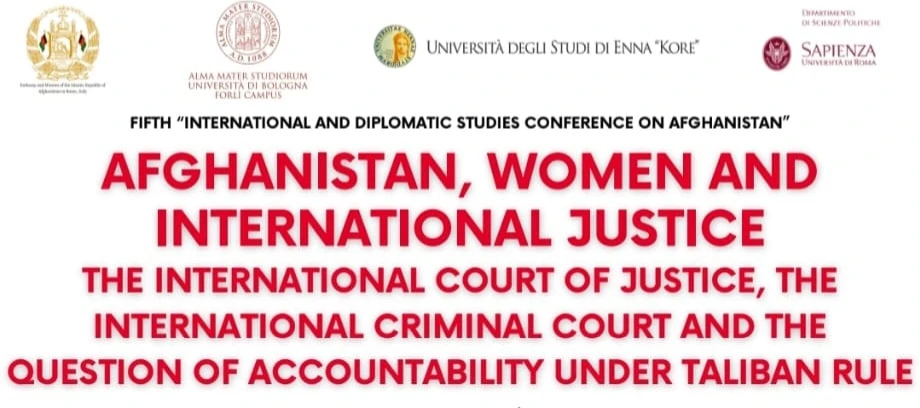
Other governments have taken nearby positions. The United Kingdom said it was reviewing possible international law measures. Germany said violations of women's rights in Afghanistan may amount to crimes against humanity. Switzerland condemned the organised repression of Afghan women and their exclusion from education, work and public life. The same legal question was examined at a Rome justice conference, where legal scholars and activists discussed how international justice can respond to Taliban edicts.
How the dispute reaches daily life
Inside Afghanistan, the restrictions turn into everyday decisions. A girl who finishes sixth grade faces a closed school door. A woman who loses her job loses income and public standing. A patient who needs care may need a male guardian to travel. A woman trying to use a court faces a system where access to justice has been listed by the Parliament among the rights denied. These are separate rules, but together they shape what a person can study, earn, claim and do.
The health warning gives the strongest numbers. The United Nations counted more than 100 decrees restricting women and girls since August 2021. The European Parliament's May resolution gives a different figure, referring to more than 150 Taliban decrees since 2021. Neither document is cited, and the discrepancy between that count and the United Nations figure of more than 100 cannot be resolved from the available information. Those rules include bans on secondary education, university study, employment, movement and public participation. The closure or suspension of nearly 300 health facilities affects more than one million women and girls who relied on them. In Kandahar and Kabul, specialised centres still aim to treat hundreds of women directly and hundreds of thousands indirectly, but shortages of female professionals and travel rules narrow the route to care.
What is still undecided
Gender apartheid still has no standalone definition in international law. Negotiators are discussing the proposed convention on crimes against humanity, and no date was given for its adoption. Recognition by a government is a diplomatic position, while a crime needs a treaty text or a court process before it can be used that way. The European Parliament's resolution gives European institutions a direction, but it cannot by itself detain, charge or punish a Taliban official.
Several practical details also remain open. Barrot did not give the names of the two expected Taliban representatives or the length of their proposed stay. No date was given for a Council or Commission decision on how the Parliament's resolution will be carried into diplomacy. The next dated steps come from France's support plan: 50 Afghan female students from January 2027, 35 scholarship holders in September 2027 and 200 Afghan women in 2027.
Key Points
- The European Parliament said on November 25, 2026 that Taliban rule has institutionalised slavery, gender apartheid and child marriage.
- Its May 21, 2026 resolution 2026/2737(RSP), on the Taliban's new Criminal Procedure Code for Courts, was adopted by 480 votes to 5, with 83 abstentions, and urged the Council of the European Union and the European Commission to condemn those practices in diplomatic engagements.
- The resolution refers to more than 150 Taliban decrees since 2021, conflicting with the United Nations count of more than 100; neither document is cited.
- The Parliament listed lost access to education beyond sixth grade, employment, justice, healthcare, freedom of movement and public life.
- It called for an end to public floggings, corporal punishment and executions, and for restrictions on LGBTQ+ persons, religious minorities and vulnerable groups to be lifted.
- France and Spain have used the term gender apartheid and say they will push for legal recognition in negotiations on a proposed crimes against humanity convention.
- Australia and six other countries submitted a proposal to include gender apartheid in the draft convention, while it remains unclear whether the separate CEDAW process pursued with Canada, Germany and the Netherlands has moved to arbitration.
- Gender apartheid is not yet a standalone crime under international law, and no adoption date for the proposed convention was given.