Legal Scholars and Activists Examine International Justice in Rome
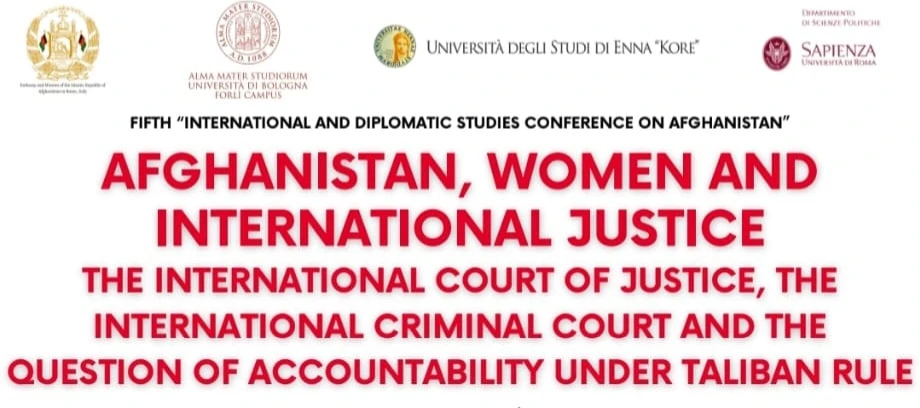
Legal scholars, civil society members, and students gathered at the Afghan Embassy in Rome to examine arrest warrants, bans, and the pursuit of international justice. The fifth Conference of International and Diplomatic Studies on Afghanistan, titled Afghanistan, Women and International Justice, took place on Saturday, November 21, in Rome before a large audience. The gathering focused on the concept of gender apartheid, examining how international law can address the edicts that have excluded women and girls from public life in Afghanistan. The event followed two major developments that brought the country back into international focus. On October 5, the International Criminal Court made public four arrest warrants against senior Taliban figures. On November 4, UNESCO and UNICEF noted that more than 2.6 million Afghan girls have been barred from secondary school since 2021. Universities have also been closed to women since 2022, alongside a steady stream of bans making life increasingly difficult.
Contents
- Legal Scholars and Activists Examine International Justice in Rome
- Understanding the International Criminal Court Warrants
- The Second Avenue of Accountability Through State Disputes
- The Critical Role of Personal Testimony in Legal Evidence
- Broader Restrictions Across Afghan Society
- Chronology of Key Developments
- What Remains Unknown and Unresolved
- At a Glance
Ambassador Khaled Ahmad Zekriya hosted the meeting, sitting on a panel alongside Professors Paolo Bargiacchi, Raffaele Cadin, Maria Irene Papa, and Emanuele Cimiotta, General Vincenzo Camporini, and Ciro Romano, rector of the Università Popolare Cattolica Montemurro-D'Ippolito. Joining via video link was Antonella Napoli, editor-in-chief of Focus on Africa, who spoke about reporting on forgotten crises and remembered Maria Grazia Cutuli, the journalist killed in Afghanistan in 2001. The program placed side by side two questions: which acts Taliban leaders must answer for before international justice, and how the testimonies of Afghan women can help prove them. A video presented works by Afghan painter Rafi Rasooli, depicting the grief of Afghan women barred from studying, followed by an Afghan lunch hosted by the Embassy.
Understanding the International Criminal Court Warrants
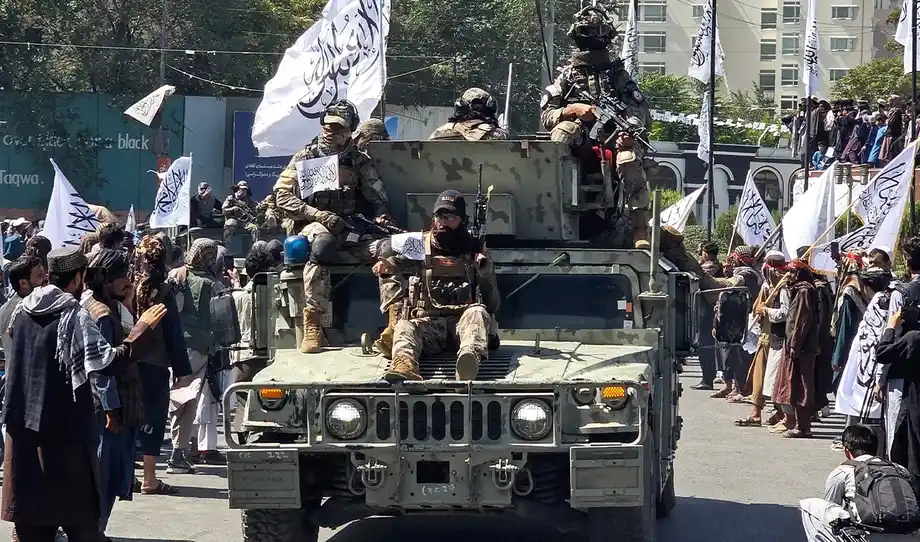
To bring those responsible before a judge, two main legal avenues exist today, with the first running through the International Criminal Court based in The Hague. According to the press release of the International Criminal Court published on October 5, Pre-Trial Chamber II unsealed four arrest warrants against senior Taliban figures. The warrants were originally issued on July 8 and September 9, 2025, remaining sealed until October 2026. The suspects named are Supreme Leader Haibatullah Akhundzada, Chief Justice Abdul Hakim Haqqani, and the ministers of education and higher education, Habibullah Agha and Neda Mohammad Nadim. The primary charge is gender persecution, classified as a crime against humanity under article 7(1)(h) of the Rome Statute, targeting women and girls with bans and restrictions. Gender is defined in this context as encompassing socially constructed roles, behaviours, expectations, and hierarchies associated with individuals based on sex. The court found reasonable grounds to believe these leaders ordered, induced, or solicited gender persecution against girls, women, and persons non-conforming with the Taliban policy on gender, alongside political persecution against persons perceived as allies of girls and women. The alleged crimes occurred between the Taliban takeover on August 15, 2021, and at least January 20, 2025.
Deputy Prosecutor Nazhat Shameem Khan noted that the Office of the Prosecutor submitted two applications for warrants on January 23, 2025. On October 31, 2022, the Pre-Trial Chamber re-authorised the investigation, which has been conducted by the Afghanistan Unified Team. On November 12, judges closed the original proceeding covering US troops and ISIS-K, but the investigation into events since August 2021 continues under a separate track known as Afghanistan II, as detailed in our earlier coverage of when judges at the International Criminal Court closed the broader inquiries. This closure drew criticism from the Afghan organization Rawadari, which called for it to be reversed, and Human Rights Watch, which warned it risks narrowing access to justice. The ICC Appeals Chamber previously confirmed the scope of the investigation in decisions dating back to March 2020.
The Second Avenue of Accountability Through State Disputes
The second legal avenue concerns states rather than individuals. In September 2024, Australia, Canada, Germany, and the Netherlands called on Afghanistan to answer for discrimination against women under the United Nations convention prohibiting it. If consultations do not yield an agreement, the matter can come before the International Court of Justice, which sits in The Hague and adjudicates disputes between states. There are no criminal trials at this court. Instead, the International Court of Justice determines whether a state has upheld its international obligations, which remain legally binding even when a government changes.
It is within this diplomatic and legal framework that the term gender apartheid found space in the discussion in Rome. Gender apartheid denotes a system of domination and segregation based on gender, and its use arises directly from the lived condition of Afghan women. Under existing international law, however, gender apartheid does not yet exist as a standalone criminal offense. The ICC warrants rely on the established charge of gender persecution, and the draft UN convention on crimes against humanity remains tied to a 2019 text that does not recognize gender apartheid as a distinct crime. United Nations experts have urged states to support its inclusion, and Human Rights Watch stated that fourteen countries have publicly backed the idea.
The Critical Role of Personal Testimony in Legal Evidence
Giving a system a legal name makes it possible to prosecute it, but a name alone is not enough to secure a conviction. To prosecute a system of oppression, investigators must show how it operates in the daily lives of those who endure it. The text of a government ban states what was ordered, but it does not reveal how it was enforced. Proving enforcement requires the voices of those who received the order, such as a student who can specify when she last walked through her faculty gates, or a teacher who had to tell her pupils that school was over. These specific details, including dates, places, and the names of officials who conveyed the order, turn a narrative into actionable legal evidence.
One session at the Rome conference gave space to such testimonies, presented by five speakers, including Maria Clara Mussa, Simona Fernandez, Maryam Barack, and Setayesh Osmany. They brought the voices of Afghan civil society into direct contact with the audience. However, a testimony carries weight in court only if it reaches judges safely, and that path is complex. The program framed the challenge as difficult even for legal scholars: determining how accessible international justice mechanisms are to a woman who possesses vital knowledge and must decide whether to speak, how, and with whom. The session was held under the Chatham House Rule, allowing participants to report what was said without identifying speakers, thereby protecting those who spoke out.
Broader Restrictions Across Afghan Society
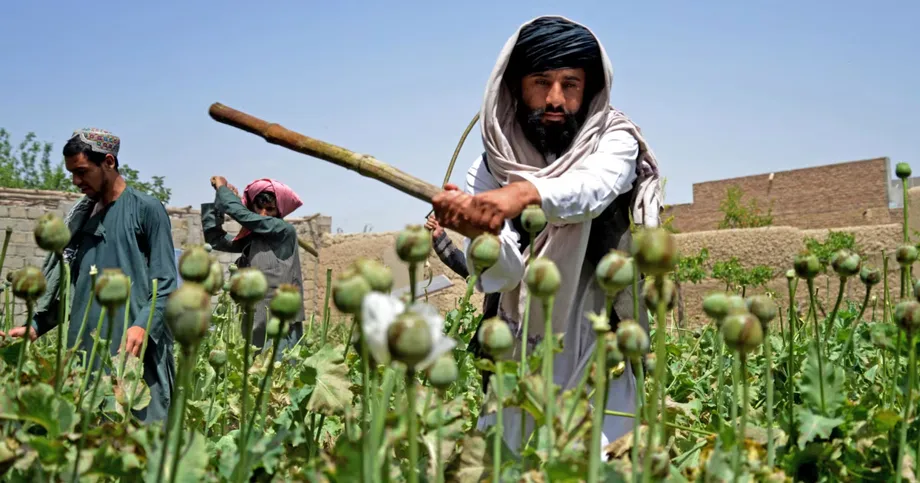
The crackdown on women and girls forms part of a wider pattern of restrictions affecting various aspects of Afghan life. In the telecommunications sector, the Taliban authorities announced on September 21, 2024, that they had blocked TikTok and the online game PUBG after checks on five networks, following cabinet orders from April 2022, as noted in our report on how Afghanistan's Taliban authorities enacted the bans. In education and broadcasting, the suspension of BBC FM radio broadcasts across the country removed a local transmission route reaching 5.4 million people. Khubaib Ghufran, spokesperson for the Ministry of Information and Culture, described the suspension as temporary due to repeated violations, though no specific rules or restoration dates were identified. Meanwhile, opium cultivation has experienced a sharp rebound. According to the United Nations Office on Drugs and Crime survey published on October 29, Afghanistan produced 1,466 tonnes of opium in 2026 across 43,300 hectares, with Badakhshan accounting for more than two thirds of the total, representing a significant increase from 2025 figures.
International sporting and diplomatic ties have also shifted in response to these policies. Cricket Scotland announced on November 9, 2026, that it would restrict bilateral series and tri-series involving Afghanistan men, joining tournaments or providing training camps outside official International Cricket Council events, citing human rights conditions and restrictions on women and girls, as covered when Cricket Scotland Council Limited approved the measures. In the area of child recruitment, United Nations monitoring verified that Taliban forces recruited and used 557 boys between January 2023 and December 2025, including children as young as 12. Of those, 341 performed support duties and 216 served in combat and support roles, keeping Afghanistan in Tier 3 of the United States trafficking assessment. Taliban deputy spokesperson Hamdullah Fitrat rejected the allegations, stating that the recruitment of underage people is strictly prohibited.
Chronology of Key Developments
- May 5, 2020: The ICC Appeals Chamber authorized an investigation into the situation in Afghanistan.
- August 15, 2021: The Taliban seized power in Afghanistan and subsequently began issuing edicts restricting women.
- October 31, 2022: ICC Pre-Trial Chamber II authorized the resumption of the prosecutor's investigation.
- January 23, 2025: The ICC Prosecutor submitted applications for two arrest warrants against senior Taliban leaders.
- July 8 and September 9, 2025: Pre-Trial Chamber II issued four arrest warrants against senior Taliban figures.
- October 5, 2026: The ICC unsealed the four arrest warrants in the Afghanistan situation.
- November 21, 2026: The fifth Conference of International and Diplomatic Studies on Afghanistan was held in Rome.
What Remains Unknown and Unresolved
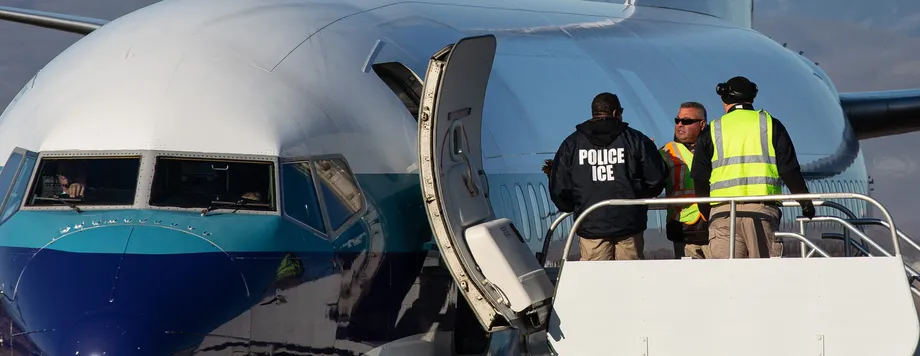
Significant questions remain regarding the enforcement of international arrest warrants against senior Taliban leaders who reside within territory controlled by their own administration. Law enforcement agencies have not indicated how suspects living under these conditions will be apprehended or transferred to The Hague. Furthermore, no timeline has been established for when the International Court of Justice might hear state-level discrimination complaints, nor has it been decided whether gender apartheid will be formally codified as a standalone crime under international law. In domestic broadcasting and communications, authorities have not specified which exact violations led to the suspension of BBC FM transmissions, and no restoration date has been provided. Legal experts and human rights organizations continue to monitor these developments to see how evidence gathered from witnesses can overcome systemic barriers to justice.
At a Glance
- Four arrest warrants for senior Taliban figures were unsealed by the International Criminal Court on October 5, 2026, charging gender persecution as a crime against humanity.
- The warrants target Supreme Leader Haibatullah Akhundzada, Chief Justice Abdul Hakim Haqqani, and education ministers Habibullah Agha and Neda Mohammad Nadim.
- UNESCO and UNICEF reported that over 2.6 million Afghan girls have been barred from secondary school since 2021.
- The fifth Conference of International and Diplomatic Studies on Afghanistan convened in Rome on November 21, 2026, to discuss legal accountability and testimony.
- State-level accountability efforts involve a diplomatic push by Australia, Canada, Germany, and the Netherlands under the UN convention against discrimination.