From a cabinet order to a claim of nationwide blocking
Afghanistan's Taliban authorities said on September 21, 2024, that they had blocked TikTok and the online game PUBG, following a week of checks on five telecommunications networks. The announcement came more than two years after the cabinet first ordered restrictions on the apps in April 2022.
Contents
- From a cabinet order to a claim of nationwide blocking
- How the restrictions developed
- Why the Taliban targeted the apps
- Millions of young people were within reach of the ban
- What PUBG players stand to lose
- One user welcomed the gaming ban but opposed losing TikTok
- Criticism, broadcasting and control of information
- Why blocking access is technically difficult
- Key Points
The Ministry of Communications and Information Technology said the telecommunications regulator, ATRA, had examined Afghan Wireless, Etisalat, Salaam, MTN and Roshan and confirmed that blocking was complete. The ministry attributed the filtering to an order from the Taliban prime minister's office.
The announcement marked a later stage in a policy that initially gave providers one month to block TikTok and three months to block PUBG. Those deadlines concerned two different activities: sharing short videos and playing an online survival game. Both had become popular sources of entertainment among young Afghans as authorities restricted music, films and television programmes.
Taliban officials presented the restrictions as protection for young people and enforcement of their interpretation of Islamic rules. Afghan users and commentators described more varied consequences, including less time spent gaming, the loss of religious and cooking videos, and fewer opportunities to criticise government actions.
The practical reach of the restrictions remains uncertain: no independently verified figure is available for how many users could still reach either app, including through virtual private networks, or VPNs. The ministry's September statement described checks on providers, while users' ability to get around filtering presents a separate technical challenge.
The chronology matters because an order to block an app, a provider's promise to implement it and a regulator's claim that the work is complete are different stages of enforcement.
How the restrictions developed
The cabinet's first public instruction came on Thursday, April 21, 2022. Taliban deputy spokesman Inamullah Samangani said the communications ministry had been directed to block TikTok and PUBG because the authorities considered them harmful to the younger generation.
Samangani also announced instructions to restrict broadcasts containing material the Taliban considered immoral. The policy therefore extended beyond two apps to the wider question of what Afghans could watch online and on television.
- April 21, 2022: Samangani announced the cabinet order to block TikTok and PUBG and restrict broadcasts deemed immoral.
- Later in 2022: The communications ministry agreed an implementation schedule with telecommunications companies and internet providers, allowing one month for TikTok and three months for PUBG.
- September 21, 2024: The ministry said a week of regulatory checks across five networks had confirmed complete blocking.
Anayatullah Alokozai, a spokesperson for the communications and information technology ministry, described the agreement with providers after a Saturday meeting:
After a series of meetings that we had with telecommunications companies, the companies promised in the latest meeting on Saturday that they will close TikTok in one month and PUBG game in three months,
The implementation discussions included representatives from the security sector and the administration responsible for enforcing the Taliban's interpretation of Sharia, or Islamic law. Telecommunications companies and internet service providers were then given the decision to carry out.
Why the Taliban targeted the apps
Samangani framed the ban as a response to concerns about how young people spent their time and what they watched. Explaining the cabinet's decision in April, the Taliban spokesman said its purpose was to:
prevent the younger generation from being misled
Samangani also said TikTok's content conflicted with Islamic laws. In another explanation, he pointed to complaints about both platforms:
We've received a lot of complaints about how the TikTok app and the PUBG game are wasting people's time,
The ministry's later statement placed TikTok and PUBG among applications and sites it described as illegal and immoral. That language reflects the authorities' judgment about acceptable content, which became the basis for directing providers to restrict access.
The cabinet chose restrictions on entire platforms. For users, that means the same barrier applies whether they want to watch a cooking demonstration, listen to a religious explanation, post a humorous video or join a game.
Millions of young people were within reach of the ban
Afghanistan had roughly nine million internet users around the time of the initial announcement. Ministry figures cited later in 2022 put the number at 10 million. Those estimates describe the potential reach of internet restrictions, rather than the number of people using either TikTok or PUBG.
Population estimates from the same period put Afghanistan's total at about 39 million to 40 million. More than 63 percent, or nearly two thirds, were younger than 25. Using the figures of 40 million people and a share above 63 percent, more than 25 million Afghans belonged to that age group.
Young people therefore sat at the centre of the policy in two ways: officials said they wanted to protect them, while young users faced losing activities they already enjoyed. TikTok enabled short videos and live broadcasts. PUBG offered a shared game that friends could join through an internet connection.
The restrictions arrived after the Taliban returned to power in August 2021 and curtailed other entertainment. Music, films and television soap operas had already faced bans. Closing two popular online outlets narrowed the remaining choices further.
What PUBG players stand to lose
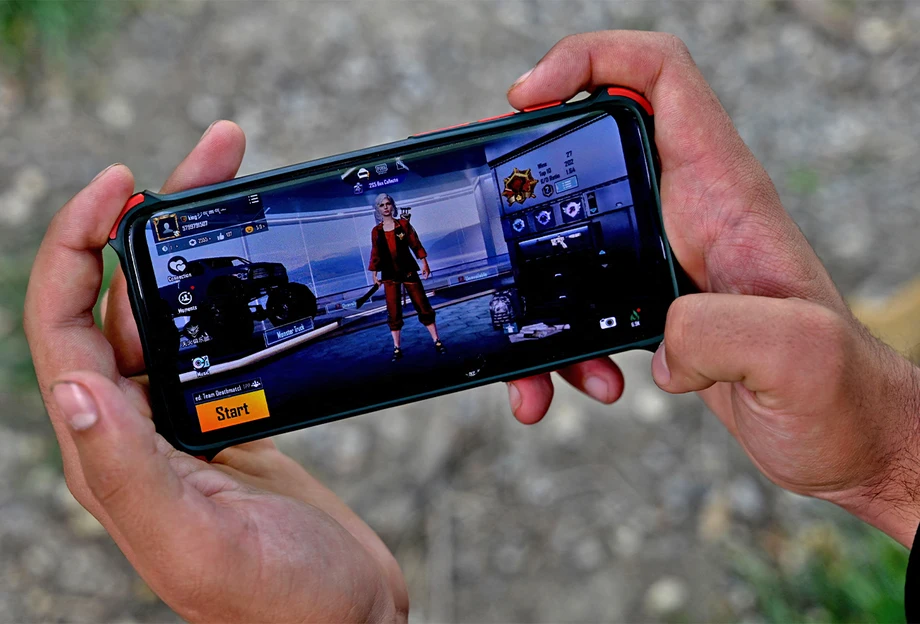
PUBG, short for PlayerUnknown's Battlegrounds, is a competitive survival game developed in South Korea. In its familiar format, up to 100 players enter a battlefield, gather equipment and weapons, and compete to become the last surviving player or team. Friends can play together in teams of up to four.
The game entered the market in 2017 and became popular among young Afghans in early 2019. Its combination of competition, conversation and repeated matches helped turn it into a regular social activity for some players.
Afghanistan's previous government also temporarily prohibited PUBG through ATRA. That earlier effort struggled to stop access. The Taliban therefore inherited both an existing debate about gaming and experience of the difficulty of enforcing a ban.
Pakistan and India had also imposed restrictions on PUBG, although their policies and duration varied. Afghanistan's action belongs to a regional history of governments intervening in popular apps, with each restriction shaped by its own national decisions.
Some Afghan adults welcomed the prospect of less gaming. Their concerns focused on time taken from studying, spending on internet access, and behaviour they associated with long playing sessions.
One user welcomed the gaming ban but opposed losing TikTok
Manizha Khan, an education specialist in Kabul, expressed sharply different views about the two platforms. She said some PUBG players spent too much time on the game and became loud and rude.
Khan supported blocking the game because of the effects she associated with excessive use:
I would be very happy if PUBG is banned because it is extremely addictive and promotes violence and abuse among the youth,
Her account of TikTok was different. Khan used it to listen to interpretations of the Quran and watch cooking videos. The app provided an enjoyable activity at a time when she had little social life.
Describing what she would lose, Khan said:
I personally use TikTok for daily motivation away from social life, which I currently don't have much of,
She added:
The ban will take this opportunity from me.
Khan's experience helps explain why reactions could not be divided neatly into support for or opposition to both apps. A person worried about excessive gaming could still value a video platform for religion, food or companionship.
Criticism, broadcasting and control of information
Abdulhaq Omeri, an Afghan journalist, argued that TikTok also served a political purpose. Users could broadcast live or publish short clips criticising decisions made by Taliban authorities.
Omeri described the connection he saw between those videos and the planned restriction:
TikTok users have recently increased in Afghanistan. People criticize the actions of the Taliban's government in live videos and short clips. Through banning TikTok, the Taliban want to stop them,
His interpretation differed from the government's stated explanation of protecting young people. The two positions identify competing stakes: officials sought control over content they considered harmful, while critics feared losing a channel for public scrutiny.
The cabinet's broadcasting instruction widened that concern. Samangani said it covered programmes originating abroad and distributed through internet addresses and websites. Authorities had also restricted foreign media programmes carried by domestic broadcasters.
Tariq Farhadi, an economic and political commentator, criticised the government's priorities. He argued that the Taliban should concentrate on reducing poverty and strengthening Afghanistan's relations with the outside world, given the country's dependence on foreign assistance.
Public reactions included support for curbing games and demands for cheaper internet access. Those responses showed that the debate involved household costs and education as well as religion, entertainment and political expression.
Why blocking access is technically difficult
Telecommunications companies provide the routes through which phones and computers reach online services. A government can instruct those companies to stop connections to particular services, which makes providers central to enforcing an app ban.
A VPN creates an encrypted connection to another server, often in a different country. Depending on how a restriction operates, that connection can allow a user to reach a service that their local network blocks directly.
Omeri argued that VPNs would make the TikTok and PUBG restrictions difficult to sustain, pointing to attempts to get around bans elsewhere. His prediction contrasts with the ministry's later assertion that blocking had been completed across the networks it inspected.
For Afghan users, the immediate consequence is a more restricted route to services previously available through an ordinary internet connection. For providers, the policy creates an obligation to maintain filtering under regulatory supervision. The September 2024 announcement shows that authorities were still assessing implementation long after the first cabinet order.
Key Points
- The Taliban cabinet ordered TikTok and PUBG blocked on April 21, 2022.
- A later implementation agreement allowed one month for TikTok and three months for PUBG.
- On September 21, 2024, the communications ministry said checks across five telecommunications networks confirmed complete blocking.
- Officials cited protection of young people, religious rules and complaints about time spent on the apps.
- Afghan reactions included support for limiting gaming and concern about losing useful videos and space for criticism.
- VPNs present a continuing challenge to enforcement, and the proportion of users still able to access the apps is unknown.