Jeddah agreement adds 5,000 places for Bangladeshi pilgrims
Bangladesh will be able to send 83,500 pilgrims to Hajj in 2027 after Saudi Arabia approved an additional 5,000 places under an agreement signed in Jeddah on Monday, November 9, 2026. The increase raises the allocation by about 6.4 percent from the 78,500 places initially set for Bangladesh.
Contents
- Jeddah agreement adds 5,000 places for Bangladeshi pilgrims
- How much has the allocation increased?
- Why Mina's tent capacity matters
- Further places depend on unused allocations
- How the agreement came together
- Bangladesh promises simpler administration and better service
- Officials from both countries attended
- Key Points
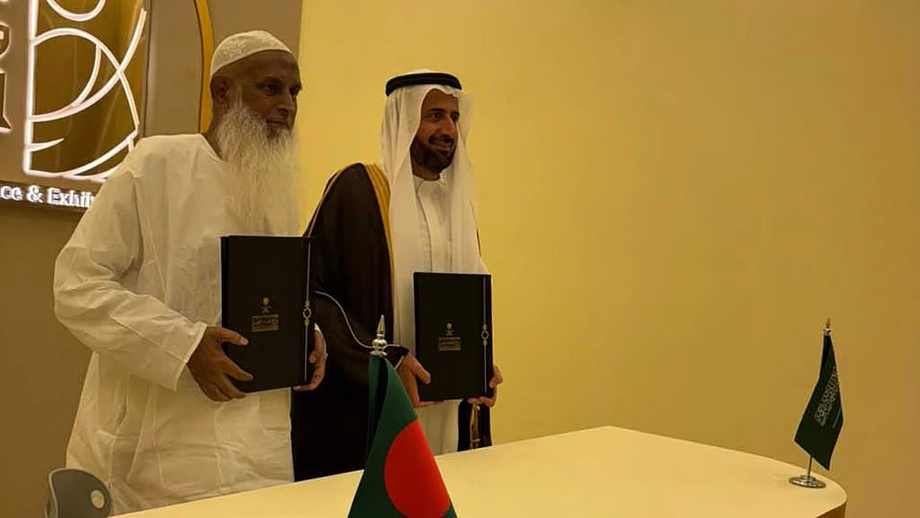
Religious Affairs Minister Kazi Shah Mofazzal Houssain Kaikobad signed the agreement with Saudi Minister of Hajj and Umrah Dr Tawfig bin Fawzan Al-Rabiah at 7 p.m. local time. According to Bangladesh's Ministry of Religious Affairs, the Saudi minister approved the increase immediately after a special request from the Bangladesh government.
The agreement gives another 5,000 Bangladeshis the opportunity to make the pilgrimage compared with the initial allocation. Bangladesh also received an assurance that Saudi Arabia would consider giving it priority for further places if another country leaves part of its allocation unused or has its quota cancelled.
Mina's limited tent capacity was a central issue in the discussions. The ministers reviewed Bangladesh's progress in organising Hajj and the administrative challenges involved in accommodating more pilgrims.
How much has the allocation increased?
Saudi Arabia had initially allocated Bangladesh 78,500 places for 2027, the same number of people the religious affairs ministry said travelled from Bangladesh in the most recent Hajj season through government and private arrangements. The new agreement takes the allocation to 83,500.
The calculation is straightforward: 5,000 additional places divided by the original 78,500 gives an increase of approximately 6.4 percent. For every 100 places in the initial allocation, Bangladesh has gained roughly six more.
A Hajj quota is the number of pilgrims a country is permitted to send for that season. The additional allocation expands the number of people Bangladesh can accommodate within that limit, while also increasing the scale of the arrangements needed to serve them.
The ministry described the increase as the result of a special government request during the bilateral talks. Kaikobad said the discussions had concluded successfully and thanked the Saudi authorities for approving the additional places.
Why Mina's tent capacity matters
Mina's tent accommodation places a practical limit on how many pilgrims can be received. Kaikobad said this constraint came up when the two ministers discussed Bangladesh's quota and the possibility of increasing it further.
Hajj is the annual Muslim pilgrimage to Mecca and nearby holy sites. Pilgrims follow a shared schedule of religious rites, including time in Mina, where large numbers stay in tents. Increasing a country's allocation therefore requires space and services at the locations used during the pilgrimage.
The ministers discussed both the allocation and the management work needed to support it. For Bangladesh, the additional 5,000 places mean a larger group to organise under government and private arrangements. For Saudi Arabia, the allocation must fit within the capacity available at the pilgrimage sites.
Mina's capacity also explains why the possibility of another increase was tied to places becoming available elsewhere. Reassigning an unused allocation would give Bangladesh access to space already included in Saudi Arabia's planning for the season.
Further places depend on unused allocations
Saudi Arabia assured Bangladesh that it would consider giving the country priority if another nation could not send its full number of pilgrims or if an allocation was cancelled. Kaikobad described the assurance after the signing ceremony.
The agreed allocation is 83,500. Any additional places would depend on capacity becoming available and a further Saudi decision. No number or timetable was announced for such a decision.
Kaikobad also recounted a broader assurance from Saudi Hajj and Umrah Minister Al-Rabiah. Speaking about the support Saudi Arabia would provide to Bangladesh, he quoted the minister as saying:
We will do whatever is needed for you (Bangladesh).
The assurance accompanied the discussion about giving Bangladesh priority for unused or cancelled allocations. It leaves Bangladesh with an agreed increase now and a conditional opportunity to seek more places later.
How the agreement came together
The agreement sets the national allocation for the 2027 pilgrimage following discussions between the two governments. Bangladesh's request secured an increase from the number Saudi Arabia had initially assigned.
The main steps described by the ministry and the minister were:
- Before the agreement, Saudi Arabia initially allocated Bangladesh 78,500 places for Hajj in 2027.
- On November 9, 2026, the two ministers met in Jeddah and discussed Hajj management, administrative challenges and accommodation capacity in Mina.
- Following Bangladesh's special request, Saudi Arabia approved another 5,000 places, bringing the allocation to 83,500.
- At 7 p.m. local time that Monday, the ministers signed the bilateral Hajj agreement.
- After the signing, Kaikobad described the increase and the Saudi assurance about considering Bangladesh for any further places that become available.
The talks brought together officials responsible for both policy and the administration of the pilgrimage. Their participation placed the quota agreement alongside the work of coordinating services between Bangladesh and Saudi Arabia.
Bangladesh promises simpler administration and better service
Kaikobad said the government, led by Prime Minister Tarique Rahman, was working to make Hajj management simpler, more transparent and more focused on serving pilgrims. He said efforts to improve service quality and transparency in administrative work would continue.
The minister's comments addressed how the larger allocation would be managed. Bangladesh's most recent contingent of 78,500 pilgrims travelled through a combination of government and private arrangements, and the new quota expands the number of people who can take part in the coming season.
For prospective pilgrims, the concrete change is the availability of 5,000 more places than Saudi Arabia initially allocated. For the authorities responsible for Hajj, the agreement increases the number of pilgrims whose arrangements must be coordinated while keeping attention on the service improvements the minister promised.
Kaikobad thanked Saudi Hajj and Umrah Minister Al-Rabiah, the Saudi ambassador to Bangladesh and officials involved in securing the increase. He also expressed gratitude to King Salman bin Abdulaziz Al Saud and Crown Prince Mohammed bin Salman for Saudi support.
Officials from both countries attended
Senior officials at the signing included Saudi Assistant Minister of Hajj and Umrah Dr Al Hassan Al Monakha, Bangladesh's Religious Affairs Secretary Munshi Alauddin Al Azad and Hajj Wing Additional Secretary Dr Md Ayatul Islam.
The diplomatic representatives included Saudi Ambassador to Bangladesh Abdullah Jafar H. bin Abiyah and Bangladesh Ambassador to Saudi Arabia Md Delwar Hossain. Bangladesh's Consul General in Jeddah, Md Sakhawat Hossain, and Hajj Counsellor Md Kamrul Islam also attended.
The presence of ministry officials, ambassadors and Bangladesh's representatives in Jeddah reflected the range of institutions involved in organising the pilgrimage. The agreement fixes the allocation at government level, while the ministers' discussions also covered the administration and accommodation needed to support the pilgrims.
Key Points
- Bangladesh's Hajj quota for 2027 is 83,500, an increase of 5,000 places.
- The increase is approximately 6.4 percent above the initial allocation of 78,500.
- The agreement was signed in Jeddah at 7 p.m. local time on November 9, 2026.
- Limited tent capacity in Mina was discussed during the quota negotiations.
- Saudi Arabia will consider giving Bangladesh priority for unused or cancelled allocations, subject to a further decision.
- Bangladesh's religious affairs minister pledged continued work to improve pilgrim services and administrative transparency.