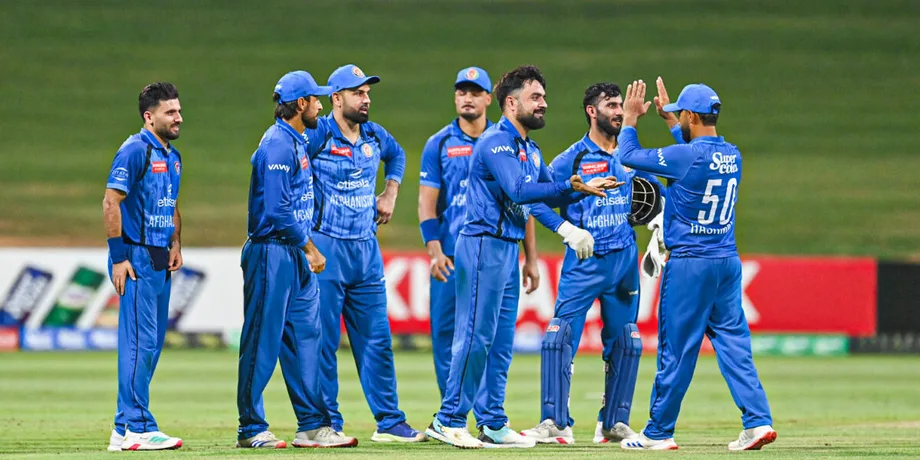
ICC fixtures will continue, but other team engagements stop
Cricket Scotland has ruled out arranging bilateral series, joining tournaments involving three teams or providing training camps for Afghanistan's men outside International Cricket Council events, citing restrictions on women and girls under Taliban rule. The policy, announced on Monday, November 9, 2026, preserves matches required by ICC competition rules, including official tournament warm-ups.
Contents
- ICC fixtures will continue, but other team engagements stop
- What Scotland will no longer arrange
- Two requests prompted a wider review
- Women's exclusion is at the centre of the decision
- Munsey can still receive permission for the league
- ICC membership and refugee players follow different tracks
- Recent meetings explain the tournament exception
- Scotland joins Australia and England
- What could change the policy
- Key Points
The decision reaches beyond Scotland's match schedule. It also covers practice matches and access to training facilities, following approaches from the Afghanistan Cricket Board in July and September. Cricket Scotland's board approved the measures at a recent meeting of Cricket Scotland Council Limited.
Individual Scottish players face a different arrangement. Opening batter George Munsey, the only Scottish player selected in the recent Afghanistan Premier League draft, can receive permission to participate if the ICC approves the competition. The proposed league is planned for December in the United Arab Emirates, with five franchise teams expected.
Scotland's contracted men's and women's players were informed of the policy on Monday. The board will review it annually, or sooner after a significant ICC decision or a material change in conditions. Its central demand is meaningful improvement in women's cricket in Afghanistan and in wider human rights conditions.
What Scotland will no longer arrange
Cricket Scotland, the governing body responsible for the country's national teams, set out the restriction in its statement:
Cricket Scotland will not proactively schedule bilateral series or participate in tri-series involving Afghanistan Men unless there is a material change in the circumstances surrounding Afghanistan women's cricket and wider human rights considerations.
A bilateral series is a set of matches arranged between two countries. A tri-series brings together three teams. Under the new policy, Scotland will neither organise the first type of engagement with Afghanistan nor take part in the second when Afghanistan's men are involved.
Cricket Scotland will also stop hosting or participating in Afghanistan men's training camps before tours, practice matches and warm-up fixtures outside ICC events. That extends the policy to the preparation that takes place before an international series, rather than limiting it to matches with official results.
The ICC exception leaves a route for the teams to meet. Scotland will play Afghanistan when competition regulations require it, including in official preparation matches attached to ICC tournaments. The practical dividing line is who arranges the engagement: independently scheduled team activities are restricted, while fixtures governed by ICC event rules continue.
Two requests prompted a wider review
The Afghanistan Cricket Board approached Cricket Scotland in July seeking training facilities before its men's series against Ireland. Cricket Scotland said it declined because of operational restrictions and to give its board time to consider its position. The request also came at short notice, with suitable venues unavailable.
A second approach followed in September concerning the Afghanistan Premier League. Together, the requests brought two different relationships under examination: cooperation between national governing bodies and the participation of individual Scottish professionals in an Afghan franchise competition.
Cricket Scotland's executive examined Afghanistan's humanitarian situation, the treatment of women and girls, the organisation's equality commitments and its support for women's cricket. The process also included consultation with government and consideration of positions taken by other major cricket boards.
The board described the advancement and growth of women and girls in cricket as one of its four strategic priorities. Its decision connects that domestic commitment with the activities it is willing to arrange internationally.
Women's exclusion is at the centre of the decision
The Taliban returned to power in Afghanistan in August 2021. Since then, women and girls have faced sweeping restrictions on education, employment, public participation and sport. Girls have been barred from secondary and higher education, while women's cricket has effectively disappeared inside the country.
Afghanistan's men's national team continues to compete internationally. Women who want to represent the country have had to pursue a different course, with some players fleeing Afghanistan and trying to rebuild their cricket careers abroad.
The Taliban says it respects women's rights according to its interpretation of Islamic law and local customs, and that internal matters should be addressed locally. Cricket Scotland has made changes in women's cricket and wider human rights conditions the basis for reconsidering its own engagement with the Afghan board.
Scotland's policy therefore links access to voluntary sporting cooperation with the opportunities available to women and girls. Afghanistan's men can still encounter Scotland at ICC tournaments, but the Afghan board will no longer be able to arrange additional team activities with Scotland under the present conditions.
Munsey can still receive permission for the league
George Munsey's selection in the Afghanistan Premier League draft gives the policy an immediate consequence for a Scottish player. Cricket Scotland said it would issue him a no-objection certificate, usually called an NOC, subject to the league receiving ICC approval.
An NOC is permission from a player's governing body to take part in another competition. Franchise cricket involves players joining league teams rather than representing their national sides. Those teams can recruit professionals from several countries, which explains why a Scottish batter could play in a competition organised by the Afghan board.
Cricket Scotland said it would comply with its contractual obligations to players. Its policy treats those obligations separately from the board's choice about arranging matches and training activities with Afghanistan's national team.
The proposed league is expected to feature five franchises and overseas players in the United Arab Emirates in December. ICC approval remains a condition for Munsey's clearance, and no decision date for that approval was given.
Afghan women's cricket representatives living in exile have urged international players to reconsider participating. Several cricketers based in England registered for the draft. Those developments put the league at the centre of a wider debate about opportunities for male professionals while Afghan women remain excluded from playing at home.
ICC membership and refugee players follow different tracks
Afghanistan became an ICC Full Member in 2017 despite lacking a women's national team and the development structures generally required for that status. The country retains its membership while its men's team continues playing international cricket.
Full membership is a country's status within cricket's international governing body. Scotland's decision concerns its own relationship with the Afghanistan Cricket Board; changes to ICC membership or competition rules would require action within the international governing body.
Afghan women abroad have been working to restore a place in the game. An Afghanistan Refugee Women's XI, composed primarily of players based in Australia, toured England during the summer alongside the Women's T20 World Cup.
The ICC has introduced a roadmap that could allow the refugee team to compete in its international events by 2030. For those players, the route back to international competition is being developed outside Afghanistan, where restrictions continue to prevent women's cricket from operating.
Recent meetings explain the tournament exception
Scotland last played Afghanistan in a full international on October 25, 2021, at the T20 World Cup in Sharjah. Afghanistan won by 130 runs. The teams have since met in warm-up matches before the 2024 and 2026 editions of the tournament.
Their recent encounters and the steps leading to the policy show how official internationals, tournament preparation and cooperation between boards fit together:
- October 25, 2021: Afghanistan beat Scotland by 130 runs in their most recent full international, at the T20 World Cup in Sharjah.
- May 31, 2024: Afghanistan won a T20 World Cup warm-up match in Trinidad by 55 runs.
- February 2, 2026: Afghanistan won another T20 World Cup warm-up, in Bengaluru, India, by 61 runs.
- July 2026: The Afghan board requested training facilities in Scotland before its men's series against Ireland.
- September 2026: A further approach concerned the Afghanistan Premier League.
- November 9, 2026: Cricket Scotland announced its restrictions on engagements outside ICC events.
The 2024 and 2026 warm-ups illustrate the kind of fixture that can continue under the new policy. A practice match arranged independently between the boards would fall under the restriction, while one governed by ICC tournament arrangements remains permitted.
Scotland joins Australia and England
Cricket Scotland's approach follows restrictions adopted by Cricket Australia and the England and Wales Cricket Board over the Taliban's treatment of women and girls. Both have suspended bilateral cricket arrangements with Afghanistan.
Scotland considered those positions during its review, alongside government consultation and its own strategic commitments. Its policy now places limits on discretionary cooperation while retaining participation in fixtures required by the ICC.
The immediate change is therefore in what the Scottish governing body can agree to next: no bilateral series, no tri-series involving Afghanistan's men, and no training camps or practice fixtures outside ICC events. Individual players' league permissions remain subject to contracts and tournament approval.
What could change the policy
Cricket Scotland has provided two routes to reconsideration: a regular annual review and an earlier review triggered by a significant ICC decision or a material change in circumstances. The board's statement ties renewed bilateral and tri-series engagement to conditions surrounding Afghan women's cricket and wider human rights.
The policy gives no detailed checklist for measuring that change. Its review process leaves the board responsible for assessing developments in Afghanistan and decisions made by the ICC before changing the restrictions.
The next scheduled development is the proposed Afghanistan Premier League in December, subject to approval. Beyond that, the ICC's 2030 roadmap offers a possible route into international events for the refugee women's team, while Scotland's own policy remains open to annual reassessment.
Key Points
- Scotland will not arrange bilateral series, join tri-series or provide training activities involving Afghanistan's men outside ICC events.
- ICC tournament fixtures and official warm-up matches can continue.
- The decision follows Afghan board approaches in July and September 2026.
- George Munsey can receive permission for the Afghanistan Premier League if the ICC approves it.
- The proposed league is planned for December in the United Arab Emirates, with five teams expected.
- Cricket Scotland will review the policy annually or after a significant ICC decision or material change in conditions.
- An ICC roadmap could allow the Afghanistan refugee women's team to enter international events by 2030.