A landmark wicket caps an extraordinary night in Sharjah
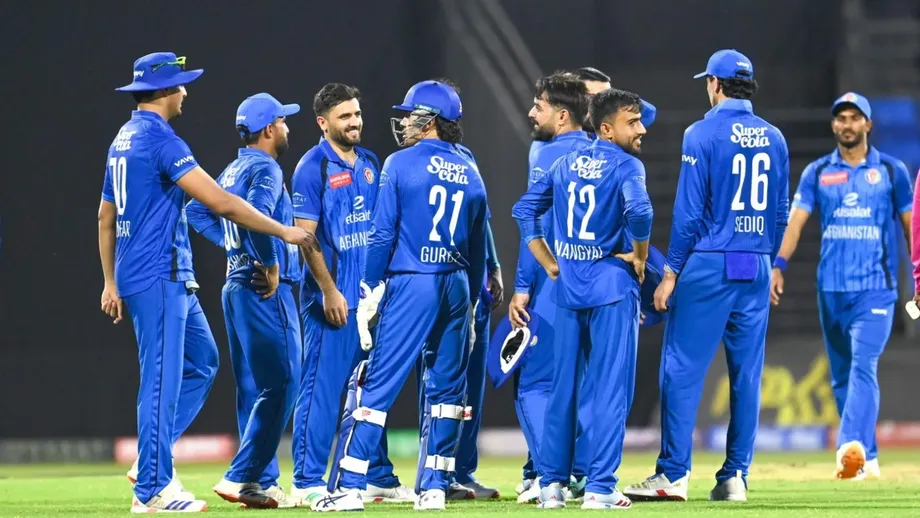
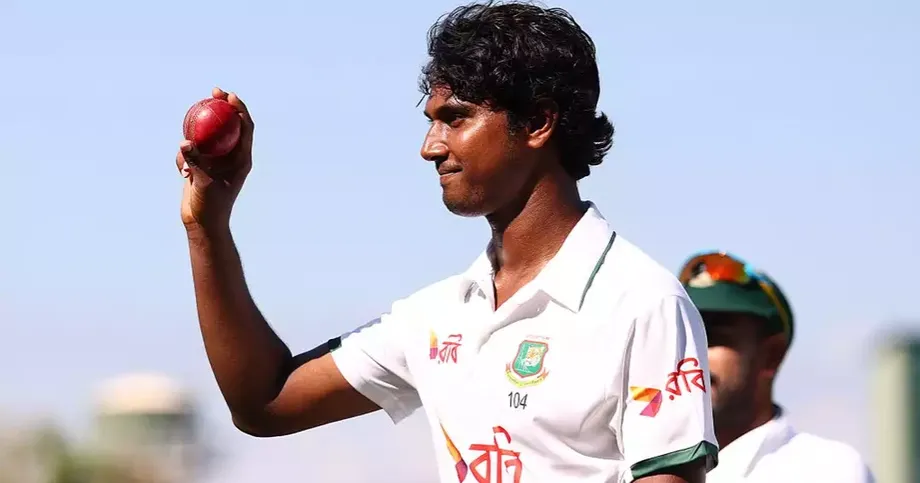
Rashid Khan became the first bowler to reach 200 wickets in men's Twenty20 internationals on October 29, 2026, as Afghanistan beat Zimbabwe by 19 runs at Sharjah Cricket Stadium. His milestone came in a match that also produced two centuries and an Afghanistan recovery from five runs for four wickets to 221 for seven.
Contents
- A landmark wicket caps an extraordinary night in Sharjah
- How Rashid reached 200
- The numbers behind the milestone
- Afghanistan lose four wickets for five runs
- Omarzai and Ijaz transform the innings
- What made the recovery a record
- Raza keeps Zimbabwe in the chase
- How the series reached its deciding point
- Key Points
The Afghanistan leg spinner dismissed Tadiwanashe Marumani lbw for two in the ninth over of Zimbabwe's chase. Zimbabwe eventually finished on 202 for five despite captain Sikandar Raza's unbeaten 106, leaving Afghanistan with an unassailable 2-0 lead in the series of three matches.
Azmatullah Omarzai made the victory possible with 116 from 50 balls. He and Ijaz Ahmadzai, who scored 52 from 27, added 142 runs for the sixth wicket after Afghanistan had slipped further to 38 for five. Their partnership was the highest for the sixth wicket or lower in men's T20Is.
Rashid also supplied a decisive burst with the bat, hitting an unbeaten 25 from six deliveries. His four sixes helped Afghanistan set Zimbabwe a target of 222, turning a threatened batting collapse into a total large enough to withstand Raza's reply.
How Rashid reached 200
Rashid entered the match with 199 T20I wickets. His first over, the seventh of Zimbabwe's innings, cost six runs without a dismissal. The breakthrough arrived on the third delivery of his next over, when Marumani missed an attempted shot towards the leg side and the ball struck his pad.
The umpire gave Marumani out lbw, short for leg before wicket. The dismissal applies when a batter's body intercepts a ball judged to be heading towards the stumps, subject to rules about where it pitched and struck the batter.
Rashid finished with one wicket for 29 runs from four overs. That meant he conceded 7.25 runs an over in a match where Afghanistan scored at 11.05 and Zimbabwe at 10.10. His spell gave Afghanistan some control during a contest dominated by aggressive batting.
The landmark came in his 120th T20I appearance. His career breakdown records 198 wickets in 119 matches for Afghanistan and two in one appearance for the ICC World XI. The 200 therefore covers his complete men's T20I career.
The numbers behind the milestone
England's Adil Rashid was second on the wicket list with 171 from 153 matches, leaving Rashid Khan 29 wickets ahead despite playing 33 fewer games. Rashid Khan's return works out at about 1.67 wickets per appearance, compared with about 1.12 for the England spinner.
The Afghanistan Cricket Board's announcement gave Rashid a bowling average of 13.96 and an economy rate of 6.13 at the milestone; the completed match statistics put those figures at 14.06 and 6.14. Bowling average measures runs conceded for each wicket taken, while economy rate measures runs conceded per over.
Rashid's career figures included nine innings with four wickets and two with five. His best return was five wickets for three runs. Against Zimbabwe alone, he had taken 38 wickets in 22 appearances, making them a substantial part of his international record.
Venue figures show how much of that career has unfolded away from Afghanistan: 143 wickets came at neutral grounds and 57 at opposition grounds. The Sharjah wicket also brought him to 150 T20I wickets in Asia, achieved in 88 appearances on the continent.
Rashid, 28, had already become Afghanistan's first bowler to reach 200 wickets in one day internationals, against Bangladesh in Abu Dhabi in October 2025. The Sharjah achievement added a separate milestone in the shorter international format.
Afghanistan lose four wickets for five runs
Zimbabwe captain Raza won the toss and chose to bowl. His decision brought immediate rewards as Afghanistan lost Rahmanullah Gurbaz, Ibrahim Zadran, Mohammad Akram and Shahidullah Kamal with only five runs on the board during the powerplay.
A T20 innings normally lasts 20 overs, or 120 legal deliveries. During the opening six overs, known as the powerplay, fielding restrictions usually give batters more room to attack. Afghanistan instead lost four of their ten available wickets before building a meaningful score.
Sediqullah Atal made 17 from 21 balls before being dismissed in the ninth over. At 38 for five, Afghanistan had lost half their wickets with more than half the innings still to play. Omarzai and Ijaz had to balance keeping the innings alive with finding enough runs to challenge Zimbabwe.
Brad Evans and Kundai Matigimu each finished with two wickets for Zimbabwe. Vincent Masekesa, Ernest Masuku and Raza took one apiece. Zimbabwe's early success, however, gave way to a partnership that changed both the scoring rate and the direction of the match.
Omarzai and Ijaz transform the innings
Omarzai, batting at number six, struck 12 sixes and five fours in his maiden T20I century. Those boundaries supplied 92 of his 116 runs, nearly four fifths of his total. His strike rate of 232 meant he scored at the equivalent of 232 runs per 100 balls.
Ijaz contributed five fours and three sixes to his 52. Together, the pair added 142 from 59 deliveries, scoring at more than 14 runs an over. Their stand carried Afghanistan from 38 for five to 180 for six.
The partnership figures show Omarzai supplying 87 from 32 balls and Ijaz 52 from 27, with the remaining three runs coming as extras. Omarzai provided the greater acceleration, while Ijaz's own rapid half century kept Zimbabwe under pressure at the other end.
Masuku finally ended the stand on the last ball of the 18th over. Ijaz attempted a lofted shot and Matigimu completed a diving catch at mid off. Omarzai continued until the fifth ball of the 19th over, when Evans caught him off Raza's bowling.
Omarzai became the fourth Afghanistan batter to score a men's T20I hundred. Rashid then drove the final surge, finishing the innings with a six off Matigimu. Mujeeb Ur Rahman remained unbeaten on two as Afghanistan closed on their third highest T20I total.
What made the recovery a record
Afghanistan scored 216 runs after losing their fourth wicket at five. That surpassed the previous men's T20I mark of 190 runs added after the fourth wicket, set by India against Afghanistan in Bengaluru in 2024.
India's recovery in that match featured Rohit Sharma's fifth T20I century and a partnership of 190 with Rinku Singh, who made 69. Afghanistan's new mark was 26 runs higher, achieved after an even more severe opening collapse.
Afghanistan also added 183 after their fifth wicket fell at 38. That exceeded the previous men's T20I record of 153 by Papua New Guinea against Singapore in 2025 by 30 runs. Other leading recoveries from that point included Slovenia's 150 and West Indies' 144.
The 142 between Omarzai and Ijaz was a single partnership. The 183 added after the fifth dismissal includes that stand and everything scored after it ended. Afghanistan also became the first men's T20I side to pass 200 after losing its first four wickets for fewer than 20 runs.
Raza keeps Zimbabwe in the chase
Zimbabwe were five wickets down for 85 around the halfway point of their reply. Chasing 222, they needed a recovery of their own, and Raza supplied it with his second T20I century.
The Zimbabwe captain finished unbeaten on 106 from 56 balls, hitting five fours and nine sixes. He reached his hundred with a single on the third ball of the final over and struck the last delivery of the match for six.
Raza and Tadiwanashe Tsiga added an unbeaten 120 from 60 deliveries. Raza contributed 83 from 37 balls during the stand, while Tsiga made 31 from 23. Their partnership took Zimbabwe beyond 200, but the required pace remained higher than they could sustain.
Zimbabwe's final 202 for five left them 19 runs behind Afghanistan's score. Rashid's unbeaten 25 was larger than that winning margin, illustrating the value of Afghanistan's late hitting after Omarzai and Ijaz had rebuilt the innings.
How the series reached its deciding point
Afghanistan had won the opening T20I by 37 runs. The second victory settled the series before the final match, scheduled for November 1, while giving Zimbabwe one remaining opportunity to finish with a win.
The teams had already been competing in the UAE earlier in October. Afghanistan entered the Sharjah ODI final against Zimbabwe after winning both league matches in a tournament that also included Bangladesh. Rashid took eight wickets during that unbeaten league campaign.
The sequence places the T20I milestone within a busy period of international cricket for both sides:
- October 19, Abu Dhabi: Afghanistan beat Zimbabwe by 158 runs in the ODI tournament's league stage.
- October 23, Sharjah: Afghanistan and Zimbabwe were scheduled to meet in the ODI final.
- Opening T20I: Afghanistan beat Zimbabwe by 37 runs.
- October 29, Sharjah: Afghanistan won the second T20I by 19 runs, and Rashid reached 200 wickets.
- November 1: The third and final T20I was scheduled.
Afghanistan secured the series through a match that demanded both a batting rescue and enough bowling control to survive another century. Zimbabwe's early wickets and Raza's unbeaten hundred kept them competitive, but Afghanistan's record recovery supplied the decisive runs.
Key Points
- Rashid Khan became the first bowler to take 200 men's T20I wickets in his 120th appearance.
- He reached the milestone by dismissing Tadiwanashe Marumani lbw for two and finished with one for 29.
- Omarzai scored 116 and Ijaz Ahmadzai 52 in a record partnership of 142 for the sixth wicket.
- Afghanistan recovered from five for four and 38 for five to finish on 221 for seven.
- Raza's unbeaten 106 took Zimbabwe to 202 for five, leaving Afghanistan winners by 19 runs.
- Afghanistan secured a 2-0 series lead before the final match scheduled for November 1.