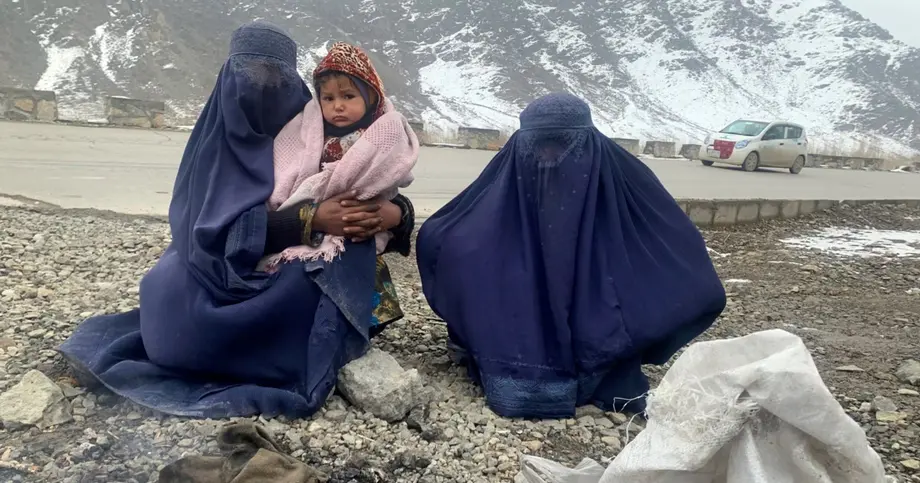
France separates the technical from the political
France has "no intention whatsoever" of establishing diplomatic relations with the Taliban, Foreign Minister Jean-Noël Barrot told the National Assembly on Tuesday, 24 November, drawing a line between technical contacts with the administration in Kabul and any political recognition of it. Barrot was answering Léa Balage El Mariky, a lawmaker from the Ecologists party, who had challenged the government over negotiations with the Taliban about the return of Afghan nationals living in France without legal residency permits.
Contents
- France separates the technical from the political
- What the words gender apartheid are meant to carry
- The practical bargain behind the parliamentary fight
- What Paris put on the table for Afghan women
- In Madrid, a government says never
- Counting a system, not an incident
- Brussels has already used the term in writing
- The legal track: CEDAW, the ICC and a treaty in the making
- The awkward middle ground European capitals now occupy
- Why governments keep the channel open
- What is still open
- Key Points
The minister used the exchange to put a name to what the Taliban have built since August 2021, when they took power as the previous government collapsed and international forces withdrew.
Any strictly technical exchanges that may take place do not constitute approval or recognition of this regime. This regime imposes the worst form of discrimination against women and girls in our century. This is gender apartheid.
Balage El Mariky had called the contacts "a betrayal" and said two Taliban representatives were expected to travel to France as part of the discussions. She asked the government to disclose who the representatives are and how long they would be allowed to stay. Barrot offered no names and no dates.
The foreign ministry carried the phrase into the same news cycle, posting on X: "La France se tient aux côtés des femmes afghanes, victimes d'un apartheid de genre." In plain terms, the sentence says France stands beside Afghan women, victims of a gender apartheid. Madrid had reached for the same language on 17 October 2023, when Spanish Foreign Minister José Manuel Albares described the exclusion of girls from school and women from work in those words.
What the words gender apartheid are meant to carry
Apartheid is the name given to the legal system of racial separation that South Africa's white minority government enforced for decades, until it was dismantled in the 1990s. Gender apartheid borrows that structure and applies it to a set of rules that exclude people from schools, jobs, courts, clinics and public spaces because of their sex. Afghan activists and international human rights organisations have used the term since 2021 to describe the decrees issued by the Taliban, and no international treaty yet defines it as a separate crime.
Barrot said his government was working towards recognition of gender apartheid as a distinct crime under the forthcoming Convention on the Prevention and Punishment of Crimes Against Humanity, a draft treaty that governments have been negotiating at the United Nations. Giving the concept its own legal definition would let prosecutors pursue the people who design and run such a system, not only those who carry out individual acts of violence.
Pramila Patten, the UN Special Representative of the Secretary-General on Sexual Violence in Conflict, described the machinery at work in Afghanistan during a Madrid conference this week. She said the Taliban had turned the exclusion of women from public life into official government policy, and that the group's edicts had grown into a single legal and administrative framework meant to remove women from public life altogether.
By June 2026, the Taliban had issued 264 restrictive decrees concerning human rights, including 166 specifically targeting women and girls.
Patten put the number of Afghan women and girls living under that system at nearly 20 million, and called Afghanistan one of the world's most extreme examples of systematic persecution of women.
The practical bargain behind the parliamentary fight
Deportation is the reason French officials are talking to the Taliban at all. Barrot said the technical contacts were meant to speed the removal of Afghan nationals whom French authorities consider to pose the greatest security risk. Interior Minister Laurent Nuñez had told parliament on 3 November that Paris was seeking the possibility to return a certain number of Afghans in an irregular situation, describing them as technical discussions, and said Germany was pursuing similar steps.
The Foreign Ministry has set a boundary around the policy, stating that asylum seekers and women would not be returned to Afghanistan under any circumstances. That promise matters because a person's lack of residency papers, a court conviction and a security assessment are three different things, and each shapes an individual case differently. The ministry has described the target group as people who are both unlawfully present and considered a national security risk.
What a technical channel means in practice is a working line between officials who are not diplomats posted to each other's capitals. It allows questions about identity documents, flight manifests and receiving airports to be settled without either government extending formal recognition. France has published neither a timetable for deportations nor a figure for how many people it wants to send back, a gap noted since the technical discussions about returns were confirmed earlier this month.
What Paris put on the table for Afghan women
Alongside the deportation talks, Barrot announced new education places. Fifty female students from Afghanistan will be transferred to France starting in January 2027. In September 2027, another 35 women will receive government scholarships. France will also welcome 200 Afghan women next year.
In a television interview with TF1 on Wednesday, 25 November, the International Day for the Elimination of Violence Against Women, Barrot went further on the legal question.
France will support the definition of a crime of gender apartheid so that those responsible for this systematic segregation of girls and women in Afghanistan are punished.
He said Taliban policies restrict women's access to education, employment and healthcare, and accused the authorities of trying to erase Afghan women's identity, down to depriving them of their own names.
The same interview reached beyond Afghanistan. Barrot condemned a sentence handed to Iranian singer Parastoo Ahmadi and four members of her band, who received 74 lashes for a concert streamed online in 2024 in which she appeared without a veil. He was due to attend Voces Iraníes, an evening of Iranian music and civil society voices at the Arab World Institute marking four years since the Woman, Life, Freedom movement began, and said France must remain a refuge where Iranian women and men can express themselves freely.
In Madrid, a government says never
Spain's position has been stated at greater length. Albares opened the fourth HearUs summit at the foreign ministry in Madrid on 23 November, a two-day meeting held on 22 and 23 November with the organisation Women for Afghanistan and around 70 participants, including Afghan activists, former lawmakers, researchers, religious scholars, diplomats and UN officials. The theme was Afghan Women's Leadership in Achieving Justice and Peace through Accountability.
Albares said Spain would never recognise the Taliban authorities while they violate the fundamental rights of women and girls, and that women's rights must not become a bargaining chip in political negotiations. He described the edicts as a system of discrimination, segregation and constant violence, and said the crime needed to be named with precision because it goes beyond mere segregation.
No power can aspire to be legitimate while systematically denying the mere dignity of women. The future of Afghanistan is yours. And without you, there is no future for Afghanistan.
Madrid also put money behind the words. Albares said his government had contributed financially to the launch of a new independent UN investigative mechanism for Afghanistan, so that it can begin documenting violations and preserve evidence for future proceedings. Katrín Jakobsdóttir, the former prime minister of Iceland, presented a campaign called One Million Voices for the Women and Girls of Afghanistan, which asks the UN and governments to withhold recognition from the Taliban, to expand humanitarian visas, to recognise gender apartheid in law and to create an international fund for women's education and employment.
On the sidelines, an activist handed Albares photographs of Bibi Sediqa and Mozhda Uzbek, two women reported to be detained by the Taliban, along with letters from their families, and asked him to help secure their release. The full agenda of the fourth HearUs summit ran across four panels on education, economic empowerment, justice and the place of women in peace and security decisions.
Counting a system, not an incident
Numbers from UN agencies released this week describe how far the restrictions reach and how quickly the support built around Afghan women is being withdrawn. The UN Women office in Afghanistan said on 25 November that more than 193 service points for survivors of violence have closed across the country this year because of aid cuts, affecting more than one million women and girls. Nearly 300 humanitarian health facilities have been suspended or shut down, reducing care in many areas, and up to 427,000 women could soon lose access to counselling, legal support, vocational training and safe spaces.
Susan Ferguson, UN Women's Special Representative in Afghanistan, framed the problem as two pressures meeting at once.
Just as the risks of violence against women and girls are growing, the services they depend on are disappearing because of aid cuts.
The agency counted more than 100 decrees and directives affecting women and girls issued over the past five years. A UN assessment released earlier this year found that women in Afghanistan are nearly four times less likely than men to reach formal justice mechanisms, which leaves many without a route to report abuse or seek protection. Sima Bahous, UN Women's Executive Director, told a UN event marking the international day that justice means a survivor safely seeking help and institutions protecting her, ensuring her access to justice and holding perpetrators to account.
The closures compound a health system already under strain, part of the healthcare crisis that has left millions of Afghan women without nearby treatment.
Brussels has already used the term in writing
The European Parliament answered the same question formally. Its press office, asked whether the Taliban's treatment of Afghan women and girls amounts to gender apartheid, pointed to a resolution adopted on 21 May 2026 which states that "the Taliban regime has institutionalised slavery, gender apartheid and child marriage".
The parliament said that since what it called the Taliban's illegal seizure of power in 2021, Afghan women and girls have faced systematic persecution and been deprived of education beyond the sixth grade, employment, justice, healthcare, freedom of movement and participation in public life. It called on the Council of the European Union and the European Commission to condemn these practices in all diplomatic engagements, and asked both institutions to support recognition of such practices as crimes against humanity under the proposed treaty.
Lawmakers went into detail. The resolution demanded an immediate end to public floggings, corporal punishment and executions, and the lifting of restrictions on women and girls in public life, as well as on LGBTQ+ persons, religious minorities and other vulnerable groups. It warned that a new criminal procedure code gives husbands the power to punish wives for what it calls disobedience, and that removing women from judgeships, prosecutions and legal practice makes it harder for them to bring claims at all.
London has kept its distance from the label. Britain's Foreign Office said it was aware of calls to recognise gender apartheid in Afghanistan and was consulting civil society organisations and international partners to establish whether new international rules could help address the situation, without taking a position on whether the term applies.
The legal track: CEDAW, the ICC and a treaty in the making
Cases are already moving through existing law. On 25 September 2024, Australia, Canada, Germany and the Netherlands formally began proceedings against Afghanistan under the Convention on the Elimination of All Forms of Discrimination Against Women, arguing that the Taliban's restrictions breach obligations Afghanistan accepted as a state party to that treaty. The point of the case is that those obligations survive a change of government in Kabul.
Criminal proceedings have advanced too. The International Criminal Court issued arrest warrants for Taliban leader Hibatullah Akhundzada and Abdul Hakim Haqqani, who heads the Taliban's judicial system, in July 2025, with judges finding reasonable grounds to believe the two bore responsibility for the crime against humanity of persecution on gender grounds.
Navi Pillay, the 2026 Nobel Peace Prize laureate and a former UN High Commissioner for Human Rights, addressed the Madrid summit by video and drew a comparison with the struggle against racial apartheid in South Africa, expressing confidence that the effort against gender apartheid would succeed. She praised Afghan women for documenting abuses, running classes in homes and speaking out from exile.
You are not victims waiting to be rescued; you are human rights defenders and agents of change.
Patten pressed the same argument for evidence gathering, saying the challenge is to make the new investigative mechanism work and that it needs political will, sustained support and resources. She put the purpose of the whole exercise in one line: accountability is not revenge, but refusing to accept that there are people who are above the law.
- 15 August 2021: the Taliban return to power as the former government collapses and international forces withdraw.
- 17 October 2023: Spain's foreign minister calls the treatment of Afghan women and girls gender apartheid.
- 25 September 2024: Australia, Canada, Germany and the Netherlands begin proceedings against Afghanistan under CEDAW.
- July 2025: the International Criminal Court issues arrest warrants for Hibatullah Akhundzada and Abdul Hakim Haqqani.
- 21 May 2026: the European Parliament adopts a resolution saying the Taliban have institutionalised slavery, gender apartheid and child marriage.
- June 2026: the European Commission hosts a Taliban delegation in Brussels to discuss returns.
- 12 October 2026: EU envoy Thomas Frellesen meets Taliban interior minister Sirajuddin Haqqani in Kabul.
- 22 and 23 November 2026: the fourth HearUs summit is held at Spain's foreign ministry in Madrid.
- 24 November 2026: Barrot and German Foreign Minister Johann Wadephul both rule out recognition of the Taliban.
- 25 November 2026: the UN marks the international day against violence against women and Barrot announces the treaty push on French television.
The awkward middle ground European capitals now occupy
Thomas Frellesen, a Danish diplomat who took up the post of European Union special envoy for Afghanistan in October, said the bloc has not moved an inch towards political acceptance, even as its officials sit with Taliban representatives. A Taliban delegation met the European Commission in Brussels in June at the request of member states, to coordinate the return of Afghan migrants, a meeting he placed inside a European readmission approach.
There's no normalization of relations between the EU and Afghanistan, and it doesn't reflect any kind of recognition or legitimization of the de facto authorities.
Frellesen said the returns under discussion concern migrants convicted of criminal capital offences, that each return decision is a competence of individual member states, and that returns must comply with the principle of non-refoulement, which bars sending a person to a country where they face a real risk of harm. He declined to give figures and said the numbers so far are very limited.
Berlin's version of the policy comes with hard numbers. German Foreign Minister Johann Wadephul told the Berlin Foreign Policy Forum on 24 November, in an event organised by the Körber Foundation, that Germany has no real relationship with the Taliban and does not recognise the group as Afghanistan's legitimate government, describing contacts as limited to consular and humanitarian matters conducted through neighbouring countries. Germany has deported 13 Afghans to Kabul in September, 30 on 16 June, 31 on 28 July and 23 on 25 August.
Germany was the first European country to let Taliban appointees staff Afghan missions, accepting two consular officials at the embassy in Berlin and the consulate general in Bonn in 2025, and approving four more representatives last week. Austria, Switzerland and Belgium have also hosted Taliban delegations. Critics argue that the presence of Taliban-appointed staff at missions abroad complicates life for Afghan refugees who need those offices for paperwork, and Fawzia Koofi, who chairs Women for Afghanistan, said European governments should address the causes of displacement rather than pursue deportations.
Why governments keep the channel open
Two security files sit behind the technical contacts. The first is narcotics. Frellesen said the EU had read a UN Office on Drugs and Crime report showing opium production in Afghanistan has jumped five times this year, partially reversing the poppy ban that initially cut output sharply, and that the ban alone is not enough while farmers lack alternatives. The EU has funded livelihood programmes for farmers and argues the Taliban authorities must provide resources in the regions.
The second is militancy. Counterterrorism to ensure Afghanistan does not harbour terrorist groups is among the EU's top three priorities, and Frellesen said reporting from a UN sanctions monitoring team published in August shows Islamic State Khorasan Province remains able to operate.
ISKP still seems, according to the information that we get, to be able to be active. And this is an enormous concern for us.
He also pointed to statements from China about other groups active in the country, and to tension between Afghanistan and Pakistan creating spaces where armed groups can move more freely. The EU has kept its delegation in Kabul since 2021 and has provided more than 2 billion euros ($2.2 billion) in assistance over five years, following a principle it describes as by women, for women. Frellesen said the situation of women and girls was the first issue he raised with the authorities in Kabul, and that the EU drafts the human rights resolutions on Afghanistan at the UN, including the one that created the independent investigative mechanism.
Koofi offered a different reading of the same engagement. She told the Madrid summit that the Taliban expect international donors to feed Afghans while using the country's resources and revenues for themselves, and that 95% of Afghans live below the poverty line and depend heavily on humanitarian assistance. She asked donors to prioritise organisations led by women, which she said remain among the few sources of income and support available to women inside the country, and warned that the consequences of the crisis would not stop at Afghanistan's borders.
What is still open
France has not named the Taliban representatives reported to be travelling, has not said when they would come and has not set out how many Afghans it wants removed or on what schedule. Germany has not explained how consular services at its Afghan missions can function for women who need documents. The crime Barrot promised to support does not exist yet in treaty text, and its shape will depend on negotiations that have no announced deadline.
Dates that are fixed can be counted. The 16 Days of Activism Against Gender-Based Violence, launched this year under the message "Still together. Stand with Afghan women and girls", runs until 10 December. The first group of 50 Afghan students is due in France in January 2027, and 35 scholarship holders follow in September 2027, the same year France says it will take in 200 more Afghan women.
Key Points
- French Foreign Minister Jean-Noël Barrot told the National Assembly on 24 November that the Taliban's treatment of women and girls is gender apartheid, and that France has no intention of establishing diplomatic relations with the group.
- France is holding technical talks with the Taliban about returning Afghan nationals without legal residency who are considered a security risk, a policy confirmed by Interior Minister Laurent Nuñez on 3 November.
- Paris announced 50 Afghan female students arriving from January 2027, 35 scholarships in September 2027 and 200 Afghan women welcomed next year.
- Spain's José Manuel Albares used the fourth HearUs summit in Madrid on 22 and 23 November to rule out recognition and to back a One Million Voices petition campaign.
- UN officials counted 264 Taliban decrees by June 2026, 166 of them targeting women and girls, and nearly 20 million women and girls living under the system.
- UN Women said 193 service points for survivors of violence have closed this year, nearly 300 health facilities have been suspended, and up to 427,000 women could lose support.
- The European Parliament resolved on 21 May 2026 that the Taliban have institutionalised slavery, gender apartheid and child marriage.
- The International Criminal Court issued arrest warrants in July 2025 for Hibatullah Akhundzada and Abdul Hakim Haqqani over gender persecution, and four countries began CEDAW proceedings on 25 September 2024.
- EU envoy Thomas Frellesen says readmission cooperation brings no recognition, while Germany has deported 97 Afghans to Kabul since June and lets Taliban appointees staff two missions.