A federal order ends 22 months in custody
Shaban Ali Rafat, an Afghan journalist who had been held by U.S. immigration authorities since Jan. 21, 2025, was released on Tuesday, Nov. 24, 2026. U.S. District Judge Jennifer L. Thurston concluded that the government had not shown it could deport him to any country in the reasonably foreseeable future. The decision ended more than 22 months in detention, but it left his request for asylum unresolved.
Contents
- A federal order ends 22 months in custody
- Why immigration law no longer allowed his detention
- From a wait in Mexico to protection from return to Afghanistan
- The transfers and court dates behind the 22 months
- Why his journalism and Hazara identity matter
- What happens to his asylum request now?
- Why his lawyer still fears removal to another country
- One case inside a detention system of 65,765 people
- What to Know
Thurston, who sits in the Eastern District of California, granted Rafat's habeas corpus petition and ordered his release under supervision. A habeas corpus petition asks a court to examine whether the government has lawful authority to keep someone in custody. Thurston adopted a recommendation issued on Nov. 6 by Magistrate Judge Erin Guy Castillo, who had found that continued detention was no longer authorized by statute.
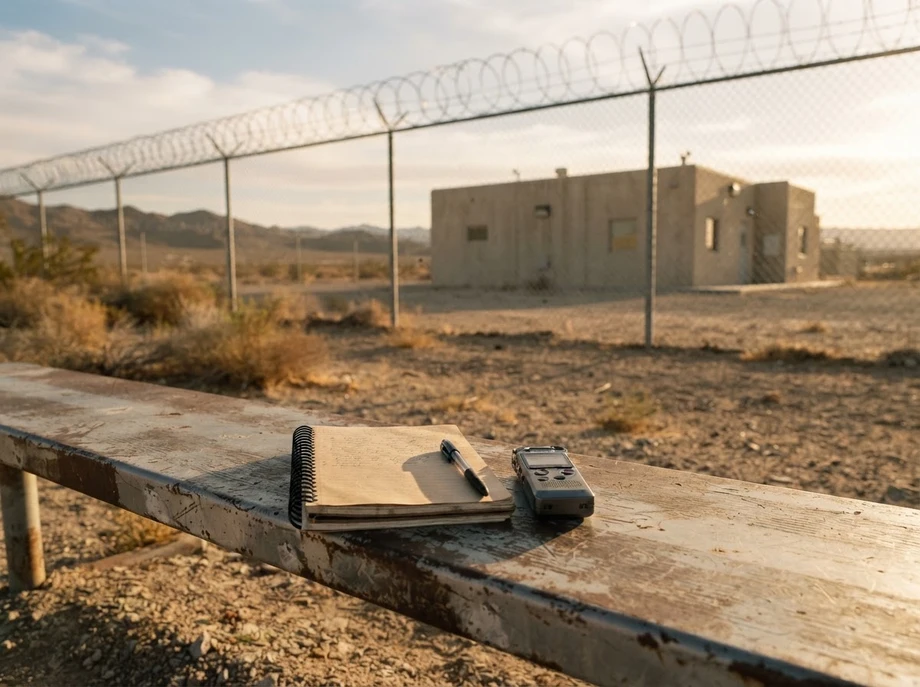
The San Francisco Bay Area office of the Council on American-Islamic Relations, known as CAIR-SFBA, represents Rafat and confirmed his freedom on Wednesday. In the CAIR-SFBA announcement, the organization said he had been held in California since entering the United States to request asylum. U.S. Immigration and Customs Enforcement (ICE) had most recently held him at the California City Detention Facility in the Mojave Desert.
For Rafat, the order means he can pursue his immigration case outside a detention center for the first time since his arrival. It does not decide whether he can remain permanently in the United States. His asylum hearing remains scheduled for Dec. 8, and his lawyers are still warning that the government could try to send him to a country other than Afghanistan.
Why immigration law no longer allowed his detention
The case, Rafat v. Albarran, No. 1:26-cv-06056, did not ask the federal court to grant asylum. It presented a narrower question: could ICE continue imprisoning Rafat when Afghanistan was legally closed as a destination and officials had produced no evidence that another country would accept him?
Federal law authorizes detention after a final removal order under 8 U.S.C. 1231(a)(6). The Supreme Court's 2001 decision in Zadvydas v. Davis, however, treats six months as the period generally presumed reasonable. After that point, a detainee can argue that there is no significant likelihood of removal in the reasonably foreseeable future. The government must then provide evidence to answer that argument. Rafat's 22 months in custody were nearly four times the initial period of six months.
Castillo found that officials offered no evidence that any country would accept Rafat under 8 U.S.C. 1231(b)(2)(E). She also noted that sending him somewhere else would require additional proceedings to consider his fear of harm. Her findings stated:
The Court finds Petitioner's continued detention is unreasonable and no longer authorized by statute.
Under 28 U.S.C. 636(b)(1), the parties had 14 days after service of the Nov. 6 findings to object. The respondents filed objections, but Thurston reviewed the record on Nov. 24 and adopted Castillo's conclusions and recommendations in full. She ordered immediate release under the supervision rules in 8 C.F.R. 241.5. Castillo had not needed to decide Rafat's remaining legal claims because the detention argument was sufficient to support release.
From a wait in Mexico to protection from return to Afghanistan
Rafat's journey to the United States began with an attempt to use an official appointment system. Court findings say he registered through the CBP One app in the summer of 2024 and waited in Chiapas, Mexico, from Aug. 23. CBP One was being used by U.S. Customs and Border Protection to arrange appointments for people seeking processing at the border. Rafat waited about six months without receiving the opportunity he sought.
He was mugged and severely beaten in Mexico, according to court filings. Following an attack on Jan. 21, 2025, he traveled to Lukeville, Arizona, crossed the border that night and surrendered to immigration officers. He was immediately taken into custody. The next day, officials began expedited removal, a process that allows the government to deport certain arrivals quickly without first placing them through the full immigration court process.
The federal findings recount that, after an interview with U.S. Citizenship and Immigration Services on Jan. 22, Rafat was told he had received withholding of removal to Afghanistan. This form of protection applies to a particular country. It prevented his return to Afghanistan but left the removal order in place, allowing officials to investigate whether another country might take him.
A separate assessment on March 18, 2025, conducted under the Convention Against Torture, concluded that Rafat was more likely than not to be tortured if returned to Afghanistan. The Convention Against Torture bars governments from sending people to places where they face a sufficiently serious risk of torture. The assessment therefore explained why Afghanistan was not an available destination, while his continued imprisonment depended on whether officials could demonstrate a realistic alternative.
The transfers and court dates behind the 22 months
Rafat was moved through several facilities across the country before his case reached the federal judges in California. The principal dates in his journey and detention are:
- Aug. 23, 2024: Rafat was waiting in Chiapas for a response after seeking a CBP One appointment.
- Jan. 21, 2025: After being attacked in Mexico, he crossed at Lukeville, surrendered to officers and entered ICE custody.
- Jan. 22, 2025: He was placed under an expedited removal order and, according to the court findings, was told after an interview that he had withholding of removal to Afghanistan.
- March 18, 2025: An assessment under the Convention Against Torture found torture more likely than not if he were returned to Afghanistan.
- During 2025: He was moved from facilities in Arizona to the Northwest ICE Processing Center in Tacoma, Washington.
- June 2025: He was transferred to Adelanto, where he remained for about six months.
- Jan. 20, 2026: He was moved to the California City Detention Facility, his final place of custody.
- May 2026: With help from another detainee, Rafat contacted CAIR's San Francisco Bay Area office.
- Nov. 6, 2026: Castillo recommended release, finding no evidence that removal to another country was likely soon.
- Nov. 24, 2026: Thurston granted the habeas corpus petition and ordered his supervised release.
The transfers meant that Rafat experienced detention in several locations while the basic obstacle remained unchanged. Afghanistan was deemed too dangerous for his return, yet officials had not identified another country prepared to accept him.
Why his journalism and Hazara identity matter
Before the Taliban returned to power in August 2021, Rafat worked as a producer and reporter for Maaref TV, which was then owned by the Afghan state. He also served as a senior media officer at Kabul University. His assignments included women's rights, democratic initiatives and the persecution of the Hazara community. He covered the 2020 terrorist attack on the university campus, where he had worked.
Rafat is himself Hazara, a member of an ethnic minority whose population is largely Shiite Muslim. The Committee to Protect Journalists (CPJ) urged U.S. authorities earlier in November to release him immediately and unconditionally and to grant him asylum. The organization warned that returning him to Afghanistan would expose him to persecution and retaliation because of both his journalism and his ethnicity.
Jose Zamora, CPJ's Americas regional program director, explained why the organization believed deportation would place Rafat directly in danger:
Rafat fled Afghanistan because the Taliban made it impossible for him to work as a journalist without risking his life. Deporting him now would deliver him directly into the hands of the very persecutors he escaped.
Zamora also called Rafat's prolonged imprisonment a betrayal of U.S. commitments to press freedom and human rights. CPJ said violence against Hazaras had increased since the Taliban's return. It reported that Taliban authorities closed several Hazara media outlets during 2026 and arrested senior leaders as part of pressure on the minority community. Those concerns formed the backdrop to the American officials' own finding that torture was the more probable outcome if Rafat were sent home.
What happens to his asylum request now?
The next scheduled step is an asylum hearing on Dec. 8, 2026. CAIR-SFBA said the hearing is currently set to take place online. Following Rafat's release, his lawyers asked to move the proceeding to a courtroom near his new home so that he can appear in person. They are also seeking a full and fair examination of the evidence supporting his asylum claim. No date has been given for a final asylum decision.
Rafat's access to legal help came only after a long period in custody. David Tarr, his attorney and a managing attorney at CAIR-SFBA, said Rafat contacted the organization in May 2026 with assistance from another detainee. Tarr said no immigration case appeared to have been registered in the court system at that point, even though Rafat had already spent well over a year in detention. In the attorney's account, the case had made little progress before CAIR became involved.
Rafat also reported that an officer told him he had no right to asylum because of the way he entered the United States. Tarr worried that this position could prevent a judge from considering the substance of his claim, despite a professional record that the lawyer described as readily verifiable and a fear of persecution he considered well established. Tarr expressed his assessment in direct terms:
He's one of the most legit cases I've ever seen.
The federal findings that secured his release do not describe the coming asylum proceeding. Public filings therefore leave unclear how that proceeding connects with the removal order and protection decisions from 2025. What is certain is that release from ICE custody and permission to remain in the country are separate questions, and only the first has been resolved.
Why his lawyer still fears removal to another country
Thurston's order places limits on any return to custody. Rafat must live under an order of supervision, a form of release that commonly requires regular reporting to ICE. The government cannot simply imprison him again on the same circumstances. Under the recommended conditions adopted by the court, there must be a material change and a neutral decisionmaker must find a significant likelihood of removal. ICE has not published his individual reporting schedule.
Tarr welcomed the release but said protection from Afghanistan alone would not keep his client safe. He argued that Rafat faces persecution because of his political support for women's rights and democracy, as well as his Hazara ethnicity. His statement raised a separate concern about an unnamed destination:
We also need to prevent his illegal removal to an arbitrary and dangerous third country, as yet unnamed, where he would face additional harm before being returned to Afghanistan, in violation of international agreements to which the U.S. is a signatory.
The legal possibility of removal to another country helps explain that warning. In June 2025, the Supreme Court stayed a lower court order that had restricted such removals, and the Department of Homeland Security has used the practice, including for Afghan nationals flown to Pakistan. In Rafat's case, however, the existence of a general government power did not supply the missing evidence that a particular country was likely to accept him in the foreseeable future.
No destination has been named, and no date for another removal attempt has been announced. The government also retains the ability to appeal the release order to the U.S. Court of Appeals for the Ninth Circuit. Until then, Rafat can live outside detention while remaining subject to supervision and the conditions imposed by the court.
One case inside a detention system of 65,765 people
TRAC, a data research center at Syracuse University, counted 65,765 people in ICE detention as of July 11, 2026, its most recent published figure before Rafat's release. His case provides a detailed example of a problem that can arise within that system: a person receives protection from return to one country, but the remaining removal order keeps him detained while officials search for another destination.
The judges applied the Zadvydas standard to Rafat's individual record rather than treating the government's general authority as enough. For others with similar protection grants, the findings show the importance of evidence about an actual destination and a realistic timetable. For Rafat, the practical result is more immediate. He can work with his lawyers outside custody, attend the next stage of his asylum case and avoid a return to imprisonment unless the court's conditions are met.
ICE and the Department of Homeland Security did not respond to requests for comment about his detention and release. CPJ also said its messages to the agencies had received no immediate reply. The next fixed date in the case is now the Dec. 8 asylum hearing, while the question of where Rafat will ultimately be allowed to build his life remains open.
What to Know
- Shaban Ali Rafat was released on Nov. 24, 2026, after more than 22 months in ICE custody.
- Judge Jennifer L. Thurston granted his habeas corpus petition after finding no demonstrated likelihood of removal in the foreseeable future.
- U.S. officials had already found that Rafat was more likely than not to face torture if returned to Afghanistan.
- Rafat formerly worked for Maaref TV and Kabul University and reported on women's rights, democracy and Hazara persecution.
- His release is supervised, and detaining him again requires changed circumstances and a new finding that removal is significantly likely.
- His asylum case remains undecided, with a hearing scheduled online for Dec. 8 and a request pending for an appearance in person.
- No alternative country for his removal has been named, and his lawyer continues to oppose any transfer that could expose him to further harm.