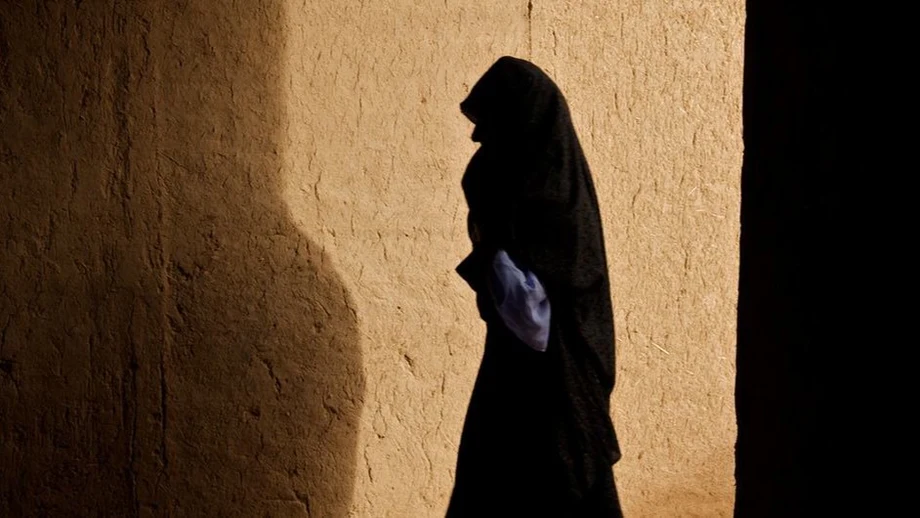
A Day Set Aside, and a Country That Tests It
On Wednesday, Nov. 25, 2026, the United Nations marked the International Day for the Elimination of Violence Against Women and opened the 16 Days of Activism Against Gender-Based Violence, a campaign that runs until Dec. 10, Human Rights Day. This year's theme is "UNiTE to End Violence Against Women and Girls: Ensure Justice, Protect Survivors, End Impunity." In Afghanistan, the theme reads as a description of what five years of Taliban rule have removed. Girls are barred from secondary school, women from universities and most paid work, and the routes once used to report abuse or reach a court have narrowed to almost nothing.
Contents
- A Day Set Aside, and a Country That Tests It
- The Numbers the Campaign Puts on the Table
- Five Years That Removed a Generation From Classrooms
- The Rapporteur's Word for It: Femi-Genocide
- When No Female Doctor Is Allowed, There Is Often No Treatment
- A Province Where Women Lose Their Names
- Madrid: Turning Gender Apartheid Into a Legal Category
- Spain's Pledge, and What Recognition Would Mean
- Accountability, and the Money It Needs
- What Afghan Women Say Themselves
- Diplomacy in Europe, Hunger at Home
- Key Points
Restrictions on movement and on access to services have cut into what women can earn, learn and travel to. Domestic violence, forced and early marriage and the practical difficulty of filing a complaint leave many survivors without support and without anyone held responsible. The measures are not scattered. More than 100 decrees issued since 2021 govern where women may go, what they may study, whether they may work and who may treat them when they are ill.
The date carries its own history. The UN General Assembly designated Nov. 25 through Resolution 54/134 in 1999, building on a commemoration that Latin American and Caribbean feminist groups had observed since 1981, on the anniversary of the 1960 assassination of the Mirabal sisters, three political activists killed on the orders of the Dominican dictator Rafael Trujillo. In 2011 the day also became the Roses Revolution Day, a commemoration against obstetric violence supported by the German National Committee of UN Women.
The Numbers the Campaign Puts on the Table
One in three women experiences physical or sexual violence during her lifetime, according to the United Nations, and UN Women and the World Health Organization have estimated that about 736 million women have faced such violence. The killings are counted separately. UN figures show about 50,000 women and girls killed by intimate partners or family members worldwide in 2024, an average of 137 a day. A UN report released for this year's observance counted about 47,000 women and girls killed in 2025, or five every hour.
Commonwealth Secretary-General Shirley Botchwey marked the day with a statement that widened the definition of harm beyond bruises: a woman forced to leave her home to escape abuse, a survivor whose trauma damages her physical and mental health for years, a young woman who withdraws from public life because of online threats, and a victim of trafficking deprived of her freedom, dignity and basic rights.
Five Years That Removed a Generation From Classrooms
Afghanistan is the only country in the world where girls are barred from education beyond the sixth grade. The United Nations puts the number of girls excluded from secondary school at around 2.6 million, while UNESCO has estimated 2.4 million. The loss compounds. UN Women warns that girls kept out of classrooms are more likely to be married early and more likely to die in childbirth.
Adult life is equally stark. UN Women records women's employment at 7 percent against 84 percent for men, a gap of 77 points, and surveys find that more than half of Afghan women leave home no more than once or twice a month. Some have built work that authorities cannot see, in hidden classrooms and home salons that operate behind doors opened only wide enough for one pupil at a time.
The country's demography sharpens the cost. Afghanistan has about 45 million people, a median age of roughly 17, and 42 percent of the population under 15. A generation raised under these rules will shape the country for decades.
The Rapporteur's Word for It: Femi-Genocide
Reem Alsalem, the UN special rapporteur on violence against women and girls, says the scale and severity of the policies go beyond the language of restrictions. She has adopted a term for what she describes: femi-genocide, the deliberate destruction of women and girls because they are female, carried out through discriminatory laws, restrictions and violence together.
Calling these measures restrictions is an understatement," Alsalem said. "We have not seen anything like what Afghan women and girls have been experiencing over the past five years. This is systematic exclusion from public life, subjugation and control.
She was direct about intent. "I firmly believe that the Taliban have been pursuing the destruction of women and girls because they are female," she said, adding that women and girls are "undoubtedly being persecuted and systematically destroyed." She turned the same judgment on the governments watching: "It is extremely disappointing and, frankly, unfathomable that the international community has allowed this treatment to continue for five years."
Richard Bennett, the UN special rapporteur on human rights in Afghanistan, described the country's trajectory since 2021 as "a downward spiral." He warned that a whole generation of girls has now missed secondary school, and that shutting women out of education and paid work does lasting damage to the country's future. Taliban officials have said their policies follow Islamic law and Afghan culture, and have dismissed foreign criticism as interference in internal affairs.
When No Female Doctor Is Allowed, There Is Often No Treatment
In many parts of the country, male doctors are no longer permitted to treat women, and a shortage of female clinicians turns a rule into a diagnosis. A United Nations report documents the case of a woman in Kunar province who suffered several miscarriages without access to medical care.
The UN Assistance Mission in Afghanistan reported in September 2025 that inspectors from the Taliban's Ministry for the Promotion of Virtue and Prevention of Vice were tightening limits on health care for women by enforcing decrees in clinics and hospitals. Funding cuts have done the rest: nearly 300 humanitarian health facilities have closed or suspended work, and the United Nations has said an estimated 22 million women and girls are at risk of losing essential care.
Hunger adds its own arithmetic. UN estimates for 2027 project that more than 4 million children under five and about 1.27 million pregnant and breastfeeding women will need treatment for acute malnutrition.
Susan Ferguson, the UN special representative in Afghanistan, described the situation in her latest report as "the world's worst women's rights crisis," with Afghan women "fighting for their very survival." Cuts in aid funding, she said, have forced humanitarian organisations into "impossible decisions about which women and girls can receive support and which have to be turned away."
A Province Where Women Lose Their Names
In Balkh, a province in the north, public employees and health workers were told to stop writing and saying women's first names on official documents, including prescriptions and medical records, and to record every female patient as Bibi, a word used for an older woman or grandmother. An order in Balkh was reported this week and no text of it has been published; there is no confirmation that it applies outside the province. Karishma, a Kabul activist who uses a pseudonym, confirmed the instruction and said staff expected to enforce it have largely ignored it so far.
These are 28 million women being buried alive," said Chékéba Hachemi, president of the association Afghanistan Libre and co-founder of Stand Speak Rise Up, which campaigns against rape in war. "They are dying of hunger, and now they do not even have the right to a name. To the very end, they are being removed.
She said she had taken a dozen calls that morning from Afghan women weeping on the phone. An Afghan woman's first name was long treated as a matter of her husband's honour, and official paperwork has routinely listed women as the wife or daughter of a male relative. Karim Pakzad, an associate researcher at the French institute IRIS who follows Afghanistan, said the order amounts to a backward step of 70 years, and that even before the 1960s people in poorer circles in Kabul avoided asking a man the name of his wife, mother or sister.
The country's penal code gives the hierarchy a number. Under the Taliban code, harming a camel carries five months in prison; breaking a woman's arm carries 15 days. Tombstones often carry no woman's name at all, only that of a male relative.
Madrid: Turning Gender Apartheid Into a Legal Category
The fourth HearUs Summit, held in Madrid on Nov. 22 and 23 under the title "Afghan Women's Leadership in Achieving Justice and Peace through Accountability," brought Afghan activists, athletes and lawyers together with Spanish and UN officials. Spain's Foreign Ministry organised it with Women for Afghanistan. The first day was given to Afghan Women's Peace Circles; the second to four panels on education and work, international accountability mechanisms, Islamic perspectives on women's rights, and women's role in peace and security decisions. The meeting launched a Guiding Framework for Afghanistan Accountability, built from discussions at the 2025 summit, and a campaign to gather one million signatures introduced by former Icelandic prime minister Katrín Jakobsdóttir.
The summit's concept note put the exclusion in figures: nearly eight in 10 Afghan women aged 18 to 29 are not in education, employment or training, and 10.7 million women and girls will need humanitarian assistance in 2026.
Fawzia Koofi, president of the board of Women for Afghanistan, said the restrictions had gone past the loss of school and work. "They have questioned the existence of women," she said. Koofi also alleged that a recent Taliban measure effectively permits marriage for girls as young as 9, an effect that could not be independently established from the remarks presented at the summit. Child marriage existed before 2021, she said, but poverty and the absence of legal protection now push families to marry off daughters so they can feed the children who remain.
Spain's Pledge, and What Recognition Would Mean
José Manuel Albares, Spain's foreign minister, told the summit that his government would press for gender apartheid to be written into a future international convention on crimes against humanity, and would seek stronger legal cover against forced marriage, sexual and reproductive violence and persecution on grounds of gender. Spain has also put money into a new independent UN investigative mechanism for Afghanistan.
No power can aspire to be legitimate while it systematically denies the very dignity of women," Albares said. "There can be no lasting peace without truth, without justice, without accountability and without women's participation.
He said Spain would not recognise the Taliban while women's rights are violated, and drew a line between a government and a population: "Our rejection towards the Taliban regime is not a rejection of the Afghan people. We do not mistake those who exercise oppression with those who suffer from it." Navi Pillay, a former UN high commissioner for human rights, addressed the meeting by video and compared the campaign to the struggle against racial apartheid in South Africa.
Accountability, and the Money It Needs
Pramila Patten, the UN special representative on sexual violence in conflict, told the summit that no other country has imposed such exhaustive and systematic restrictions on half its population purely because of gender, and said the violations could amount to crimes against humanity. The UN's 2026 report on conflict-related sexual violence records rape, gang rape and forced marriage attributed to Taliban officials, including security personnel.
Accountability is not revenge," Patten said. "It is refusing to accept that there are people who are above the law.
Evidence is the constraint. The UN Human Rights Council created an independent investigative mechanism in October 2025 to collect, consolidate, preserve and analyse evidence of serious violations in Afghanistan. Patten said its value depends on political will, sustained support and resources, and warned against praising Afghan women's courage while leaving them without protection. Hundreds of health facilities and support centres for survivors have already closed for lack of funds.
A court track exists as well. Judges at the International Criminal Court closed its other Afghanistan inquiries in November, covering US troops and ISIS-K, and left in place a case centred on alleged Taliban persecution of women, girls and LGBTQI+ people, with arrest warrants against four senior Taliban leaders still in force.
What Afghan Women Say Themselves
Tamana Zaryab Paryani, a 28-year-old trained lawyer and former newspaper journalist who was detained by the Taliban in Kabul in January 2022 with her sisters and later reached Europe, addressed the UN Security Council at the end of October. She names the system as she sees it.
"This is gender apartheid. We expect the international community to recognise it and stand with the women of Afghanistan," she said.
Haroon Mutasem, who teaches international criminal law at the American University of Afghanistan and is a research fellow at Humboldt University in Berlin, argues that the situation goes beyond the gender persecution defined in the Rome Statute of the ICC. "This is not just about individual acts of persecution, but about an institutionalised system of oppression and domination of one gender group by another," he said. He warns that a failure to respond could weaken the claim that human rights apply everywhere.
Others at the summit spoke of what survives. Khalida Popal, former captain and co-founder of Afghanistan's women's national football team, said the team lost its place in the country's sporting life after 2021. "The Taliban erased us. But we did not give up," she said, describing the players' return to competition as the result of years of lobbying, and arguing that "if the opportunities are given, the platforms are given, you will see the real power of the women of Afghanistan." Mountaineer Zakia Ahmad, who climbed Mount Everest, said she kept going by thinking about the women at home. "Afghan women can do whatever they want," she said.
Diplomacy in Europe, Hunger at Home
As the summits continue, European governments have reopened channels to Taliban officials. The European Union received a delegation of senior Taliban figures in June to discuss the deportation of Afghans whose asylum claims failed, and France hosted Taliban representatives in October. France's foreign ministry says Paris has no intention of recognising the authorities, and describes the contacts as a way to make returns easier. Hachemi argues that the meetings give the Taliban a form of political legitimacy.
Inside Afghanistan, the humanitarian system is thinning. The UN Office for the Coordination of Humanitarian Affairs recorded 29 incidents affecting aid access in October, 11 of them involving gender restrictions that hit both women delivering assistance and women trying to receive it. Agencies warn that the combination of decrees and funding cuts leaves families with less food, less medicine and fewer places to turn, in a country where about one person in three faces acute food insecurity.
Key Points
- The UN marked the International Day for the Elimination of Violence Against Women on Nov. 25, 2026, opening 16 Days of Activism under the theme "Ensure Justice, Protect Survivors, End Impunity."
- Afghanistan remains the only country barring girls from education beyond grade six, with about 2.6 million girls out of secondary school by UN count.
- Reem Alsalem, the UN special rapporteur on violence against women and girls, describes Taliban policies as femi-genocide and says the international community has produced no real consequences.
- The fourth HearUs Summit in Madrid on Nov. 22 and 23 drew Afghan activists and UN officials and launched a Guiding Framework for Afghanistan Accountability.
- Spain said it will push for gender apartheid to be included in a future convention on crimes against humanity and has funded a new independent UN investigative mechanism.
- Pramila Patten said Taliban violations could amount to crimes against humanity and that international mechanisms will fail without resources.
- A reported order in Balkh province replaces women's first names with Bibi on official and medical documents; no text has been published and its reach beyond the province is unconfirmed.
- UN figures count about 50,000 women and girls killed by partners or family members in 2024, 137 a day, and about 47,000 in 2025, five an hour.