A breakdown that reached beyond the patrols
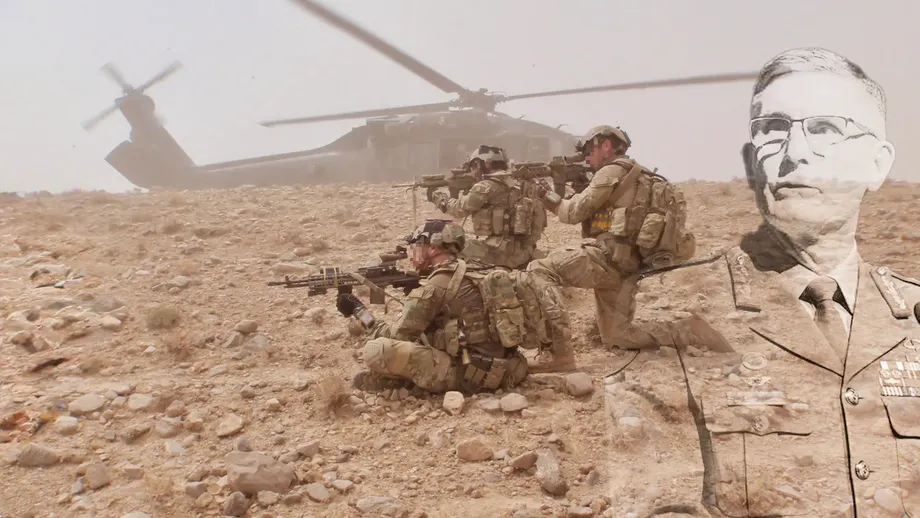
Australian Army commanders allowed authority over the Special Air Service Regiment in Afghanistan to shift towards sergeants and corporals, according to a newly published summary of an official investigation. The 22-page document describes an "inversion of authority" in which patrol commanders gained power while some officers became reluctant or unable to lead them.
Contents
- A breakdown that reached beyond the patrols
- What the earlier inquiry established
- How authority moved down the ranks
- The warning signs commanders missed
- Prisoners, planted weapons and false accounts
- What responsibility means for senior leaders
- Two soldiers face criminal proceedings
- How the investigations unfolded
- Key Points
The Inspector-General of the Australian Defence Force review broadens scrutiny of the leadership failures surrounding alleged unlawful killings. It describes a group of influential non-commissioned officers as a "bikie gang" and says senior headquarters failed to act effectively on warning signs, including rising Afghan death counts without a corresponding increase in Australian casualties.
The summary names no individuals. Its central finding concerns how the organisation was run: officers blurred professional boundaries, oversight weakened and small teams gained freedom to choose and conduct missions with little effective supervision.
The review describes the loss of control as a gradual process:
The breakdown in command occurred in an incremental way over an extended period of time.
It also identifies failures above the patrol level:
Signs of broader decline appear to have been evident to some in higher headquarters. That there was no effective intervention and that this decline was allowed to continue, suggests an absence of effective leadership at various levels.
For Afghan families seeking answers and Australian personnel facing scrutiny, the findings place two forms of accountability alongside each other: criminal proceedings over particular deaths and institutional responsibility for allowing dangerous practices to continue.
What the earlier inquiry established
Defence commissioned the original Afghanistan Inquiry in 2016 after rumours and allegations of possible breaches of the Law of Armed Conflict. Those rules govern conduct during war, including the protection of civilians and people taken prisoner.
The Defence Department's Afghanistan Inquiry page says the investigation covered Special Operations Task Group conduct between 2005 and 2016. It operated independently of the Australian Defence Force chain of command and government. The Chief of the Defence Force received its report on November 6, 2020, and announced the findings on November 19.
Led by Major General Paul Brereton, the inquiry found credible information implicating 25 current or former defence personnel in serious crimes, including alleged involvement as accessories. It recommended that 19 soldiers be investigated by police over the alleged murder of 39 prisoners and civilians and the cruel treatment of two others. It recommended referring 36 incidents to the Australian Federal Police.
The 25 people identified and the 19 recommended for police investigation describe different groups within the inquiry's findings. The inquiry's conclusions were findings of credible information for further investigation; criminal charges are decided through a separate legal process.
Investigators interviewed 423 witnesses and examined more than 20,000 documents and more than 25,000 images during an investigation lasting four and a half years.
How authority moved down the ranks
SAS patrol commanders were usually sergeants leading teams of four to six soldiers. Non-commissioned officers, including sergeants and corporals, provide experienced leadership within military units, while commissioned officers hold formal command responsibilities.
The new review says that relationship became reversed. Its description of junior officers is stark:
This resulted in junior officers being effectively subservient to non-commissioned officers, and occupying a position which can best be described as 'learned helplessness'.
Some junior officers sought acceptance through "mateship" and excessive familiarity with the soldiers they were supposed to command. Drinking together, using first names and allowing unrestricted access to alcohol weakened rank boundaries. Some officers also perceived a lack of support from higher command.
Patrol commanders gained room to select and execute their own missions. The review says intelligence assessments lacked objectivity and military lawyers were sympathetic to the teams. It also describes excessive influence from American and British special forces and other government agencies, including intelligence services.
The warning signs commanders missed
Fighting intensified from around 2009, with SAS teams increasingly focused on hunting Taliban leaders whom they were authorised to kill if capture was not possible. The Taliban also carried out assassinations, often targeting civilians working for the Afghan government.
Higher headquarters held data showing rising numbers of people recorded as enemy combatants killed, including sudden spikes. The review also identifies a lack of wounded insurgents and a lack of Australian casualties among the patterns requiring attention.
Some commanders noticed the figures and heard rumours of wrongdoing. Others did not. The review says there was no suggestion that commanders aware of rumours were complicit, while describing the failure to take effective action as extraordinary.
The summary also refers to an "apparent absence of input from CA" concerning SAS soldiers permitted to return to Afghanistan without passing mandatory mental health checks. CA means Chief of Army. Lieutenant General Ken Gillespie held that position from 2008 to 2011, although the summary itself names no individuals.
Together, the findings describe failures at several points where supervision should have operated: deciding who was fit to deploy, approving operations, checking intelligence and examining patterns in deaths.
Prisoners, planted weapons and false accounts
Brereton's inquiry found credible information that some junior soldiers were directed by patrol commanders to kill prisoners to obtain their first kill, a practice known as "blooding". It also examined the use of weapons, radios and other equipment planted beside bodies to make those killed appear to have been legitimate targets.
Brereton explained how the use of such items developed:
But it evolved to be used for the purpose of concealing deliberate unlawful killings.
The inquiry also found broad interpretations of when someone could be regarded as directly participating in hostilities and therefore targeted. For civilians, that classification can determine whether a soldier considers lethal force lawful.
Brereton said the cases identified for possible criminal investigation involved people whose protected status should have been apparent:
The cases in which it has been found that there is credible information of a war crime are ones where it was, or should have been, plain that the person killed was a non-combatant.
The inquiry described a tightly bonded special forces community in which secrecy and loyalty made obtaining truthful evidence difficult. False accounts and planted equipment also obstructed the checks that should have followed a death.
What responsibility means for senior leaders
The new review followed the Brereton Inquiry and addresses a central gap in the public debate: how officers could retain formal command while patrol leaders exercised so much practical control.
The earlier inquiry did not assign officers direct blame for the alleged killings, but it did identify indirect responsibility for the culture surrounding them. Brereton referred to responsibility among those within the regiment who promoted a warrior culture and the influential non-commissioned officers who spread it.
The latest summary gives a fuller account of failures in command, including weak supervision, blurred relationships and the absence of effective intervention. It places responsibility for running the organisation alongside the investigation of individual acts.
General Angus Campbell, Chief of the Defence Force when the 2020 findings were released, apologised for wrongdoing by Australian soldiers. He described the allegations in direct terms:
It is alleged that some patrols took the law into their own hands, rules were broken, stories concocted, lies told and prisoners killed.
Campbell announced that 2nd Squadron SAS would be removed from the Army's order of battle, its formal list of military units. He said the Chief of Army would establish a replacement squadron with a new name and culture. Brereton's inquiry also recommended that the government compensate victims' families before court proceedings concluded.
Two soldiers face criminal proceedings
Oliver Schulz and Ben Roberts-Smith have been charged with war crimes. Both deny the charges.
Schulz faces a murder trial scheduled to begin in February. His lawyers have indicated that he intends to argue he was operating under orders. Roberts-Smith is accused of executing or ordering the execution of five prisoners and has said he followed his training and the rules governing Australian soldiers in Afghanistan.
The year of Schulz's scheduled February trial and the publication date of the new command review are not specified in the account announcing the findings.
The criminal cases will examine individual allegations. The command review addresses the wider environment in which soldiers deployed and operated, including the instructions, supervision and scrutiny they received.
How the investigations unfolded
The examination of Australian special forces conduct stretches across wartime operations, an independent inquiry and subsequent scrutiny of leadership. The main dates establish how long the conduct and the response have been under examination:
- 2005 to 2016: The period covered by the original Afghanistan Inquiry into Special Operations Task Group conduct.
- From around 2009: Fighting intensified and SAS operations increasingly focused on Taliban leaders, according to the command review.
- 2016: Defence commissioned the independent IGADF Afghanistan Inquiry.
- November 6, 2020: The Chief of the Defence Force received the inquiry report.
- November 19, 2020: The inquiry findings were publicly announced.
- Following the Brereton Inquiry: Defence commissioned further examination of command failures, now described in a public summary.
For families of Afghans allegedly killed, the inquiry's recommendation for compensation offered a response that could proceed before criminal cases ended. For the Army, the new findings focus attention on everyday command duties: checking operational accounts, questioning unusual casualty patterns and ensuring that experienced soldiers remain answerable to their officers.
Key Points
- A 22-page IGADF summary says Australian Army leaders allowed effective control of SAS operations to shift towards influential patrol commanders.
- The review identifies weak supervision, blurred rank boundaries and failures to act on casualty data and rumours.
- The Brereton Inquiry found credible information concerning the alleged killing of 39 people and recommended police investigation of 19 soldiers.
- The original inquiry covered 2005 to 2016 and examined evidence from 423 witnesses.
- Oliver Schulz and Ben Roberts-Smith face war crimes charges. Both deny wrongdoing.
- The findings extend scrutiny from individual alleged crimes to the officers and headquarters responsible for command.