A 2047 ambition with two investment pipelines
Rajasthan will present its tourism ambitions for 2047 at the Jaipur Exhibition and Convention Centre (JECC) on 10 December 2026, backed by government figures showing 453 tourism agreements worth INR 17,641 crore already described as grounded. A second pipeline contains 1,738 approved projects with estimated investment of INR 29,927 crore. Together, those projects are expected to add approximately one lakh rooms, or 100,000 rooms, to the state's accommodation capacity.
Contents
- A 2047 ambition with two investment pipelines
- What the 10 December session is meant to decide
- Why the agenda stretches from havelis to artificial intelligence
- How to read the investment and room numbers
- Four policies cover where visitors stay and explore
- Visitor growth meets a local employment test
- What the first diaspora gathering delivered
- Corporate pledges and a broader investment message
- What to Know
The immediate venue is Pravasi Rajasthani Divas 2026, a gathering intended to connect Rajasthan with Rajasthanis living elsewhere in India and overseas. Its tourism session will carry the theme Rajasthan@2047: Heritage, Innovation, and Global Opportunities. The goal is to place Rajasthan among the world's leading tourism destinations by 2047, the year India marks 100 years of independence, while turning heritage conservation, investment and new visitor experiences into employment for local communities.
What the 10 December session is meant to decide
Tourism will be one of six sectoral discussions at the 2026 event. Industry representatives and other participants will review the state's Tourism Vision 2047, its policy framework, investment initiatives and ongoing projects. They will also be asked to contribute industry feedback and international experience to plans for new destinations, services and infrastructure.
The stated outputs are practical rather than ceremonial. Participants are expected to identify priority projects, policy reforms, infrastructure requirements and implementation targets. In simple terms, the meeting is intended to establish which projects should move first, which government rules may need changing and what supporting facilities those projects will require.
- December 2024: The Rising Rajasthan Global Investors Summit at JECC generated agreements behind later investment ceremonies.
- 10 December 2025: The first Pravasi Rajasthani Divas brought diaspora investors, project launches and sector discussions together at the same venue.
- 18 November 2026: This is the cutoff date for the government's count of 453 grounded tourism MoUs.
- 10 December 2026: The tourism session at JECC will examine the roadmap for 2047.
- 2047: Rajasthan aims to be among the world's leading tourism destinations.
Why the agenda stretches from havelis to artificial intelligence
Rajasthan's starting assets include historic forts and palaces, the decorated havelis of Shekhawati, wildlife, cultural traditions and varied natural landscapes. Havelis are large traditional residences, often built around courtyards and distinguished by detailed architecture and wall paintings. The session will consider heritage conservation alongside cultural and experiential tourism, which gives visitors opportunities to participate in local culture rather than limiting a trip to sightseeing.
Wildlife, adventure, nature, rural and spiritual tourism are also on the agenda. So are destination weddings, medical and wellness travel, sustainable tourism and MICE tourism. MICE stands for meetings, incentives, conferences and exhibitions, a segment built around organised group travel and business events. Its inclusion connects the tourism discussion with convention facilities, hotels, transport and event services.
Travel experiences using artificial intelligence form another agenda item. Such technology can support activities including personalised planning and digital visitor services. The discussion will also cover skills training and greater participation by local communities. Those subjects link the expansion of tourism to the people expected to run accommodation, guide visitors, provide services and protect the natural and historic attractions on which the industry depends.
How to read the investment and room numbers
A memorandum of understanding, or MoU, records an agreement or investment intention. The Rajasthan government says 453 tourism-related MoUs representing INR 17,641 crore had been grounded by 18 November 2026. Grounded indicates movement beyond the signing stage toward execution. The INR 17,641 crore figure is the investment value attached to those agreements, equivalent to INR 176.41 billion, rather than a measure of expenditure already completed.
The separate approval figure comes from the Rajasthan Tourism Unit Policy 2024. Under that policy, 1,738 new tourism projects have been approved with estimated investment of INR 29,927 crore, or INR 299.27 billion. Their expected accommodation contribution is roughly one lakh rooms. The approval pipeline has a headline value about 1.7 times that of the grounded MoUs, while its 1,738 projects are nearly four times the 453 agreements. One group concerns MoUs moving toward execution, while the other concerns approvals under a single policy.
For readers, one crore means 10 million rupees and one lakh means 100,000. These units explain why the figures can appear much larger or smaller when converted into billions. They also show the scale of the accommodation plan: 100,000 additional rooms would affect not just major hotels, but the construction, furnishing, staffing and servicing work associated with tourism properties.
Four policies cover where visitors stay and explore
The investment push rests on four initiatives introduced across five years. Their titles cover different parts of the visitor economy, from accommodation in homes and villages to film promotion and formally approved tourism projects.
- The Rajasthan Rural Tourism Scheme 2022 is the earliest initiative in the group and connects the programme with tourism outside the best-known urban centres.
- The Rajasthan Tourism Unit Policy 2024 is the framework under which the 1,738 projects worth INR 29,927 crore have been approved.
- The Rajasthan Film Tourism Promotion Policy 2025 adds cinema and screen-related promotion to the state's tourism strategy.
- The Rajasthan Homestay (Paying Guest House) Scheme 2026 covers smaller accommodation arrangements in which visitors pay to stay in or alongside a household.
The spread of policies matters because the 2047 agenda is not confined to large hotel developments. Homestays and rural tourism can place visitor spending closer to households and villages, while film promotion and new tourism units address different ways of attracting visitors and investment. The 2024 policy currently carries the most detailed project figures in the announcement.
Visitor growth meets a local employment test
Tourist footfall in Rajasthan increased by 8.50 per cent between January and August 2026 compared with the same months in 2025. For every 100 visits recorded during that period a year earlier, the growth rate corresponds to 108.5 visits in 2026. That rising footfall provides the immediate demand context for adding rooms, developing destinations and expanding visitor services.
Tourism Department Secretary Shuchi Tyagi connected the state's heritage with innovation, investment and employment. She described both the global ambition and the local outcome the government wants from it.
Rajasthan's rich heritage and cultural identity are a strong foundation for tourism development. Our vision is to transform this heritage into tourism experiences of global standing through innovation, new tourism experiences and an environment that welcomes investment. With 2047 in mind, our focus is on making Rajasthan one of the world's leading tourism destinations. We also have to ensure that tourism growth creates employment, livelihoods and new opportunities for local people.
Her statement explains why skill development and community participation appear beside investment and technology on the JECC agenda. More visitors can support jobs in accommodation, transport, food, guiding and cultural activities, while heritage conservation determines whether the forts, palaces and havelis attracting those visitors remain viable attractions. The government's argument is that the financial pipeline and the local employment plan need to advance together.
What the first diaspora gathering delivered
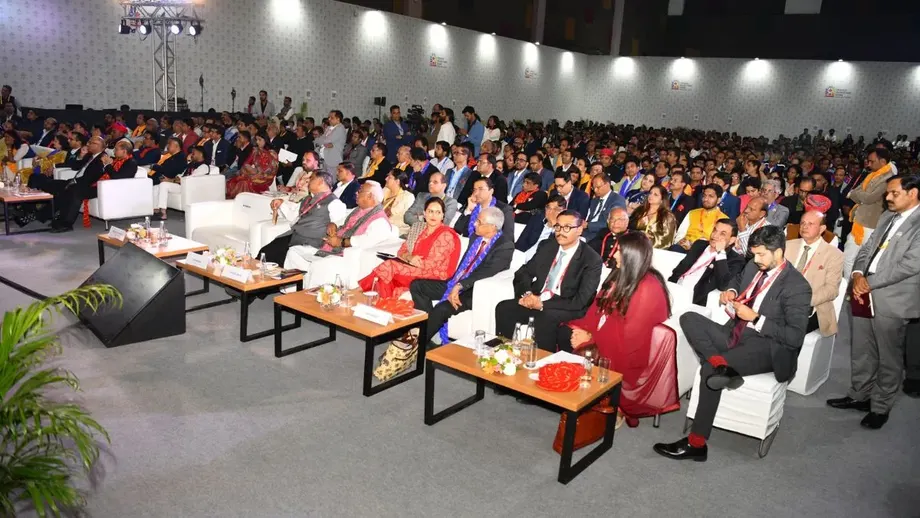
The 2026 programme follows the first Pravasi Rajasthani Divas on 10 December 2025, which drew around 8,700 nonresident Rajasthanis from India and abroad to JECC. Rajasthan Governor Haribhau Bagade and Chief Minister Bhajan Lal Sharma inaugurated that event. Punjab Governor Gulab Chand Kataria and Union Ministers Piyush Goyal, Bhupender Yadav and C. R. Patil attended, while Union Urban Development Minister Manohar Lal Khattar joined later.
Its largest investment ceremony involved groundbreaking for projects worth INR 1 lakh crore, equivalent to INR 1 trillion. Those projects arose from MoUs signed at the Rising Rajasthan Global Investors Summit in December 2024. Sharma initiated the ceremony from the stage by remote control. He said cumulative groundbreaking ceremonies worth INR 8 lakh crore, or INR 8 trillion, had been completed since December 2024 for projects based on summit agreements. A groundbreaking marks the public start of work, not the completion of a project.
The 2025 programme also included 13 new or revised policies intended to attract investors and simplify business procedures. Sharma unveiled a commemorative coffee table book called Commitments in Action, while an exhibition called Pragati Ka Path presented the state's development journey. Seven sectoral discussions followed the inaugural session, covering Industry, Water, Energy, Health, Tourism, Mines and Education. Tourism therefore carried into the diaspora format before receiving its dedicated 2047 investment discussion in 2026.
Chief Minister Sharma told participants that investors would find changed conditions in Rajasthan and pointed to progress in water, electricity and energy generation, road, rail and air connectivity, education, and measures for women and disadvantaged groups during his government's two years in office.
You will find a transformed development landscape here.
Sharma said policy reforms had simplified procedures and invited diaspora investors to choose sectors in which they wanted to participate. Governor Bagade and Governor Kataria also praised the state government's work and appealed to entrepreneurs to invest in Rajasthan.
Corporate pledges and a broader investment message
Union Commerce and Industry Minister Piyush Goyal endorsed the state's approach at the 2025 gathering and said Prime Minister Narendra Modi and the central government supported Rajasthan's development goals. Addressing a diaspora he described as nearly one crore people, or about 10 million, Goyal urged its members to contribute to their homeland.
The collective potential of one crore people can create miracles.
Vedanta Group Chairman Anil Agarwal and Tata Power's Praveer Sinha were among the visiting business figures who assured the state of further investment. Several delegates expressed willingness to invest between INR 1,000 crore and INR 2,000 crore in their native districts. Agarwal named Hindustan Zinc, Cairn Energy and Nand Ghar as Vedanta's three major initiatives in Rajasthan and said the group had contributed INR 3 lakh crore in revenue to the government so far.
Agarwal also announced plans for an industrial park and a urea fertilizer plant, describing the planned plant as India's largest. He cited Rajasthan's minerals, natural resources, geographic position and business environment before encouraging other investors to commit capital.
I guarantee you that this state will be the best destination for your investment.
Nine nonresident Rajasthanis were honoured for contributions to the state's development, with some recognised in their absence. They were Anil Agarwal, Kumar Mangalam Birla, Vinit Mittal, Ajay Piramal, Madhav Singhania, Punam Chand Rathi, Narsi Kularia, C. M. Mundra and Pradeep Ghisulal Rathore. The honours, investment appeals and project ceremonies show how the diaspora event combines business mobilisation with public recognition.
For tourism, the practical agenda is now precise: choose priority projects, decide policy changes, identify infrastructure needs and set implementation targets. The state has not given a completion schedule for the roughly 100,000 rooms or an absolute visitor count behind the 8.50 per cent rise. The next dated checkpoint is the JECC session on 10 December 2026, where those investment figures are due to be examined alongside the roadmap for 2047.
What to Know
- Rajasthan will hold its Rajasthan@2047 tourism session at JECC in Jaipur on 10 December 2026.
- The state says 453 tourism MoUs worth INR 17,641 crore were grounded by 18 November 2026.
- Another 1,738 projects worth INR 29,927 crore have been approved and are expected to add about 100,000 rooms.
- Tourist footfall rose 8.50 per cent from January to August 2026 compared with the same period in 2025.
- The agenda covers heritage, wildlife, rural tourism, weddings, wellness, business events, artificial intelligence, skills and community participation.
- The first Pravasi Rajasthani Divas in 2025 attracted about 8,700 participants and included groundbreaking for projects worth INR 1 lakh crore.
- The session is expected to identify priority tourism projects, reforms, infrastructure needs and implementation targets for the 2047 goal.