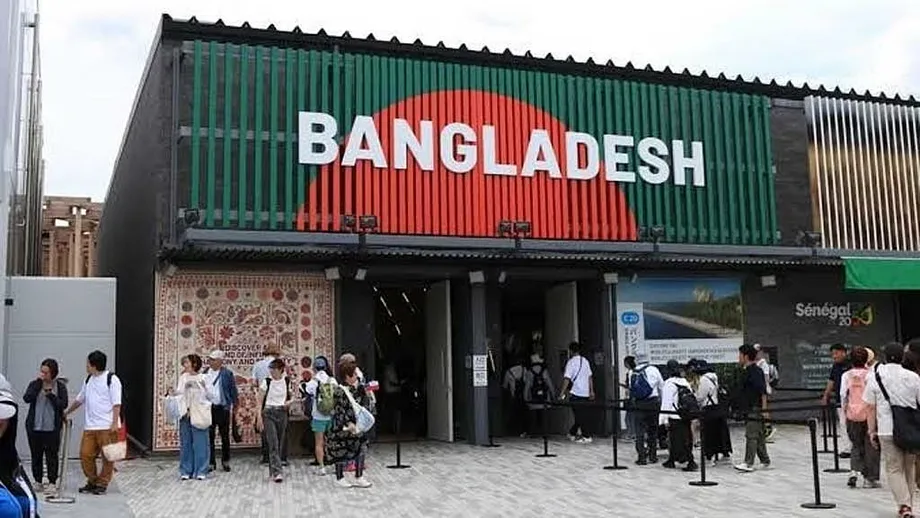
Dhaka presses for money that reaches communities
Bangladesh needs $10 billion to $11 billion a year to tackle climate change and is already spending about $4.5 billion to $5 billion annually from its own budget, its delegation said at COP31 on 13 November. Its demand in Antalya, Turkey, is for international funding to arrive faster, through simpler applications and with more grants rather than loans.
Contents
- Dhaka presses for money that reaches communities
- How large is the financing gap?
- Two adaptation demands, one delivery problem
- Why Bangladesh wants grants rather than loans
- What the $30 million selection means
- Nepal shows why approval speed matters
- Following the money to villages and shelters
- Measuring results and changing energy finance
- Emissions targets, jobs and trade
- What happens before negotiations close?
- Key Points
Environment, Forest and Climate Change Minister Abdul Awal Mintoo said promises of finance had advanced faster than payments. Speaking on the fifth day of formal negotiations, the delegation sought clearer answers about who would provide international funding, how it would be distributed and when vulnerable communities would receive support.
The figures put domestic spending at roughly 41% to 50% of the stated annual need. They also explain why Bangladesh is pressing for delivery alongside larger international targets: the country is already committing billions while families face cyclones, floods, river erosion, salinity and extreme heat.
Bangladesh also announced its selection for a Climate Investment Funds programme offering up to $30 million per country. Coastal infrastructure and agriculture able to withstand climate hazards are its priorities. The programme requires investment plans, making the route from selection to spending another practical test of climate finance.
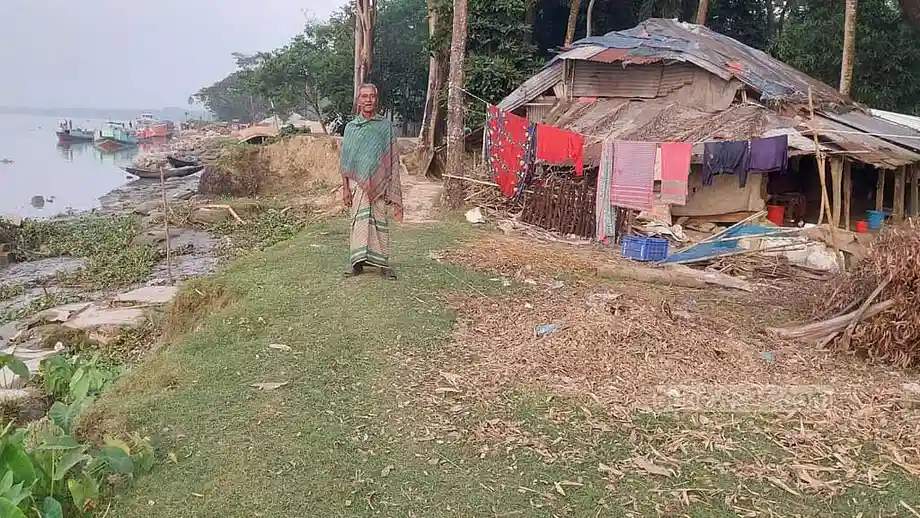
Foreign Affairs State Minister Shama Obaed Islam stressed that assistance must reach communities most in need. Delegates highlighted people displaced by river erosion, whose immediate concerns include secure housing, drinking water, healthcare and livelihoods.
How large is the financing gap?
Mintoo has estimated Bangladesh's annual economic damage from climate change at $15.2 billion. That exceeds the country's stated annual financing need, while representing a different measure: damage counts losses, whereas financing pays for protection, emissions reduction and responses to climate impacts.
Before the summit, Department of Environment Director Mirza Shawkat Ali put climate spending through the Annual Development Programme at about $4.2 billion annually. That figure covers development programme allocations; the delegation's $4.5 billion to $5 billion figure describes spending from the domestic budget more broadly.
Bangladesh's National Adaptation Plan estimates that implementing its measures from 2023 to 2050 will cost about $230 billion. Submitted in 2022, the plan was among adaptation plans prepared by 27 least developed countries, according to Shawkat. Bangladesh has begun implementation using domestic resources but wants international funding to accelerate it.
Adaptation means preparing for climate effects, for example by protecting drinking water from salt intrusion or improving flood warnings. Mitigation means reducing the emissions that drive warming. Bangladesh wants easier funding for both, with greater grant support for adaptation and losses already suffered.
Two adaptation demands, one delivery problem
Bangladesh supports the Least Developed Countries Group's demand to triple adaptation finance to $120 billion annually before 2035. Prime Minister Tarique Rahman also called on 12 November for at least half of international climate finance to go to adaptation, according to national priorities.
Rahman, addressing the summit's high level segment, described the type of assistance Bangladesh wants:
Climate-vulnerable countries need grants, not more loans that increase their debt. They also need reliable financial support, access to modern technology and stronger support for adaptation.
The $120 billion demand sets an annual amount, while the prime minister's proposal sets a share of total finance. Negotiators still need agreement on the starting figure used to measure a tripling and on how progress will be tracked.
The United Nations' COP31 finance update says developed countries are expected to lead efforts to mobilise at least $300 billion annually by 2035, within a broader $1.3 trillion goal. An assessment highlighted at the summit projects an $840 billion annual shortfall against that broader goal on current trends.
UN Secretary-General António Guterres warned that the adaptation demand would still leave much of the need unmet:
Even tripling adaptation finance would meet less than 30 per cent of what is needed.
Why Bangladesh wants grants rather than loans
Bangladesh's concern is that borrowing to protect communities creates repayments that compete with future spending on those same communities. Change Initiative's 2025 Climate Debt Risk Index found that Bangladesh received $2.70 in climate loans for every $1 in grants and estimated climate debt at $79.60 per person.
At a 10 November COP31 event organised by Change Initiative and Young Power in Social Action, researchers said 55 countries covered by the index spent $47.17 billion servicing debt in 2023. The index recorded $33.74 billion in climate finance for those countries across 2002 to 2023, a comparison spanning different periods that illustrates the scale of their repayment burden.
Bangladesh, Cabo Verde, Cambodia, Myanmar, Pakistan, the Philippines, Senegal and Sri Lanka accounted for 74.3% of climate loans recorded in the index. Each received more climate finance through loans than grants.
Change Initiative also said only $2.3 billion of the $20.8 billion increase in developed country climate finance between 2022 and 2024 went to adaptation, about 11%. Its findings identified $32.43 billion in adaptation commitments, or 66.1% of those recorded, without corresponding payment records.
UN climate chief Simon Stiell described the pressure facing developing countries:
Many developing countries are trapped in a downward loop of debt, disaster, and devastating capital costs.
Bangladesh is consequently seeking grants, debt relief and clearer reporting that separates loans from grants. Civil society proposals include pausing repayments after disasters and checking the debt risks of climate loans before signing them.
What the $30 million selection means
Mintoo described Bangladesh as among the first five countries selected for $30 million each from the Climate Investment Funds, with the support presented as a grant for resilience. Details of the Accelerating Resilience Investments and Innovations for Sustainable Economies programme, known as ARISE, describe an opportunity to prepare an investment plan seeking up to $30 million.
Bangladesh will develop that plan with multilateral development bank partners. A payment date and final financing terms were not specified. Haiti, the Kyrgyz Republic, Morocco and Sierra Leone were also selected, alongside a regional programme involving Malawi and Mozambique that can seek up to $40 million.
The selection followed 25 expressions of interest representing more than $700 million in potential investments. ARISE received initial commitments exceeding $100 million from Germany, Spain and Ireland, while Britain confirmed up to $128 million more over coming years from money returning to an existing CIF resilience programme.
For Bangladesh, $30 million would equal about 0.27% to 0.30% of its stated annual climate financing need. The programme can support specific investments and attract further funding, but its size makes the wider demand for reliable finance plain.
Nepal shows why approval speed matters
Nepal's recent flooding has become a central example in the finance debate. Estimated damage reached $4.8 billion. More than 1,450 people were confirmed dead and almost 5,300 remained missing after August flash floods along the Trishuli River north of Kathmandu.
The Fund for Responding to Loss and Damage earmarked $21.6 million for Nepal, about 0.45% of estimated damage. Climate finance campaigner Harjeet Singh said the allocation had not yet been paid and required further applications for specific projects. A reported standard application cap of $20 million per disaster also differs from the amount earmarked for Nepal.
Across 119 applicant countries, requests totalled about $2.8 billion, compared with donor pledges of approximately $822 million, roughly half of which had been paid. The requested amount is about 3.4 times the pledges.
Singh also said a Nepalese flood protection project took seven years to win Green Climate Fund approval. Bangladesh wants simpler direct access to that fund, the Global Environment Facility and the Adaptation Fund, alongside faster loss and damage payments.
Loss and damage funding addresses harm people already suffer, including destroyed infrastructure and losses harder to price, such as cultural heritage and community ties. Bangladesh wants the fund to cover both economic and non-economic losses and receive contributions large enough to respond to demand.
Following the money to villages and shelters
Bangladesh's earlier coastal displacement demands were backed by a nationwide assessment estimating 4,955,527 people living in displacement after natural disasters. The assessment found that 63% had left home before April 2020 and 85% lived in rural union areas, showing why assistance must reach villages as well as cities.
Shama Obaed Islam called at a separate COP31 event for predictable, accessible finance without costs for women. She identified cyclone shelters with separate facilities for women, reproductive and mental healthcare, and meaningful participation in adaptation decisions as priorities.
Farah Kabir, ActionAid Bangladesh's country director, called for direct access to funds for groups led by women and grassroots organisations under the Belém Gender Action Plan for 2026–2034. She also sought budgets and data broken down by gender, independent monitoring and complaint channels for communities excluded from support.
Asked at the delegation briefing about dedicated finance for children and education, a representative said they had not seen a financing demand exclusively for children, while pointing to work to strengthen healthcare services.
Bangladesh also backs a proposed platform connecting national adaptation priorities with funders and development partners. Its delegation wants the Belém Adaptation Indicators to track improvements in resilience without adding reporting burdens for developing countries.
Measuring results and changing energy finance
Md Golam Rabbani, director of Brac University's Centre for Climate Change and Environmental Research, proposed measuring results in concrete local terms. In Bhola, officials could count households facing severe drinking water shortages and track whether an adaptation project reduces that number. In Satkhira, agriculture officers could help design projects around farmers' needs.
Rabbani called for a public report by June 2027 showing which ministries received climate budget allocations, where money was spent and whether projects reduced risks. The budget for the 2027 fiscal year proposed Tk51,746 crore in climate spending across ministries.
Change Initiative has proposed a Renewable Energy Sovereignty Facility combining grants, guarantees and limits on public loans. It projects $7.69 billion in investment from 2026 to 2030 while reducing new public borrowing from $4.6 billion to $800 million. These are projections for the proposed mechanism.
The organisation estimates an annual renewable energy investment gap of $1.35 billion through 2030. Research coordinator Mofazzal Hossain said 90.4% of renewable energy investment since 2000 came as loans, while $880 million of $2.54 billion classified as climate finance for the energy sector went to coal and gas plants.
Brice Böhmer, climate lead at Transparency International, called for public participation and community oversight to reduce corruption risks. Together, these proposals would track the form of finance, its destination and the protection it delivers.
Emissions targets, jobs and trade
Bangladesh says it produces less than 0.5% of global greenhouse gas emissions. Its updated national climate pledge targets emissions 6.39% below a business as usual projection by 2035 using domestic efforts, with a further 13.92% reduction conditional on international support. That comparison uses projected future emissions rather than current emissions.
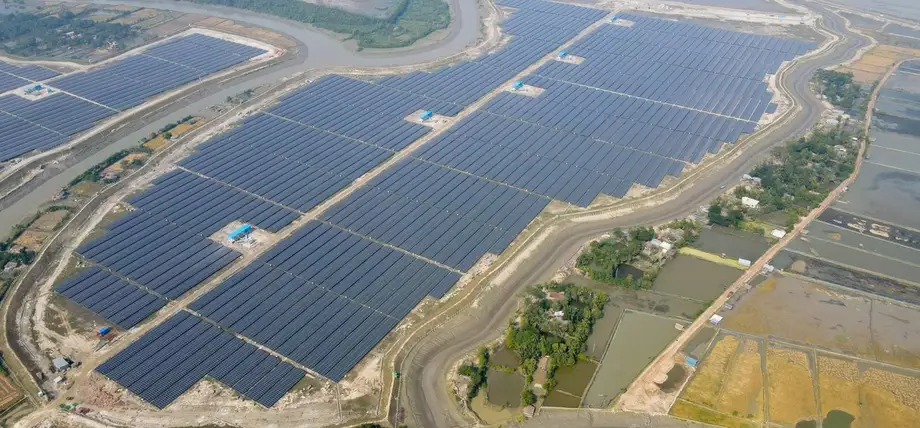
Rahman said Bangladesh aims to meet 20% of electricity needs from renewable sources by 2030 and is developing 4,000 megawatts of solar power. Other plans include planting 250 million trees over five years and dredging 20,000 kilometres of rivers and canals.
Bangladesh supports extending the Mitigation Work Programme through 2030, backed by finance, technology and training. It also wants a just transition, meaning changes to energy and industry that protect workers through decent employment, new skills and social protection.
The delegation raised concerns about unilateral trade policies such as the Carbon Border Adjustment Mechanism, which links charges on certain imports to emissions from their production. Bangladesh argues that climate trade measures should avoid adding barriers for businesses, workers and exporters in developing economies.
What happens before negotiations close?
COP31 runs until 20 November. Bangladesh says it will work with the Least Developed Countries Group, the G77 and China, and other partners during the second week to secure decisions that turn commitments into practical support.
- 9 November: COP31 opened in Antalya, with Turkey hosting and Australia leading negotiations.
- 10 November: Bangladesh pressed for grants and faster access, while civil society presented research on climate debt.
- 12 November: Rahman sought an adaptation share of at least 50%, and Bangladesh's ARISE selection was announced.
- 13 November: The delegation set out annual financing needs and demands for simpler access.
- 20 November: Negotiations are scheduled to close.
Finance sources, adaptation accounting and predictable loss and damage funding remain unresolved. Pressure on donor budgets adds to the challenge: foreign aid fell 23% in the preceding year, including a 56.9% reduction from the United States.
Development finance institutions from Britain, Norway and Canada announced plans to mobilise $10 billion for climate projects in emerging markets by 2030. Guterres also urged climate funds to reduce bureaucracy and called for taxes on extraordinary fossil fuel profits to help pay for climate harm.
For Bangladesh, the immediate test is whether final decisions provide a clearer timetable, simpler applications and funding communities can use without taking on further debt.
Key Points
- Bangladesh states annual climate financing needs of $10 billion to $11 billion and domestic spending of $4.5 billion to $5 billion.
- Dhaka supports $120 billion annually for adaptation before 2035 and an adaptation share of at least half of international climate finance.
- Bangladesh can prepare an ARISE investment plan seeking up to $30 million for resilience.
- The delegation wants more grants, faster disaster support and easier direct access to climate funds.
- Community priorities include safe water, secure housing, protection for women and support for displaced families.
- COP31 negotiations are scheduled to conclude on 20 November.