A disputed certificate drives a wider education reform
Indonesia's parliamentary education commission plans to put overseas qualification recognition into the revised National Education System Law after the withdrawal of Gibran Rakabuming Raka's school equivalency certificate exposed disputes over how foreign education is assessed. The proposal would establish a dedicated chapter covering recognition procedures and the documents used to grant it.
Contents
- A disputed certificate drives a wider education reform
- What the ministry withdrew
- How the dispute reached Parliament
- Which documents should establish completion?
- University recognition already has detailed rules
- Matching grades across different systems
- Religious students face practical barriers
- Why election requirements make recognition consequential
- Where the bill stands and what applicants can do
- Key Points
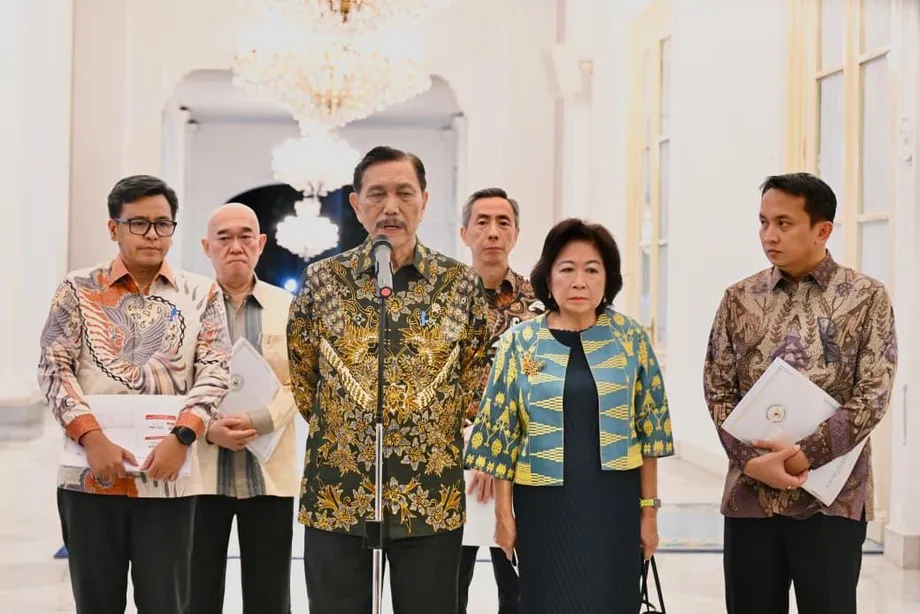
Lalu Hadrian Irfani, deputy chair of Commission X of the House of Representatives and a member of the National Awakening Party, outlined the plan at the Senayan Parliament Complex in Jakarta on November 13, 2026. He wants a single set of binding guidelines under the revision of Law No. 20 of 2003, rather than procedures that produce competing interpretations.
The immediate trigger was the Ministry of Primary and Secondary Education's withdrawal of certificate No. 9149/D.D1/KS/2019, issued on August 6, 2019, recognizing Gibran's overseas education at the senior secondary level. Education Minister Abdul Mu'ti confirmed the withdrawal, which followed a Supreme Court ruling.
The consequences extend beyond a dispute involving the vice president. Indonesian students returning from Singapore, Egypt and Saudi Arabia can face obstacles when seeking admission to schools at home. Lalu also identified religious students whose overseas education is difficult to match with the requirements of general schools.
Equivalency is the process of deciding where a foreign qualification fits within Indonesia's education system. It helps an institution determine which level of education a student has completed. Lalu's proposal would give that process a stronger basis in national legislation while leaving detailed assessment criteria to implementing regulations.
The central policy issue is how officials should evaluate completion documents, academic records and qualifications from different education systems using consistent standards. Existing university regulations already address several of these matters, offering a concrete starting point for the broader debate.
What the ministry withdrew
The ministry acted through Decree No. 206 of 2026, signed on November 11 by Tatang Muttaqin, director general of secondary and special education. It revoked the 2019 equivalency certificate and ordered its withdrawal from its recipient and other parties holding it.
The ministry stated that the document no longer had binding legal force. Yusril Ihza Mahendra, coordinating minister for law, human rights, immigration and corrections, said the withdrawal implemented a final Supreme Court judgment.
The Supreme Court's decision, No. 742 K/TUN/2026, granted a cassation appeal brought by Subhan Palal on October 30, 2026. The court declared the equivalency certificate invalid and ordered the issuing official to revoke it. Cassation is a review by the Supreme Court of a case that has passed through lower courts.
The Jakarta Administrative Court had rejected the lawsuit on May 21, 2026. After the Supreme Court decision, ministry representatives submitted the withdrawal to the administrative court on November 12 and asked for further examination of the disputed certificate to stop because it had been revoked.
How the dispute reached Parliament
The parliamentary proposal developed across several stages of litigation and government action. Lalu had already called for clearer statutory provisions on October 12, before the Supreme Court's decision and the ministry's withdrawal.
The main dates show how the recognition question moved from an administrative document to a wider legislative debate:
- August 6, 2019: The education authorities issued Gibran's equivalency certificate.
- May 21, 2026: The Jakarta Administrative Court rejected the lawsuit challenging it.
- October 6, 2026: The Constitutional Court declared a separate application concerning his educational eligibility inadmissible because the applicants lacked legal standing.
- October 12, 2026: Lalu called for overseas qualification recognition provisions in the education law revision.
- October 30, 2026: The Supreme Court granted Subhan Palal's cassation appeal.
- November 11 and 12, 2026: The ministry revoked the certificate and submitted the withdrawal to the administrative court.
- November 13, 2026: Lalu outlined plans for a dedicated equivalency chapter and expert consultations.
Which documents should establish completion?
Lalu wants the revised framework to clarify the functions of a surat keterangan, or certificate, and a surat keputusan, or formal administrative decision. The proposal would also establish clearer criteria for issuing each document through government and ministerial regulations.
The Gibran dispute brings another document into focus: a certificate of attendance. Such a certificate records participation in a course or educational activity. An academic transcript records subjects and results, while a diploma or graduation certificate records the award of a qualification or completion of a program.
The Constitutional Court's October 6 proceedings examined whether the documents underlying Gibran's equivalency certificate demonstrated completion of the required educational level. The court said it had not found convincing evidence of an overseas diploma, certificate or qualification supporting recognition at the minimum senior secondary level. It declared the application inadmissible because the applicants lacked legal standing, meaning they were not entitled to bring that particular case.
Gibran responded on October 7 by saying he had studied through the undergraduate level in Singapore and arguing that university admission required prior completion of secondary education. His overseas education history, including study in Singapore and at UTS Insearch Sydney in Australia, became part of the public debate.
Lalu said the possible use of an attendance certificate in an equivalency assessment still required technical discussion with experts. The proposal has not settled that issue, and no consultation date or adoption deadline was announced.
University recognition already has detailed rules
The Ministry of Research, Technology and Higher Education's 2017 equivalency regulation provides a detailed framework for foreign university qualifications and conversion of cumulative academic results. Regulation No. 59 of 2017 was signed on September 18 and promulgated on September 25 that year.
Article 3 requires the overseas institution or study program to be accredited or recognized by the relevant government or authorized body. Applicants must show their original diploma and academic transcript and submit copies of both. Further requirements are assigned to guidelines issued by the director general.
Articles 7 and 8 assign the assessment to a team formed by the director general, who then determines the recognition and grade conversion results. Article 4 says graduates continue using the title appearing on their foreign diploma. The regulation also expressly revoked its predecessor, Regulation No. 21 of 2015.
The 2017 text gives the legislative debate an important point of reference: Indonesia has published rules for recognizing overseas university qualifications. Lalu's broader concern is the clarity and consistency of recognition across educational levels and document types, including the school qualifications at the center of the Gibran case.
Law No. 12 of 2012 on Higher Education also provides for equivalency when graduates of overseas universities seek to continue higher education in Indonesia. Regulation No. 50 of 2024 addresses university diplomas, competency certificates and professional certificates. These instruments operate within higher education, while the proposed national education law chapter would address a broader recognition framework.
Matching grades across different systems
Lalu has identified conversion of academic results as another area needing clearer guidance. A student returning to Indonesia may need recognition of both the level of a qualification and the marks earned while studying abroad.
Grade conversion translates results from one education system into a form usable in another. The 2017 university regulation treats this as a separate task from recognizing the qualification itself. Article 5 requires conversion to be objective, transparent and accountable.
Article 6 provides methods for graduates whose institutions issue a cumulative assessment and for those whose institutions do not. Where a cumulative assessment exists, the approach matches the classification awarded overseas with classifications under Indonesia's national higher education standards. Detailed methods are left to the director general's guidelines.
That structure shows the two levels of regulation relevant to Parliament's proposal. A law can establish who is entitled to recognition and who has authority to decide. Detailed rules can then explain how assessors handle different qualifications and grading systems. Lalu wants the revised framework to make those responsibilities and criteria clearer.
Religious students face practical barriers
Indonesian students returning from religious education abroad are among the groups Lalu wants the new provisions to cover. He said some encounter difficulties when they try to enter general schools because their education documents are not readily accepted.
Lalu described those obstacles while explaining why the discussion needed to extend beyond graduates of general schools:
Ketika mereka kembali mau melanjutkan ke sekolah umum di sini, itu terkendala.
He was saying that students face barriers when they return and want to continue at general schools in Indonesia. His examples included Indonesians studying in Egypt and Saudi Arabia, as well as Singapore, where different educational structures require different assessments.
For a returning student, the administrative decision can determine which school level they can enter and whether their previous learning is accepted. Lalu also wants clearer guidance for students from madrasahs planning to study abroad, so that recognition requirements are easier to understand before they leave.
Education outside formal schooling has another route to recognition: an equivalency examination administered by an institution designated by the government or a regional government, using national education standards. The commission's work therefore involves several pathways, including formal overseas qualifications and learning assessed through an equivalency process.
Why election requirements make recognition consequential
Article 169, letter r, of Law No. 7 of 2017 on Elections requires presidential and vice presidential candidates to have completed at least senior secondary school or an equivalent level. The categories include general, vocational and Islamic senior secondary education. Article 13, paragraph 1, letter r, of General Elections Commission Regulation No. 19 of 2023 carries a similar requirement.
Article 227, letter l, of the election law addresses supporting evidence, including legalized copies of a diploma, school completion certificate or another qualifying certificate issued by a secondary education institution or program. Recognition of overseas education helps authorities decide whether a foreign qualification meets that threshold.
Yusril said the withdrawal required serious consideration of the constitutional consequences for Gibran's position. State Secretary Prasetyo Hadi described Gibran as expressing an intention to resign during a November 10 meeting with President Prabowo Subianto. A completed resignation and an effective departure date were not confirmed in that account.
The commission wants the eventual recognition guidelines to support verification for candidates for regional leadership as well as presidential and vice presidential candidates. The practical goal is to give officials a consistent basis for checking educational eligibility before disputes reach court.
Where the bill stands and what applicants can do
The National Education System amendment bill is undergoing harmonization at the House's Legislation Body. Harmonization is the stage at which lawmakers examine how a draft fits with existing legislation and check its wording and internal consistency.
The codified draft contains 16 chapters and 257 articles. Its wider provisions include integration of national education data and 13 years of compulsory education. Public submissions remain open during harmonization and subsequent deliberations, giving students and education institutions a route to describe recognition problems.
Commission X plans to invite specialists familiar with overseas education systems to discuss technical criteria. Their task would include explaining differences among countries and helping define the requirements for recognition certificates and formal equivalency decisions.
Students currently applying for school qualification recognition use the Ministry of Primary and Secondary Education's electronic equivalency service. The ministry describes the service as free, with completion within a maximum of five working days after all required documents are complete.
The listed documents include a diploma or evidence of completion, school reports for the last three years, a junior secondary diploma or grade IX report, a passport and a birth certificate. For applicants, having complete records remains the immediate practical requirement while Parliament works on the proposed legal framework.
Key Points
- Commission X plans a dedicated overseas qualification recognition chapter in the revision of Law No. 20 of 2003.
- The proposal follows the withdrawal of Gibran's 2019 school equivalency certificate after a Supreme Court ruling.
- Lawmakers want clearer criteria for certificates, formal recognition decisions and assessment of academic results.
- Regulation No. 59 of 2017 already sets requirements for foreign university qualification recognition and grade conversion.
- Returning students, including those educated at religious institutions abroad, are among the intended beneficiaries.
- The education bill remains at the harmonization stage, with public input open and expert discussions planned.