Proposed age limit advances alongside wider digital rules
Kazakhstan is moving toward a ban on new social media registrations by children younger than 16, with an exemption for messaging services such as WhatsApp and Telegram. The proposal sits within a much broader legislative package covering platform accountability, anonymous accounts with more than 5,000 followers, educational courses and online broadcasting.
Contents
- Proposed age limit advances alongside wider digital rules
- What would change for children and families?
- Who would check a user's age?
- How did the bill reach the Kurultai?
- Platforms face obligations beyond the age ban
- Course creators would have to disclose qualifications
- Media, advertising and online cinemas are included
- Budget amendments target wages and public services
- Singapore cooperation and regional digital trade
- Constitutional review and social legislation also advance
- Key Points
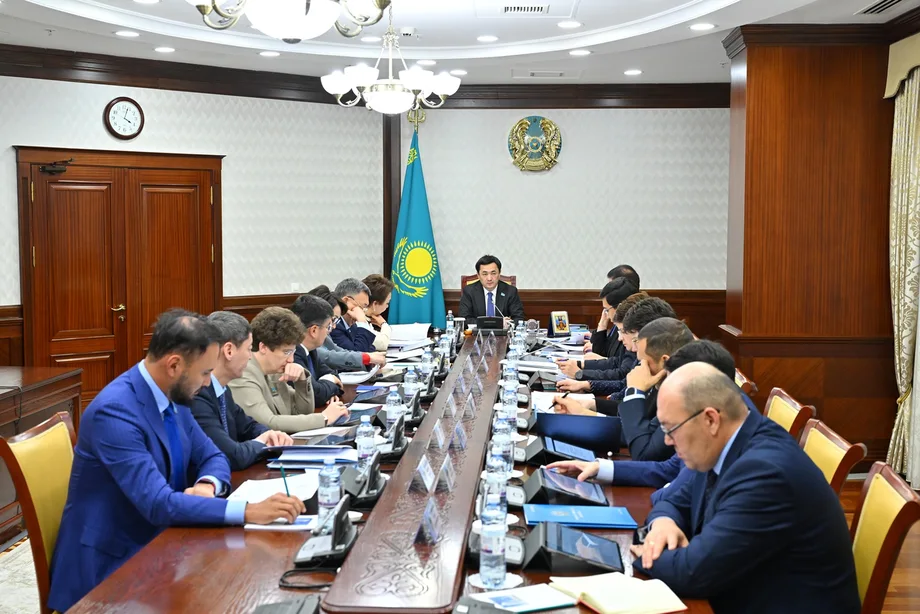
On November 13 in Astana, the Kurultai Bureau, chaired by Speaker Aibek Dadebay, approved a draft agenda that includes amendments on online platforms and mass media. Lawmakers are also due to consider related changes to the Code of Administrative Offences, which sets out responsibility for violations outside the criminal justice system.
The Ministry of Culture and Information prepared the legislation following a presidential instruction to make digital spaces safer for children and establish responsibility for platforms distributing destructive content. The ministry also describes reducing unlawful content and updating legislation for changes in digital media as central goals.
The proposed restrictions have not taken effect. For families, the main change would concern whether children can create social media accounts before their 16th birthday. For businesses and content creators, the package reaches further, introducing identification, registration and disclosure obligations.
The Bureau meeting also advanced an agenda covering the national budget for 2027 to 2029, criminal justice cooperation with Singapore and a digital economy agreement among members of the Organization of Turkic States. Those measures are separate from the proposed age restriction, although they will share parliamentary attention.
What would change for children and families?
Children under 16 would be prevented from registering new accounts on platforms classified as social networks. The proposal focuses on registration, rather than a general prohibition on visiting social media websites or viewing publicly accessible material without signing in.
Messaging services would be excluded. The Culture and Information Ministry explains that services such as WhatsApp and Telegram are used primarily for personal communication and help children stay in contact with parents, legal representatives and educational institutions.
For a family, that would mean different rules for opening a social network account and registering for a messaging service. The exemption preserves a route for everyday communication while the government seeks to restrict entry into social media platforms.
The ministry has not specified how existing accounts belonging to children under 16 would be handled, how age would be verified, what personal information would be collected or how that information would be protected. The precise companies covered, the conditions for registering platform representatives and the date of the forthcoming parliamentary sitting also remain unspecified.
Who would check a user's age?
Platform owners and their representatives in Kazakhstan would carry the main responsibility for complying with the proposed registration restriction. Turning an age threshold into a working rule requires a way to determine whether someone opening an account is old enough.
The ministry has not selected a verification method. Possible approaches raised in discussion include eGov, Kazakhstan's electronic government system; an individual identification number; digital documents; identification through a bank; and facial recognition technology.
Those methods would involve different practical steps for users. A document check would rely on recorded identity information, while a facial assessment would involve processing an image. The eventual choice would shape how families register, what information platforms handle and how users correct mistakes.
The Culture and Information Ministry plans to work through technical and organisational questions with the Ministry of Artificial Intelligence and Digital Development. Detailed implementation procedures are expected to be set through regulations after public discussion. Such regulations explain how a law will operate in practice, including procedures that the law itself leaves to government bodies.
How did the bill reach the Kurultai?
The government originally submitted the bill to the Mazhilis before parliamentary reform. It was subsequently transferred to the Kurultai under transitional constitutional provisions covering legislation submitted before July 1, 2026. The government therefore does not have to introduce the proposal again.
The legislative sequence includes several distinct steps:
- Before July 1, 2026: the government submitted the online platforms and mass media amendments to the Mazhilis, making them eligible for transfer to the new legislative body.
- October 14: lawmakers approved the separate national budget bill for 2027 to 2029 at its first reading.
- November 13: the Kurultai Bureau considered legislative initiatives in Astana and approved the draft agenda for a forthcoming sitting.
- December 29: the public consultation notice for the ministry's draft lists this as the deadline for comments through the Open Legal Acts portal.
The consultation notice and the parliamentary agenda describe different stages of the proposal's development. The decisive text for users and companies will be the version lawmakers adopt, together with the regulations that explain its operation.
The Bureau's approval puts the amendments into the planned parliamentary workload. Lawmakers still have to consider the legislation before its proposed obligations can become enforceable.
Platforms face obligations beyond the age ban
Online platforms would be required to register their representative offices under Kazakhstan's legal procedures. The ministry presents that requirement as a way to bring domestic and foreign digital market participants under comparable operating conditions and increase tax receipts from their activities.
The package also seeks to establish platform responsibility for distributing destructive content. Related amendments to the Code of Administrative Offences would accompany the main bill, linking the new duties to Kazakhstan's administrative enforcement framework.
Anonymous users with more than 5,000 followers would face another requirement: they would have to send information allowing the authorised government body to identify them. The threshold applies to the audience of an anonymous account. The authorised body would determine the required information and maintain a register of those users.
For a creator running a large anonymous page, the proposed rule would make identification to the regulator part of operating that account. The description of the proposal does not specify publication of the creator's identity to followers.
The amendments would also expand the authorised body's powers to set rules for monitoring platforms and restricting access to internet resources, online platforms and messaging services. The exemption for messaging registration therefore sits alongside a broader package that also addresses access restrictions.
Course creators would have to disclose qualifications
People distributing educational courses or learning materials would have to accompany that content with information about relevant education, including diploma or certificate details. The proposal would give learners a stated qualification to consider when deciding whether to trust or pay for instruction.
The obligation concerns the information attached to educational content. Its practical importance reaches beyond formal teaching institutions because learning materials are also distributed through individual social media accounts and other digital channels.
Creators promoting occult services or similar activities would face a different disclosure requirement. Their content would have to carry a notice stating that the information is for entertainment and lacks scientific or practical confirmation.
The package also addresses the use of a person's image. It proposes circumstances in which further consent would not be required when the image had already been published in an unrestricted source by the person, their legal representative or an authorised person. That provision would affect how previously public images are reused online.
Media, advertising and online cinemas are included
The proposed amendments would extend the requirement to publish free corrections of information damaging a person's honour, dignity or business reputation to online platforms. The existing provision described in the draft applies to mass media; the new wording would also cover the platform where the information appeared.
Advertising on platforms, including advertising for medicines, would have to comply with legal requirements comparable to those governing mass media. Media organisations would also be required to label official responses received from government bodies.
Online video services form another part of the package. The draft introduces definitions for audiovisual platforms, audiovisual channels and operators distributing those channels. It proposes licensing the distribution of audiovisual channels and adds a chapter addressing online cinemas.
The ministry also proposes a broadcasting deadline. Television and radio channels included in the national operator's list of freely accessible channels would have to arrange broadcasting within 30 calendar days after the list is approved. A channel failing to do so would be removed from the list.
Further provisions address court decisions involving unlawful online casinos, foreign media products and platforms carrying information contrary to Kazakhstan's laws. The draft describes mechanisms for stopping or suspending relevant activities or distribution within the country. Together, these changes make the bill a broad revision of digital media regulation, rather than legislation confined to children's accounts.
Budget amendments target wages and public services
Lawmakers are also preparing for a second reading of the national budget for 2027 to 2029, following its first reading on October 14. A second reading allows legislators to examine and vote on more detailed provisions and amendments.
During further work on the budget, deputies supported amendments to increase spending in 2027 to carry out presidential instructions. The planned priorities include raising the minimum wage, increasing pay for district doctors by up to 40%, and financing infrastructure and social projects.
The Bureau announcement gives neither a total for the additional spending nor the proposed new minimum wage. The increase of up to 40% concerns the doctors identified in the proposal, with final budget decisions dependent on parliamentary consideration.
For workers, medical staff and communities awaiting projects, those spending decisions would have a direct financial effect. The budget bill sets the resources available for the government's commitments across the three years, while the proposed amendments concentrate additional expenditure in 2027.
Singapore cooperation and regional digital trade
The planned agenda includes ratification of an agreement between Kazakhstan and Singapore on mutual legal assistance in criminal matters. Ratification is the legislative approval through which a country formally accepts an agreement's obligations.
The agreement provides routes for obtaining evidence, conducting searches, exchanging bank account information and taking measures concerning proceeds of crime. Those procedures matter when an investigation in one country requires documents, financial information or assets held in the other.
Cooperation would operate under the agreement's conditions and each country's national law. The arrangement is designed to give competent authorities a legal channel for requesting assistance across borders.
A separate agreement among members of the Organization of Turkic States concerns partnership in the digital economy. Its stated areas include electronic commerce, digital payments and cybersecurity, alongside reducing trade barriers and helping Kazakh goods reach other member markets.
For businesses, the intended changes concern selling across borders and receiving digital payments. Specific mechanisms for lowering barriers and a timetable for putting them into operation have not been announced.
Constitutional review and social legislation also advance
The Kurultai is scheduled to hear information concerning the Constitutional Court's message on the state of constitutional legality in Kazakhstan. The subject covers compliance with constitutional principles and the functioning of the legal system. The Bureau announcement does not detail the court's conclusions or the planned discussion.
The Bureau also accepted new legislation concerning mandatory social insurance and social security. Another proposal would ratify the statute of the Standards and Metrology Institute for Islamic Countries, known as SMIIC.
Those bills have been sent to the relevant committees for their conclusions. Committee consideration is a preparatory stage, during which lawmakers examine proposals before further parliamentary action.
The immediate development for families is the advance of the proposed registration limit, while platforms and creators face a much wider set of possible duties. Parliamentary consideration and the subsequent implementation rules will determine the requirements they ultimately have to follow.
Key Points
- Kazakhstan proposes barring new social media registrations by children under 16, with messaging services exempt.
- The restriction has not taken effect; age verification and treatment of existing children's accounts remain unspecified.
- Platforms would face representative registration requirements, while anonymous accounts with more than 5,000 followers would have to identify themselves to the regulator.
- Educational content would need qualification disclosures, alongside broader changes covering advertising, corrections and audiovisual services.
- The parliamentary agenda also includes the 2027 to 2029 budget, criminal justice cooperation with Singapore and a regional digital economy agreement.