A bigger repair drive, with local needs still pressing
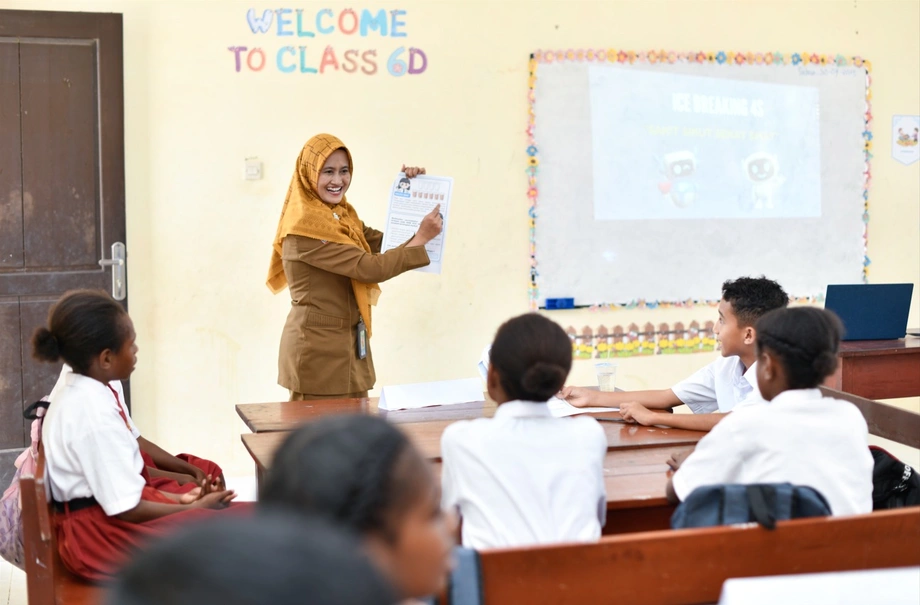
Indonesia plans to revitalize 100,000 educational institutions in 2027, Education Minister Abdul Mu'ti said in Palu, Central Sulawesi, on November 13, 2026, as the government expands a construction programme intended to make classrooms safer and more comfortable before 2029.
Contents
- A bigger repair drive, with local needs still pressing
- Which schools will receive priority?
- How much progress has been recorded?
- What the budget documents say
- Schools manage the work and local businesses supply it
- Principals face strict rules on public money
- Central Sulawesi shows the scale of unfinished repairs
- Training connects construction plans with school needs
- Buildings and digital learning follow a shared timetable
- Key Points
The announcement came as Central Sulawesi highlighted its own unfinished work: 143 senior high and vocational schools have received about Rp150 billion in renovation funding for 2026, while more than 200 of the province's roughly 430 schools at those levels still need infrastructure repairs.
Mu'ti urged regional leaders and other stakeholders to submit proposals for the next round. Requests that cannot be accommodated this year could be considered the following year, giving local governments another opportunity to secure repairs.
The national expansion follows President Prabowo Subianto's instruction to accelerate improvements to school buildings. The president has also outlined another 100,000 schools for 2028, with the goal of eliminating damaged classrooms and unsafe school buildings by 2029 and ensuring proper restrooms.
Delivering that ambition will involve more than increasing the number of construction sites. Schools will manage funds directly, local education offices will help supervise the work, and the ministry is warning recipients against unofficial fees and interference.
Which schools will receive priority?
The Ministry of Primary and Secondary Education's September coordination statement identifies three priorities for 2027: schools affected by disasters, schools in disadvantaged, frontier and outermost areas, and schools with severe damage.
Indonesia commonly groups those geographically and economically difficult areas under the abbreviation 3T. The programme includes remote islands such as Miangas, and Prabowo has said a dedicated task force was established to support development in remote island communities.
For families, those priorities direct assistance toward places where school buildings most urgently need attention or where access to construction support is difficult. The planned improvements cover suitable learning spaces and sanitation, rather than classroom appearance alone.
The ministry's September statement expects the 2027 expansion to bring the cumulative number of institutions receiving revitalization close to 200,000. Its policy basis is Presidential Instruction No. 7 of 2025, which makes school revitalization and faster learning digitalization presidential priorities.
How much progress has been recorded?
The ministry says 16,167 educational institutions received revitalization in 2025, supported by Rp16.9 trillion and benefiting 4.23 million students. That provides the completed annual baseline against which the much larger plans for 2026 and 2027 can be measured.
Yudhistira Nugraha, head of the ministry's Bureau of Communications and Public Relations, said on November 11 that the programme had reached 55,451 schools across two years. His breakdown comprised the 16,167 institutions in 2025 and another 39,284 covered by October 20, 2026. He put construction completion for the 2025 programme at 99.96 percent.
Mu'ti subsequently described the 2026 programme as progressing smoothly and expected it to reach its expanded annual target. At his Palu visit, he gave that target as 80,744 institutions, up by 9,000 from 71,744. An earlier stated figure was 80,774, increased from 71,774; the stated expansion was the same 9,000 institutions.
Using the 80,744 target and the ministry's 16,167 figure for 2025 gives a combined total of 96,911, explaining the government's description of roughly 97,000 schools across the two years. Adding the planned 100,000 in 2027 would bring that total to 196,911.
The proposed 2027 programme is about 24 percent larger than the 80,744 target for 2026. Reaching it would require schools and regional authorities to prepare and supervise substantially more projects in a single year.
What the budget documents say
The ministry's 2027 budget statement, published on August 31 as press release No. 770/sipers/A6/VIII/2026, sets out a ministry budget ceiling of Rp61.10 trillion. That is Rp2.86 trillion above the earlier indicative ceiling of Rp58.24 trillion.
Within that ceiling, Rp9.28 trillion is allocated to educational institution revitalization. The ministry says Rp55.5 trillion of its total budget is directed toward national priority programmes, including building improvements, support for students and teachers, and digital learning.
Mu'ti said his ministry had sought more money from the Finance Ministry to support the 2027 programme. Speaking after the president's presentation of the draft state budget and financial note, the education minister described that request directly:
"We have requested additional funds from the Finance Ministry for 2027," Mu'ti said.
The final funding package for all 100,000 institutions, including any additional allocation, has not been set out in the announcements. The August ceiling and the subsequent request for more funding are therefore central to understanding how the expansion is being prepared.
Schools manage the work and local businesses supply it
Indonesia is using a system called swakelola, meaning that educational institutions manage implementation themselves. Funds go directly to schools, giving principals responsibility for organizing work according to agreed plans and the needs of their buildings.
Mu'ti argues that this approach can stretch budgets, speed up construction and improve the fit between a project and a school's needs. The ministry attributes the expansion of the 2026 target to savings through this method alongside additional funding.
Nearby businesses can benefit when schools buy building materials and supplies locally. Local workers can also find employment on the projects, allowing part of the education budget to circulate through surrounding communities.
Yudhistira said the programme had involved more than 58,000 local micro, small and medium enterprises and employed about 239,000 workers. The ministry's broader estimate is that revitalization through swakelola could create work for more than one million people as the programme expands.
Those figures describe different stages of the programme: the 239,000 figure records employment reported by the ministry, while the figure above one million is an expectation. The practical benefit for a community depends on how much labour and how many supplies its school purchases nearby.
Principals face strict rules on public money
The ministry's November implementation guidance places school responsibility alongside a warning about misuse. At a planning workshop in Lampung on November 11, Mu'ti instructed recipients to follow their signed cooperation agreements and approved planning documents.
Those agreements, known as PKS, set the terms for carrying out the funded work. Principals must match construction and spending to the plans they have accepted, while local education offices are expected to help monitor both financial records and physical progress.
Mu'ti warned schools about people claiming to represent the central government who demand money or try to influence construction decisions. He said principals should not fear threats when they are following the rules, while suspected misuse would be referred to law enforcement.
Maulani Mega Hapsari, the ministry's director of junior secondary schools, said assistance is transferred in full, without deductions. She asked recipients to report anyone claiming to act for central authorities who requests a share of the grant.
The supervision structure gives schools control over implementation while retaining checks outside the school. Central authorities provide assistance, principals manage projects, and regional education offices support planning and monitor spending and construction.
Central Sulawesi shows the scale of unfinished repairs
Governor Anwar Hafid said Central Sulawesi's 143 funded projects cover senior high schools and vocational schools, known locally as SMA and SMK. The roughly Rp150 billion allocation comes from the 2026 state budget, with completion targeted for December 2026.
Mu'ti inaugurated eight revitalized educational institutions at an event at SMA Negeri 6 Palu on November 13. The institutions are located in Palu and Sigi and include senior high, vocational and special schools.
Anwar's estimate that more than 200 of about 430 SMA and SMK institutions still need repairs means that more than 46 percent of that provincial school group has outstanding infrastructure needs. He requested continued central government support for the next budget year.
Eligibility also involves preparation beyond identifying damage. Anwar said recipient schools must have lawful land documentation, including a land certificate. The work can cover new infrastructure, rehabilitation, renovation, structural strengthening and improvements to the school environment, with assistance addressing at least moderate damage.
For local authorities preparing proposals, that makes accurate building assessments and land records part of the route to securing funds. A school may need substantial repairs, but its application also has to meet the programme's administrative requirements.
Training connects construction plans with school needs
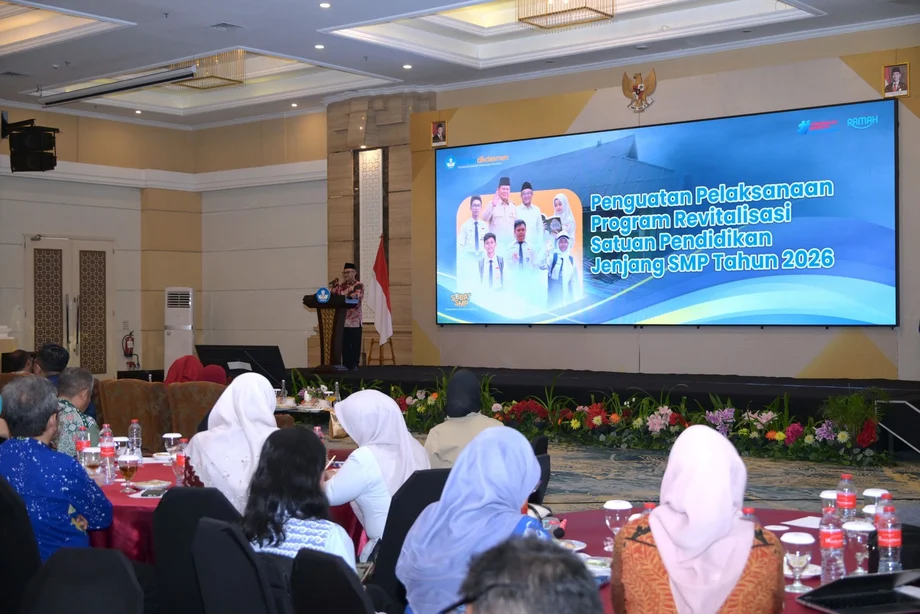
The ministry is holding technical workshops to help schools complete planning documents and funding agreements. Maulani said the fifth junior secondary workshop ran for four days and involved 813 institutions and 2,049 participants, including principals, planners and supervisors.
The event operated through eight coordination areas. Of the participating institutions, 130 from Lampung and South Sumatra attended in person, with 390 participants, while 683 institutions joined remotely. The sessions covered coordination areas including Padang, Makassar, Kupang, Mataram, Pontianak, Surabaya and Pekanbaru.
A separate senior high school workshop on November 10 to 13 brought together 766 principals and planning consultants representing 383 schools in 25 provinces. Tatang Muttaqin, director general of secondary and special education, said assistance should reach the right schools, meet quality requirements, finish on time and remain transparent.
Tatang cited the 2026 Basic Education Data system, known as Dapodik, which recorded 9,990 damaged senior high schools. The senior high school directorate targeted repairs at 5,403 of them, or 54.08 percent.
His breakdown included 2,240 schools in 2025, 1,477 in 2026, and another 517 and 1,169 through two additional budget phases. The figures show how the national expansion is assembled from different school levels and funding rounds.
Buildings and digital learning follow a shared timetable
School construction is advancing alongside digital learning investment. The ministry says it distributed 288,000 interactive flat panels in 2025, with one supplied to each recipient school, and planned to increase the number in 2026. These large touchscreens function as digital whiteboards for classroom teaching.
The August budget statement allocates Rp5.83 trillion to digital learning in 2027. Deivy Regar, head of the education office in Keerom, Papua, said teachers also need guidance and training to use the technology effectively, especially in 3T areas facing practical limitations.
The government has also been preparing an academic paper and draft ministerial regulation to restore senior high school subject streaming and specialization from the 2027/2028 academic year. That work concerns how students organize their studies, while the renovation programme concerns the spaces and facilities in which they learn.
The main dates and milestones are:
- 2025: The ministry records 16,167 institutions revitalized, benefiting 4.23 million students.
- September 4, 2026: Central and regional authorities sign the 2026 revitalization commitment and handover records for 2025 digital learning assistance.
- October 20, 2026: Recorded programme coverage for the year reaches 39,284 schools.
- November 13, 2026: Mu'ti reiterates the 100,000 target in Palu and inaugurates eight revitalized institutions.
- December 2026: Central Sulawesi targets completion of its 143 funded projects.
- 2027 and 2028: The president's expansion plan calls for 100,000 schools in each year, working toward safe school facilities by 2029.
Key Points
- Indonesia plans to revitalize 100,000 educational institutions in 2027, prioritizing severe damage, disaster impacts and 3T areas.
- The ministry records 16,167 institutions revitalized in 2025 and gives an expanded 2026 target of 80,744.
- The announced 2027 ministry budget ceiling includes Rp9.28 trillion for revitalization, with additional funding requested.
- Schools manage funds directly and must follow approved plans, with regional authorities supporting supervision.
- Central Sulawesi has 143 funded projects worth about Rp150 billion, while more than 200 senior high and vocational schools still need repairs.
- The wider goal is to eliminate unsafe school buildings and damaged classrooms by 2029.