A national English requirement meets a major teacher shortage
Indonesia will make English compulsory for pupils in grades 3 to 6 from the 2027/2028 academic year, with an initial rollout targeting about 58,000 primary schools considered ready. The preparation challenge is substantial: more than 90,000 of roughly 150,000 elementary schools lack teachers with an English education background, according to Nunuk Suryani, the ministry's director general responsible for teachers and education personnel.
Contents
- A national English requirement meets a major teacher shortage
- Which pupils and schools are covered?
- How the policy reached this stage
- How large is the staffing challenge?
- What the training numbers mean
- What teachers will learn in ten days
- What will English lessons look like?
- How will progress be assessed?
- Why curriculum and access still matter
- Where Indonesian and regional languages fit
- Key Points
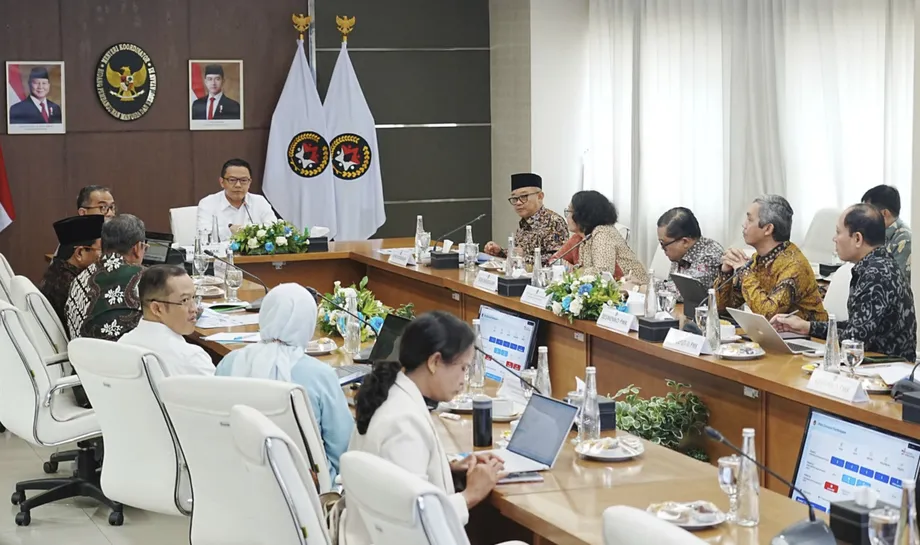
The Ministry of Primary and Secondary Education has set out a training programme involving 58,482 classroom teachers, one from each participating school, across 19 provinces. Working with 101 public and private universities, the government intends to prepare existing teachers rather than recruit additional staff for the introduction of English.
Deputy Education Minister Atip Latipulhayat says success should be visible in ordinary classroom life: children asking questions, listening to others and using simple English with confidence. End of semester examination marks will be only part of the picture.
The policy therefore brings together two changes. English will become a required subject for more children, while teachers will be encouraged to place communication ahead of perfect grammar. For schools that have never taught the language, both the subject and the approach will require preparation.
Which pupils and schools are covered?
The ministry's October 2025 announcement states that the requirement covers elementary schools, Islamic primary schools known as Madrasah Ibtidaiyah, and equivalent institutions throughout Indonesia. Education Minister Abdul Mu'ti announced the policy at the 71st TEFLIN conference on teaching English as a foreign language at Universitas Brawijaya in Malang.
The national requirement applies to grades 3 through 6, while the practical preparation described by officials begins with grade 3 teachers and schools considered ready. Nunuk has described implementation as gradual, starting in the 2027/2028 academic year.
The distinction matters for families: a national starting year and a phased rollout operate together. Officials have named the academic year and the initial group of schools, but have not given a detailed schedule showing when every remaining school will be ready or how all four grades will be covered during the transition.
How the policy reached this stage
Toni Toharudin, head of the ministry's Standards, Curriculum and Educational Assessment Agency, says the transition was already included in Article 33 of Ministerial Regulation Number 12 of 2024, covering curricula from early childhood through secondary education. Ministerial Regulation Number 13 of 2025 continued that process by amending the earlier regulation.
The sequence connects the legal requirement with several years of teacher preparation:
- 2024: Article 33 of Ministerial Regulation Number 12 sets out the curriculum transition.
- 2025: Regulation Number 13 follows; the ministry verifies 90,447 schools for training interventions and prepares 1,057 regional facilitators.
- October 2025: The ministry publicly confirms the 2027/2028 starting year.
- 2026: Teacher preparation expands through universities, organised training and independent study on Ruang GTK.
- 2027/2028: Compulsory English is scheduled to begin, with implementation initially targeting about 58,000 ready schools.
- 2025–2029: The teacher competency development roadmap provides the wider preparation framework.
The regional facilitators are intended to train and assist teachers, help integrate the online learning system and support the development of introductory language training modules. Their role extends preparation beyond a single national training event.
How large is the staffing challenge?
Nunuk's figures put the shortage of teachers with an English education background at about 60 percent of the country's roughly 150,000 elementary schools. The ministry's verification of 90,447 target schools gives a more precise count for training interventions within that broad need.
The initial rollout of about 58,000 schools represents roughly 39 percent of the 150,000 elementary schools cited by officials. This comparison shows how much preparation remains beyond the first group. It also explains why the government is using a roadmap extending to 2029 rather than relying entirely on training immediately before the new academic year.
Atip has described a need for about 150,000 teachers able to teach English, with at least one in every elementary school. District education offices are helping map local needs. Some descriptions of that goal refer to an English specialist in each school, while Abdul Mu'ti's staffing plan centres on giving existing classroom teachers the necessary skills.
For participating schools, the immediate responsibility will therefore fall largely on teachers who already teach children across several subjects. Their preparation must cover both English and the ability to introduce it in ways suitable for young learners.
What the training numbers mean
The ministry's November 2026 statement, issued around the Cambridge English for Indonesia Summit 2026, says more than 20,000 teachers have been involved in the Primary School Teacher Competency Improvement Programme for Teaching English, known as PKGSD-MBI. Its activities include organised training, independent learning through Ruang GTK and cooperation with 101 universities.
Officials have also outlined a training plan for roughly 60,000 teachers, with a specific participating group of 58,482. Around 15,000 elementary teachers have accessed independent English teaching training through Ruang GTK. The earlier roadmap listed targets of 10,000 teachers in 2026 and 30,000 in each of 2027 and 2028.
Those figures describe participation, platform access and planned training at different stages. The ministry has not published a single reconciled total of unique teachers who have completed every component, or an explanation of how the expanded group fits the earlier annual targets.
Abdul Mu'ti has said funding for the expanded training came partly from money redirected within teacher development programmes. A degree scholarship initiative offered places to 150,000 teachers without a qualifying diploma or bachelor's degree, but about 50,000 enrolled, leaving funding available for English teaching preparation.
What teachers will learn in ten days
The programme for 58,482 teachers is organised into 3,002 classes involving universities with English education study programmes. It reaches 227 districts and cities and 2,717 subdistricts across 19 provinces.
Each teacher is scheduled to receive 80 lesson periods over ten days: 40 in person and 40 through independent online learning on Ruang GTK. The sessions cover subject knowledge, lesson preparation, teaching practice, simulations and strategies suited to primary pupils.
Nunuk describes an in-on-in model that combines initial learning, classroom application and reflection. In simple terms, teachers study an approach, try it with their own pupils and then consider what worked and what needs adjusting. The programme includes practical experience so that training connects with everyday teaching.
University instructors will travel to locations near participating schools rather than require teachers to attend distant campuses. Nunuk says schedules are intended to allow teachers to teach their early lessons before joining training, keeping them available to their pupils.
Abdul Mu'ti says the ten days are intended to develop the teaching skills needed to introduce English, rather than turn classroom teachers into language experts. Further competency development is planned after a year of implementation, including training within schools and other forms of support.
What will English lessons look like?
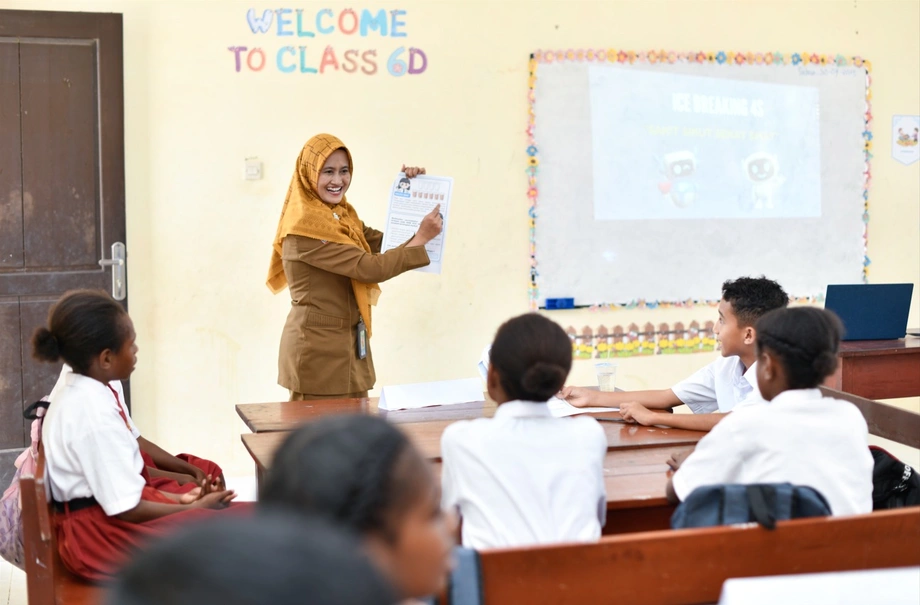
Grade 3 lessons will focus especially on listening and speaking, using songs, games and interactive activities. Abdul Mu'ti has also suggested films and other teaching media that can make learning enjoyable and encourage children to participate.
Atip says pupils should use English to ask questions, explain ideas, listen to classmates and cooperate. Activities close to children's daily lives are intended to help them practise language while developing confidence and respect for others.
Abdul Mu'ti has urged teachers to encourage writing and speaking without placing excessive pressure on grammatical accuracy. Children may make mistakes or mix Indonesian and English as they learn, he says, provided their meaning can be understood.
For a young pupil, the practical goal is to become willing to communicate. Atip has illustrated that ambition by describing a child in Papua or a village in West Java being able to say several sentences in English without fear. The intended change is something a child can do, rather than simply a new subject appearing on a timetable.
How will progress be assessed?
Atip told the Cambridge summit that the ministry would look at classroom development alongside examination results. Richer exchanges between teachers and pupils, and more children confidently using simple English in familiar situations, are among the signs of progress he identified.
Francesca Woodward, global managing director of Cambridge University Press and Assessment, also called for support for teachers and broader learning opportunities. She said assessment should help identify pupils' needs, track their development and guide the support they receive.
Assessment in this approach has a continuing classroom purpose. A teacher needs to know whether children understand spoken language, can respond and are ready for the next activity. That information can help shape lessons while learning is taking place, alongside the marks recorded at the end of a term.
British Ambassador to Indonesia Dominic Jermey linked English proficiency with confidence, communication, collaboration, critical thinking and adaptability. Speaking at the summit, he said education investment was important to Indonesia's Golden Indonesia 2045 vision and to helping young people use their knowledge to innovate and contribute.
Why curriculum and access still matter
Dr. Adi Sutrisno, head of the English Literature Study Programme at Universitas Gadjah Mada, supports the policy while identifying teacher readiness, curriculum alignment and unequal access to facilities as central challenges. In the university's assessment of school readiness, he called for preparation across the education system.
"The most crucial aspect now is the core preparation about how ready the curriculum is, how teachers are being trained, and how stakeholders in this field prepare themselves to implement this policy effectively," he concluded.
Sutrisno connects primary English with Outcome-Based Education, an approach that organises education around what learners should be able to do. He argues that the skills expected later in education need a stronger foundation during primary school.
He also cites synaptogenesis, the formation of connections between brain cells, and the development of memory and other thinking skills as reasons to support language learning during childhood. His practical concerns remain focused on schools: teachers need suitable methods, aligned curricula and access to educational facilities.
Atip has called for particular attention to schools that have never offered English. Their teachers and pupils will be starting from a different position from schools with established lessons, making continuing support important as compulsory teaching begins.
Where Indonesian and regional languages fit
The government says English teaching will follow Trigatra Bangun Bahasa, a language policy principle with three commitments: prioritise Indonesian, preserve regional languages and master foreign languages. Atip has said regional languages should continue to be respected and maintained, especially during the early years of education.
English is being added as another means of communication within that framework. Indonesian retains its place as the national language of unity, while regional languages remain part of children's cultural lives and education.
Teachers will carry much of the responsibility for putting the policy into practice. Abdul Mu'ti has said technology can help learning while the teacher remains central. The next scheduled milestone is the 2027/2028 academic year, when the initial rollout will bring the training programme into classrooms and give pupils their first experience of the new requirement.
Key Points
- English will become compulsory for grades 3 to 6 from the 2027/2028 academic year, with a gradual rollout initially targeting about 58,000 ready schools.
- The national policy covers elementary schools, Madrasah Ibtidaiyah and equivalent institutions.
- More than 90,000 of roughly 150,000 elementary schools lack teachers with an English education background, according to Nunuk Suryani.
- A training programme involving 101 universities is planned for 58,482 existing classroom teachers across 19 provinces.
- Grade 3 lessons will prioritise listening, speaking and confidence through activities including songs and games.
- Progress will be considered through classroom interaction and children's use of English alongside examination results.
- The language framework retains priority for Indonesian and preservation of regional languages.