
Jakarta Seeks a Bigger Share of Mineral Revenue
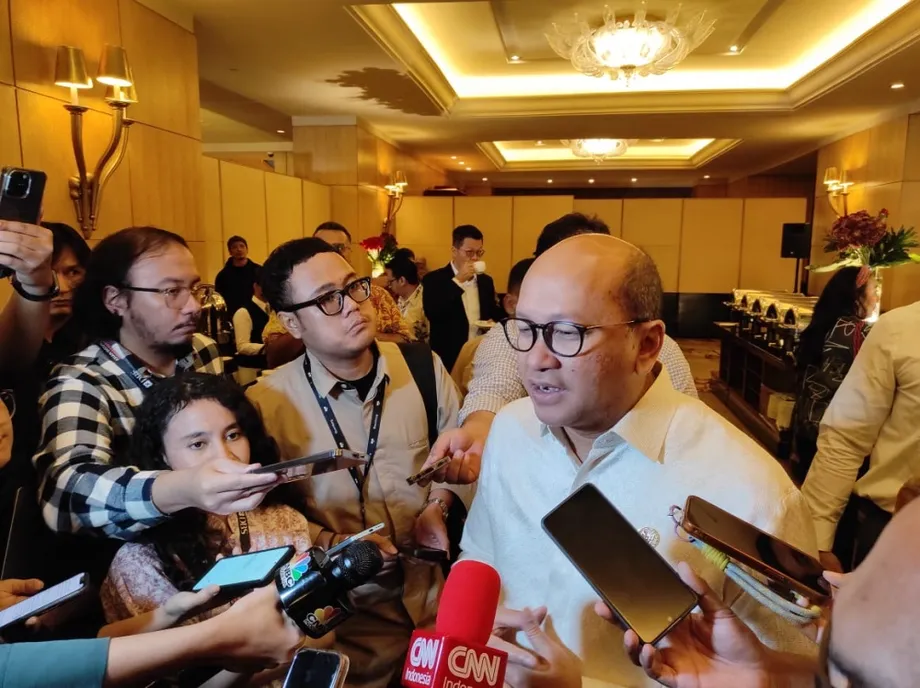
Indonesia plans to impose export duties and a windfall tax on coal and nickel to help pay for rising fuel and liquefied petroleum gas subsidies. Finance Minister Purbaya Yudhi Sadewa announced the proposal at a media briefing in Jakarta, presenting it as a response to pressure on the national budget and revenue lost through undervalued mineral exports.
Contents
- Jakarta Seeks a Bigger Share of Mineral Revenue
- Two Taxes With Different Jobs
- Why Zero Duties Have Become an Enforcement Issue
- Presidential Approval Has Not Settled the Details
- Commodity Markets Respond to Higher Costs
- Miners Face a New Charge After a Difficult Year
- Domestic Buyers Move to the Front of the Queue
- Production Quotas Add Another Layer of Control
- Nickel Processing Remains Part of the Plan
- Bali Financial Proposal Offers a Different Incentive
- Key Points
As of May 29, 2026, the policy has presidential backing, but its rates and technical arrangements remain under discussion. An initial target of April 1, 2026, was postponed. The Finance Ministry has projected that the coal export levy alone could bring in an additional Rp25 trillion, roughly $1.58 billion.
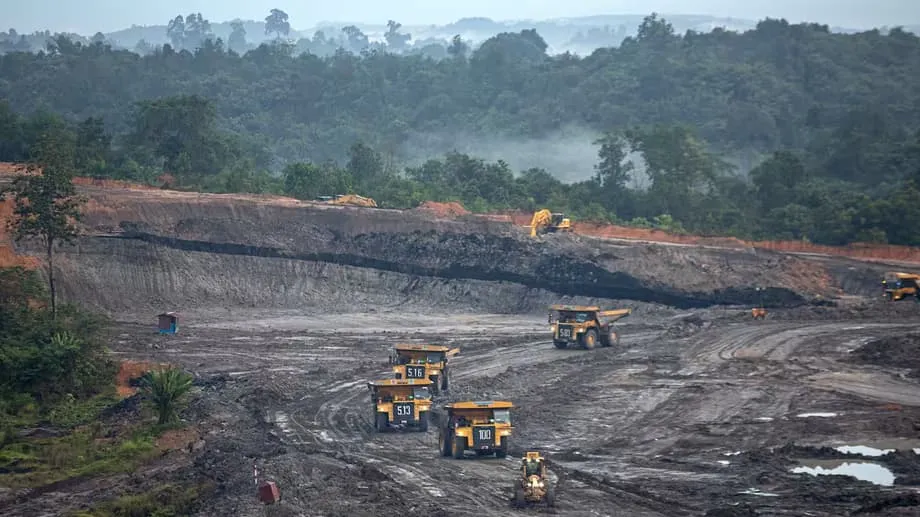
Indonesia is the world's largest exporter of thermal coal, the coal used to generate electricity, and the dominant supplier of nickel. Its decisions therefore matter to overseas power producers, stainless steel manufacturers and companies making batteries for electric vehicles, as well as to Indonesian miners and taxpayers.
The World Bank forecasts a 16 percent rise in commodity prices this year, with coal projected to increase by 20 percent and nickel by 12 percent. Escalating tensions in the Middle East have unsettled energy markets and pushed coal prices higher, giving producers larger margins while increasing the government's subsidy burden.
Jakarta wants to capture part of those gains while strengthening control over shipments leaving the country. The proposal combines an immediate budget objective with changes to export oversight, production quotas and the priority given to domestic buyers. It also marks a substantial shift from the limited intervention that has shaped Indonesian commodity export regulation.
Purbaya said the additional revenue would be sufficient to cover the growing subsidy gap. He described coordination with the Ministry of Energy and Mineral Resources, commonly known as ESDM, as still ongoing.
Oh yes, there will be export duties and a windfall tax, but this is still being coordinated with ESDM. As for me, I just receive the revenue,
Two Taxes With Different Jobs
An export duty is a charge on goods sold abroad. A windfall tax targets extraordinary profits arising from circumstances outside a company's control, such as war, supply disruptions or geopolitical crises. Indonesia's proposal uses both to redirect a share of commodity earnings into the state budget.
Higher coal prices create the opportunity behind the windfall proposal. Mining companies can earn more from their output when international prices climb, while the government faces higher costs for keeping subsidized fuel and liquefied petroleum gas affordable. Liquefied petroleum gas, or LPG, is the fuel covered by the latter subsidy.
Purbaya's plan would connect those two pressures: collect more from coal and nickel producers and use the revenue to help meet public spending needs. His assurance that the receipts could cover the subsidy gap is central to the government's case for the taxes.
The export duty has a second purpose beyond raising money. Purbaya argues that a duty would give customs officers the authority they need to inspect mineral shipments before departure, helping the government collect revenue that is currently lost through understated export values or smuggling.
Why Zero Duties Have Become an Enforcement Issue
Coal and nickel currently face no export duties. Purbaya, who also serves as State Treasurer, says that arrangement leaves the Directorate General of Customs and Excise without the legal standing to inspect the goods before shipment. Mineral cargo can consequently leave Indonesian ports with limited official scrutiny.
Under invoicing means declaring an export price lower than the price actually paid. The government's concern is that artificially low prices on customs documents reduce the revenue associated with Indonesia's mineral trade. Officials describe the resulting losses as potentially running into billions.
Purbaya explained the connection he sees between the zero duty regime and the scale of undervalued declarations.
Because the tax is zero, there are no export duties, Customs cannot inspect the goods before shipment. So under invoicing is very significant there.
The proposed duty would allow customs officers to examine cargo before it leaves, compare declared values with spot market benchmarks and stop suspicious shipments. Spot prices are prices for commodities traded for immediate delivery, providing a reference against which an export declaration can be checked.
Purbaya said he had specifically requested the duty to strengthen those checks.
I requested the introduction of export duties so that Customs can inspect goods before departure,
He also described the intended result of inspecting shipments earlier.
That way, we can control leakages from under invoicing or smuggling.
Presidential Approval Has Not Settled the Details
President Prabowo Subianto has approved the broad contours of the tax plan, giving it political support at the highest level. Finance Ministry officials have suggested a progressive coal export duty, with possible rates of 5 percent, 8 percent and 11 percent depending on market conditions and turbulence.
A progressive structure would vary the charge rather than apply one rate in every market situation. Officials still need to settle the calculation method and the price thresholds that would determine which rate applies.
The government initially aimed to introduce the policy on April 1, 2026. Energy and Mineral Resources Minister Bahlil Lahadalia confirmed in late March that the deadline would be missed because the technical work required more time.
Bahlil described that work as a joint effort with the Finance Ministry.
We are still refining the technical aspects with the Finance Ministry,
He then confirmed the delay.
Therefore, the tax will not be implemented by the previously proposed April 1 deadline.
Officials also need to determine how the levies will apply to processed nickel products, including nickel pig iron, ferronickel, nickel matte and mixed hydroxide precipitate. These are different forms of nickel output within the processing industry, making the coverage of the proposed taxes important to companies beyond the mines themselves.
No replacement implementation date or final tax rates had been given by May 29. Purbaya has nevertheless indicated that persistently high global prices could allow the government to accelerate the timetable if budget pressures grow.
The main steps described by officials span several dates:
- In the middle of March 2026, Prabowo instructed the cabinet to prioritize domestic coal consumption before exports.
- By the middle of March, coal production permits covering 390 million tons had been issued.
- In late March, Bahlil confirmed that technical discussions would prevent implementation on April 1.
- April 1, 2026, passed as the original target date without the proposed tax taking effect.
Commodity Markets Respond to Higher Costs
Nickel futures on the London Metal Exchange rose as much as 2.7 percent following the announcement, before settling 2.1 percent higher at $17,310 per ton. The response reflected investors' expectations that higher costs in Indonesia could tighten supply margins.
Battery manufacturers and stainless steel producers depend on Indonesian nickel feedstock. A tax affecting that supply would change costs within production chains that extend well beyond Indonesia, explaining why an announcement in Jakarta prompted a reaction in international trading.
ICE Newcastle coal contracts have been hovering near $136.50 per ton. Those prices have increased the urgency of the government's revenue plans while expanding the margins available to mining companies.
Purbaya acknowledged that producers would oppose the additional charge. He said elevated coal prices give the administration room to act sooner if its need for revenue becomes more pressing.
They certainly will not agree,
Miners Face a New Charge After a Difficult Year
Indonesia's coal industry entered the tax debate after a weaker 2025. National production fell by 5.5 percent, while the value of coal exports dropped nearly 20 percent to $24.48 billion. The decline in export earnings was therefore much steeper than the decline in output.
The Finance Ministry's forecast of Rp25 trillion, or about $1.58 billion, in additional coal levy revenue represents an attempt to recover income through taxation rather than higher export volume. For the government, stronger current prices offer a way to raise receipts despite the previous year's fall in earnings.
Mining executives argue that another fiscal charge could discourage investment and reduce production when overseas buyers are already facing tighter supply. Their concern is that higher prices and higher taxes will affect companies differently depending on their costs and output.
Bahlil has suggested that the government could allow a measured relaxation of restrictive production quotas if global prices remain stable. That would give producers an opportunity to sell more output while adjusting to the proposed tax regime.
Jakarta is therefore considering taxes and production permissions together. The level of the duty would affect how much companies retain from each export, while the quota would determine how much they are allowed to produce.
Domestic Buyers Move to the Front of the Queue
Prabowo told a cabinet meeting in the middle of March that coal production must be prioritized for domestic consumption before export permits are granted. He said the same principle applies to crude palm oil, placing national needs ahead of access to overseas markets.
The president described businesses as having permission to operate while the nation's ownership of its resources remained central.
They are allowed to do business, but ownership belongs to the Indonesian nation,
Indonesia already uses the Domestic Market Obligation, or DMO, to require coal producers to sell a portion of their output locally. Buyers include Perusahaan Listrik Negara, the state electricity utility commonly known as PLN.
Those domestic sales take place at prices capped by the government, below international benchmarks. The arrangement gives local power plants access to coal at controlled prices, while limiting the amount that producers can sell at more attractive overseas prices.
Prabowo's instruction strengthens the priority given to this domestic supply requirement. Under stricter enforcement, miners that fail to meet their local commitments would have their export permits blocked entirely.
The policy places two demands on producers at once: reserve coal for Indonesian users and contribute more revenue from exports. Both fit the administration's position that extraction should first serve national interests.
Production Quotas Add Another Layer of Control
Bahlil is using the Work Plan and Budget system, known as RKAB, to manage production permissions. RKAB is the annual operating approval that determines a company's production quota, making it a central tool for controlling output and enforcing supply commitments.
The government has reduced its coal production target for 2026 to 600 million metric tons, from 790 million tons in 2025. That is a reduction of 190 million tons, or about 24 percent, calculated from the two annual figures.
By the middle of March, permits had been issued for only 390 million tons. That amount represents 65 percent of the 600 million ton target. The pace of approvals raised the possibility that production could fall short of the full target.
Nickel permissions have also been tightened. Mining permits covering 150 million tons had been issued against an eventual cap of 250 million to 270 million tons. The approved amount was therefore below the intended ceiling while the government continued to manage the approval process.
RKAB restrictions, domestic supply obligations and export taxes affect different parts of the same business. A mining company needs permission to produce, must satisfy local commitments where required and would then face the proposed charge on eligible exports.
Bahlil's suggestion that quotas could be relaxed in stable global price conditions offers a possible adjustment within that framework. More permitted output could soften the effect of new taxes, while the government would retain control over production and domestic supply.
Nickel Processing Remains Part of the Plan
Jakarta says the tax proposal will not derail its strategy of developing processing industries at home. Indonesia has spent years building a nickel processing ecosystem intended to capture more value than ore extraction alone, with particular attention to materials suitable for electric vehicle batteries.
Downstream industrialization means carrying out more stages of production inside Indonesia instead of relying chiefly on the extraction and sale of raw materials. The proposed treatment of nickel pig iron, ferronickel, nickel matte and mixed hydroxide precipitate matters because the tax could affect products at different stages of processing.
The government is considering incentives for manufacturers that use high levels of domestic raw materials. The aim is to keep investment in battery supply chains attractive while introducing additional charges on commodity exports.
Officials are also reviewing the nickel benchmark mineral price, known as HPM, with a view to raising it and capturing greater economic value from processed output. That review forms another part of the government's effort to retain more of the value generated by its mineral resources.
The proposed incentives and price review sit alongside the taxes, rather than replacing them. Jakarta is trying to collect more revenue now while preserving investment in industries intended to generate more value inside the country over time.
Bali Financial Proposal Offers a Different Incentive
Purbaya has also discussed establishing an International Financial Centre in Bali as a special financial zone. Global investors placing assets there could receive tax incentives, potentially including a zero percent rate, provided the funds strengthen Indonesia's foreign exchange reserves.
The finance minister indicated that he could support such a rate when requested.
If requested, I can give zero percent,
He tied that possibility to funds entering the proposed zone.
With that, zero tax is fine as long as the funds enter the financial special economic zone.
Purbaya said the resulting inflows could support the bond market by expanding foreign participation in government securities. Those securities are instruments through which the government borrows money from investors.
The Bali proposal illustrates another side of the administration's approach: higher charges on selected commodity exports, alongside incentives for investment that supports processing industries or brings financial assets into Indonesia. Both are intended to strengthen the country's finances, although they operate through different channels.
Indonesia's coal and nickel plans bring together revenue collection, customs inspections, production limits and domestic supply priorities. The immediate decision still facing officials is how to turn the approved direction into tax rules that specify rates, price thresholds, covered products and an implementation date.
Key Points
- Indonesia plans export duties and a windfall tax on coal and nickel to help cover rising fuel and LPG subsidy costs.
- The Finance Ministry projects Rp25 trillion, about $1.58 billion, in additional revenue from the coal levy alone.
- Possible coal duty rates are 5 percent, 8 percent and 11 percent, but final rates and calculation rules remain under discussion.
- Prabowo has approved the broad plan. The original April 1, 2026, start was delayed, with no replacement date given by May 29.
- Purbaya says duties would allow customs inspections before departure and help curb under invoicing and smuggling.
- The 2026 coal production target is 600 million metric tons, compared with 790 million tons in 2025.
- Domestic coal supply takes priority over exports, and producers that fail to meet local commitments face blocked export permits.
- Officials are considering incentives for manufacturers using domestic raw materials and a financial zone in Bali with possible zero percent tax rates.