
A vast coastal defense with millions of lives at stake
Indonesia is advancing an estimated $80 billion sea wall along Java's northern coast to protect a region that contributes 27.53 percent of national gross domestic product, about $368.4 billion. Government estimates put around 50 million people in affected areas, where rising seas and sinking land threaten homes, factories, farmland, ports and airports.
Contents
- A vast coastal defense with millions of lives at stake
- How the barrier would be built
- Why Pantura matters to the national economy
- Two forces are pushing water farther inland
- Why a wall also needs cleaner rivers and less pumping
- Fishing communities fear losing access and habitats
- Local flood defenses can move the damage elsewhere
- Who would pay for construction and upkeep?
- Fishing village investment is planned alongside the wall
- A long history, with planning now focused on 2027
- The regional stakes go beyond Java
- The Bottom Line
As of May 29, 2026, Coordinating Minister for Infrastructure and Regional Development Agus Harimurti Yudhoyono, widely known as AHY, says planning continues and the proposal should mature further by 2027. President Prabowo Subianto has made the project a national strategic priority and created a specialized authority to move it toward construction.
The proposed Giant Sea Wall would extend roughly 500 kilometers from Banten to Gresik in East Java, although some estimates put its eventual length beyond 700 kilometers. Its estimated cost is more than twice the projected cost of Indonesia's new capital city in eastern Borneo.
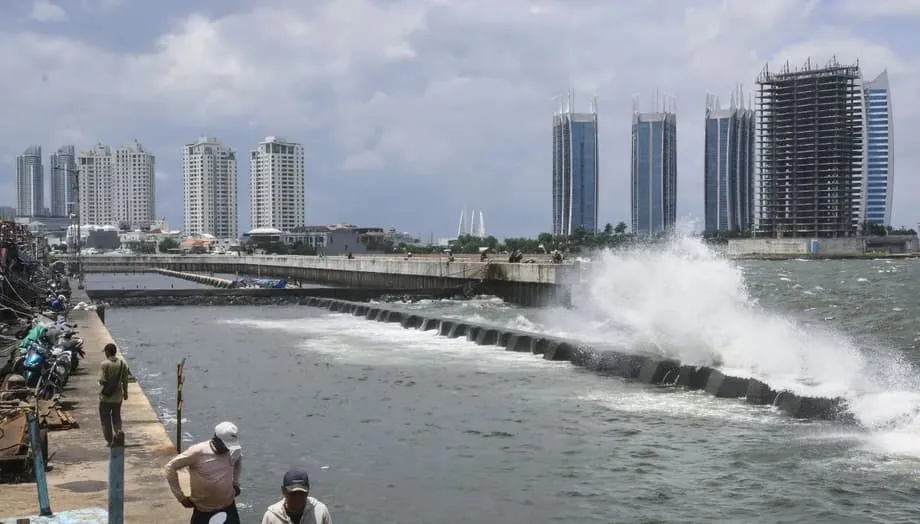
Coastal communities along Pantura, the local name for Java's northern coast, already experience recurring tidal floods. In some northern areas, officials put land subsidence at five to 20 centimeters a year. Subsidence means the ground is sinking, leaving buildings and roads lower in relation to the sea even before ocean levels rise.
Prabowo says the undertaking can no longer be delayed. He has noted that the concept appeared in national development plans during the presidency of Soeharto. Discussions have continued for more than a decade, but the current administration is bringing renewed political backing, university involvement and investment outreach to a proposal whose environmental and financial risks remain substantial.
The government's case is that delay will expose millions to worsening inundation during each monsoon season. Environmental organizations and researchers argue that the wall's success will depend on measures beyond concrete, including controlling groundwater extraction and protecting fishing communities.
How the barrier would be built
The Giant Sea Wall is planned as an integrated coastal defense system, with an offshore barrier approximately four to six kilometers from the shoreline. A large lagoon would sit behind the main wall, forming part of the protected area. Engineers and environmental observers have expressed both interest and skepticism about that design.
Authorities have divided the undertaking into 15 segments so that work can proceed in phases according to available funding and technical readiness. The initial Jakarta Bay phase alone is projected to cost between $8 billion and $10 billion.
Concrete walls and coastal embankments would be combined with natural protection, including mangrove restoration to reduce wave energy. Mangroves can soften the force of waves before they reach the shore, while the hard structures are intended to hold back seawater.
AHY says the project covers five provinces, 20 regencies and five cities. That spread requires coordination among government agencies with different responsibilities and priorities, as well as between national and local authorities across one of the world's most densely populated islands.
Prabowo has established the North Java Coast Management Authority to oversee planning, construction and financing. Its head is Deputy Minister of Maritime Affairs and Fisheries Didit Herdiawan Ashaf. The authority must bring those responsibilities together across a coastline where decisions about one stretch of water or land can affect communities elsewhere.
Why Pantura matters to the national economy
Java's northern coast contains five major industrial growth centers, approximately 70 industrial estates, 28 designated industrial zones and five special economic zones. The concentration of production helps explain why the government treats coastal protection as an economic priority as well as a public safety measure.
AHY describes the undertaking as more than a sea wall. The region's roughly $368.4 billion contribution to GDP means repeated flooding could affect factory operations, employment and supply chains across Indonesia. Industrial parks facing recurrent inundation could also lose investor confidence, with disruptions extending to regional trading partners.
Ports and airports along the coast are essential routes for trade and travel. Agricultural land faces a different threat: saltwater intrusion can leave rice fields barren. Lost farmland would weaken food security in a country where millions rely on locally grown staples and could increase food imports, putting further pressure on the national trade balance.
The government argues that the cost of doing nothing will exceed the construction bill. Its warning covers both damage to homes and the erosion of productive land and infrastructure. Protecting those assets is the central economic justification for an undertaking whose estimated price reaches $80 billion.
Two forces are pushing water farther inland
Land subsidence across northern Java is reported at between one and 20 centimeters a year, with government estimates for some northern regions ranging from five to 20 centimeters. Excessive groundwater extraction, the weight of buildings, mangrove deforestation and changes in soil moisture contribute to the sinking.
Groundwater extraction removes water from beneath the surface. As the ground loses support and settles, neighborhoods become lower relative to surrounding water. In some reported cases along Java's coast, subsidence has effectively raised local water levels by up to two meters, submerging roads and damaging foundations.
Indonesia's Meteorology, Climatology and Geophysical Agency reports that sea levels have risen by an average of almost 4.3 millimeters annually since 1992, with the rate accelerating in recent years. Government warnings about the coastal threat also use an estimated annual sea level increase of 0.8 to 1.2 centimeters.
Global warming raises sea levels partly because warmer ocean water expands. When rising water meets sinking land, the distance between the sea and the ground changes from both directions. Officials describe this as double pressure, increasing tidal flooding and erosion beyond the effect of either process alone.
Semarang, Demak and Jakarta Bay already experience dangerous high tides. Officials expect tidal floods to become more frequent and destructive through 2050. The push for construction also reflects concerns that coastal conditions are deteriorating faster than earlier models predicted.
Recent modeling indicates that offshore structures can reduce storm surge heights in particular locations, although results depend on the shape and depth of the seabed. A storm surge is a rise in seawater during a storm. The way water moves around a barrier varies with local underwater geography, making design choices important along each section of coast.
Why a wall also needs cleaner rivers and less pumping
Researchers caution that seawalls do not stop land from sinking. If groundwater extraction continues behind the barrier, the protected ground will keep becoming lower, potentially trapping water inside the lagoon and creating new drainage problems.
Groundwater regulation and urban water management reforms are therefore central to the project's operation. Academics and policy researchers have also urged integrated coastal management, wastewater upgrades and river cleanup to tackle the causes of subsidence and limit the ecological damage associated with hard barriers.
The proposed lagoon brings those issues together. Rivers would need to be cleaned so that the water behind the wall does not become a stagnant moat with low oxygen. Coastal protection would need to work alongside drainage and water management inside the protected zone.
Researchers frame the central engineering question as whether Indonesia can build a seawall that functions as intended. Their proposed approach combines enforceable groundwater rules, cleaner rivers and genuine participation by affected communities rather than treating the barrier as a complete solution by itself.
Fishing communities fear losing access and habitats
Indonesian environmental organizations warn that construction could increase sand mining, damage remaining mangroves and obstruct fishing communities' access to coastal waters. Those concerns reach beyond the footprint of the wall because fishers depend on routes to the sea and healthy habitats for their catch.
Parid Ridwanuddin, a marine researcher at environmental organization Auriga Nusantara, argues that communities do not need a giant wall or a new authority. He instead calls for a thorough review of spatial planning and policies that allow fishers to continue working without obstruction.
Susan Herawati, secretary-general of the People Coalition for Fisheries Justice, known as KIARA, criticizes the proposal as a quick fix for deeper climate problems. She also suggests that its enormous funding could become a channel for political patronage rather than genuine public protection. Explaining her objection to treating climate adaptation as a single construction task, she said:
"Climate issues should not be reduced to fake, quick fix solutions that act like a fire extinguisher, treating the problem as if it were fire: You pour water, and it is done. It does not work that way," she said.
Critics point to the Semarang-Demak toll road as a warning. They say earlier coastal works blocked fishing routes, destroyed mangroves and worsened flooding in neighboring villages. They argue that the government should address those failures before proceeding with further construction.
Cornel Gea, a public lawyer at the Semarang Legal Aid Foundation, says the new authority must prioritize consultation along the northern coast. Maintaining fishing routes and resolving potential displacement should be addressed before concrete is poured. Gea also stresses that the coast is connected by land and sea, allowing damage in one area to affect others quickly.
Local flood defenses can move the damage elsewhere
Fieldwork in Kendal, Central Java, has shown how incomplete protection can redistribute flooding. Raised roads and small flood walls sometimes direct water into neighboring homes that had previously stayed dry. Saltwater has also reached productive land that once escaped regular tides.
Those findings make the placement and operation of each segment important to surrounding communities. A defense that protects one road or neighborhood can change where water travels, leaving another area more exposed. Parallel social and environmental measures are needed to avoid protecting some residents at the expense of others.
Home elevation grants and better drainage in low lying neighborhoods could provide more immediate relief to poor households. Some families cannot afford the matching funds required by larger infrastructure programs, making the way assistance is financed important to who receives protection.
Higher Education Minister Brian Yuliarto says Prabowo has instructed universities to mobilize researchers and lecturers to support the sea wall. Their work is also meant to identify efficiency gains and complementary measures that reduce unintended harm.
Universities have already tested coastal protection strategies in Demak and Semarang. Those techniques could reduce construction costs and environmental disruption if applied correctly, giving planners practical experience to draw on as they develop the larger scheme.
Who would pay for construction and upkeep?
Jakarta is seeking a combination of national and provincial budgets, partnerships between public bodies and private companies, and direct foreign investment. Rosan Roeslani, Minister of Investment and Downstream Industry and chief executive officer of Danantara Indonesia, has coordinated discussions on investment support schemes intended to accelerate the timetable.
Prabowo pitched the sea wall to China in 2025. Indonesia has since widened its outreach to countries with substantial capital and experience managing coastal water, including the Netherlands, South Korea, Japan and the United Arab Emirates.
The Netherlands brings experience associated with its 32-kilometer Afsluitdijk dam and centuries of reclaiming land from the sea. South Korea has built the Saemangeum Seawall, one of the world's largest coastal barriers. Japan upgraded seawall infrastructure after the 2011 Tohoku earthquake and tsunami. The United Arab Emirates has been mentioned as a possible contributor through partnership arrangements.
Construction is only part of the financial commitment. A barrier of this size would require monitoring, repairs and sediment management over decades. Sediment management means dealing with material such as sand and mud that accumulates or moves around the structures and waterways.
Responsibility for maintenance remains unresolved. If foreign investors pay for construction without committing to upkeep, Indonesian taxpayers could face substantial bills long after the wall is completed. The eventual division of those costs will matter alongside the initial investment.
The Corruption Eradication Commission has pledged to monitor the undertaking. Observers question whether oversight can keep pace with a project spanning numerous jurisdictions and revenue streams. Transparency in financing and contracting will be central to managing that concern.
Fishing village investment is planned alongside the wall
The government is also advancing Kampung Nelayan Merah Putih, or Red and White Fishermen's Villages. The program aims to create integrated fishing hubs with modern ports, cold storage facilities and market kiosks.
Didit Herdiawan Ashaf, who leads the sea wall authority while serving as deputy fisheries minister, says the infrastructure and community components must proceed together rather than one after the other. Officials hope the villages will improve fishery productivity and provide stable economic anchors along the coast.
Pilot villages have been established in Gresik, Malang Regency, Tuban, Pasuruan and Sumenep in East Java. The provincial government has proposed up to 40 sites, with each village estimated to need between 20 billion and 25 billion rupiah.
The program could help gain support among residents who might otherwise resist the larger barrier. Critics regard the villages as necessary but insufficient compensation: modern ports and storage would have limited value if construction closed fishing routes or damaged the mangrove habitats on which catches depend.
The unresolved tension is between protecting major economic assets and preserving local livelihoods and ecosystems. How the government manages that tension will shape the project's lasting public acceptance.
A long history, with planning now focused on 2027
Prabowo's administration has tied its reputation to delivering a proposal that predates his presidency by decades. Creating a dedicated authority, involving universities and courting investors are intended to turn longstanding plans into an executable project.
The major dates and planning markers show how the current push connects to a much longer coastal problem:
- During the Soeharto era, the sea wall concept appeared in national development plans, according to Prabowo.
- Since 1992, Indonesia's Meteorology, Climatology and Geophysical Agency has recorded average annual sea level growth of almost 4.3 millimeters.
- After the 2011 Tohoku earthquake and tsunami, Japan upgraded seawall infrastructure, experience relevant to Indonesia's search for partners.
- In 2025, Prabowo pitched the project to China.
- As of May 29, 2026, planning continues under a dedicated authority, with AHY expecting the proposal to mature further by 2027.
- Through 2050, officials expect tidal flooding to become more frequent and destructive without intervention.
The phased design lets authorities match individual segments to funding and technical readiness. It also requires coordination across local boundaries so that construction, drainage, fishing access and environmental protection work together rather than as disconnected projects.
The regional stakes go beyond Java
Australia, Indonesia's closest neighbor and a key strategic partner, has an interest in how the project develops. The Australian Department of Foreign Affairs and Trade has historically worked with Indonesian planning agencies on water and infrastructure initiatives.
A failed or poorly managed defense could contribute to political instability, food insecurity as farmland becomes saline, and economic disruption across the region. Australia's interest includes transparent and effective management because the consequences would reach beyond Indonesia's shoreline.
A successful project could demonstrate how a densely populated developing country can adapt to climate change while protecting production and communities. Its value would depend on balancing engineering ambition with ecological preservation and fair treatment of residents.
The central choice is therefore broader than whether to build a barrier. Indonesia is trying to protect a coastal economy worth hundreds of billions of dollars while keeping the water, land and fishing systems around it functioning. Groundwater controls, maintenance funding, river cleanup and community consent will determine whether the planned defenses provide lasting protection.
Prabowo is betting that stronger government coordination can finally match the scale of the threat. The same undertaking will test whether national economic priorities can be delivered without leaving neighboring villages or coastal livelihoods more vulnerable.
The Bottom Line
- Indonesia plans a sea wall of roughly 500 kilometers, potentially more than 700 kilometers, along Java's northern coast at an estimated cost of $80 billion.
- AHY expects planning to mature further by 2027. The project has 15 segments, with the initial Jakarta Bay phase estimated at $8 billion to $10 billion.
- Government estimates place around 50 million people in affected areas. Pantura contributes 27.53 percent of national GDP, about $368.4 billion.
- Rising seas and sinking land threaten homes, industrial areas, farmland, ports and airports. Researchers call for groundwater controls, cleaner rivers and better drainage alongside coastal barriers.
- Environmental organizations warn about sand mining, mangrove damage, fishing access and displacement. Critics cite problems associated with earlier coastal works.
- Indonesia is pursuing mixed financing and potential partnerships with China, the Netherlands, South Korea, Japan and the United Arab Emirates. Maintenance responsibilities remain unresolved.
- Didit Herdiawan Ashaf heads the North Java Coast Management Authority. The government is also developing fishing villages with ports, cold storage and market facilities.