The Hidden Crisis Behind Korea’s Celebrated School Meals
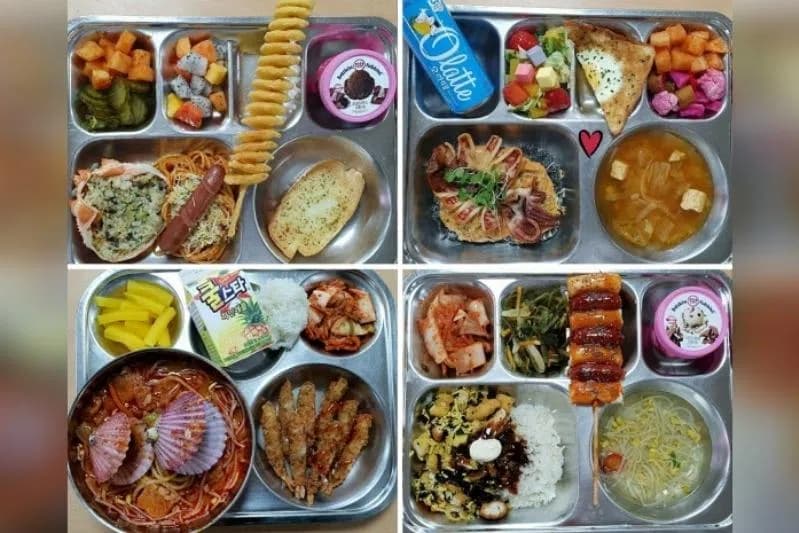
Social media images of South Korean school lunches have captivated international audiences for years. Metal trays arrive brimming with color: seasoned vegetables, steaming rice, carefully portioned proteins, and delicate side dishes arranged with precision. These photographs have become symbols of nutritional excellence, representing a universal free lunch program that ensures no student goes hungry regardless of economic background. Yet beneath this polished presentation lies an increasingly desperate reality. The workers who prepare these celebrated meals are fleeing their jobs in record numbers, driven away by wages that hover near poverty levels, physical demands that destroy bodies, and airborne toxins that have killed dozens.
The contrast could not be starker. While students photograph their lunches for global admiration, the kitchens producing these meals have become sites of occupational hazard. South Korea now faces a staffing emergency that threatens to dismantle the very system that has drawn international praise. As of March 2025, kitchen worker numbers had fallen approximately 4 percent below the national quota of 44,000 positions, a deficit that marks only the beginning of an accelerating exodus. In Seoul, the situation has reached critical levels, with application rates falling 84.5 percent short of available positions despite high unemployment in other sectors.
A Workforce in Collapse
The statistics reveal a profession in freefall. Between January and November 2024, 3,198 school kitchen workers resigned before reaching retirement age, representing 60.4 percent of all departures during that period. Many abandoned their posts within six months of starting, unable to withstand the physical and environmental pressures. Nationwide recruitment efforts in 2025 attracted 29 percent fewer applications than available openings, signaling that word has spread about the harsh realities of school cafeteria work.
The compensation structure offers little incentive to endure these hardships. Workers earn base salaries of just over 2 million won monthly, approximately 1,740 Singapore dollars or 1,400 US dollars, placing them near the economic margins of South Korean society. This financial precarity deepens during school breaks, when many workers receive no wages at all despite remaining on call or performing maintenance duties. The three month unpaid vacation period creates annual cycles of hardship that push workers toward more stable employment.
Lee Gap-suk, a Seoul based kitchen worker with seven years of experience, described the operational chaos caused by constant turnover.
Among 15 workers in our kitchen, only four have more than a year of experience, as most leave within two to three years. We serve too many students, but there is little time to build teamwork because people do not stay long.
Each worker typically bears responsibility for feeding approximately 200 students and teachers daily, managing every stage from ingredient preparation through cooking, serving, and cleanup.
Kitchens That Make Workers Sick
The physical toll extends far beyond ordinary occupational fatigue. South Korean school kitchens have become environments where daily exposure to cooking fumes creates lethal health risks. Since 2021, authorities have recognized 178 cases of lung cancer among school meal workers as occupational diseases, with incidence rates more than five times higher than those found in other professions. Fifteen workers have died from these conditions in recent years, including a woman who succumbed to lung cancer on April 18 while still pursuing legal recognition of her workplace illness.
Medical research has identified the specific hazard: prolonged exposure to aerosolized cooking emissions during high heat frying and food preparation. The World Health Organization classifies these emissions as Group 1 carcinogens capable of damaging lung tissue. Workers report kitchens where ventilation systems fail to clear smoke, leaving them breathing what one employee described as air that felt like it was killing her lungs with every shift.
Woo Si-bon, head director of the national education staff department under the Korean Confederation of Trade Unions, explained that summer conditions compound these dangers.
Workers say they continue to cook in stifling heat trapped inside aging buildings with outdated or malfunctioning ventilation. Summers bring conditions that many call unbearable. Kitchen temperatures routinely exceed 33 degrees Celsius, and workers dressed in long sleeves and rubber boots report feeling temperatures above 45 degrees.
Industrial accident cases in school cafeterias rose 17.5 percent last year to over 2,100 incidents, involving burns, musculoskeletal injuries, and other trauma. The accident rate of 3.7 percent stands more than five times above the national industrial average.
Technological Promises Meet Practical Reality
Faced with this human resources catastrophe, education authorities have pivoted toward technological solutions. Government proposals emphasize frying robots and ventilation upgrades as pathways to reducing worker burdens. However, field testing has revealed significant gaps between aspiration and implementation.
The robotic systems deployed thus far carry price tags exceeding 100 million won each while adding substantial maintenance costs to strained kitchen budgets. More critically, current automation technology can only handle ready-to-cook frozen fried products, which contradicts the fundamental philosophy of South Korea’s school lunch program.
Robots can handle ready-to-cook frozen fried products, but such processed foods are rarely used in school lunches, so workers still have to bread, coat and fry food by hand,
Lee Gap-suk noted, highlighting how automation fails to address the actual labor of preparing fresh, diverse meals.
Ventilation improvements have proceeded at a glacial pace. In 2023, the Seoul Metropolitan Office of Education announced plans to fully upgrade school kitchens by 2027. Yet as of late 2025, only about 12 percent of these improvements have been completed in the capital, while nationwide completion stands at just 41 percent. Regions including Gyeonggi Province and Incheon remain similarly behind schedule, leaving workers exposed to carcinogenic environments for years to come.
Industrial Action and Legislative Response
The crisis has catalyzed organized labor action across the nation. In late November, school meal workers joined other nonregular school staff in a phased nationwide strike that disrupted meal service at over 1,900 schools in Seoul, Incheon, Gangwon Province, North Chungcheong Province, and the Jeolla and Jeju regions. More than 11,400 workers participated in the initial days of the walkout.
The School Irregular Workers’ Solidarity Council organized the strike after ten rounds of negotiations with education authorities failed to produce acceptable terms.
Their avoidance has pushed us into this strike,
the council stated, accusing government negotiators of repeatedly dismissing demands with phrases like not acceptable and under review.
Union demands center on pay equity with national public employees, including holiday bonuses calculated at 120 percent of monthly base salary rather than the flat 50,000 won annual increase officials offered. Workers also seek elimination of the three month unpaid vacation period, during which some earn as little as 730,000 won monthly for cleaning services. Additionally, the union demands a 90,880 won monthly increase to bring base salaries above the projected minimum wage, while authorities have offered only 72,000 won.
Legislative solutions are advancing through the National Assembly. Progressive Party Representative Jeong Hye-kyung has introduced amendments to the School Meals Act that would formally define school meal workers in statute and mandate comprehensive health and safety plans every three years. The proposal would establish staffing standards through presidential decree and guarantee parents and worker representatives seats on school meal committees. Democratic Party Representative Ko Min-jung has introduced separate amendments, with both bills targeting passage through the Education Committee before year end.
Broader Context: National Labor Shortages
The school kitchen crisis reflects South Korea’s wider demographic and economic challenges. The nation currently faces over 500,000 job vacancies across key industrial sectors, driven by an aging population and rapid technological transformation. In response, the Ministry of Justice has begun easing visa restrictions to attract foreign workers, including streamlined paths for culinary trainees through the D-4 visa category and expanded E-7 skilled worker visas for manufacturing and technology sectors.
However, these immigration reforms offer limited immediate relief for school cafeterias, which require specific linguistic and cultural competencies to prepare Korean cuisine while communicating with school administrations. The fundamental challenge remains transforming domestic working conditions to retain existing staff and attract new workers to a profession long stigmatized as low skilled labor.
Expert Calls for Structural Reform
Medical and academic experts emphasize that incremental adjustments will prove insufficient. Healthcare professionals recommend increased staffing levels to lengthen intervals between frying duties, thereby reducing cumulative fume exposure while easing the physical strain of mass food preparation. They note that adequate staffing indirectly reduces accident risks by eliminating the pressure to rush food preparation before lunch service begins.
An official from the Korean Confederation of Trade Unions representing non-regular school workers suggested budget reallocation priorities.
At a time when using robots is not yet practical, there is a view from the field that it would be better to allocate budgets to ventilation improvements or hiring additional staff.
Lee Byoung-hoon, professor emeritus of sociology at Chung-Ang University, framed the crisis as a question of institutional values.
Ultimately, this is about budget priorities within education authorities. Improving conditions for school meal workers can be sufficiently funded if it takes precedence over spending on unnecessary facility upgrades and other ancillary costs.
The stakes extend beyond worker welfare to the nutritional foundation of South Korean education. Schools in affluent districts like Seoul’s Seocho have already faced parent complaints after reducing side dish varieties when just two workers became responsible for over 1,000 students. Such compromises threaten to transform the diverse, nutritionist planned meals into standardized processed food, undermining the very quality that generated international acclaim.
Key Points
- South Korea’s school lunch system faces critical staffing shortages, with worker numbers 4 percent below quota and Seoul experiencing an 84.5 percent application shortfall.
- Since 2021, 178 school kitchen workers have developed occupational lung cancer at rates five times higher than other professions, with 15 deaths confirmed.
- Workers earn approximately 2 million won monthly, receive no pay during school vacations, and each staff member serves roughly 200 students daily.
- Technological solutions including frying robots and ventilation upgrades have failed to address core issues, with only 12 percent of Seoul kitchens upgraded despite a 2027 completion target.
- Over 11,400 workers participated in nationwide strikes in late November 2025, demanding pay equity, holiday bonuses, and safety improvements.
- Legislative amendments to the School Meals Act are pending in the National Assembly, seeking formal worker definitions, safety mandates, and staffing standards.