War Disrupts Supply Chains, Boosts Recycling Demand
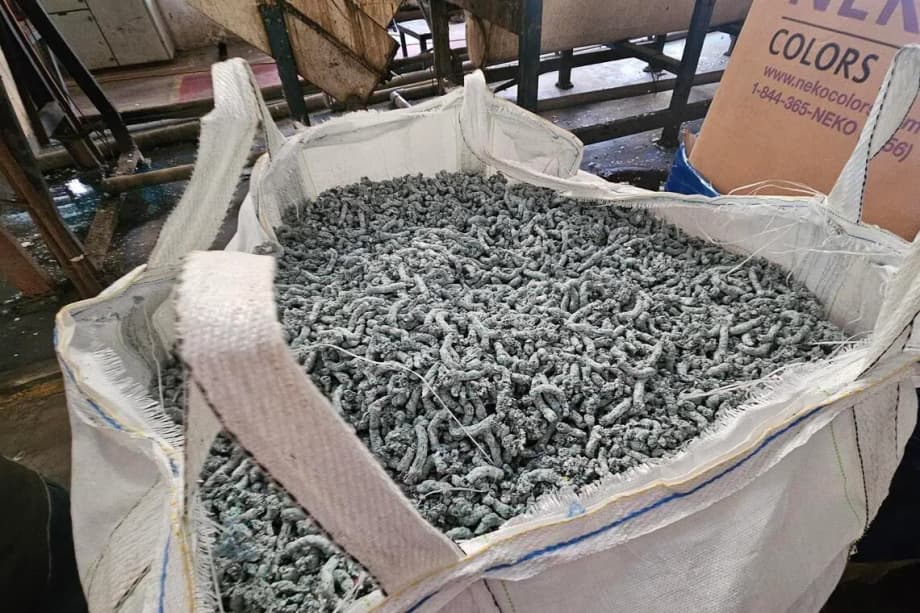
Under a cloudy sky in early April, workers at a recycling plant in Kapar, Selangor, fed discarded plastic packaging into shredding machines. The facility, operated by Sannanda Rika, transforms what Mr G. Aushal, the company’s managing director, calls the “warm ‘popcorn’ for low-density polyethylene (LDPE)” into base materials for industrial packaging, tarpaulin, and agricultural drip tape.
- War Disrupts Supply Chains, Boosts Recycling Demand
- The Economic Logic Behind Importing Waste
- From China to Malaysia: The Global Waste Trade Shift
- Regulatory Crackdown: New Rules and Targeted Bans
- Waste Colonialism and Environmental Justice
- Regional Domino Effect: Neighbors Close Their Borders
- Future Outlook: Extended Producer Responsibility and the Circular Economy
- The Bottom Line
This industrial routine has taken on new strategic importance in recent months. The ongoing conflict in the Middle East has disrupted global oil flows, sending shockwaves through the petrochemical industry and creating a supply crisis for virgin plastic resin. Since the United States and Israel launched air strikes against Iran in late February, Malaysian recyclers have experienced a surge in demand that is reshaping the economics of waste.
“A Singapore-based customer could not secure plastic supply, so he asked me to ship up to three 40-foot containers of recycled plastic resin per week instead of per month previously,” Mr Aushal explained. Each container carries between 27 and 28 tonnes of material. His company now sources discarded plastic waste primarily from the European Union and Japan to produce up to 500 tonnes of LDPE materials monthly.
The demand spike is measurable across the industry. Mr Will Low, vice-president of the Malaysia Plastic Recyclers Association, estimates that demand for recycled materials has risen between 20 and 30 percent since the military escalation began. Simultaneously, prices for virgin materials, produced directly from crude oil, have climbed more than 50 to 60 percent. “That is why some manufacturers have brought forward plans to increase the percentage of recycled material in their product,” Mr Low stated.
Malaysia’s Deputy Finance Minister Liew Chin Tong acknowledged the opportunity in an April 12 blog post, declaring that the shortage of imported virgin resin makes this the ideal moment to scale up the domestic plastic recycling industry. Recycled resin typically costs 10 to 20 percent less than virgin alternatives, positioning it as a strategic alternative amid volatile oil markets.
The Economic Logic Behind Importing Waste
Despite producing over one million tonnes of plastic waste annually, Malaysia recycles only 10 percent of its domestic output. This gap between supply and industrial demand creates a dependence on foreign feedstock that has placed the country at the center of a global trade controversy.
According to 2025 data from the United Nations Commodity Trade Statistics Database, Malaysia imported $162 million worth of plastic scrap weighing nearly 460,000 tonnes, ranking it as the world’s third-largest importer behind only the Netherlands and the United States. This import value has tripled over the past decade.
Industry representatives argue that imported waste serves an essential economic function. “Imported homogeneous plastic sources offer higher-quality feedstock for producing high-value resin and generating sustainable profit margins,” explained Associate Professor Saman Ilankoon of Monash University Malaysia. His research indicates that Malaysian household garbage lacks proper source separation, meaning it “does not produce enough good quality and uncontaminated feedstock for the local industry.”
Mr Aushal’s operation illustrates this divide. His company imports 70 to 80 percent of its feedstock from overseas, with the remainder sourced locally. The imported material, he notes, comes consistently from post-industrial production, whereas local feedstock consists mainly of contaminated post-consumer waste that requires extensive processing.
Cheah Chee Choon, president of the Malaysian Plastics Manufacturers Association, reinforced this position in March when appealing against proposed import restrictions. He noted that imported plastic waste, while pricier, meets higher quality standards than locally available alternatives.
However, not all plastics can substitute for virgin material. Mr Mike Tan, chairman of the association’s Johor branch, explained that high-precision electronic components and medical devices require virgin resin due to superior heat resistance and insulating properties. An industry veteran identified only as Mr Chia noted that recycling degrades plastic toughness, making recycled resin unsuitable for automotive applications where durability is critical, though it remains viable for household products.
From China to Malaysia: The Global Waste Trade Shift
Malaysia’s prominence in the waste trade emerged following a decisive shift in global recycling geography. For decades, China accepted nearly half of the world’s plastic waste, using it to feed its manufacturing sector during rapid industrialization. In 2018, Beijing implemented its National Sword policy, banning imports of 24 categories of solid waste and reducing plastic waste imports by over 95 percent within a year.
This closure forced a regional realignment. Waste exporters from wealthy nations shifted operations to Southeast Asian countries with less stringent environmental enforcement. Malaysia, with established port infrastructure and manufacturing capacity, became a primary destination. According to Greenpeace Southeast Asia statistics, ASEAN plastic waste imports increased 171 percent between 2016 and 2018, rising from 837,000 tonnes to 2.266 million tonnes.
The environmental consequences proved severe. In 2019, then Environment Minister Yeo Bee Yin vowed Malaysia would not become the world’s dumping ground, pledging to return illegal shipments to their origins. Yet the economic incentives persisted. Europe exports nearly 80 percent of the world’s traded plastic waste, with Malaysia receiving a substantial portion. Data from Eurostat shows EU plastic waste exports to Malaysia rose 35 percent in 2023 compared to 2022.
Jan Dell, an engineer and founder of The Last Beach Cleanup, described the EU’s incoming ban on plastic waste exports to non-OECD countries (scheduled for mid-2026) as an “admission” that such exports are “harmful and unethical.” However, she criticized the bloc for “massively increasing the amount of plastic trash they ship to Asia now” ahead of the deadline.
The trade operates under the Basel Convention, an international treaty regulating hazardous waste movement that expanded to include plastic waste in 2021. This framework distinguishes between parties and non-parties, creating the legal foundation for Malaysia’s recent restrictions on American waste.
Regulatory Crackdown: New Rules and Targeted Bans
July 2025 marked a turning point in Malaysian waste policy. Under amended customs regulations enforced by SIRIM Berhad (the national standards agency), Malaysia prohibited plastic waste imports from countries that have not ratified the Basel Convention, most notably the United States.
The ban followed the seizure of more than 100 shipping containers from Los Angeles that had been improperly labeled as raw materials rather than waste. Environment Minister Nik Nazmi declared, “We do not want Malaysia to be the world’s rubbish bin.”
The new regulations extend beyond the US prohibition. All plastic scrap imports under HS code 3915 now require pre-approval and pre-shipment inspections in the country of origin. Materials must meet stringent contamination thresholds: individual polymers require 99.5 percent purity levels, and shipments cannot exceed 2 percent non-plastic contaminants such as wood, paper, or metal. Food, oil, and electronic waste face zero tolerance.
Steve Wong, chief executive of Hong Kong-based Fukutomi recycling company, reported that the market had “come to a virtual standstill” as traders and recyclers adjusted to the new requirements. “With scrap inventories building up at ports and yards, and no clear guidance yet on the enforcement discretion or timeline of Malaysia’s new system, the market for imported plastic waste has effectively frozen,” he wrote in a June email shared with industry observers.
Outgoing Malaysian Anti-Corruption Commission chief Azam Baki has pushed for more aggressive action, proposing a six-month moratorium on plastic and e-waste imports to assess economic and environmental impacts. “If you ask me, there may be no need to import plastic waste at all,” he stated in April, arguing that improved domestic waste management could eliminate import dependence entirely.
However, industry advocates counter that domestic systems remain inadequate. Hema Sulakshana of Greenpeace Malaysia acknowledged that “the Malaysian government continues to allow plastic waste imports for economic reasons and demand from the local recycling industry,” though she noted that much imported material is either nonrecyclable or contaminated, ultimately ending up in landfills or incinerators.
Waste Colonialism and Environmental Justice
The trade in plastic waste has become a focal point for environmental justice advocates who frame the practice as “waste colonialism.” This term, first introduced during the 1989 Basel Convention negotiations, describes the transfer of environmental costs from wealthy consuming nations to poorer recipient countries.
Amy Youngman, Legal and Policy Specialist at the Environmental Investigation Agency (EIA), characterized the practice as reflecting “a form of waste colonialism, where the environmental and social costs of overconsumption in the Global North are externalised to the Global South.” The EIA estimates that between 2021 and 2023, Malaysia imported an average of 1.4 billion kilograms of plastic waste annually.
The human health impacts are measurable. In communities near recycling facilities, residents report respiratory problems and other illnesses linked to improper waste burning. Research by the International Pollutants Elimination Network found dangerously high levels of dioxins in free-range chicken eggs near plastic processing sites, with contamination levels exceeding European food safety standards by 70 times in some locations. Dioxin exposure correlates with cardiovascular disease, cancer, diabetes, and endometriosis.
Lauren Weir, Senior Ocean Campaigner at EIA, explained that “imported plastic waste, especially when poorly sorted or contaminated, is more likely to be mishandled, burnt, dumped or processed unsafely, posing serious pollution risks to local communities.” She noted that these shipments can also displace domestic recycling efforts by flooding local systems and undercutting markets.
Jim Puckett, founder of the Basel Action Network, celebrated Malaysia’s US ban while warning that waste traders actively seek regulatory gaps. “A lot of misdeclared shipments are being sent as ‘plastic pellets’ or other commodity tariff codes instead of being labeled as waste,” he noted, describing tactics used to circumvent Basel Convention controls.
Regional Domino Effect: Neighbors Close Their Borders
Malaysia’s regulatory tightening occurs within a broader regional retreat from waste imports. Indonesia implemented a total ban on plastic scrap imports effective January 1, 2025, while Thailand enacted similar prohibitions the same month. Vietnam has announced plans to follow suit later this year.
These parallel bans create pressure for Malaysia to serve as the remaining outlet for wealthy nations’ waste exports. Wong Pui Yi, a Malaysian campaigner with the Basel Action Network, expressed concern that “all these operators will come and relocate to Malaysia.” She explained: “Because we are still one of the easiest countries to bring plastic waste into, and enforcement is weak.”
The Indonesian experience illustrates the enforcement challenges. Despite the official ban, local advocates report that imports continue through misclassification. Dr. Daru Setyorini of Ecoton noted that despite a 2 percent contamination rule, “we have found contamination levels of up to 30 percent in some imports.” The waste often enters reclassified as industrial raw material rather than scrap plastic.
In Thailand, where imports have also ceased, the ban followed years of preparation. Yuyun Ismawati of the Nexus3 Foundation contrasted this with Indonesia’s approach, noting that Thailand “worked on it for years” while Indonesia’s sudden implementation left inadequate preparation time.
Jan Dell warned that without coordinated global action, bans simply shift pollution geographically rather than solving it. “The goal is to close the door country by country,” she stated. “Countries just have to stop exporting their trash.”
Future Outlook: Extended Producer Responsibility and the Circular Economy
Malaysia faces the complex task of balancing industrial demand for recycled feedstock with environmental protection and public health. The government’s Malaysia Plastics Sustainability Roadmap outlines a transition toward a circular economy, targeting 15 percent recycled content in packaging by 2030, up from 10 percent in 2023.
The Housing and Local Government Ministry plans to require manufacturers to report recycled content in plastics, paper, metal, used beverage cartons, and glass by 2030. This Extended Producer Responsibility (EPR) framework would make producers accountable for products across their entire life cycle, theoretically reducing waste generation and stimulating investment in domestic collection and recycling infrastructure.
Mr Low of the Malaysia Plastic Recyclers Association emphasized that EPR implementation is crucial for driving long-term demand for recycled resin. However, success depends on solving the domestic waste separation problem that currently makes local feedstock economically uncompetitive compared to imports.
As Malaysia assumes the ASEAN chair this year, Deputy Minister Liew has pledged to address waste trafficking at regional and global levels, urging source countries in Europe and North America to take leadership in curbing illegal exports. The country also participates in ongoing negotiations for a Global Plastics Treaty, where Malaysia’s domestic regulatory experience positions it as a potential leader in shaping international standards.
For now, the immediate future remains volatile. The Iran conflict continues to disrupt virgin resin supplies, maintaining pressure on manufacturers to incorporate recycled materials. Yet the July 2025 restrictions have constrained the import channels that recyclers depend upon. The industry stands at a crossroads between the economic logic of waste imports and the environmental imperative to manage domestic resources sustainably.
The Bottom Line
- Malaysia imported $162 million worth of plastic scrap in 2025, making it the world’s third-largest importer, despite pledging to prevent the country from becoming a dumping ground
- The Iran war has increased demand for recycled materials by 20 to 30 percent while virgin resin prices jumped 50 to 60 percent, driving manufacturers toward recycled alternatives
- Effective July 2025, Malaysia banned all plastic waste imports from the United States and other non-parties to the Basel Convention, while imposing strict pre-shipment inspection requirements and 99.5 percent purity standards on remaining imports
- Industry advocates argue that imports remain necessary because only 10 percent of Malaysia’s domestic plastic waste is recycled, and local feedstock lacks the quality and consistency required for industrial use
- Regional neighbors Indonesia and Thailand implemented total import bans in January 2025, raising concerns that Malaysia could become the sole remaining destination for wealthy nations’ plastic waste exports
- Environmental groups frame the trade as “waste colonialism,” citing health impacts on local communities and the externalization of pollution costs from wealthy consuming nations to Southeast Asia
- Malaysia aims to increase recycled content in packaging to 15 percent by 2030 through Extended Producer Responsibility policies, though success depends on improving domestic waste separation and collection systems