A New Pattern on City Streets
For decades, residents of Malaysia’s bustling capital have grown accustomed to the sight of rough sleepers seeking shelter in doorways and under overpasses. Yet a troubling evolution is now unfolding across Kuala Lumpur’s commercial and religious districts. Groups of women accompanied by very young children have adopted increasingly assertive tactics, directly approaching pedestrians, entering dining establishments without invitation, and even tapping on vehicle windows at traffic intersections.
This shift represents a departure from traditional begging methods where individuals typically remain stationary with outstretched hands or cups. Instead, these new arrivals actively target potential donors, sometimes refusing to leave when asked and creating uncomfortable confrontations in spaces previously considered private or protected.
The phenomenon has sparked intense debate on social media platforms, with many observers questioning whether these coordinated appearances represent isolated instances of desperation or evidence of organized syndicates exploiting vulnerable women and children for financial gain. Local residents report seeing the same individuals at multiple locations throughout the day, suggesting a systematic rotation through busy areas rather than random chance encounters.
Writer Jenifer C. encountered this behavior firsthand during a late lunch with friends at a city center restaurant. Her account illustrates the persistence that has become characteristic of these interactions and highlights the sophisticated approaches now being employed.
My friends and I were having a late lunch one day and suddenly, a lady dressed in black came in and started going table-to-table asking for alms. She claimed to be from Palestine but spoke to me in Hindi. Even more suspicious was how the young child she held always seemed to be sleeping.
When Jenifer explained she carried no cash, the woman remained unmoved. Only after the restaurant owner intervened, offering a complimentary packed meal, did the beggar depart. Ten minutes later, another woman bearing a similarly lethargic child entered the same establishment to repeat the process.
Commercial Districts Under Pressure
Beyond individual encounters, business owners report systematic intrusions that disrupt operations and unsettle paying customers. A restaurant cashier near the city center, speaking anonymously, described regular afternoon visitations that have become increasingly difficult to prevent.
They start appearing at about 4pm when it is not too hot. We have repeatedly turned them away as they can disturb our customers but they keep returning.
These incursions are not limited to casual dining spots. Textile shops along Jalan Tuanku Abdul Rahman, a major commercial thoroughfare, have become regular stops for rotating groups of women who move methodically through the district.
Local resident Ravi, who frequents the area, noted the growing frequency of these patrols. The women appear to operate in loose coordination, covering specific territories during peak shopping hours when foot traffic is highest and sympathy may be more readily available.
Strategic Targeting of Religious Gatherings
Perhaps most concerning to community leaders is the deliberate positioning outside houses of worship, where congregants may feel heightened moral obligation to give. Journalists observing the Masjid India mosque documented precise timing that suggests sophisticated awareness of religious schedules.
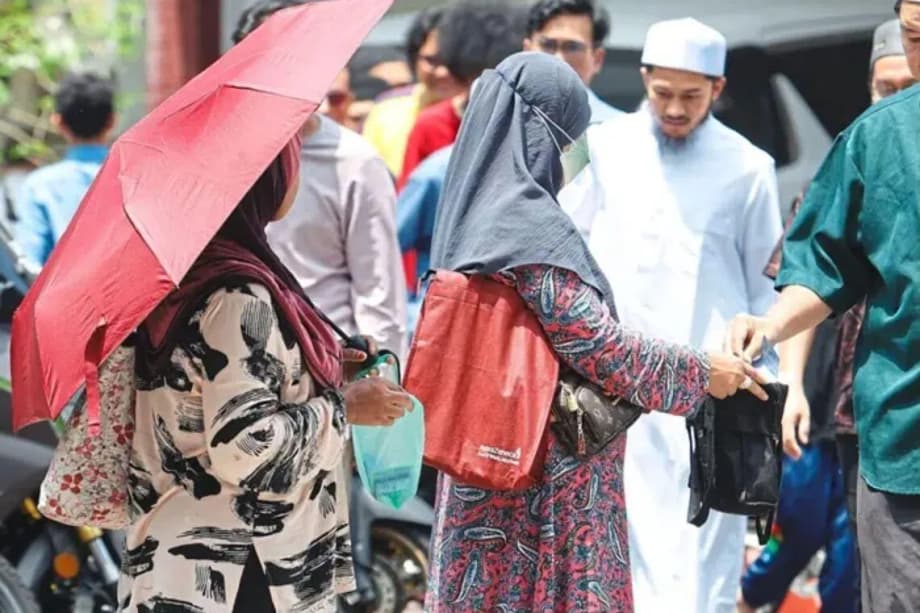
One woman positioned herself on the walkway with a child in tow approximately five years of age. As Friday prayers concluded and worshippers began dispersing, the pair immediately relocated to block the primary exit, extending bags to capture the outgoing flow of congregants.
Similar scenes have emerged at the Taman Tun Dr Ismail mosque, where groups of four children stood sentry at entrance points. Each child held plastic containers, silently soliciting donations from worshippers entering or leaving the premises. The silent nature of these appeals, combined with the children’s young ages, creates powerful emotional leverage that many find difficult to ignore.
The Costume Phenomenon
Parallel to these developments, Malaysian urban centers have witnessed the emergence of what local media terms “upgraded beggars” who employ elaborate costumes and modern payment technology. In Johor Bahru and Kuala Lumpur, individuals dressed as popular cartoon characters including Super Mario, Luigi, and Doraemon now populate night markets, petrol stations, and Ramadan bazaars.
These performers, often children themselves, wear professional-quality costumes equipped with cooling fans. Investment in these outfits is substantial, with similar Labubu costumes retailing online for between RM600 and RM1,000. The expenditure suggests either committed individual enterprise or backing from organized networks.
A nine-year-old boy interviewed at a local bazaar wore a frog costume while holding a collection box containing Malaysian ringgit notes. When questioned, he indicated the money was for himself. Nearby, another child dressed as a grey Labubu character employed similar tactics, while a fourteen-year-old in a pink bunny costume accepted electronic transfers via a QR code displayed on their tip box.
Sixty-one-year-old Kamal, a retired cleaner and father of ten, defended his decision to wear a frog costume while soliciting at traffic lights. He reported earning up to RM100 within three hours, significantly more than his previous cleaning wages. He cited financial pressures including supporting children still in school as justification for the risky roadside work.
Legal Framework and Enforcement Gaps
Malaysian authorities currently operate under the Destitute Persons Act, which criminalizes begging in public spaces without appropriate permits. Section 2 of the legislation specifically categorizes individuals asking for donations in public as beggars subject to legal intervention.
However, enforcement remains inconsistent. Johor Bahru Social Welfare Department director Ahmad Hashim Selamat confirmed that three costumed individuals were recently detained at a traffic light crossing on Jalan Padi Emas 1. Following processing at the department office, the individuals received verbal and written warnings before signing pledges agreeing that repeat offenses would trigger prosecution under the Act.
Skudai assemblyman Marina Ibrahim has urged the public to withhold donations, arguing that financial support merely encourages the practice to expand. She noted the costume trend has spread from Johor Bahru to shopping centers in Kulai, indicating rapid geographic diffusion.
Importantly, Ahmad Hashim emphasized that most individuals encountered are not homeless vagrants but rather have established families and residences. This distinction complicates traditional social welfare approaches designed primarily for the destitute, suggesting instead a need for alternative income support or vocational intervention.
Safety Concerns and Territorial Disputes
The physical risks associated with these activities extend beyond traffic dangers. Sixty-year-old Sonny, a Rohingya woman supporting twelve children, reported being chased away by men claiming she had encroached upon their designated begging territory while wearing a red tiger costume. These accounts hint at possible gang involvement or organized control of lucrative locations.
The presence of sedated or unusually sleepy children carried by female beggars has raised particular alarm among observers. While no direct evidence of drugging has been confirmed in available reports, consistent accounts of unconscious infants during aggressive solicitation hours suggest possible chemical intervention to keep children compliant during extended working periods.
Sonny, who previously sold women’s accessories before declining sales forced her into costume begging, expressed the limited options available to undocumented or status-challenged residents. She maintained that her activities cause no disturbance, yet acknowledged the hostility from competing solicitors.
What to Know
- Groups of women with young children are increasingly entering Kuala Lumpur restaurants and religious sites to aggressively solicit donations, refusing to leave when asked by staff or customers.
- Individuals claim various nationalities, including Palestinian origins, while speaking languages like Hindi, raising questions about their true backgrounds and possible syndicate involvement.
- The phenomenon has expanded to include “upgraded beggars” wearing expensive cartoon costumes equipped with QR codes for electronic payment at markets and traffic intersections.
- Malaysian authorities are enforcing the Destitute Persons Act, which requires permits for public solicitation, though many offenders are released with warnings rather than prosecuted.
- Children as young as nine are participating in costume begging, while infants carried by female solicitors often appear sedated or unnaturally sleepy, prompting safety concerns.
- Officials and community leaders advise the public to avoid giving cash donations, as financial support encourages the expansion of these organized begging operations.