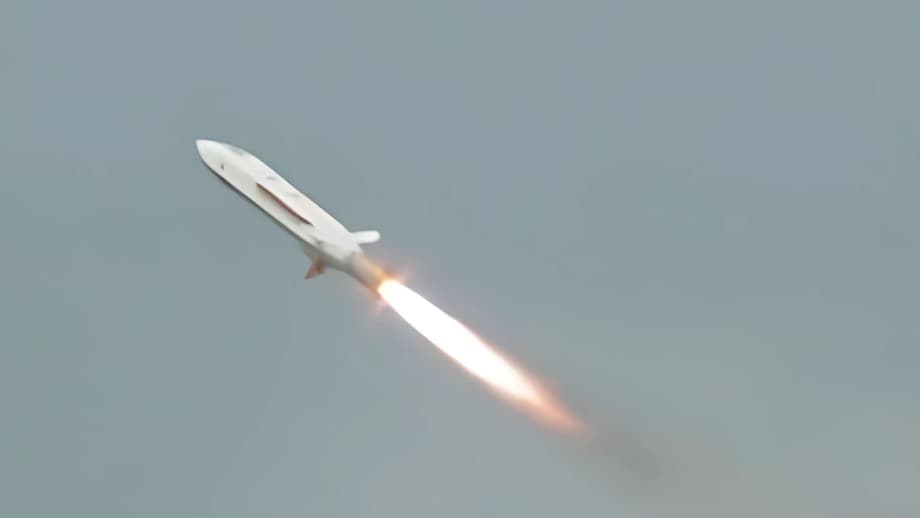
Japan Fields First Domestic Long-Range Strike Missiles
On March 31, 2026, the Japan Ground Self-Defense Force (JGSDF) announced the operational deployment of two advanced missile systems at separate locations across the Japanese archipelago, marking the most significant transformation of Tokyo’s military posture since the establishment of the Self-Defense Forces in 1954. At Camp Kengun in Kumamoto Prefecture on the island of Kyushu, the JGSDF activated the Type 25 Surface-to-Ship Guided Missile (25SSM), while at Camp Fuji in Shizuoka Prefecture, the force deployed the Type 25 Hyper Velocity Gliding Projectile (25HGP). These weapons represent Japan’s first domestically developed long-range stand-off missiles capable of striking targets beyond visual range, fundamentally altering the strategic geometry of the Indo-Pacific region.
The deployment timing reflects Tokyo’s accelerating response to what defense officials describe as the most severe security environment of the post-war era. The Type 25 SSM, formerly designated as the “Upgraded Type 12 Surface-to-Ship Missile,” extends engagement ranges from approximately 200 kilometers to roughly 1,000 kilometers, enabling Japanese forces to target hostile naval vessels and select land-based assets across the East China Sea, the Taiwan Strait approaches, and potentially coastal areas of mainland China. This capability crosses a threshold that Japanese defense policy had deliberately avoided for decades under the constitutional constraints of Article 9.
In an official statement released with the deployment announcement, the JGSDF emphasized the defensive rationale behind the fielding of these systems.
These equipment are important in enhancing Japan’s deterrence and response capabilities. The Ground Self Defense Force will always stand with the people of Japan and will continue to make every effort to protect their safety and security.
The Type 25 designation reflects fiscal year 2025, which ended March 31, 2026, when the systems received their formal names under Japan’s defense equipment nomenclature convention. Both systems derive from earlier developmental programs but have now transitioned from experimental assets to operational weapons assigned to frontline units responsible for the defense of Japan’s southwestern islands.
Technical Capabilities and Strategic Range
The Type 25 SSM constitutes a radical evolution of the legacy Type 12 missile originally fielded in 2012. While the baseline Type 12 offered approximately 200 kilometers of range using a combination of inertial navigation, GPS guidance, and a Ka-band Active Electronic Scanned Array radar seeker, the upgraded variant achieves five times that reach while incorporating advanced stealth characteristics designed to reduce radar cross-section. The missile features an asymmetrically-shaped nose cone and faceted body surfaces that scatter enemy radar signals, complicating detection and tracking by adversary air defense networks.
Beyond extended range and reduced observability, the Type 25 SSM introduces network-centric warfare capabilities previously unavailable to Japanese coastal defense units. The system incorporates Update-to-Date Command (UTDC) functionality, which utilizes satellite communications links to enable ground control stations to retarget missiles in-flight. This allows operators to redirect weapons dynamically toward moving maritime targets or newly identified threats even after launch, creating a responsive kill chain that can adapt to fluid tactical situations without requiring pre-programmed target coordinates.
Mounted on highly mobile truck-based Transporter-Erector-Launcher (TEL) platforms, the Type 25 SSM can disperse rapidly across Japan’s road networks, hide in pre-prepared positions, or relocate between the southwestern islands to complicate enemy targeting. This mobility addresses lessons learned from modern conflicts where fixed military infrastructure faces vulnerability to precision missile strikes during the opening hours of hostilities. Japanese planners increasingly prioritize survivable systems that can sustain operations even after airfields and command centers suffer attack.
Complementing the cruise missile variant, the Type 25 HVGP introduces an entirely different class of weaponry into Japanese service. Unlike the air-breathing Type 25 SSM, the HVGP uses a rocket booster to loft a glide vehicle into the upper atmosphere, where it descends toward targets at hypersonic speeds exceeding Mach 5 along unpredictable maneuvering trajectories. This flight profile makes interception substantially more difficult than conventional ballistic or cruise missiles because defensive radars struggle to predict the weapon’s final approach path.
The Counterstrike Revolution
The March 2026 deployments culminate a doctrinal shift initiated with the adoption of Japan’s “Three Security Documents” in December 2022. These strategic revisions, comprising the National Security Strategy, National Defense Strategy, and Defense Buildup Program, explicitly endorsed the development of “counterstrike capabilities” for the first time in Japan’s post-war history. This concept, also referred to as “stand-off defense capability,” involves the ability to engage and neutralize invading enemy forces at extended ranges before they can approach or land on Japanese territory, effectively allowing Tokyo to threaten missile launch sites and invasion staging areas within potential adversary territory.
Constitutional constraints under Article 9 have historically limited Japanese military doctrine to exclusively defensive operations, prohibiting power projection capabilities that could enable pre-emptive strikes. The 2022 documents navigate these restrictions by establishing three strict conditions for counterstrike employment: an armed attack against Japan must be imminent or already underway, no alternative methods exist to halt the aggression, and the use of force must be minimized to the extent necessary. Under this framework, Japan maintains that strikes against enemy missile bases remain defensive in nature because they respond to ongoing or inevitable attacks rather than constituting pre-emptive warfare.
This strategic evolution also addresses alliance dynamics with the United States. Under existing security commitments, Washington remains obligated to defend Japan against missile attacks, yet American forces must prioritize protecting U.S. territory if both nations face simultaneous threats. By acquiring independent counterstrike capabilities, Japan can assume greater responsibility for suppressing missile threats directed at the archipelago, reducing the strategic dilemma faced by U.S. commanders during multi-theater contingencies. This burden-sharing rationale has gained traction in Washington as the United States seeks to distribute security responsibilities more broadly across the Indo-Pacific.
Regional Threats and Strategic Context
The accelerated deployment schedule reflects Tokyo’s assessment that regional security has deteriorated beyond the point where developmental delays remain acceptable. Chinese naval and air forces now operate with increasing frequency around the Ryukyu island chain, which stretches from Kyushu to Taiwan and includes the disputed Senkaku Islands. Beijing’s military modernization has produced a fleet of advanced destroyers, aircraft carriers, and amphibious assault ships capable of projecting power across the East China Sea, while Chinese missile forces maintain continuous pressure through exercises and deployments targeting the first island chain.
North Korea’s expanding nuclear and ballistic missile programs present an additional vector of threat that has exposed limitations in Japan’s previous reliance on missile defense systems alone. The Patriot PAC-3 and Aegis destroyer-based interceptors provide point defense capabilities, yet defense officials increasingly argue that pure interception cannot guarantee survival against large-scale missile salvos. The counterstrike doctrine offers an alternative approach by threatening to destroy launch sites rather than attempting to intercept every incoming threat.
Taiwan contingencies factor prominently into Japanese strategic calculations. The Nansei island chain occupies the same maritime corridor that Chinese naval forces would likely traverse during any major operation against Taiwan, potentially drawing Japan into conflict regardless of Tokyo’s direct intentions. By fielding long-range mobile missiles at Camp Kengun in Kyushu, Japanese forces can now threaten Chinese warships and amphibious formations operating within these approaches, potentially complicating Beijing’s operational planning by introducing uncertainty regarding the survivability and retaliatory reach of Japanese missile units.
Beijing has reacted sharply to the deployments. As the Type 25 systems entered service, a Chinese naval fleet simultaneously entered the Sea of Japan, signaling displeasure through military presence. Chinese Defense Ministry officials characterized the missile fielding as “neo-militarism in Japan, which has become more than just a perilous tendency but a very real threat that may wreak havoc on regional peace and security.” Foreign Ministry spokeswoman Mao Ning condemned the move as exceeding the scope of self-defense, stating that Tokyo had deployed offensive weapons under the guise of “defensive counterstrike.”
Multi-Domain Expansion and U.S. Cooperation
The current ground-launched deployments represent merely the initial phase of a comprehensive multi-domain missile architecture planned for completion by 2032. Japan intends to introduce ship-launched and air-launched variants of the Type 25 SSM during fiscal year 2027, creating redundant strike capabilities across surface, naval, and aerial platforms. The naval variant is scheduled for deployment aboard the Japan Maritime Self-Defense Force destroyer JS Teruzuki, homeported at Yokosuka, while the air-launched version will integrate with upgraded F-2 fighter aircraft operating from Hyakuri Air Base in Ibaraki Prefecture.
Parallel to indigenous development, Tokyo has pursued foreign acquisition to accelerate capability fielding. In January 2024, Japan finalized the purchase of 400 BGM-109 Tomahawk Land Attack Missiles from the United States for deployment aboard Aegis-equipped destroyers. This procurement provides an interim long-range strike capability while domestic systems mature, with the first Tomahawk-equipped warship completing crew training and system integration in March 2026, as reported by U.S. Naval Institute News. The combination of Tomahawks and Type 25 missiles creates a layered stand-off network capable of engaging diverse target sets across varying ranges and defensive environments.
Washington has provided substantial technical assistance for Japan’s hypersonic weapons program. The U.S. State Department approved approximately $340 million in Foreign Military Sale support for the HVGP development, including test preparation, transportation, and range support. Japanese engineers conducted multiple test launches at Vandenberg Space Force Base in California during 2024 and 2025, leveraging American test infrastructure while avoiding surveillance by regional adversaries who monitor Japanese domestic ranges. This cooperation reflects broader U.S. efforts to strengthen long-range precision strike capabilities across the first island chain, including similar positioning of weapons in the Philippines.
Hypersonic Technology and Future Warfare
The Type 25 HVGP incorporates advanced propulsion technology designed to defeat modern air defense systems through speed and maneuverability. The weapon utilizes a Dual-Mode Scramjet (DMSJ) engine that combines ramjet and scramjet technologies to achieve efficient propulsion across a wide velocity spectrum. Conventional scramjet engines require acceleration to hypersonic speeds before becoming operational, necessitating large rocket boosters that increase overall missile size and launch signature. The DMSJ configuration employs the ramjet mode for efficient supersonic cruise between Mach 3 and 5, then transitions to scramjet mode for hypersonic flight above Mach 5, thereby reducing booster requirements and overall system mass.
According to Japan’s Acquisition, Technology & Logistics Agency (ATLA), the hypersonic guided missile can cruise at high altitudes while maneuvering, occupying a flight envelope between typical low-level air defense systems and upper-tier ballistic missile defenses. By altering flight paths continuously, the weapon generates unpredictable intercept points that complicate defensive calculations. ATLA has characterized this capability as a “game changer” for island defense scenarios, particularly against hardened targets such as aircraft carriers or fortified command facilities.
Future variants of the Type 25 HVGP aim to extend ranges from the current several hundred kilometers to approximately 2,000 or 3,000 kilometers, potentially enabling strikes deep within continental Asia. The Ministry of Defense plans additional deployments to Camp Kamifurano in Hokkaido and Camp Ebino in Miyazaki, creating a nationwide network of mobile hypersonic batteries capable of covering multiple strategic approaches simultaneously.
Industrial and Strategic Outlook
Beyond the Type 25 family, Japan has initiated development of a “New Surface-to-Ship / Surface-to-Surface Precision-Guided Missile” intended for deployment by 2032. This next-generation system will feature enhanced guidance performance compared to the Type 25 SSM, including capabilities for automated target classification and specific aim-point designation against vulnerable areas of enemy vessels, similar to the U.S. AGM-158C LRASM. ATLA has declined to disclose specific performance characteristics, citing operational security concerns regarding Self-Defense Forces capabilities.
The fiscal year 2026 budget reflects the transition from experimental development to serial production. Japan allocated ¥73.2 billion for continued hypersonic missile development alongside ¥30.1 billion for initial procurement toward full-scale production, indicating that technological milestones for manufacturing readiness have been achieved. This funding supports Japan’s broader commitment to increase defense spending to 2% of GDP, achieving NATO-equivalent investment levels years ahead of original targets.
Domestic challenges persist regarding the new capabilities. Local residents around Camp Kengun have protested the missile deployment, arguing that introducing long-range strike weapons transforms the region into a primary target during any future conflict. Critics contend that the government moved the batteries into position with insufficient community consultation, highlighting ongoing tensions between security requirements and local autonomy. Additionally, military planners must address the concentration of ammunition depots in Hokkaido, a legacy of Cold War Soviet threats, while redistributing logistics infrastructure to support southern island defense.
The effectiveness of these new systems ultimately depends upon intelligence, surveillance, and reconnaissance (ISR) capabilities that Japan currently lacks in sufficient independent capacity. Targeting mobile missile launchers or ships at 1,000-kilometer ranges requires persistent aerial and satellite observation that remains heavily dependent upon American assets. Deepening integration with U.S. command and control systems will prove essential for operational effectiveness, even as Tokyo develops indigenous satellite constellations and sensor networks.
Key Points
- Japan deployed the Type 25 Surface-to-Ship Missile and Type 25 Hyper Velocity Gliding Projectile on March 31, 2026, marking the first operational fielding of domestically developed long-range strike missiles
- The Type 25 SSM features approximately 1,000-kilometer range, stealth shaping, and satellite-linked in-flight retargeting capabilities, deployed on mobile truck launchers at Camp Kengun in Kumamoto
- The Type 25 HVGP introduces hypersonic glide vehicle technology capable of Mach 5+ speeds and unpredictable maneuvering, initially deployed at Camp Fuji in Shizuoka
- These systems implement “counterstrike capabilities” authorized under Japan’s 2022 security documents, allowing engagement of enemy missile bases and invasion forces before they reach Japanese territory
- Ship-launched and air-launched variants of the Type 25 SSM are scheduled for 2027 deployment aboard destroyer JS Teruzuki and F-2 fighter aircraft
- Japan is simultaneously acquiring 400 U.S. Tomahawk cruise missiles and developing a next-generation precision-guided missile for deployment by 2032
- China has condemned the deployments as “neo-militarism” exceeding self-defense limits, while regional tensions continue escalating around the East China Sea and Taiwan Strait