A High-Stakes Horticultural Statement
Japan is preparing to make a bold statement about nuclear recovery and environmental resilience at one of the world’s most prestigious horticultural stages. The government is actively considering the use of decontaminated soil collected from the Fukushima No. 1 nuclear power plant disaster site at the International Horticultural Expo 2027, scheduled to take place in Yokohama beginning March 2027. This move represents a significant shift in how Tokyo approaches the massive stockpile of material removed during decontamination work following the 2011 nuclear accident, and signals an attempt to transform a symbol of disaster into a testament to recovery.
The proposal involves incorporating what officials have termed “reconstruction and revitalisation soil” into flower beds and landscaping throughout the Green x Expo venue. With the event expected to draw millions of visitors from across the globe, including participants from 61 countries and international organizations, the government sees this international platform as an unparalleled opportunity to demonstrate the safety of repurposing materials that have been stored in interim facilities for over a decade. The plan would utilize soil with low radiation levels, specifically selected to meet stringent safety criteria while serving as a visible symbol of Fukushima’s ongoing reconstruction efforts.
Sources within the government and ruling party indicate that this initiative serves a dual purpose. Beyond the immediate landscaping applications, officials hope to foster broader public understanding and acceptance of the soil’s use in other contexts throughout Japan. By showcasing the material at a major international exposition dedicated to sustainability and urban greening, authorities aim to normalize what has been a controversial and politically sensitive topic since the triple disaster of March 2011.
Fourteen Million Cubic Meters of History
To comprehend the magnitude of this proposal, one must consider the sheer volume of material involved and the legal constraints governing its future. Approximately 14 million cubic meters of decontaminated soil currently sits in interim storage facilities surrounding the Fukushima No. 1 plant, located in the towns of Okuma and Futaba in Fukushima Prefecture. These massive storage sites represent one of the most visible and enduring legacies of the catastrophic events of March 11, 2011, when a magnitude 9.0 earthquake and subsequent tsunami triggered meltdowns at the Tokyo Electric Power Company Holdings facility, releasing radioactive materials across the surrounding countryside.
The process of decontamination involved removing topsoil, vegetation, and other materials from vast swathes of land to reduce radiation levels and enable residents to return to evacuated communities. The resulting soil, bagged and stored in massive temporary facilities, has presented a logistical and political challenge that has persisted for more than fourteen years. Japanese law mandates that this soil must undergo final disposal outside Fukushima Prefecture by March 2045, creating a ticking clock for authorities to develop viable long-term solutions.
Despite years of storage and processing, the nation has struggled to develop concrete plans for the large-scale reuse or permanent disposal of this material. The government has used only 68 cubic meters across ten locations nationwide to date, representing a minuscule fraction of the total volume. These pilot applications have included small-scale deployments at the Prime Minister’s Office front garden and various ministry buildings in Tokyo’s Kasumigaseki district, serving as limited demonstrations for officials and visitors to the capital’s government quarter.
Decoding Radiation Safety Standards
The safety credentials of the proposed soil rest on specific radiation measurements that require careful interpretation for general audiences. According to the Environment Ministry, approximately three-quarters of the stored soil exhibits radiation levels of 8,000 becquerels per kilogram or less. A becquerel represents one radioactive decay per second, serving as the standard international unit for measuring radioactivity in materials. This measurement indicates how many atoms within the material are undergoing radioactive decay each second, providing a quantifiable metric for comparing different samples.
For human health considerations, officials calculate that even individuals working in direct proximity to this soil would receive an annual radiation dose of 1 millisievert or less. A millisievert measures the biological effect of ionizing radiation on human tissue, accounting for different types of radiation and their varying impacts on the body. To place this in context, the International Commission on Radiological Protection recommends that public exposure from artificial sources should not exceed 1 millisievert annually, excluding natural background radiation which averages between 2 and 3 millisieverts per year globally in most regions.
This standard places the decontaminated soil within internationally recognized safety parameters, though public perception of such materials remains complex in Japan following the 2011 disaster. The measurement of 8,000 becquerels per kilogram serves as a critical threshold in government planning, distinguishing between material suitable for wider application and soil requiring more restricted handling or permanent disposal in specialized facilities.
Yokohama’s Stage for Sustainable Future
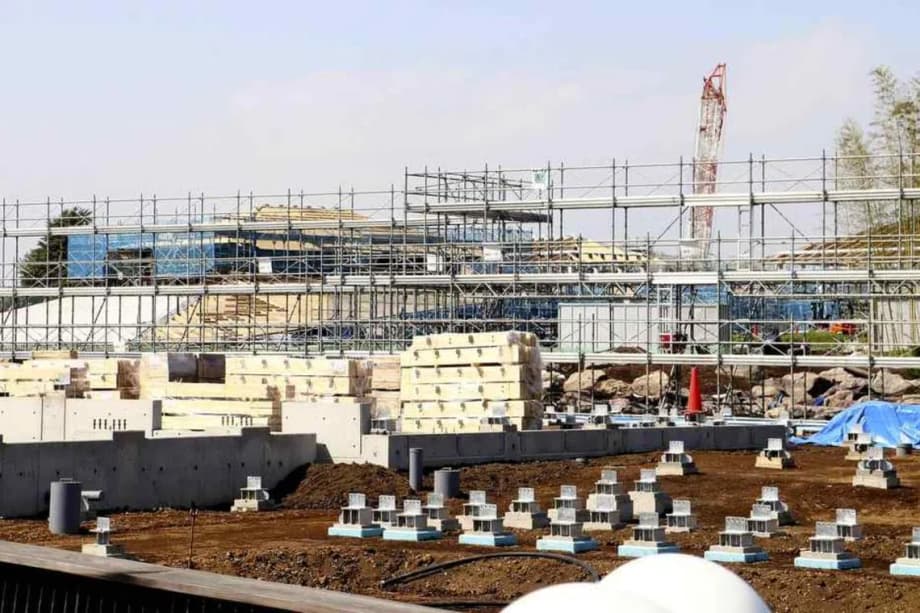
The International Horticultural Expo 2027 offers a fitting and symbolically charged backdrop for this controversial demonstration of environmental recovery. Operating under the theme “Scenery of the Future for Happiness,” the exposition will transform approximately 100 hectares of a former United States military facility spanning Yokohama’s Seya and Asahi wards into a showcase of sustainable urban greening. The venue will feature 10 million flowering and non-flowering plants, creating what organizers envision as a living laboratory for ecological coexistence and a model for integrating nature into densely populated urban environments.
The exposition framework includes four interconnected sub-themes that align closely with the United Nations Sustainable Development Goals. Co-adaptation focuses on green infrastructure solutions for creating sustainable and resilient urban environments capable of withstanding climate pressures. Coexistence promotes community bonds through horticulture and agricultural sharing. Co-creation encourages innovation at the intersection of agriculture, technology, and life sciences to develop new industries. Co-operation fosters global collaboration and exchange to achieve multicultural coexistence and environmental harmony.
The selection of Yokohama as host carries particular historical resonance for Japan’s relationship with the global community. Since opening as an international port in 1859, the city has served as a primary gateway for horticultural exchange, introducing Western plant varieties to Japan while exporting domestic flora to international markets. This legacy makes the city a symbolically appropriate location for demonstrating how land can recover and flourish even after industrial and environmental trauma. The transformation of a former military facility into a garden sanctuary also mirrors broader themes of conversion and renewal that characterize the post-industrial urban landscape.
Building Trust Through Demonstration
The government strategy for gaining public acceptance relies heavily on incremental demonstration projects designed to build confidence through visible, low-risk applications. Recent precedent emerged at the 2025 Osaka-Kansai Expo, where planters containing twelve varieties of flora including akebi were displayed using decontaminated soil from Fukushima. These visible applications serve as test cases for broader acceptance, allowing officials to present tangible evidence of safety rather than relying solely on statistical assurances or scientific reports that may fail to sway public sentiment.
A member of the ruling Liberal Democratic Party emphasized the significance of this approach in comments to media sources.
“The use of reconstruction and revitalisation soil at the horticultural expo, which is a national project, is highly significant.”
The representative noted that using reconstruction soil at a national project of this magnitude carries substantial weight for public perception, particularly given the international attention the exposition will generate. The government intends to expand promotional efforts to regional offices nationwide, creating additional demonstration sites that normalize the material’s use in everyday landscaping and public works projects.
Navigating Nuclear Scrutiny
This proposal unfolds against a backdrop of intense regulatory oversight in Japan’s nuclear sector, where authorities have adopted increasingly rigorous monitoring standards following the 2011 disaster. The Nuclear Regulation Authority maintains strict vigilance over atomic energy matters, as evidenced by recent probes into data fraud involving major utility companies and reactor safety assessments. Such rigorous enforcement underscores the seriousness with which Japanese authorities now approach nuclear safety documentation and verification, adding weight to Environment Ministry assessments of the decontaminated soil.
The International Association of Horticultural Producers, which oversees global exposition standards, conducted site inspections in March 2026 as preparations entered their final phase before the 2027 opening. This international oversight will add another layer of verification to the safety claims, ensuring that any materials used in the exposition gardens meet not only Japanese regulatory standards but international horticultural exhibition requirements. With organizers anticipating more than 10 million visitors to the Yokohama site, the safety standards for construction and landscaping materials will remain under intense scrutiny from both domestic and international observers.
Beyond the Expo: Long-Term Solutions
While the 2027 exposition offers a high-profile opportunity to demonstrate safety, it represents only a fraction of the material requiring permanent disposition. The government plans to begin selecting and surveying candidate sites for final disposal of all decontaminated soil, including portions with relatively higher radiation levels, around 2030. This timeline leaves fifteen years for implementation before the March 2045 legal deadline established by Japanese law for removal of all material from Fukushima Prefecture.
The challenge extends beyond technical logistics to encompass deep social and political dimensions of waste management in Japan. Finding communities willing to accept nuclear-related materials, even those meeting safety standards, requires building the kind of trust that the Green Expo demonstration aims to foster. Previous attempts to establish disposal sites for nuclear waste have frequently stalled due to local opposition, creating a gridlock that has complicated cleanup efforts nationwide.
The horticultural exposition thus serves a strategic dual purpose. It provides immediate utility for a small portion of the soil while laying psychological and political groundwork for the broader acceptance necessary for long-term disposal solutions. By transforming the material from a symbol of radiation danger into a medium for growing flowers at an international celebration of horticulture, the government hopes to reframe public understanding of the decontamination legacy before the critical decisions of the 2030s regarding permanent storage facilities.
Key Points
- The Japanese government is considering using decontaminated soil from Fukushima at the 2027 International Horticultural Expo in Yokohama
- Approximately 14 million cubic meters of soil from post-2011 decontamination work sits in interim storage facilities in Fukushima Prefecture
- Three-quarters of the stored soil shows radiation levels of 8,000 becquerels per kilogram or less, within international safety standards
- The Green x Expo will transform 100 hectares of a former US military facility with 10 million plants and participation from 61 countries
- Japanese law requires final disposal of the soil outside Fukushima Prefecture by March 2045
- The government has currently used only 68 cubic meters of the material across ten demonstration sites nationwide
- Site selection for permanent disposal facilities is expected to begin around 2030